
Family businesses face unique legal challenges that can threaten both relationships and financial stability. Ownership disputes, succession planning failures, and tax complications destroy countless family enterprises every year.
We at Billie Jo Hopwood Family Law & Mediation, PLLC help families navigate these legal issues in family business before they spiral into costly conflicts. This guide covers the strategies you need to protect your business and your family.
Ownership and Succession Planning in Family Businesses
Ownership Disputes Destroy Family Enterprises
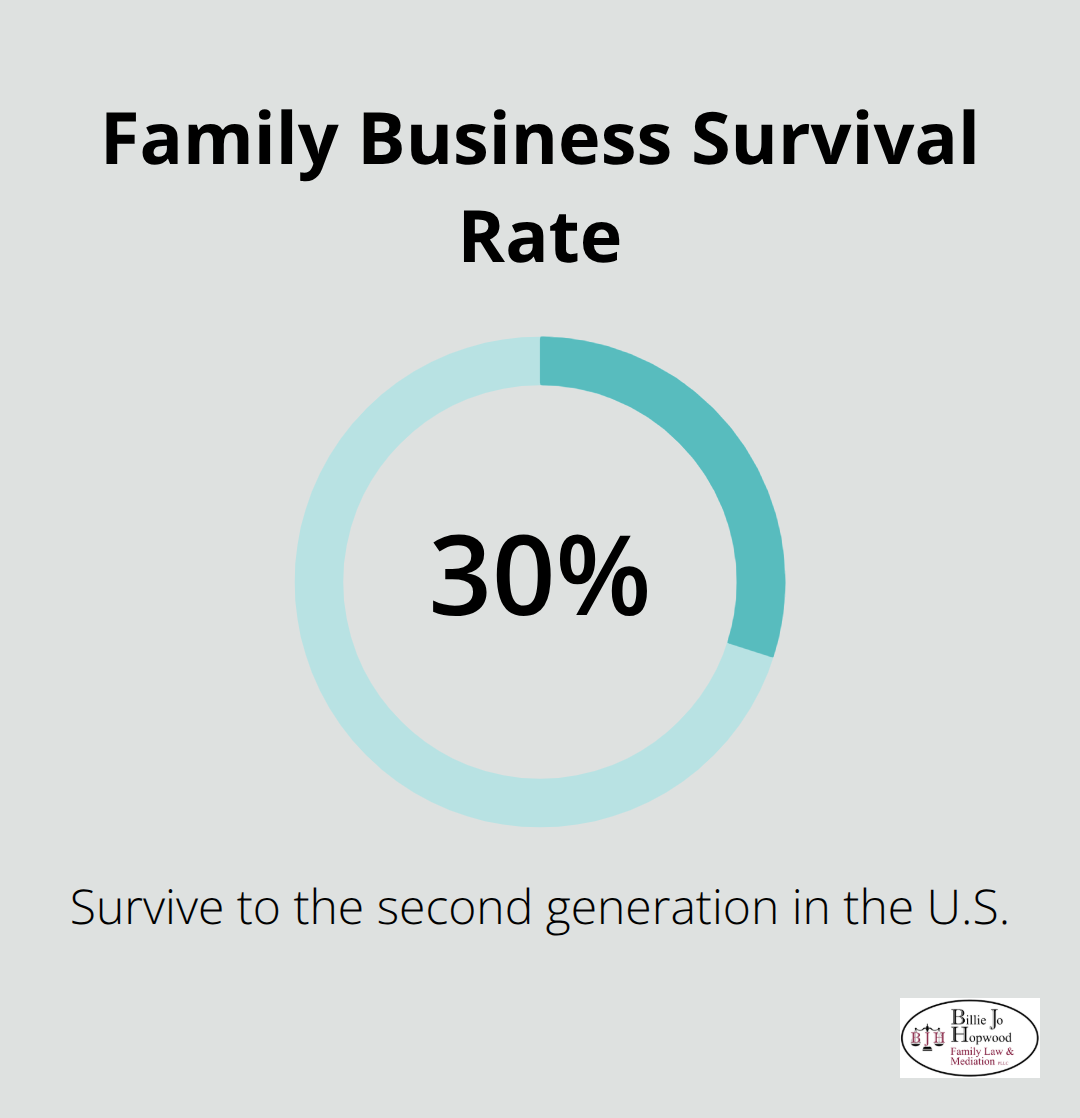
Ownership disputes destroy family businesses faster than poor market conditions. Only 30% of family businesses survive to the second generation, according to research on family business succession, and the primary culprit is unclear ownership structures and nonexistent succession plans. Most family business owners operate with handshake agreements and informal promises instead of written documentation, which guarantees conflict when the founder steps back or passes away. You need a written ownership structure that spells out who owns what percentage, how ownership transfers happen, and what happens if a family member wants to leave the business.
How Minnesota LLC Law Affects Your Business Value
Minnesota LLC law permits member transfers to convey only economic rights unless other members consent to management participation, creating what valuators call a lack-of-control discount that can reduce your business worth by 20% to 40%. This structural vulnerability exposes your family to significant financial loss during transitions or disputes. A buy-sell agreement locks in pricing methodology, identifies who can purchase shares, and specifies payment terms, preventing costly litigation over valuation when emotions run highest. Without one, siblings fight over business value while the business itself deteriorates, customers leave, and employees jump ship.
Funding Your Buyout Strategy
The agreement should address what triggers a buyout (death, disability, divorce, retirement) and whether the business, remaining owners, or a third party funds the purchase. Life insurance held in an irrevocable life insurance trust provides liquidity without tax complications, ensuring funds exist when you need them most. This approach protects both the business and family members who depend on the buyout proceeds.
Naming Your Successor and Building the Transition
Succession planning requires naming your successor at least five years before transition and documenting the plan in writing. Nearly half of family business owners nearing retirement have not named a successor, according to succession planning research, leaving the business rudderless during critical transitions. Your plan should specify the successor’s responsibilities, a timeline for gradual leadership handoff, and mentorship structures that build the next leader’s credibility with employees and customers.
Coordinating Estate Planning with Business Ownership
Estate planning must coordinate with your business plan; if you own the business outright, your will or revocable trust should transfer ownership to the intended successor and specify how other family members receive equivalent value through insurance proceeds or other assets. Without coordination, one child inherits the business while others inherit nothing, triggering resentment and oppression claims. Document all agreements in a formal operating agreement or shareholders agreement that family members sign before disputes emerge. This agreement should cover voting rights, decision-making authority, distributions, and what happens if someone wants out. The cost of drafting these documents is negligible compared to litigation expenses, which routinely exceed six figures in family business disputes.
These ownership and succession structures form the foundation for stable family businesses, but they only work when family members also establish clear roles and decision-making processes that separate personal relationships from business operations.
Management and Decision-Making Conflicts
Separate Professional Authority from Family Bonds
Family members working together blur the line between personal loyalty and professional accountability, creating decision-making paralysis that damages the business. A sibling might hesitate to fire an underperforming brother-in-law, or a parent might override sound business decisions to protect a child’s feelings. This emotional entanglement prevents companies from making the tough calls that keep operations competitive. You need documented job titles, written responsibilities, and decision-making authority that exist independent of family relationships. When someone holds the title of Chief Financial Officer, their authority over accounting and budgeting decisions should be identical whether they are your son or a stranger you hired from outside.
Create Clear Organizational Structure
Create an organizational chart that shows reporting lines and decision rights for every position, then enforce it consistently. If your daughter manages the sales team, she has authority over hiring, firing, and performance management decisions within that department. If your spouse serves as operations manager, they make scheduling and resource allocation choices without consulting you on every detail. This separation prevents family members from second-guessing professional decisions and allows the business to operate with the speed and discipline that competitors demand.
Establish a Formal Conflict Resolution Process
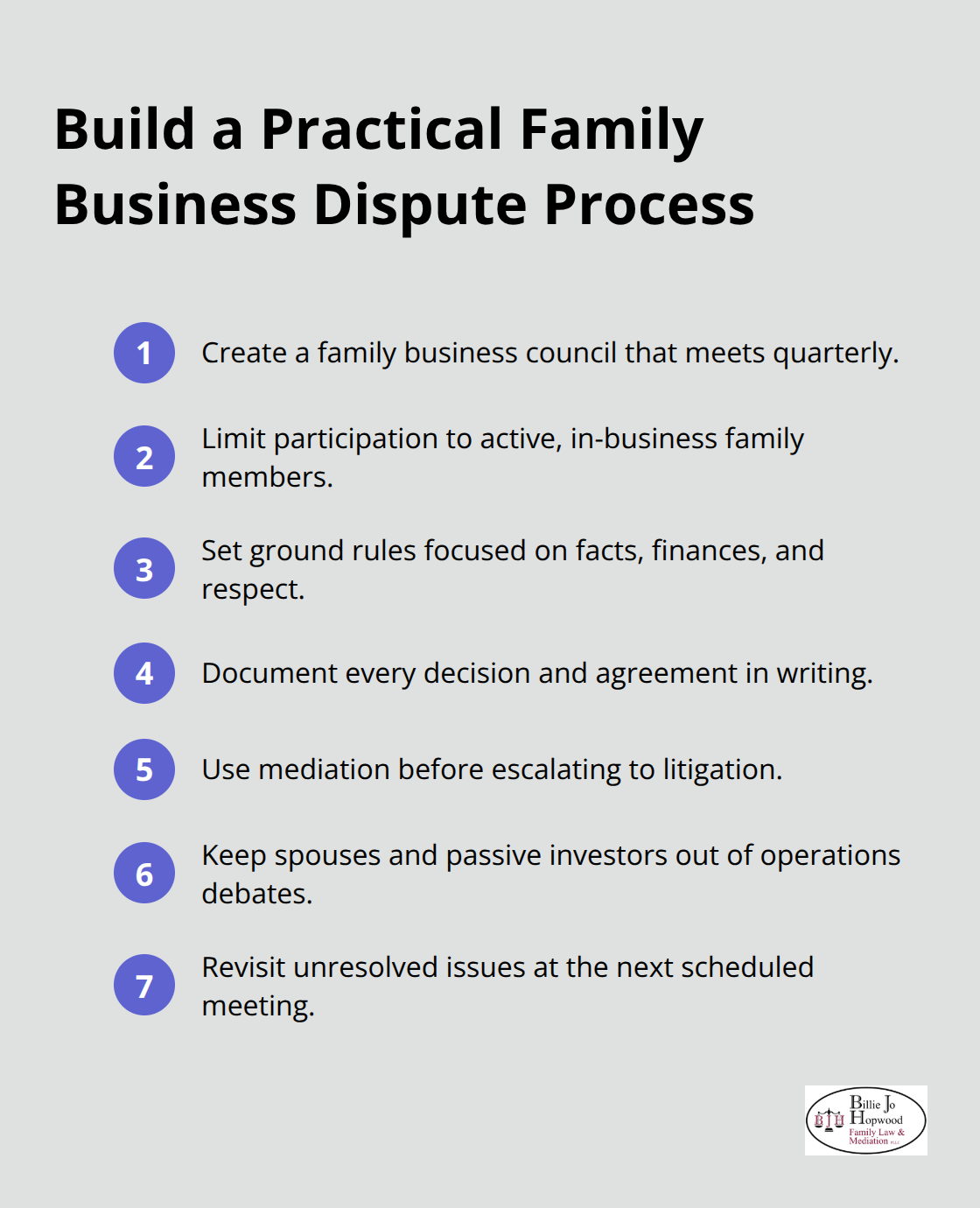
Disagreements over business direction, compensation, and resource allocation will happen regardless of how well you document roles. The difference between businesses that survive and those that implode is having a conflict resolution process before emotions take over. Most family businesses lack any formal mechanism to resolve disputes, so arguments fester and relationships deteriorate. Establish a family business council that meets quarterly to discuss operations, strategy, and any concerns. Include only active family members who work in the business, not passive investors or spouses who lack operational involvement.
Use Neutral Facilitation for High-Tension Disputes
Hire a neutral third party to facilitate these meetings if family tensions run high. Set ground rules for these meetings: no personal attacks, focus on business facts and financial data, and all decisions require documentation in writing. If a major disagreement emerges that the council cannot resolve, commit to mediation before escalating to litigation. Litigation destroys family businesses far faster than the underlying dispute ever could. A business facing a lawsuit between owners loses employee focus, customer confidence, and operational momentum while legal bills mount. Mediation costs a fraction of litigation and allows family members to preserve relationships while finding practical compromises that keep the business operating.
These decision-making structures and conflict resolution processes protect your business from internal collapse, but they only function effectively when family members also understand the financial realities that shape business sustainability and tax obligations.
Financial and Tax Considerations for Family Businesses
Family business owners often treat taxes as an afterthought, then panic when the IRS sends notices or when a sale triggers unexpected liabilities. Your business structure directly determines how much you pay in taxes and how much you keep when you exit.
Choose the Right Business Structure for Tax Savings
An S-Corporation saves you self-employment taxes on distributions, while an LLC taxed as a partnership shields you from double taxation that C-Corporations face. The wrong choice costs tens of thousands annually. If you operate as a sole proprietor or general partnership, you pay self-employment taxes on all business income, even profits you reinvest in growth. Switch to an S-Corp and you pay self-employment taxes only on reasonable salary, then take the remaining profits as distributions free from those taxes. For a family business generating $200,000 in annual profit, this structure shift saves roughly $15,000 per year in self-employment taxes alone. Coordinate this decision with your accountant and attorney before you establish the business, because restructuring later triggers unexpected tax bills and state filing fees.
Share Financial Data With All Family Members
Financial transparency prevents the disputes that destroy family businesses faster than market downturns. When one family member controls bank accounts and financial data while others work in the business, resentment builds and accusations of theft or mismanagement surface inevitably. Institute monthly financial reports that show revenue, expenses, owner distributions, and cash position, then share these reports with all family members involved in operations. If someone questions a large expense or unusual transaction, they can ask questions while emotions remain calm rather than discovering problems during a crisis or exit.
Document All Family Loans in Writing
Document all loans between the family and the business with written promissory notes that specify interest rates and repayment terms, because the IRS disallows interest-free family loans and treats them as gifts or hidden income. This protection shields your family from unexpected tax assessments and audit complications.
Plan for Estate Taxes Before They Arrive
When you pass the business to the next generation, estate taxes can consume 40% of the business value unless you plan ahead. Fund a life insurance policy with death benefits sufficient to cover the estate tax bill, held in an irrevocable life insurance trust so proceeds avoid both income and estate taxation. This approach ensures your heirs receive the business without forced fire-sales to pay tax obligations. Work with a tax professional and attorney experienced in family business transitions to align your ownership structure, compensation strategy, and estate plan into a cohesive system that minimizes taxes and maximizes what your family actually receives when you retire or pass away.

Final Thoughts
Family business owners who postpone legal planning until disputes emerge pay a devastating price in litigation costs, business collapse, and family estrangement. The strategies outlined in this guide-written ownership structures, clear succession plans, documented decision-making authority, and coordinated tax planning-cost far less than the legal issues in family business that destroy enterprises when owners fail to act. These protections work only when you implement them before conflict surfaces, not after relationships deteriorate and positions harden.
Start by reviewing your current operating agreement, buy-sell arrangement, and succession plan with your accountant and attorney to verify your business structure minimizes taxes and all agreements are legally sound. If these documents don’t exist or haven’t been updated in five years, they no longer reflect your business reality or family circumstances. Document every loan between family members and the business, share monthly financial reports with active family members, and establish a quarterly family business council meeting to discuss operations and resolve disagreements before they escalate.
If family tensions already exist or you anticipate conflict during a transition, mediation offers a path forward that preserves relationships while protecting the business. Billie Jo Hopwood Family Law & Mediation, PLLC in Melbourne, Florida understands how family dynamics complicate business decisions and legal planning, and we help families work through disagreements and develop practical solutions that keep operations stable while honoring family values.