
Divorce mediation can wrap up in weeks or stretch across months, depending on your situation. The divorce mediation timeline varies widely based on how complex your finances are, whether you agree on custody, and how willing both parties are to find middle ground.
We at Billie Jo Hopwood Family Law & Mediation, PLLC walk clients through each stage so you know exactly what’s coming. This guide breaks down the real timeline from your first meeting to signing the final agreement.
Your First Mediation Meeting
Your first mediation session sets the tone for everything that follows. Most mediators spend this time explaining how the process works rather than addressing your actual disagreements. The mediator will outline the five-stage process: introduction, information gathering, framing needs, negotiating, and drafting a settlement. Expect the mediator to clarify payment terms upfront-typically both parties split costs, ranging from roughly $250 to $400 per hour in private mediation, though court-sponsored mediation in Florida runs about $50 to $150 per party.
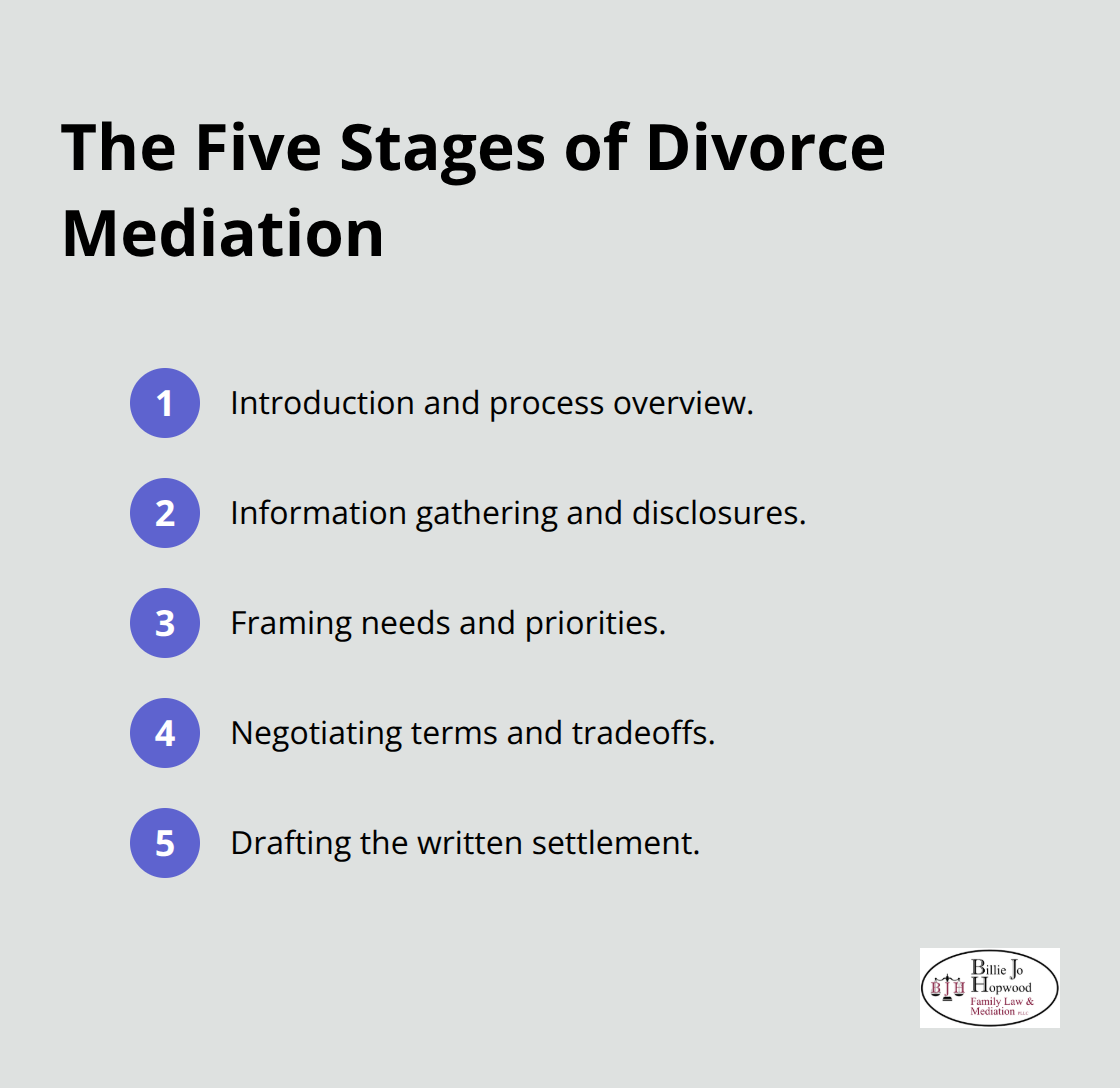
The mediator will establish ground rules, which means you’ll hear clear expectations about respectful communication and how separate sessions work if needed. This first meeting often lasts one to two hours and covers administrative details like parking, technology setup for online sessions, and scheduling follow-up appointments. You should arrive with a list of negotiation topics that matter to you-whether that’s holiday visitation schedules, specific asset divisions, or spousal support amounts-so the mediator can organize the agenda and you both understand what needs resolution.
What the Mediator Actually Does
The mediator acts as a neutral facilitator, not as your advocate or legal advisor. This distinction matters because the mediator won’t tell you what’s fair or push you toward any particular outcome; instead, they’ll help you and your spouse understand each other’s priorities and explore options together. Many mediators conduct one-on-one sessions before joint meetings, which allows each party to express concerns privately and helps the mediator understand both perspectives. If you have complex finances-retirement accounts, business interests, or significant real estate-bring documentation to this first meeting so the mediator can assess what information you’ll need to gather. You’ll also discuss whether attorneys will be present during sessions; court-ordered mediation typically excludes lawyers from the room, but private mediation varies. Some couples hire a lawyer on a consulting basis to prepare before mediation or review the final settlement afterward, which can protect your interests without derailing the neutral process.
Preparing Documents Before You Arrive
Walking into mediation unprepared extends your timeline significantly. You should gather three years of tax returns, three months of recent pay stubs, six months of bank statements, mortgage and vehicle documents, retirement account statements, and any business records if applicable. Create a comprehensive list of all marital assets and debts-vehicles, bank accounts, property, loans, credit cards-so financial discussions move forward without constant delays. If children are involved, compile their school and activity schedules, medical information, and any existing custody arrangements. Bring all court documents, filings, and orders you’ve received so far. Missing or incomplete financial information stalls progress and requires additional data gathering and follow-up that stretches timelines by weeks. The first meeting is also when you confirm logistics: if mediation is in person, know parking and directions; if online, test your technology and internet connection beforehand. Bring lunch and snacks for longer sessions, and cultivate patience and openness as you enter the process.
What Happens Next
Once you’ve completed your first meeting and submitted your initial documents, the mediator will schedule the information-gathering phase. This stage requires both parties to provide complete financial records and answer questions about assets, debts, income, and expenses. The mediator uses this information to help you both understand the full financial picture before you start negotiating terms. Preparation at this stage accelerates progress considerably, so organize your documents clearly and respond to requests within 24 to 48 hours when possible.
Moving Through the Four Stages That Matter Most
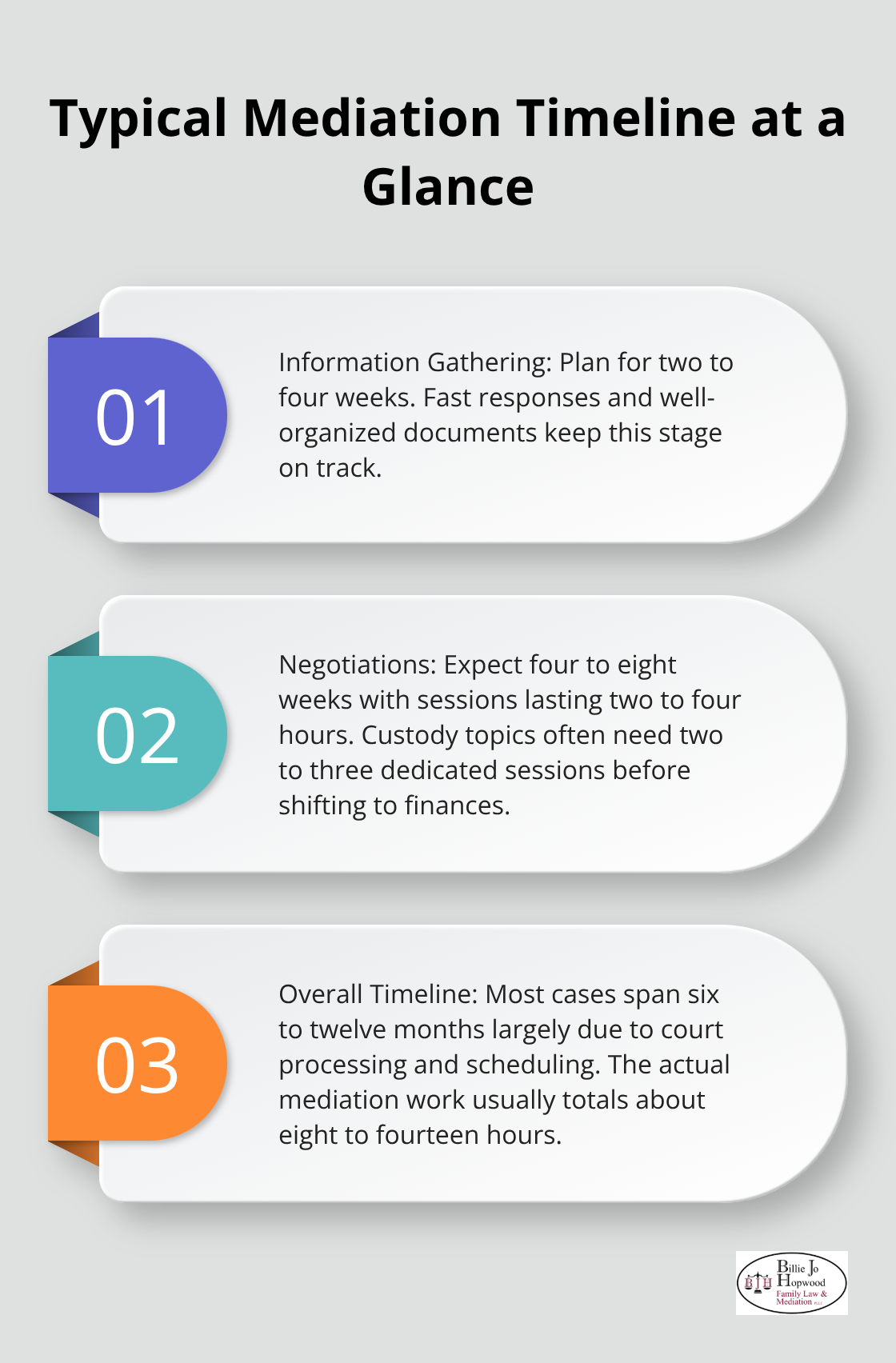
After your first meeting, mediation follows a structured path that moves you from gathering facts to reaching agreement. The information-gathering stage typically takes two to four weeks, depending on how quickly you and your spouse compile documents and respond to the mediator’s requests.
Information Gathering and Financial Disclosure
During this phase, the mediator collects your financial records, reviews them for completeness, and identifies gaps that need filling. You provide bank statements, tax returns, pay stubs, retirement account statements, and documentation of all debts. The mediator explains how Florida’s property division laws and child support guidelines apply to your situation, which grounds your later negotiations in reality rather than assumptions.
Respond to document requests within 24 to 48 hours whenever possible; delays here extend your entire timeline by weeks. If you have complex assets like retirement accounts with QDROs, business interests, or significant real estate holdings, a divorce financial professional can organize numbers and scenarios to accelerate this stage considerably.
Negotiation Sessions and Finding Common Ground
Once financial disclosure is complete, negotiation sessions begin. These typically span multiple meetings over four to eight weeks, with sessions lasting two to four hours each. The mediator helps you and your spouse brainstorm options, evaluate proposals, and gradually narrow disagreements toward settlement.
Contested custody issues take longer than asset division because emotions run higher and the stakes feel personal. Florida’s child support guidelines provide a calculation baseline, but discussions about parenting time, holiday schedules, and decision-making authority require real compromise. Many couples spend two to three sessions on custody alone before moving to financial terms.
Asset Division and Financial Terms
Asset division moves faster when both parties understand the full financial picture from stage two; couples who skip thorough financial disclosure often circle back to gather missing information, costing weeks of delay. If you disagree sharply on major assets, the mediator may propose a midpoint between your last offers to advance the timeline.
Separate sessions can help each party clarify positions privately, though shuttle mediation increases total hours and costs. Willingness to compromise matters most here; if either party refuses to budge on core issues, mediation stalls and you face months of additional delay or court involvement.
What Determines Your Pace Through These Stages
The speed at which you move through information gathering and negotiation depends on three factors: how organized your financial records are, whether you and your spouse can agree on custody arrangements, and how motivated both parties feel to reach settlement. Couples with straightforward finances and no children often complete mediation in a single long session (about 12 hours), while those with multiple properties, retirement accounts, and custody disputes typically need 8 to 14 hours spread across several sessions. Court processing and scheduling create additional delays after you reach agreement, so the overall timeline from first contact with a mediator to final decree often runs 6 to 12 months.
As you move through these stages, the mediator will guide you toward drafting your settlement agreement, which transforms your negotiated terms into a legally binding document.
What Really Slows Down Your Mediation
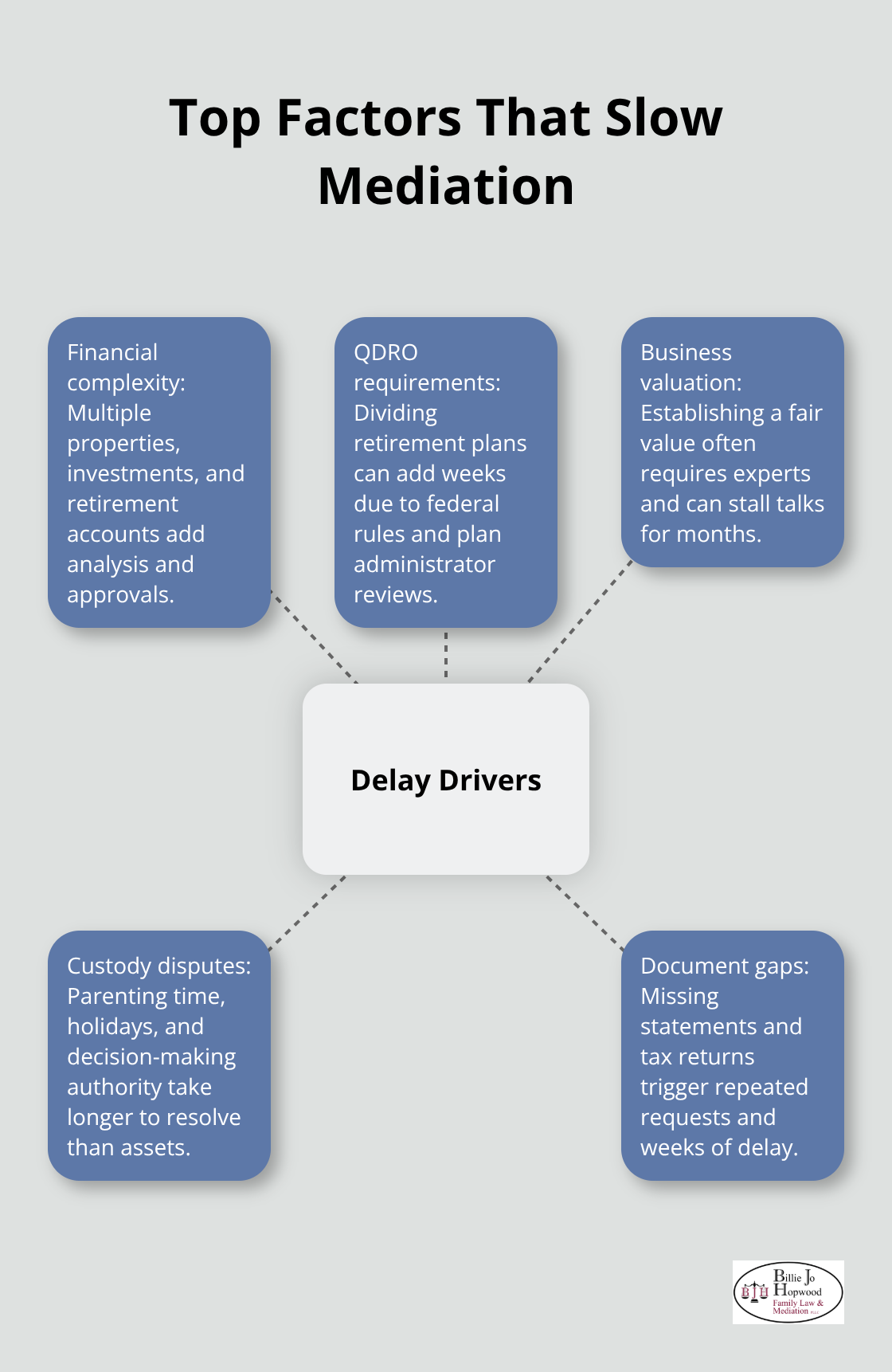
Financial complexity stands as the single biggest predictor of how long mediation takes, and most couples underestimate it significantly. If you own a home, have retirement accounts, or hold investments, mediation will stretch longer than you anticipated. Retirement account division alone often requires a Qualified Domestic Relations Order (QDRO), which adds weeks to the process because these documents must comply with federal tax law and your plan administrator’s rules. Business interests complicate matters further; valuations take time, and disagreements over what a business is actually worth can stall negotiations for months. Real estate holdings beyond your primary residence trigger appraisal disputes and questions about whether property should be sold or awarded to one party.
How Document Organization Affects Your Timeline
Missing or incomplete financial records create the worst delays because the mediator must request documents multiple times, and you lose weeks waiting for responses. Couples who arrive at mediation with three years of tax returns, six months of bank statements, and a complete asset-and-debt inventory move through information gathering in two to four weeks. Those who scramble to find documents or discover accounts they forgot about can stretch this stage to eight weeks or longer. The difference between organized preparation and chaotic document gathering adds two to three months to your entire timeline. A divorce financial professional can organize numbers and scenarios to accelerate this stage considerably if your assets are complex.
Why Custody Disagreements Take Longer
Custody disagreements drag out mediation far more than asset division because emotions override logic and both parents feel their position is non-negotiable. Florida’s child support guidelines provide a mathematical baseline that removes much debate from financial support, but custody involves parenting time, holiday schedules, decision-making authority, and school choice, each of which carries emotional weight. Couples with young children often spend two to three full mediation sessions on custody alone before moving to financial terms.
The Role of Willingness to Compromise
Willingness to compromise determines whether mediation succeeds or stalls entirely. If one party refuses to budge on core issues, the mediator cannot force agreement, and you face months of additional delay or court involvement. Court-ordered mediation, which about 70 to 80 percent of contested Florida divorces undergo, typically occurs four to eight months after filing, so timing matters less than the actual work you do in the room. Couples who enter mediation with clear priorities, realistic expectations about what they can win, and genuine openness to their spouse’s concerns settle in 8 to 14 hours across several sessions. Those who view mediation as a chance to litigate their grievances or prove their ex wrong waste time on unproductive arguments and often walk away without agreement, forcing expensive court battles later.
Final Thoughts
Your divorce mediation timeline typically spans six to twelve months from your first meeting to a finalized agreement, though the actual mediation work often completes in eight to fourteen hours across multiple sessions. Court processing and scheduling create most of the delays rather than mediation itself. If you arrive organized with complete financial records and both parties genuinely want to settle, you move through information gathering and negotiation in two to three months, while contested custody issues and complex assets like retirement accounts or business interests extend this timeline considerably.
Court battles over the same issues stretch eighteen months to two years or longer, with discovery costs, attorney fees, and trial preparation consuming far more money and emotional energy than mediation requires. About seventy to eighty percent of contested Florida divorces settle through mediation or negotiation rather than trial, which demonstrates that mediation works when both parties commit to it. You avoid the uncertainty of a judge’s decision, maintain control over the outcome, and preserve your ability to co-parent effectively after divorce.
After you reach your final mediated agreement, the settlement must be drafted in writing, reviewed by both parties, and signed before filing with the court. Some mediators draft the agreement themselves; others work with attorneys to finalize terms. If you’re considering mediation or need guidance on your divorce mediation timeline, contact our Melbourne office to discuss your situation and explore whether mediation fits your needs.