
Family law mediation in Melbourne offers a faster, less adversarial path through family disputes than court proceedings. Many Melbourne families are turning to mediation because it costs less, takes less time, and keeps decisions in your hands rather than a judge’s.
We at Billie Jo Hopwood Family Law & Mediation, PLLC have seen firsthand how the right preparation and communication strategies transform mediation outcomes. This guide walks you through each stage of the process so you can navigate it with confidence.
What Happens in Family Law Mediation
The Mediation Structure and Process
Family law mediation in Melbourne is a structured negotiation process where a neutral mediator helps you and your former partner work through parenting arrangements, property division, and financial matters without going to court. The mediator does not make decisions for you; instead, they facilitate conversation, identify underlying interests, and help both sides explore realistic solutions. Sessions typically last four to eight hours, and most straightforward cases resolve within two to four sessions spread across several weeks.
According to the Australian Government Attorney-General’s Department, Family Dispute Resolution is the mandatory first step for parenting disputes before applying to the Family Court (with safety exemptions for domestic violence situations). You must bring complete financial disclosure covering bank accounts, superannuation, property, investments, and debts so negotiations are grounded in actual numbers rather than assumptions.
Cost and Timeline Advantages
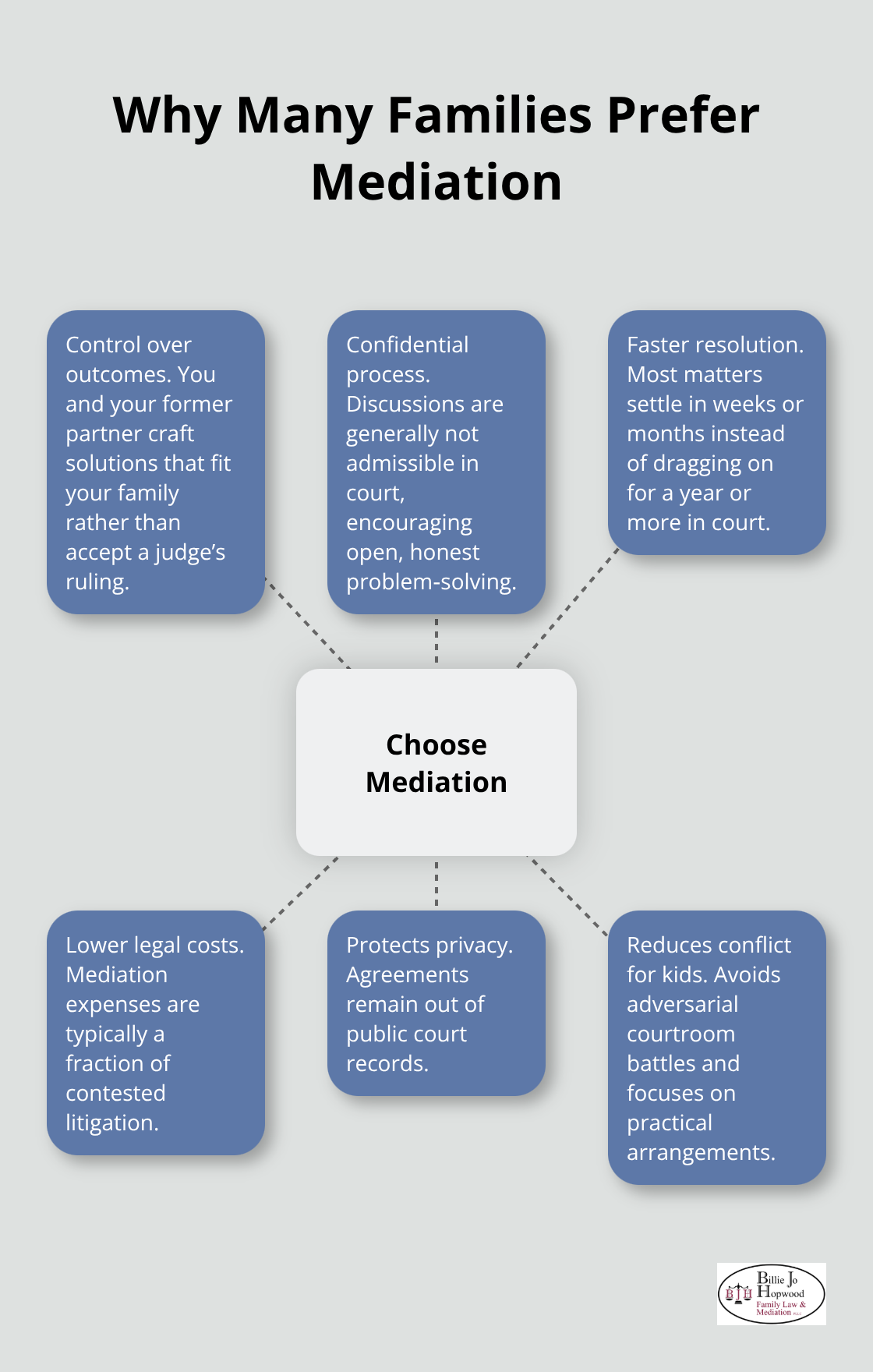
Many Melbourne families find mediation faster and significantly cheaper than court. Mediation typically costs hundreds to thousands of dollars total, while contested litigation often reaches tens of thousands of dollars in legal fees alone. Most disputes resolve in weeks or months rather than the 18 months to two years court litigation can take.
Control and Confidentiality in Mediation
Mediation differs fundamentally from court because you retain control over outcomes rather than accepting a judge’s ruling. In court, a judge decides property splits, custody arrangements, and support amounts based on legal guidelines and their interpretation of evidence. In mediation, you and your former partner design solutions that fit your specific circumstances, work schedules, children’s needs, and financial priorities.
About 70 to 80 percent of contested family law matters in Australia settle through mediation or negotiation instead of proceeding to trial, according to the Australian Institute of Family Studies. Sessions are confidential, meaning discussions are generally not admissible in court, which encourages honest conversation without fear that casual remarks will be used against you later.
Why Melbourne Families Choose This Path
Melbourne families choose mediation because it keeps arrangements private instead of public court records, reduces conflict for children by avoiding adversarial courtroom battles, and allows you to craft parenting plans that reflect each child’s actual needs and routines rather than generic court orders. The process preserves your agency in outcomes and protects your family’s privacy throughout the resolution.
With the structure and benefits of mediation clear, the next step is preparing yourself and your documents for the sessions ahead.
Preparing for Mediation
Preparation determines whether mediation moves smoothly or stalls. Three years of tax returns, three months of current pay stubs, six months of recent bank statements, mortgage and vehicle documents, and retirement account statements form the foundation of productive negotiation. The Australian Government Attorney-General’s Department requires complete financial disclosure for property matters, and incomplete documentation delays progress by weeks.
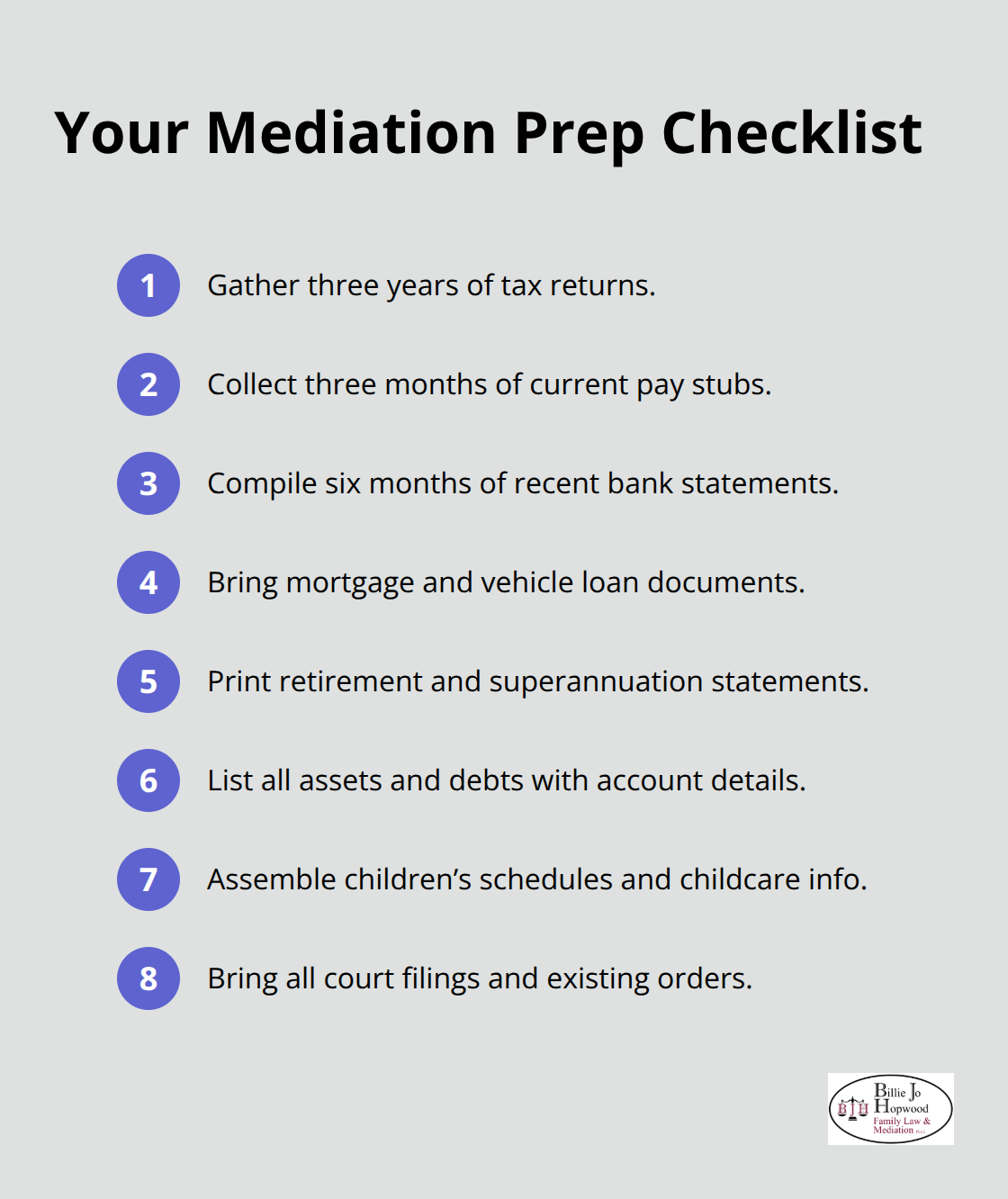
Start collecting these materials immediately; many people underestimate how long it takes to locate old statements or contact financial institutions. Create a comprehensive list of all marital assets and debts-vehicles, property, bank accounts, loans, credit cards, and investments. If children are involved, compile custody-related information such as school schedules, childcare arrangements, and each parent’s work hours. Bring all court filings and orders you have received to your first session. Missing documents create unnecessary friction and force mediators to reschedule sessions while you track down paperwork.
Clarify Your Priorities Before Sessions Begin
Before sitting down with a mediator, write down your priorities in order of importance rather than treating all issues equally. Property division, parenting time, child support, and spousal maintenance rarely receive equal weight in real families. If maintaining primary custody matters most, state that clearly. If preserving your business interests drives your decisions, prioritize that negotiation. The Australian Institute of Family Studies notes that mediation works best when both parties understand their own priorities before sessions begin. Be honest about which issues are non-negotiable and which offer flexibility; this clarity prevents wasted time debating matters where compromise is impossible. Document your reasoning for each priority so you can explain your position calmly during sessions rather than reacting emotionally. Consider consulting with a lawyer beforehand to understand your legal rights and realistic outcomes in court; this knowledge prevents you from accepting unfair settlements or demanding unreasonable terms that derail progress.
Select an Accredited Mediator Who Matches Your Needs
Select an accredited Family Dispute Resolution practitioner registered with the Australian Mediation Association to ensure professional training and accountability. Verify their experience with cases similar to yours; mediators who handle complex property matters regularly bring different skills than those focused primarily on parenting disputes. Ask potential mediators about their approach to shuttle sessions versus joint meetings, their experience with high-conflict cases, and their fees upfront. Private mediation typically costs between $250 and $400 per hour per party, though some mediators offer fixed-fee packages for straightforward matters. Victoria’s Family Relationship Centres provide free or low-cost mediation options if budget constraints exist, making this worth exploring before committing to private services. Interview at least two mediators by phone before booking; a good fit means someone who listens carefully, explains the process clearly, and demonstrates neutrality without judgment about either party’s circumstances.
With your documents organized, priorities clarified, and mediator selected, you now possess the foundation to enter mediation sessions with confidence and direction.
How to Communicate and Connect During Mediation
Frame Statements Around Your Needs, Not Blame
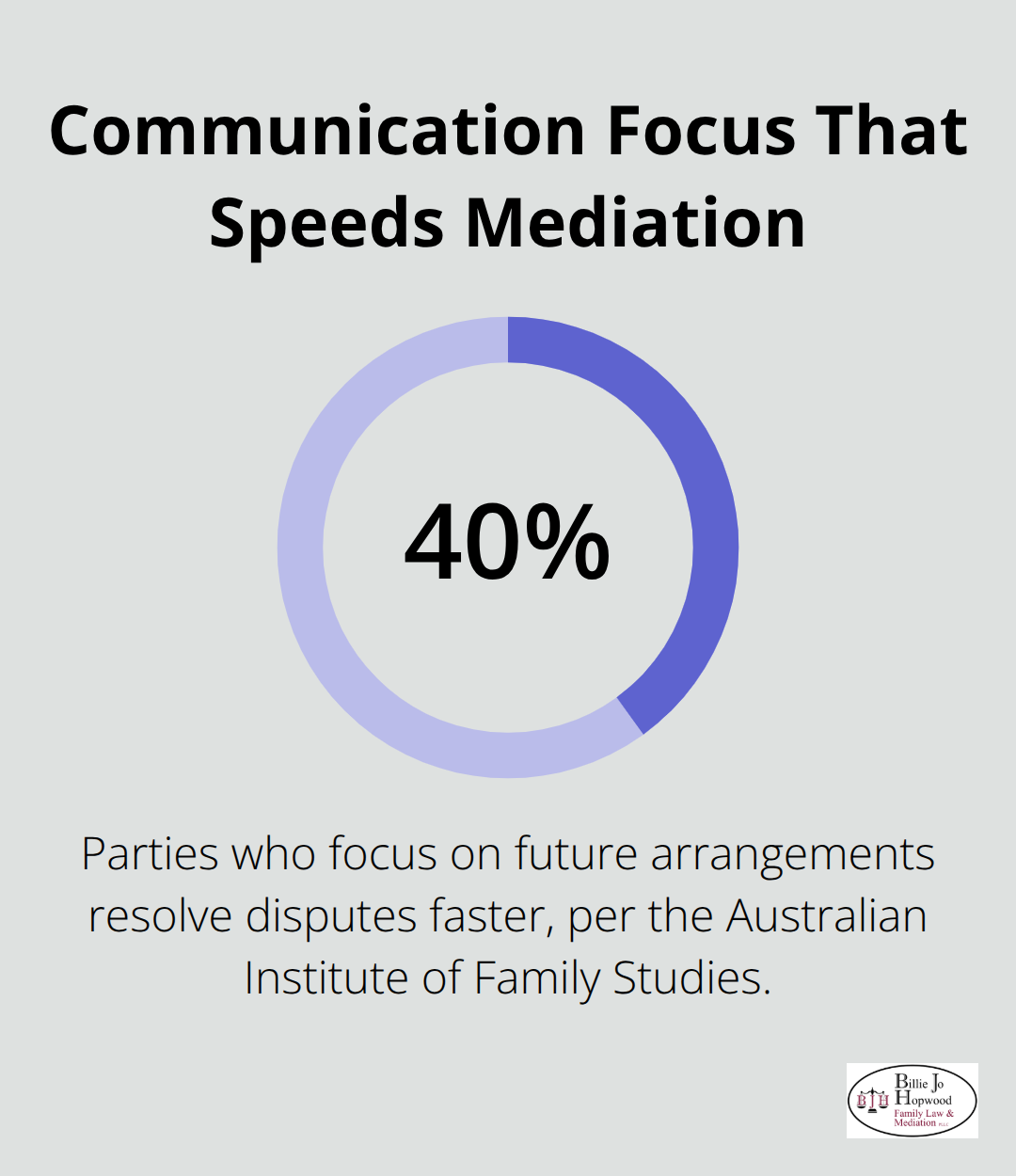
The first 30 minutes of your initial session set the tone for whether mediation succeeds or stalls. Many people enter mediation expecting to argue their position forcefully, but the mediator will stop you immediately if you attack your former partner or rehash past grievances. Instead, frame every statement around your needs and interests rather than blame. Say “I need stable childcare during work hours so our daughter attends the same after-school program” instead of “He never takes responsibility for pickup.” The Australian Institute of Family Studies found that parties who focus on future arrangements rather than past behavior resolve disputes 40 percent faster.
Mediators use caucus sessions (separate meetings with each party) to test whether proposals are realistic before presenting them jointly. If your first proposal is extreme, the mediator will tell you privately during caucus that it has no chance of acceptance, saving you the embarrassment and conflict of tabling an offer the other party will reject outright.
Listen and Document What Happens in Sessions
Listen carefully when your former partner speaks during joint sessions; mediators often pause conversations to ask what you heard rather than what you plan to say next. This practice prevents the common trap where both sides wait for their turn to speak instead of genuinely considering the other person’s position. Bring a notepad and write down specific numbers, dates, and proposals rather than relying on memory. Mediation sessions run four to eight hours, and details blur quickly once you leave the room. Written notes also prevent misunderstandings about what was discussed, especially if sessions span multiple weeks.
Manage Emotions Without Making Rushed Concessions
Emotions will surface during mediation, particularly when discussing parenting time or financial sacrifice, and that is normal. However, mediators will pause or reschedule sessions if anger or distress makes productive negotiation impossible. If you feel yourself becoming overwhelmed during a joint session, ask for a brief break or request a caucus session where you can speak privately with the mediator. Take five minutes outside the room to breathe and refocus on your priorities rather than your feelings.
The mediator’s role includes managing emotional temperature; they will call for breaks, separate parties into different rooms, or halt sessions if safety concerns arise. When emotions peak, avoid making major concessions because you feel guilty or ashamed; decisions made under emotional pressure often lead to regret weeks later when you realize you surrendered something important.
Identify Shared Interests to Build Agreement
Finding common ground happens fastest when both parties acknowledge shared interests, particularly regarding children. You and your former partner both want your kids to maintain meaningful relationships with both parents, to avoid court disruption, and to move forward with clarity. Frame proposals around those shared goals. On property division, common ground often emerges around speed and cost; both of you prefer settling quickly without months of negotiation. Use that mutual interest to push past disagreements on specific asset splits.
If you cannot agree on the value of an asset like a business or investment property, propose that both parties hire a jointly selected appraiser whose valuation both sides accept as binding. This removes debate from the equation and moves negotiation forward. The Australian Government Attorney-General’s Department notes that agreements reached through mediation become legally binding through consent orders or parenting plans once documented properly. The mediator may draft the agreement themselves or work with your lawyer on final language. Either way, once you sign, the terms become enforceable, so take the final draft seriously and review it carefully before signing rather than assuming it matches what you discussed.
Final Thoughts
Mediation succeeds when you arrive prepared, communicate clearly about your needs, and remain focused on realistic solutions rather than past grievances. Complete financial documentation, honest prioritization of what matters most, and selection of an accredited mediator whose experience matches your situation form the foundation for smooth outcomes. Throughout the process, frame statements around future arrangements, listen actively when your former partner speaks, and manage emotions without making rushed concessions under pressure.
Once you reach agreement, the mediator drafts the settlement document or works with your lawyer to finalize language. Review the final agreement carefully before signing, as this document becomes legally binding through consent orders or a parenting plan once filed with the court. Parenting arrangements require a written plan detailing day-to-day routines and decision-making authority, while property settlements need consent orders filed with the court to become enforceable.
Family law mediation Melbourne offers a path forward that preserves your privacy and keeps decisions in your hands rather than a judge’s. If you need help preparing for mediation, reviewing a draft agreement, or navigating post-mediation steps, contact Billie Jo Hopwood Family Law & Mediation, PLLC to discuss how we can support your family’s journey.