
Family law disputes in Brevard County don’t always require courtroom battles. Mediation offers families a practical path to resolve disagreements about custody, finances, and property without the expense and stress of litigation.
At Billie Jo Hopwood Family Law & Mediation, PLLC, we’ve seen how Brevard County mediation helps families reach agreements faster and with more control over the outcome. This guide walks you through what mediation looks like locally and whether it’s the right choice for your situation.
How Family Law Mediation Works in Brevard County
The Mediation Timeline and Cost Structure
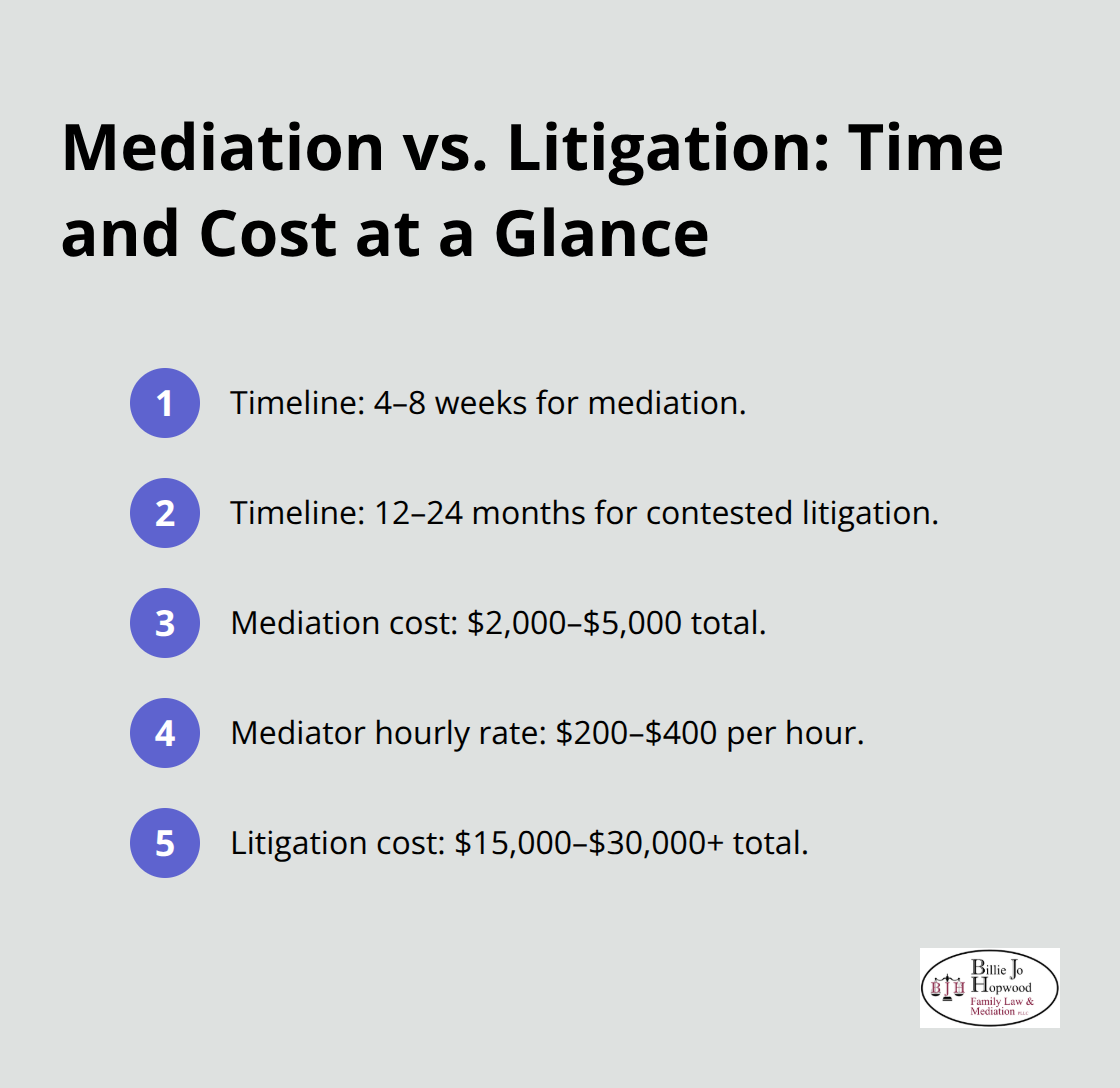
Mediation in Brevard County typically takes between 4 to 8 weeks from start to finish, depending on case complexity. Most mediators in the area charge between $200 to $400 per hour, with total costs ranging from $2,000 to $5,000 for straightforward cases. This contrasts sharply with litigation, where attorney fees alone can exceed $15,000 to $30,000 or more when cases go to trial. The financial advantage of mediation becomes clear when you compare these numbers side by side.
The Mediator’s Role in Guiding Discussions
A neutral third party trained in family law serves as your mediator. This person meets with both spouses together and separately to understand each person’s priorities and concerns. Unlike a judge, the mediator does not make decisions for you. Instead, the mediator guides conversations toward common ground and helps both parties develop realistic solutions.
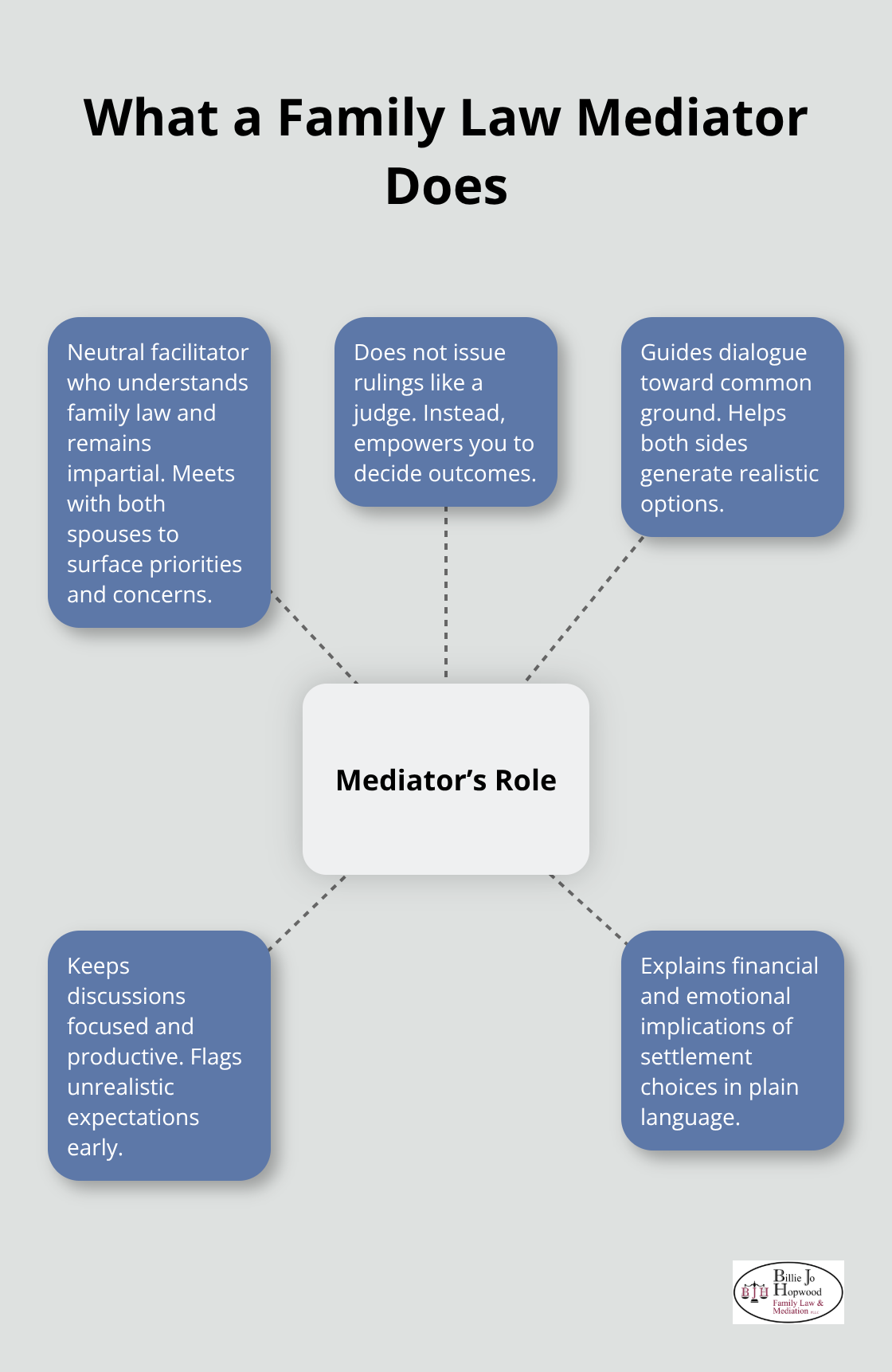
The mediator keeps discussions focused and productive, flags unrealistic expectations early, and helps you understand the financial and emotional consequences of different settlement options.
Issues Mediation Addresses in Brevard County
Child custody and parenting schedules rank among the most common topics mediators handle. Parents work with mediators to create detailed plans that address school calendars, holidays, and decision-making authority. Child support and alimony calculations are straightforward in mediation because Florida has clear statutory guidelines-the mediator applies these formulas transparently rather than leaving outcomes to judicial interpretation.
Property division receives careful attention in mediation because both parties can negotiate trade-offs that courts cannot offer. One spouse might keep the family home while the other receives retirement savings, an arrangement that works financially but would require a judge’s approval in court. Mediation also handles debt allocation, insurance beneficiary changes, and tax implications-details that litigation often overlooks.
Many mediators in the area focus on specific family law issues like custody arrangements or business valuations, so matching your case with the right mediator matters significantly. Families resolve these issues most successfully when both parties come prepared with financial documents and realistic expectations about what settlement actually looks like. The next section examines the real advantages families gain when they choose mediation over courtroom battles.
Key Advantages of Choosing Mediation Over Litigation
Mediation Costs a Fraction of What Litigation Demands
Mediation in Brevard County delivers substantial financial savings that extend beyond hourly rates. While mediators charge $200 to $400 per hour, litigation costs spiral quickly once you factor in attorney fees, court filing costs, expert witness testimony, and discovery expenses. A contested divorce that goes to trial in Florida averages $15,000 to $30,000 in total legal costs, according to data from the American Academy of Matrimonial Lawyers. Mediation typically resolves comparable cases for $2,000 to $5,000 total.
The difference becomes even more dramatic in high-conflict cases where discovery alone consumes months and thousands in attorney time. When both spouses fight over assets, custody, or support through litigation, each motion filed, deposition scheduled, and court appearance required adds to the bill. Mediation eliminates most of this overhead because both parties sit down with one neutral professional rather than two opposing attorneys preparing separate cases. You control how many sessions you need and when you meet, which means you avoid court scheduling delays that can stretch cases across years.
Faster Resolution Reduces Stress on Your Entire Family
Mediation typically concludes within 4 to 8 weeks in Brevard County, while contested litigation regularly takes 12 to 24 months from filing to final judgment. That extended timeline creates real damage beyond finances. Prolonged court battles force families to rehash grievances repeatedly through depositions, interrogatories, and trial preparation, which intensifies conflict and delays emotional healing.
Parents and children suffer when disputes drag on because uncertainty about custody, living arrangements, and financial stability persists month after month. Mediation compresses this timeline dramatically, allowing families to move forward and rebuild their lives sooner. The faster pace also reduces stress on children who benefit from quicker resolution and clearer answers about their schedules and relationships with both parents. Many families report that reaching agreement through mediation feels less adversarial than courtroom battles, which naturally reduces the emotional toll on everyone involved.
You Control the Outcome Rather Than a Judge
Mediation transfers control of the outcome directly to you and your spouse rather than placing it in a judge’s hands. Courts apply Florida’s statutory guidelines for child support and alimony, which leaves little room for customization based on your family’s actual circumstances. A judge cannot approve creative solutions that both parties prefer, such as one parent keeping the home while the other receives retirement accounts in exchange, unless the arrangement fits within rigid legal parameters.
Mediation allows you to craft agreements that reflect what actually works for your family. One parent might accept a different custody schedule in exchange for lower support payments. A spouse might keep a family business while relinquishing claims to investment accounts. These practical trade-offs happen regularly in mediation but rarely in court because judges focus on applying law uniformly rather than accommodating individual preferences. You also retain the ability to modify agreements more easily after mediation because both parties understand and accept the terms they negotiated together, whereas court orders often breed resentment and future disputes over enforcement.
These advantages position mediation as the stronger choice for most families, but mediation does present real challenges that families must navigate successfully. The next section examines the obstacles that arise during mediation and how to address them.
Common Challenges Families Face During Mediation
Communication Breakdowns Stall Progress
Mediation in Brevard County fails most often when spouses cannot communicate directly about sensitive topics without escalating into conflict. One spouse dominates conversations, refuses to listen, or uses mediation sessions to rehash old grievances rather than focus on solutions. When this happens, the mediator must spend significant time managing emotions instead of moving toward agreement, which extends timelines and increases costs beyond the typical $2,000 to $5,000 range.
Your responsibility as a participant is to come prepared to discuss issues rationally. Write down your priorities before each session. Bring financial documents organized by category. Arrive with specific proposals rather than complaints.
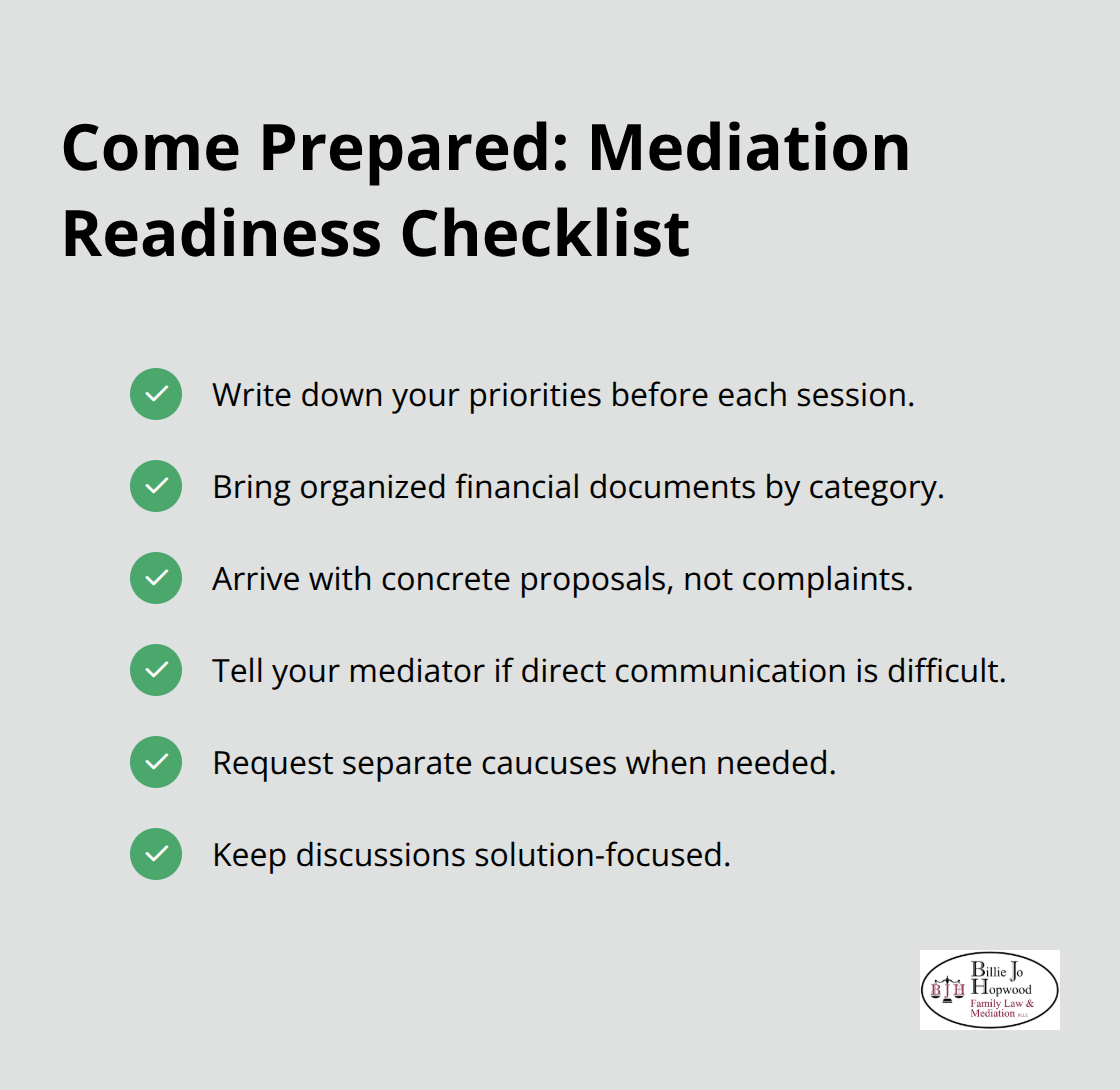
If you struggle to communicate with your spouse without anger, tell your mediator before the session starts so they can adjust their approach by meeting with each of you separately more frequently. This adjustment costs nothing extra and prevents sessions from derailing entirely.
Unrealistic Custody and Support Expectations
Disagreements over child custody and support calculations derail mediation when parents hold unrealistic expectations about what Florida law actually permits. One parent might demand primary custody while the other expects equal time, with neither parent understanding that Florida courts consider factors like each parent’s involvement in school, healthcare, and daily activities when determining custody arrangements.
Child support calculations follow Florida’s statutory guidelines based on both parents’ income and custody time, so limited room for negotiation exists once you plug in accurate numbers. Before mediation, obtain a child support calculator from the Florida Courts website and run your actual income figures through it to see what the law requires. Many parents are shocked to discover that their desired support amount contradicts what the guidelines produce, and this shock often surfaces during mediation and stalls progress.
Asset Valuation and Hidden Financial Information
Property division disputes intensify when one spouse undervalues assets or hides financial information. Retirement accounts, investment portfolios, and real estate holdings must be valued accurately before meaningful negotiation can occur. If you suspect your spouse is concealing assets or providing inaccurate valuations, request a financial affidavit and supporting documents before mediation starts.
Hiring a forensic accountant costs $1,500 to $3,000 upfront but prevents months of mediation delays caused by disputes over asset value. This investment pays for itself through faster resolution and eliminates the frustration of discovering hidden information mid-process. Families address these obstacles most successfully before entering mediation rather than discovering them during sessions, which wastes time and money.
Final Thoughts
Mediation works best for families who want faster resolution, lower costs, and control over their agreement. If you and your spouse can communicate about finances and custody without constant conflict, Brevard County mediation offers a realistic path forward. Mediation also suits situations where both parties genuinely want to avoid courtroom battles and are willing to compromise on some issues to reach settlement.
Finding the right mediator in Brevard County requires checking credentials and understanding their background. Look for mediators certified through the Florida Supreme Court’s mediation program, which means they’ve completed required training and continuing education. Ask potential mediators about their experience with cases similar to yours, whether they handle custody disputes, property division, or support calculations (some mediators focus on specific areas, so matching your case type with their background matters).
Starting mediation begins with gathering your financial documents, identifying your priorities, and contacting a mediator to schedule an initial consultation. Many mediators offer free phone consultations to discuss your case and answer questions about their process. Contact Billie Jo Hopwood Family Law & Mediation, PLLC to discuss whether mediation fits your family’s needs.