
Family law matters in Melbourne Florida can feel overwhelming when you’re facing divorce, custody disputes, or alimony questions. The legal landscape varies significantly from state to state, and understanding Florida’s specific rules makes a real difference in protecting your interests.
At Billie Jo Hopwood Family Law & Mediation, PLLC, we’ve helped countless local families navigate these challenges through both traditional litigation and mediation. This guide walks you through the key issues Melbourne residents encounter and shows you practical paths forward.
How Florida’s Divorce and Property Laws Shape Your Family’s Future
Florida’s No-Fault Divorce Framework
Florida recognizes only no-fault divorce, meaning you don’t need to prove wrongdoing by your spouse to end the marriage. Instead, Florida requires that the marriage is irretribly broken-a standard that applies in all cases. This removes the adversarial finger-pointing that complicates divorces in other states and shifts focus toward practical solutions for property division and custody arrangements. For Melbourne residents, this framework actually creates opportunities for smoother settlements because the court won’t reward one spouse for being wronged or punish the other for alleged misbehavior.
Equitable Distribution of Marital Property
Property division in Florida follows equitable distribution, not a simple 50-50 split. The court divides marital property fairly based on factors like each spouse’s financial contribution, the length of the marriage, and each person’s earning potential. According to Florida Statute 61.075, the judge considers whether one spouse sacrificed career opportunities to raise children or manage the household. This matters significantly in Brevard County divorces where one spouse often stayed home while the other advanced their career.
If you’ve been out of the workforce for years, Florida law recognizes that sacrifice when calculating your share. Non-marital property like inheritances or assets owned before marriage stays with the original owner, which protects family heirlooms and separate accounts from division.
Child Support Guidelines in Brevard County
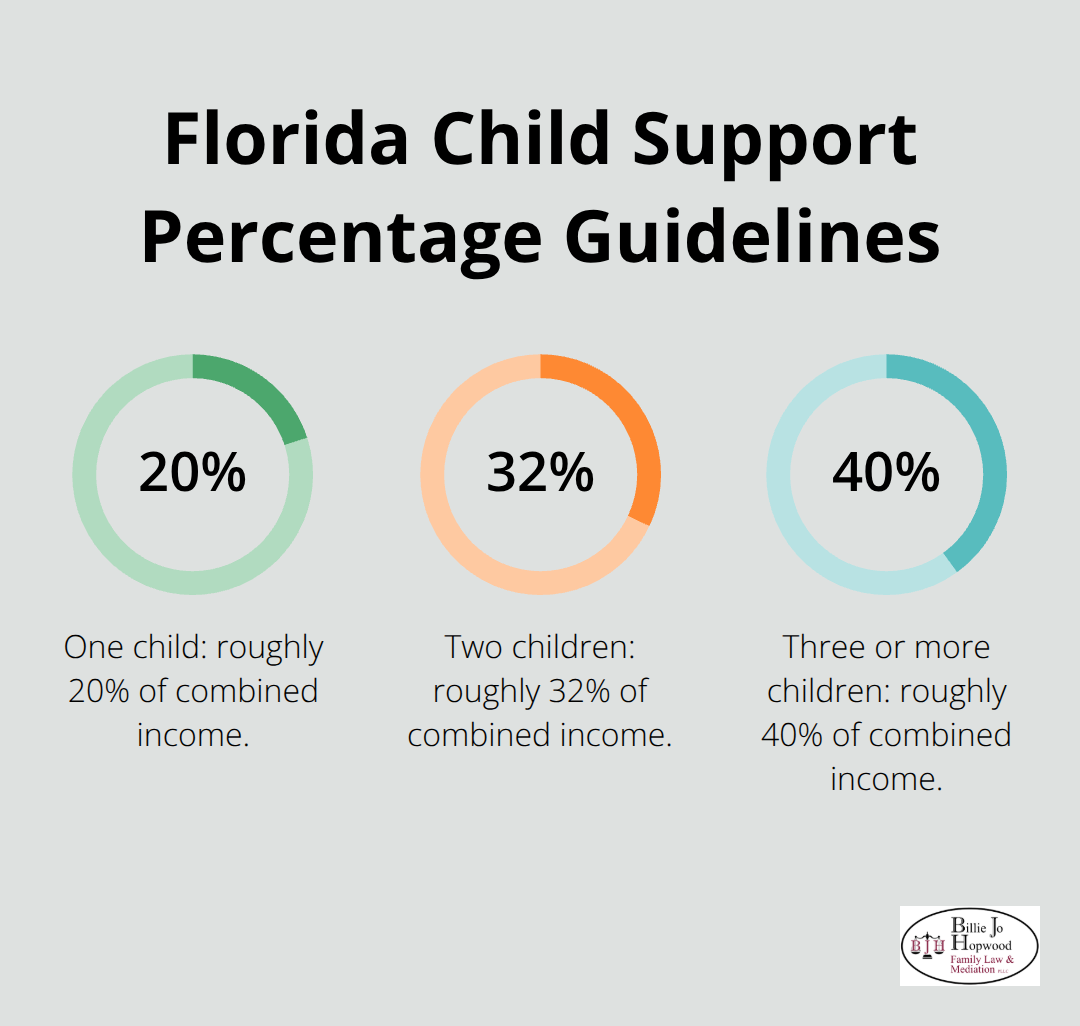
Child support in Brevard County follows state guidelines tied directly to income. Florida calculates support using both parents’ gross income and applies a percentage formula: roughly 20 percent of combined income for one child, 32 percent for two children, and 40 percent for three or more. These guidelines apply unless the judge finds them unjust (which happens rarely). Real income matters here, not just salary, so bonuses, commissions, and self-employment earnings all factor in.
Custody Decisions Prioritize the Child’s Best Interests
Custody decisions in Brevard County prioritize the child’s best interests above parental preferences. Florida law encourages shared parenting time when both parents are capable, recognizing that children benefit from meaningful relationships with both parents. The courts look at each parent’s involvement in the child’s life, stability, and ability to meet the child’s needs (not outdated assumptions about which parent should have primary custody). Understanding these custody principles helps you prepare for what comes next when disputes arise.
Common Family Law Issues Melbourne Residents Face
Alimony Disputes and Hidden Income
Melbourne residents facing divorce often encounter three thorny problems that derail settlements and drain bank accounts: alimony disputes, asset protection concerns, and custody conflicts. These issues don’t exist in isolation-they interact with each other and create compounding stress when handled poorly.
Alimony calculations in Florida depend heavily on the income figures you present, and Florida courts examine financial documents with scrutiny because spouses frequently understate earnings or hide income streams. According to the American Academy of Matrimonial Lawyers, about 43 percent of divorce cases involve hidden assets or underreported income, making financial transparency your strongest defense.
If your ex claims lower income to reduce alimony obligations, you’ll need documentation: tax returns from the past three years, W-2 forms, business profit-and-loss statements, and bank records showing actual deposits. The modification process matters too-alimony isn’t permanent if circumstances change substantially.

A job loss, serious illness, or significant income reduction can justify modification requests, but Florida courts require clear proof that the change was substantial and involuntary.
Protecting Your Rights During Divorce Proceedings
Protecting your rights during divorce proceedings means acting strategically from day one, not reacting to your spouse’s moves. Many Melbourne residents make costly mistakes by discussing settlement terms through text messages or casual conversations-statements that later become evidence in court. Instead, document everything in writing through your attorney, establish clear communication channels, and resist the urge to negotiate directly with your spouse.
Written communication protocols prevent misunderstandings and create a paper trail that protects you if disputes escalate. Your attorney can help you establish these boundaries while keeping negotiations moving forward productively.
Custody Disputes and Mediated Agreements
Custody disputes without trial resolution require different preparation entirely. Research shows that mediated custody agreements result in better long-term outcomes than court-imposed orders because parents who negotiate their own terms tend to follow them more consistently. Florida encourages shared parenting time, so positioning yourself as the parent who supports the other parent’s relationship with the child strengthens your position significantly.
Courts notice when one parent actively facilitates contact and cooperation versus when one parent creates obstacles. If custody disputes arise, document your involvement in school activities, medical appointments, and daily childcare responsibilities with dates and details. Keep records of communications showing your willingness to cooperate and your ex’s resistance patterns if applicable.
These practical steps-financial documentation, written communication protocols, and detailed parenting records-transform chaotic divorces into manageable processes where your interests receive actual protection. When disputes escalate beyond what you can resolve through direct negotiation, mediation offers a structured path forward that keeps you in control of the outcome rather than leaving decisions to a judge.
Mediation as an Alternative to Courtroom Battles
How Family Law Mediation Saves Time and Money
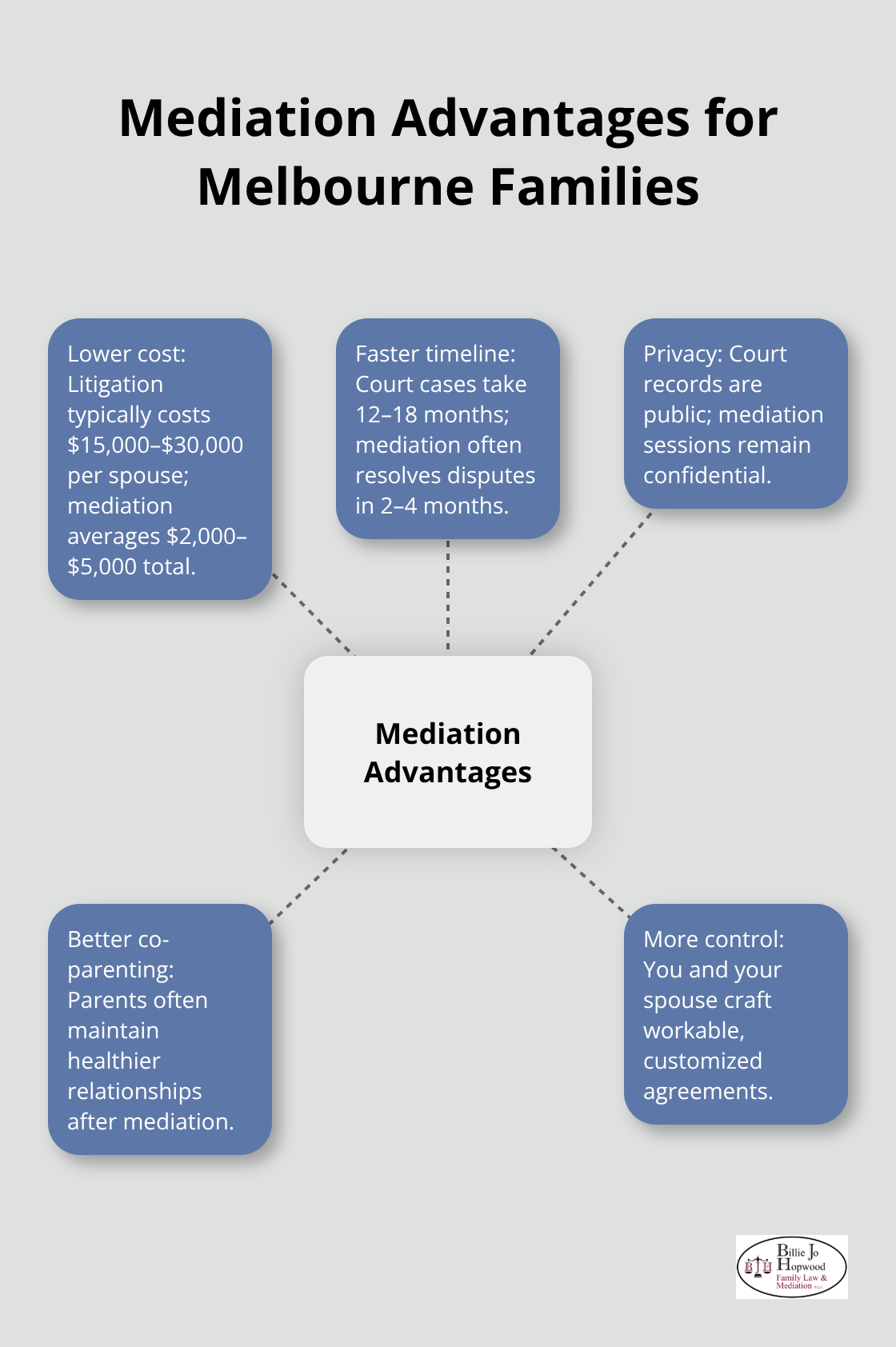
Mediation transforms divorce and custody disputes from adversarial court battles into collaborative problem-solving sessions where both parties retain control over outcomes. Unlike litigation, where a judge imposes decisions after hearing arguments from both sides, mediation lets you and your spouse work with a neutral third party to reach agreements that actually work for your family. The financial difference is staggering: litigation typically costs between $15,000 and $30,000 per spouse when cases go to trial, while mediation averages $2,000 to $5,000 total for both parties combined.
Court cases in Brevard County routinely take 12 to 18 months from filing to final judgment, whereas mediation often resolves disputes within two to four months. Melbourne residents who choose mediation spend less money, preserve more privacy (court records are public, mediation sessions remain confidential), and maintain better relationships with their co-parents afterward.
What to Expect During the Mediation Process
The process itself is straightforward and practical. You meet with a trained mediator who doesn’t take sides or make binding decisions but instead guides both parties toward mutually acceptable solutions. The mediator helps identify priorities, presents each spouse’s perspective clearly, and suggests compromise language when negotiations stall.
You bring financial documents, custody schedules, and any other relevant information to support your position, and the mediator makes certain both sides have equal access to information needed for fair agreements. This structured approach prevents the emotional escalation that happens in courtrooms where adversarial arguments intensify conflict.
When Mediation Works Best for Melbourne Families
Mediation works best when both parties genuinely want to resolve disputes, have relatively equal bargaining power, and can discuss sensitive topics without becoming abusive or completely dismissive. It works poorly when one spouse refuses to participate honestly, when domestic violence is present, or when one party lacks the mental capacity to understand agreements. We at Billie Jo Hopwood Family Law & Mediation, PLLC can assess whether mediation suits your situation and guide you through the process if it does.
Final Thoughts
Family law matters in Melbourne Florida require understanding both the legal framework and your practical options for resolution. Florida’s no-fault divorce system, equitable property distribution, and child-centered custody approach create a foundation for fair outcomes, but navigating these rules without guidance leads to costly mistakes and prolonged conflict. The path you choose-mediation, negotiated settlement, or litigation-shapes not only your financial outcome but also your relationship with your co-parent and your children’s experience throughout the process.
Your next step involves honest assessment of your situation and your goals. Do you want to preserve your relationship with your co-parent for the sake of your children? Are you willing to negotiate compromises, or do you need a judge to decide? Can you afford extended litigation, or do you need resolution within months rather than years? These questions matter because they determine which approach actually works for your family’s circumstances.
We at Billie Jo Hopwood Family Law & Mediation, PLLC help Melbourne families answer these questions and move forward with confidence. Contact us to discuss your situation and explore which approach fits your needs and your family’s future.