
Divorce reshapes families, and how you navigate it matters deeply. At Billie Jo Hopwood Family Law & Mediation, PLLC, we’ve seen how empathetic divorce mediation transforms outcomes by honoring both the practical and emotional sides of separation.
When both spouses feel heard and respected, agreements hold stronger and families heal faster. This approach works differently than traditional litigation, focusing on what you actually need rather than what courts impose.
Why Mediation Produces Better Outcomes Than Courtroom Battles in Melbourne, Florida
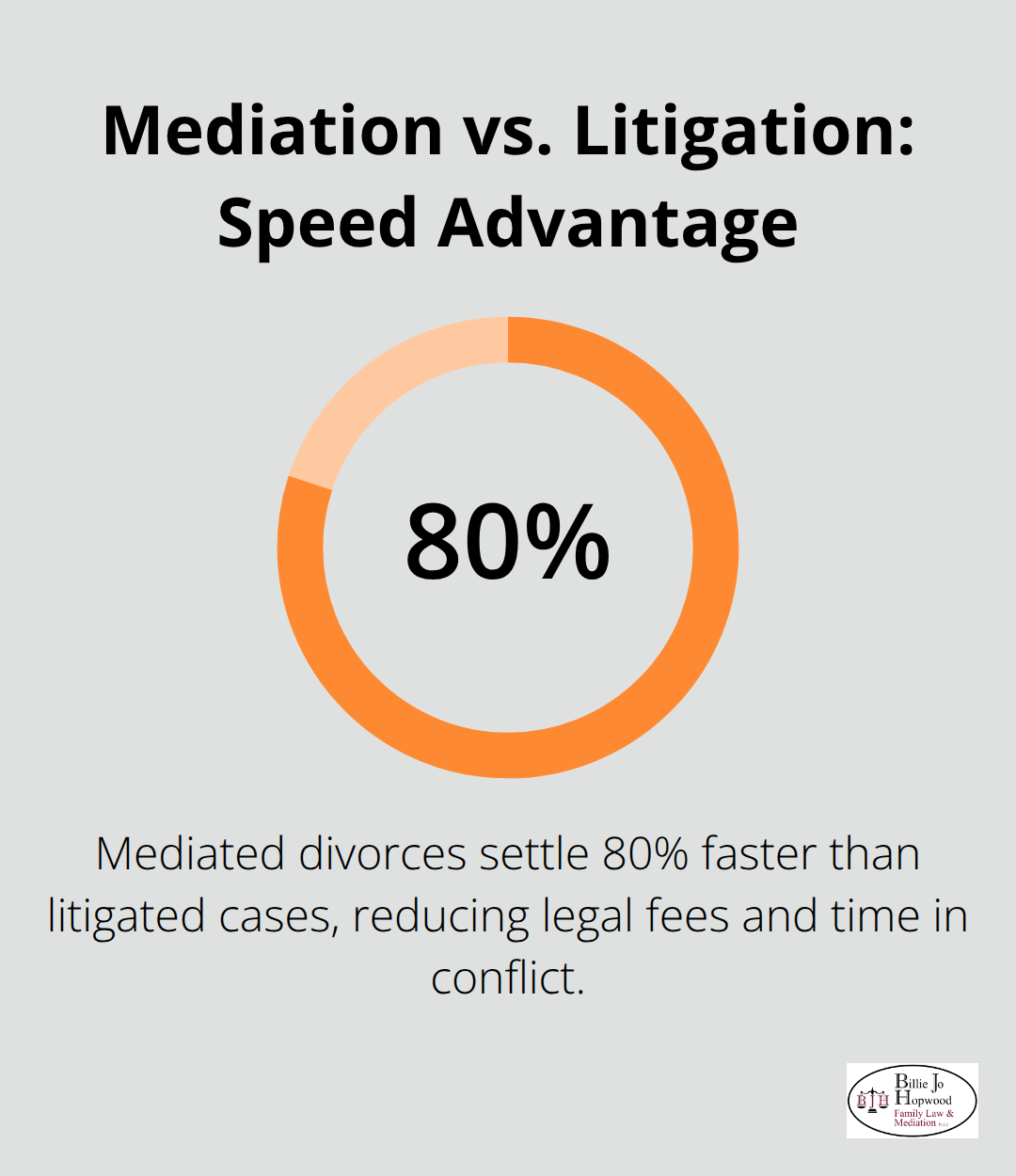
Traditional divorce litigation pits spouses against each other in an adversarial system designed to produce winners and losers. A judge makes final decisions about your assets, custody arrangements, and support obligations based on limited courtroom time and legal arguments. Mediation works differently. Instead of fighting over positions, you and your spouse work together with a neutral mediator to solve problems collaboratively. Research from the American Bar Association shows that mediated divorces settle 80% faster than litigated cases, which means lower legal fees and less time spent in conflict. When you mediate, you control the outcome rather than handing that power to a judge.
This matters enormously for your family’s future because agreements you help create are far more likely to stick than court orders imposed upon you.
Emotional Health Stays Intact During Mediation
Courtroom divorce forces you to present your worst arguments about your spouse to convince a judge to rule in your favor. This damages relationships permanently, especially when children are involved. Mediation acknowledges that emotions and practical needs coexist during separation. When both parties feel respected and heard, they make better decisions about finances and parenting. Mediators trained in empathetic approaches validate concerns without taking sides, which reduces the hostility that poisons post-divorce relationships. Studies show children recover faster from divorce when parents maintain civil communication, and mediation directly supports this outcome.
Children Benefit When Parents Stay Cooperative
Litigation forces parents into opposing camps, and children absorb that tension regardless of age. Mediation keeps the focus on what children actually need: stability, access to both parents, and adults who can cooperate on their behalf. During mediation, parents discuss custody and support arrangements while considering their children’s school schedules, relationships with extended family, and emotional security. This collaborative approach produces parenting plans that reflect real family dynamics rather than legal formulas. Custody agreements reached through mediation show higher compliance rates because both parents helped shape them, making adjustments easier when circumstances change.
Moving Forward With Sustainable Solutions
The agreements you reach through mediation hold power because you shaped them together. Unlike court-imposed orders that breed resentment, mediated settlements reflect what actually works for your specific family situation. This foundation sets the stage for how you’ll handle future decisions about your children and finances. As you consider what mediation means for your family’s path forward, understanding the specific principles that guide empathetic mediation becomes your next step.
What Makes Empathetic Mediation Actually Work
Active Listening Uncovers What You Really Need
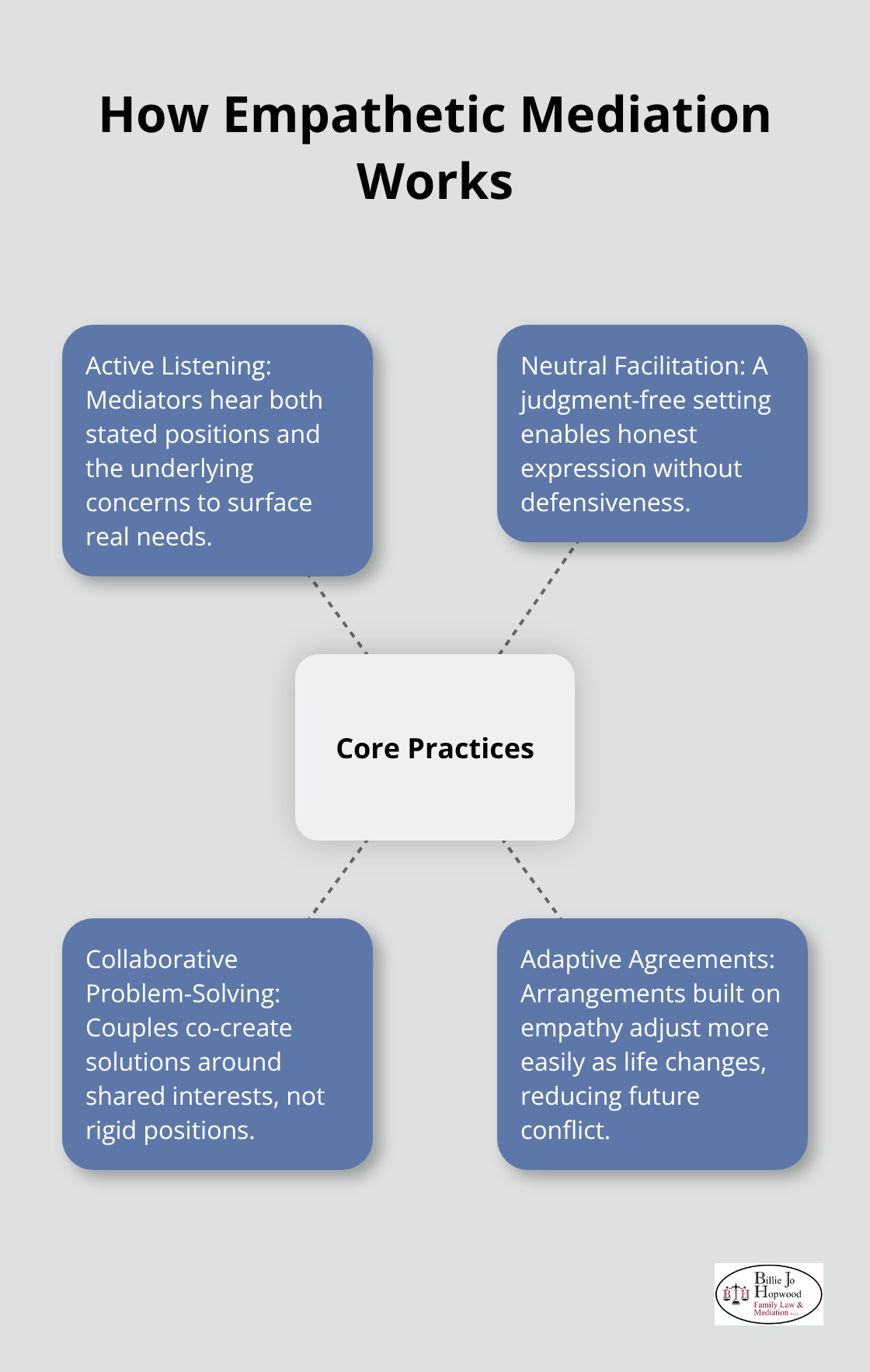
Mediators trained in empathetic approaches listen actively to what each spouse actually says rather than filtering words through legal strategy. This means the mediator hears not just the position you’re taking, but the underlying concern driving it. When you say you want primary custody, an empathetic mediator understands whether you’re worried about your child’s stability, your own financial ability to provide care, or the relationship you want to maintain with your kids. This distinction matters enormously because it opens pathways to solutions that pure legal argumentation misses.
Neutral Facilitation Creates Safety for Honest Conversation
In litigation, anything you say can be used against you, so spouses carefully guard their words and emotions. Mediation operates differently. When people feel judged, they shut down and retreat into defensive positions. A mediator who remains genuinely neutral allows both spouses to express fears, frustrations, and needs without defensiveness. This psychological safety produces more honest conversations about what you actually want versus what you think you’re supposed to fight for.
Collaborative Problem-Solving Replaces Win-Lose Thinking
Instead of each spouse presenting their best case to convince a decision-maker, you work together to identify solutions that address both people’s core needs. The win-lose mentality that poisons settlements disappears when both parties focus on shared interests rather than opposing positions. Research from the Journal of Divorce and Remarriage shows that couples who mediate report higher satisfaction with their agreements five years later compared to those who litigated, precisely because they shaped outcomes together rather than accepting imposed ones. Agreements built on empathy adapt naturally when life circumstances change, reducing future conflicts about modifications.
How These Practices Shape Your Path Forward
These three concrete practices-active listening, neutral facilitation, and collaborative problem-solving-work together to transform how you and your spouse approach separation. Understanding how to identify common ground and shared interests becomes your next step in reaching fair agreements through empathetic mediation.
Practical Strategies for Reaching Fair Agreements Through Empathetic Mediation in Melbourne, Florida
Uncover What Lies Beneath Surface Positions
Most couples entering mediation believe their positions are completely opposed. One spouse wants to keep the house while the other demands it be sold. One parent insists on primary custody while the other refuses to accept limited time with the children. These surface positions feel immovable, yet they almost always mask deeper interests that both parties actually share. The mediator’s job involves uncovering what lies beneath the stated position. When you say you want the house, what you really might need is stability for your children, a sense of security, or protection of your financial future. When your spouse demands primary custody, they might be driven by fear of missing their children’s daily lives or worry about their ability to afford separate housing. Once these underlying interests emerge, solutions appear that satisfy both people far better than compromise positions ever could.
Address Issues One at a Time
Breaking down complex issues into smaller, manageable pieces prevents the overwhelm that kills negotiations. Rather than discussing custody, finances, and property division simultaneously, mediation addresses one element at a time. You might start with child support calculations because they’re data-driven and less emotionally charged, building momentum and trust before tackling custody arrangements. This sequencing matters significantly because early agreements create psychological investment in the process itself. Studies show that couples who reach even small agreements early in mediation are 40% more likely to complete the entire settlement compared to those who begin with the most contentious issues.

Allow Space for Emotional Expression
Creating genuine space for emotional expression prevents resentment from festering beneath surface agreements. When someone feels genuinely heard about their fears or losses, they can move forward more easily. This doesn’t mean wallowing in pain during every session, but rather acknowledging legitimate emotional stakes before pivoting to solutions. A mediator trained in empathetic approaches knows when to pause problem-solving to allow someone to express what divorce means to them, then gently redirect toward actionable next steps once that expression has been received.
Final Thoughts
Empathetic divorce mediation in Melbourne, Florida produces agreements that actually last because both spouses shaped them together. When you work collaboratively rather than adversarially, the settlement reflects your family’s real needs instead of what a judge thinks you deserve. This foundation matters enormously for what comes next in your life, and it transforms how you handle future decisions about your children’s education, healthcare, and major life events.
Families moving forward after mediation experience tangible benefits that extend far beyond the divorce itself. Children adjust better when parents maintain respectful communication, which mediation actively supports throughout the process. You’ll spend less money on legal fees since mediated divorces settle faster, leaving more resources for rebuilding your life, and the agreements you reach adapt more naturally when circumstances change because you and your former spouse already know how to problem-solve together.
If you’re considering mediation in Melbourne, Florida, the first step involves reaching out to someone who understands both the legal requirements and the emotional complexity of separation. At Billie Jo Hopwood Family Law & Mediation, PLLC, we guide families through divorce and family law matters with genuine care for your wellbeing and your children’s future. Contact us to discuss how empathetic divorce mediation can work for your situation and what the process looks like for your family.