
Alimony disputes often become the most contentious part of divorce proceedings. When spouses can’t agree on spousal support, court battles drain finances and emotional energy.
Alimony mediation in Florida offers a different path. We at Billie Jo Hopwood Family Law & Mediation, PLLC have seen couples reach fair arrangements through mediation that satisfy both parties and preserve their dignity.
How Alimony Mediation Works in Florida
The Mediation Process and Timeline
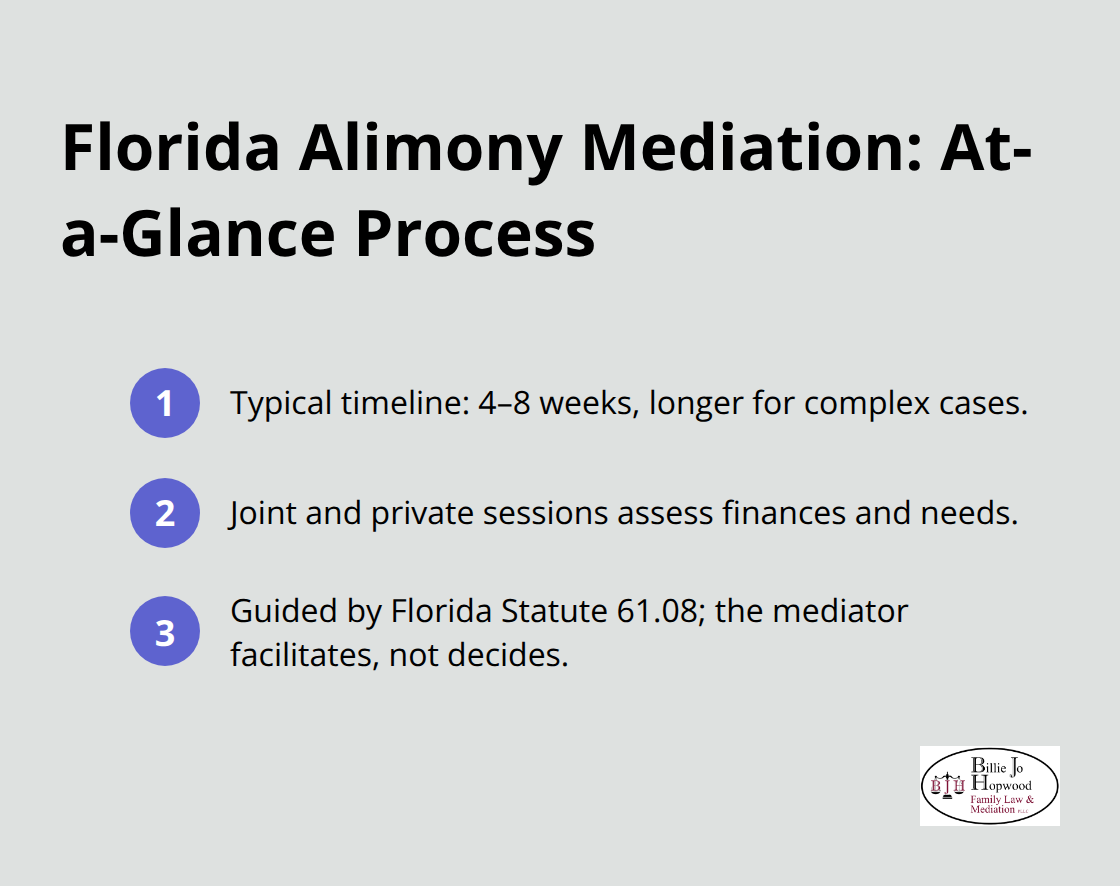
Alimony mediation in Florida follows a structured process that typically spans four to eight weeks, though complex cases may take longer. The mediator meets with both spouses together and separately to understand each person’s financial situation, earning capacity, and needs. Florida Statute 61.08 governs alimony awards, and mediators guide discussions using these legal standards without imposing decisions.
Most mediators charge between $200 and $400 per hour, split between spouses, making the process significantly cheaper than litigation which often costs $15,000 to $50,000 or more per side. The timeline matters because every week spent in mediation costs less than every day spent in court preparation and depositions.
The Mediator’s Role in Facilitating Discussions
The mediator asks difficult questions about income, assets, and lifestyle needs while keeping both parties focused on reaching a workable agreement. This neutral third party helps each spouse understand how courts would likely view their case based on the length of marriage, age, health status, and earning capacity.
A 15-year marriage carries different alimony implications than a 5-year marriage, and mediators make these distinctions clear so both parties can make informed decisions. If one spouse is 58 years old with limited job prospects while the other earns $120,000 annually, the mediator translates this into realistic alimony scenarios without either side feeling blindsided.
How Florida Alimony Laws Apply During Mediation
During mediation, Florida’s alimony factors come into play naturally through conversation rather than courtroom arguments. The process allows couples to explore creative solutions that courts cannot order, such as structured payments that taper over time, lump-sum settlements, or arrangements tied to retirement dates (solutions that rigid court orders simply cannot accommodate).
When couples understand the financial mechanics behind alimony calculations, they move past emotional positions and toward sustainable agreements that both parties can actually live with. This foundation of financial clarity sets the stage for examining the specific factors that courts weigh when determining spousal support amounts.
What Courts Actually Consider When Setting Alimony Amounts
Income and Earning Capacity Shape the Foundation
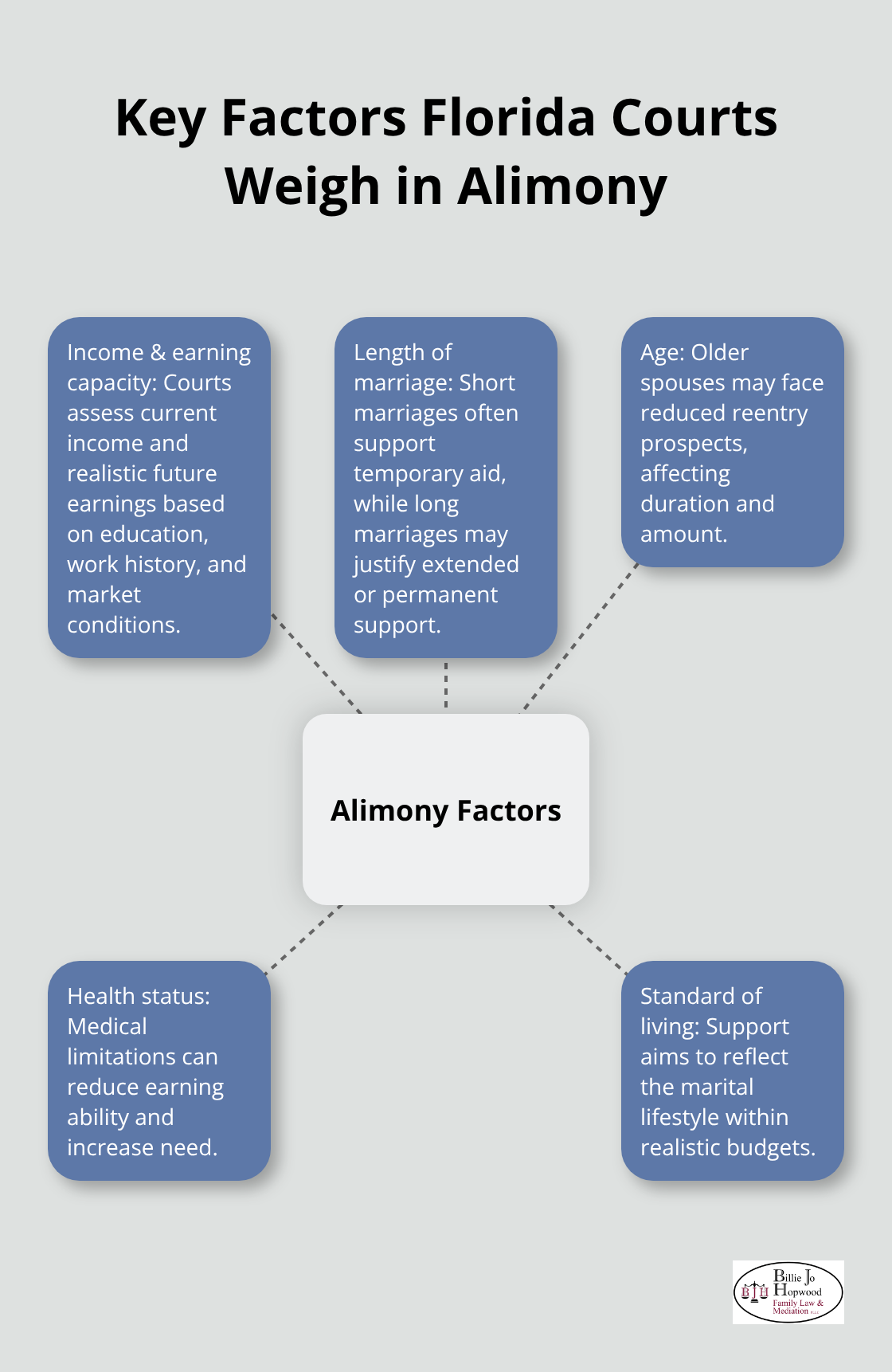
Florida courts weigh several concrete financial and personal factors when determining alimony, and understanding these specifics helps both spouses grasp what a realistic arrangement looks like during mediation. Income and earning capacity form the foundation of every alimony calculation. If one spouse earns $95,000 annually while the other has been out of the workforce for twelve years raising children, courts recognize that the second spouse cannot immediately jump into a similar income bracket.
The mediator will examine actual job market data for that person’s field, considering their education, work history, and age to project realistic earning potential. Someone who left a marketing career at age 35 faces different reemployment prospects than someone who left at age 58 with health limitations. This earning capacity assessment directly shapes the alimony amount because Florida courts aim to help the lower-earning spouse achieve self-sufficiency within a reasonable timeframe, not create permanent dependency.
Marriage Length Determines Support Duration
The length of marriage functions as a powerful lever in alimony decisions, and this factor often surprises people unfamiliar with Florida law. A five-year marriage typically generates temporary alimony lasting two to three years, while a twenty-year marriage can justify permanent alimony or long-term support. Florida Statute 61.08 establishes these general guidelines, though mediators apply them flexibly based on each couple’s circumstances.
Age, Health, and Standard of Living Matter Significantly
A spouse’s age and health status heavily influence the outcome. A 52-year-old with arthritis who cannot work full-time will receive different alimony terms than a healthy 42-year-old. The standard of living during the marriage matters significantly too-if a couple maintained a lifestyle requiring $8,000 monthly in household expenses during marriage, courts expect the lower-earning spouse’s lifestyle to reflect that standard, not drop to $3,000 monthly.
During mediation, these factors translate into specific dollar amounts and payment schedules that both parties can evaluate against their actual financial realities rather than emotional positions about fairness. Understanding how courts weigh income, marriage length, age, and lifestyle needs prepares couples to move forward with concrete alimony proposals that stand up to legal scrutiny.
Advantages of Mediation Over Litigation for Alimony
Lower Costs and Faster Resolution
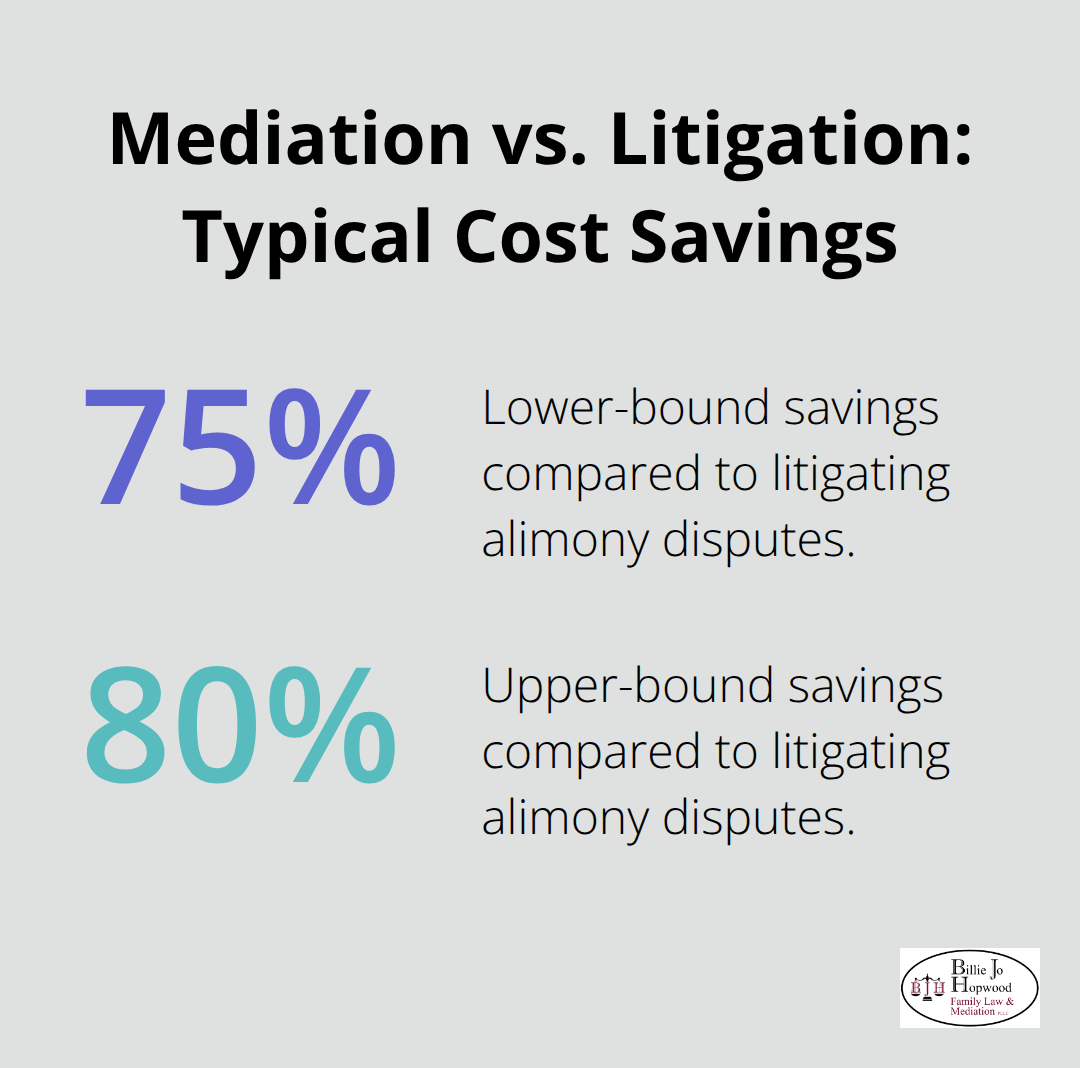
Litigation over alimony drains bank accounts with shocking speed. A contested divorce involving alimony disputes costs between $15,000 and $50,000 per spouse when handled through the court system, according to data from the American Bar Association. Mediation typically runs $200 to $400 per hour split between both parties, meaning a complete alimony mediation lasting 20 hours costs $4,000 to $8,000 total compared to $30,000 or more per side for litigation. Couples spend roughly 75 to 80 percent less money reaching an agreement through mediation than fighting in court.
Beyond hourly fees, litigation demands expensive depositions, expert witnesses to calculate earning capacity, and trial preparation that accumulates thousands in attorney time. Mediation eliminates these layers entirely because both spouses sit across from a neutral third party who guides them toward agreement rather than preparing for courtroom combat. Timeline matters equally to cost. Litigation stretches 12 to 24 months or longer when judges have crowded dockets and attorneys schedule motions months apart. Mediation condenses this into four to eight weeks for most cases. That speed translates directly to reduced legal fees and allows both parties to move forward with their lives rather than remaining frozen in legal proceedings.
More Control Over the Outcome
Control over the final arrangement represents another massive advantage that litigation cannot match. In court, a judge decides the alimony amount based on statutory factors, and that decision becomes binding whether both parties like it or not. Mediation allows couples to craft solutions that courts simply cannot order. One spouse might accept lower monthly payments if the support terminates when they reach retirement age, or both parties might agree to a lump-sum settlement paid from retirement accounts rather than monthly installments. These creative arrangements emerge naturally when both people sit together and understand each other’s actual financial needs and constraints.
Reduced Conflict and Preservation of Relationships
Couples also preserve relationships that litigation destroys. When spouses battle in court over alimony, they accumulate resentment that poisons future interactions, particularly problematic when children remain involved. Mediation keeps discussions focused on financial realities rather than personal attacks, meaning both parties walk away with their dignity intact and the ability to co-parent or communicate respectfully afterward. Many couples who work through mediation find they can maintain civil relationships long after their divorce concludes, which matters significantly when ongoing financial arrangements require cooperation between former spouses.
Final Thoughts
Alimony mediation in Florida offers couples a practical alternative to courtroom battles that drain finances and emotional reserves. When both spouses work with a neutral mediator to examine their actual financial situations, they move past emotional positions toward arrangements that both can sustain long-term. The structured process respects each person’s needs while keeping costs manageable and timelines reasonable.
The first step involves contacting a mediator who understands Florida’s alimony statutes and can guide discussions around income, earning capacity, marriage length, and lifestyle needs. Bringing recent tax returns, pay stubs, and a clear picture of monthly expenses helps mediators work efficiently and keeps hourly costs down. Many mediators offer initial consultations to explain how the process works and answer specific questions about your situation.
We at Billie Jo Hopwood Family Law & Mediation, PLLC serve families throughout Melbourne, Florida who want to resolve alimony disputes through mediation. Our team understands how Florida law applies to spousal support and helps couples navigate these conversations with clarity and respect. If you’re facing alimony questions and want to explore mediation as your path forward, we’re here to guide you through the process.