The term “immediate family” carries significant legal weight in Florida courts and family law proceedings. Understanding how immediate family is defined by law affects your rights in inheritance, medical decisions, and custody matters.
At Billie Jo Hopwood Family Law & Mediation, PLLC, we see families navigate these definitions daily in Melbourne Florida. Legal recognition determines who can make life-changing decisions on your behalf.
Who Qualifies as Your Immediate Family
Spouses and Children Form the Legal Foundation
Florida law places spouses and children at the center of immediate family definitions. Your spouse receives automatic inheritance rights when you die without a will and inherits your entire estate if you have no children from previous relationships. When children exist from other marriages, your spouse inherits 50% while children split the remaining half according to Florida Statutes.
Children include biological offspring, legally adopted children, and stepchildren in most contexts. The Family and Medical Leave Act recognizes spouses and dependent children under 21 as immediate family members. This grants eligible employees up to 12 weeks of unpaid leave for care responsibilities.
Parents and Siblings Hold Secondary Legal Status
Parents rank directly after spouses and children in inheritance law. If you die without a spouse or children, your parents inherit your entire estate under Florida’s intestate succession rules. Siblings only inherit when no spouse, children, or parents survive you.
The FMLA includes parents in its immediate family definition for leave purposes but excludes siblings entirely. Immigration law follows similar patterns – U.S. citizens can petition for parents to receive permanent resident status. The law categorizes them as immediate family alongside spouses and unmarried children under 21.
Adoptive Relationships Receive Full Legal Recognition
Adopted children and parents receive identical legal treatment to biological relationships in Florida courts. Adoption creates permanent legal bonds that grant full inheritance rights, medical decision-making authority, and family leave benefits.
Stepchildren face more complex recognition that depends on legal adoption status and specific circumstances. Half-siblings typically receive equal treatment to full siblings in inheritance matters, while step-siblings without formal adoption may lack legal standing in family decisions.

These family definitions become particularly important when courts must determine who has the authority to make critical decisions on your behalf during medical emergencies or legal proceedings.
What Legal Powers Do Immediate Family Members Hold
Inheritance Rights Create Financial Security
Immediate family members receive automatic inheritance protection under Florida’s intestate succession laws. Your spouse inherits your entire estate when no children exist from other relationships, while children from previous marriages trigger a 50-50 split between spouse and children according to Florida Statutes. Parents inherit everything when you die without a spouse or children, which creates a clear financial safety net for blood relatives.
Over 100,000 executors have navigated estate settlements more efficiently when they understand these automatic inheritance rules. Joint accounts and payable-upon-death accounts bypass probate entirely and transfer directly to spouses through Florida’s Tenancy By Entireties recognition. Non-probate assets move faster than traditional inheritance, often within weeks rather than months of death.
Medical Decisions Rest with Family Members
Florida law grants immediate family members automatic authority to make medical decisions when you cannot communicate your wishes. Spouses hold primary decision-making power, followed by adult children, then parents. Hospitals and medical facilities recognize this hierarchy without additional legal documentation in emergency situations.
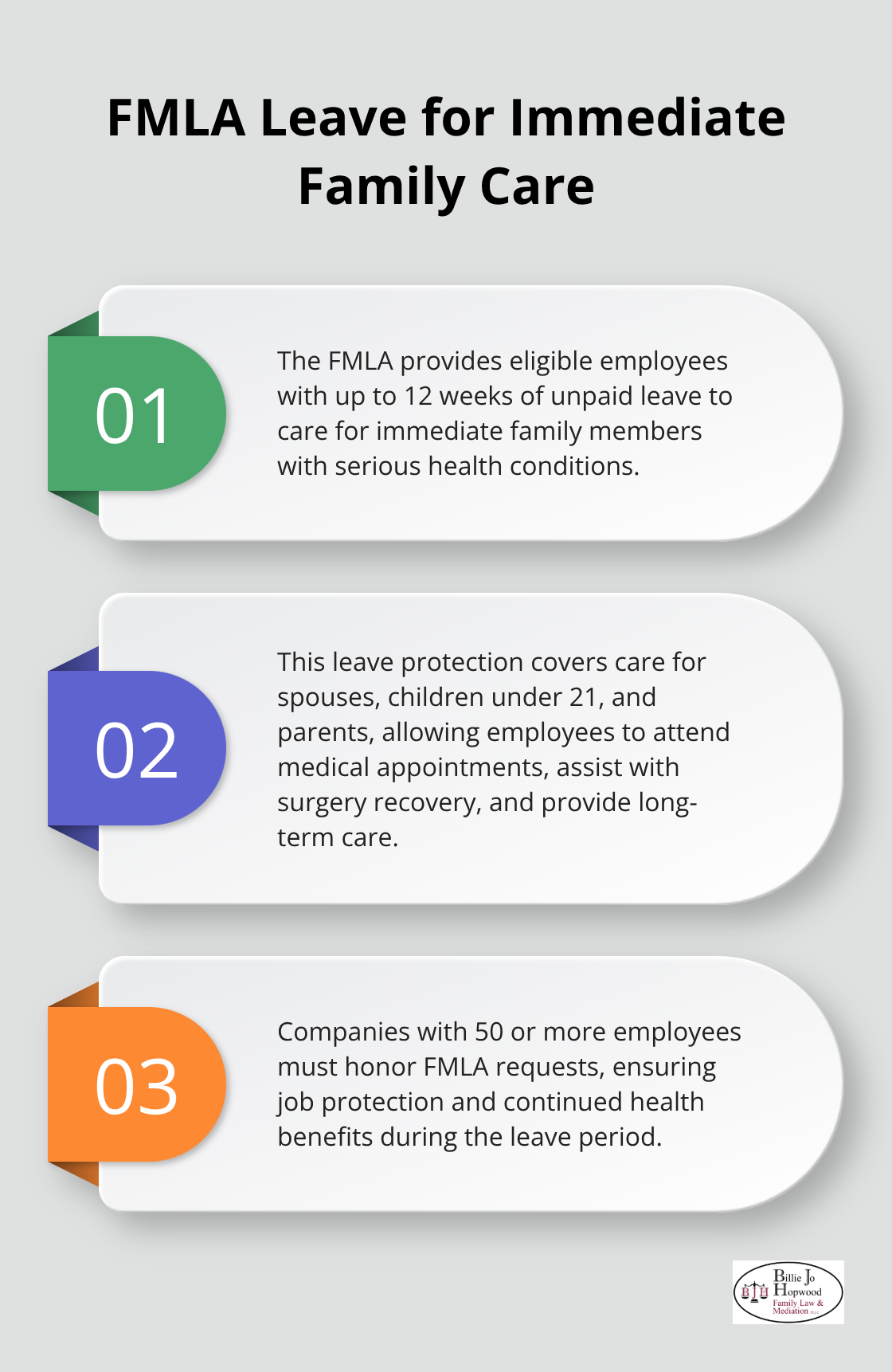
The Family and Medical Leave Act provides eligible employees with 12 weeks of unpaid leave to care for immediate family members who face serious health conditions. Companies with 50 or more employees must honor FMLA requests for spouses, children, and parents. This protection covers medical appointments, surgery recovery, and long-term care needs.
Employment Benefits Extend Family Protection
Federal law mandates that companies recognize immediate family definitions for bereavement leave and emergency time off. The Financial Industry Regulatory Authority prohibits brokers from selling certain securities to immediate family members (which prevents conflicts of interest that could harm family finances). Immigration law allows U.S. citizens to petition for permanent resident status for spouses, unmarried children under 21, and parents, which streamlines the family reunification process.
These legal powers become particularly complex when families face divorce proceedings or custody disputes that challenge traditional family structures.
When Does Family Status Matter Most in Legal Disputes
Divorce proceedings transform immediate family definitions into battlegrounds where legal recognition determines custody rights and financial obligations. Florida courts require both spouses to provide complete financial disclosures within 45 days of petition filing, and failure to comply severely damages your case according to family law. Regular dissolution cases mandate mediation in most Florida counties before final hearings, where immediate family status affects who can testify on your behalf and who gains decision-making authority over children.
Custody Decisions Hinge on Family Relationships
Child custody determinations in Florida prioritize shared parental responsibility between biological and adoptive parents unless detrimental to the child. Step-parents without formal adoption lack automatic custody rights even after years of care, which creates legal vulnerabilities during divorce. Grandparents and other extended family members face strict limitations on visitation rights unless they can prove immediate family members cannot provide adequate care.
The state follows income-based child support guidelines that typically end at age 18, but immediate family status determines which relatives can petition for custody modifications when circumstances change. Courts recognize biological connections over emotional bonds when legal adoption has not occurred.

Medical Emergencies Reveal Family Authority Gaps
Hospital emergency rooms follow strict hierarchies when patients cannot make medical decisions, with spouses holding primary authority followed by adult children and parents. Unmarried partners face complete exclusion from medical decisions regardless of relationship length, while divorced spouses lose all decision-making power once divorce finalizes.
Medical facilities require legal documentation to recognize non-traditional family structures. Long-term partners without marriage certificates cannot authorize treatments or access patient information (even during life-threatening emergencies).
Estate Administration Creates Complex Challenges
Estate administration becomes complex when no immediate family exists – Florida law allows estates to escheat to the state when no relatives are found. Probate courts recognize Tenancy By Entireties for married couples, allowing automatic asset transfer without court intervention, but unmarried couples must navigate lengthy probate processes even with joint accounts.
Intestate succession laws ignore personal relationships that lack legal recognition. Close friends and unmarried partners receive nothing unless specifically named in valid wills, regardless of their emotional significance to the deceased.
Final Thoughts
Immediate family defined by law creates a clear hierarchy that affects your most important life decisions. Florida courts recognize spouses, children, and parents as primary family members with automatic inheritance rights, medical decision-making authority, and employment protection benefits. Adoptive relationships receive full legal recognition, while step-relationships and unmarried partnerships face significant limitations without formal legal documentation.
These definitions become particularly important during divorce proceedings, medical emergencies, and estate administration. The law prioritizes legal relationships over emotional bonds, which can create unexpected challenges for non-traditional family structures. Courts apply these strict definitions regardless of the emotional significance of relationships that lack legal recognition.
We at Billie Jo Hopwood Family Law & Mediation, PLLC help Melbourne Florida families navigate these complex legal definitions. Our approach to family law matters provides the guidance families need to protect their rights and interests through challenging legal situations. Contact us today to discuss how these family definitions may affect your specific circumstances.