
Family disputes don’t have to end up in lengthy court battles. Florida law provides strong support for mediation as an alternative path to resolution.
At Billie Jo Hopwood Family Law & Mediation, PLLC, we see how mediation and the law work together to protect families while reducing conflict. This legal framework offers Melbourne Florida residents a faster, more affordable way to handle divorce and family matters.
What Legal Protections Support Mediation?
Florida’s Mandatory Mediation Requirements
Florida law requires mediation in most family law cases before couples can proceed to trial. The Florida Supreme Court mandates this process for divorce cases that involve custody, parenting time, and support issues. This requirement saves taxpayers millions annually while it reduces court backlogs.
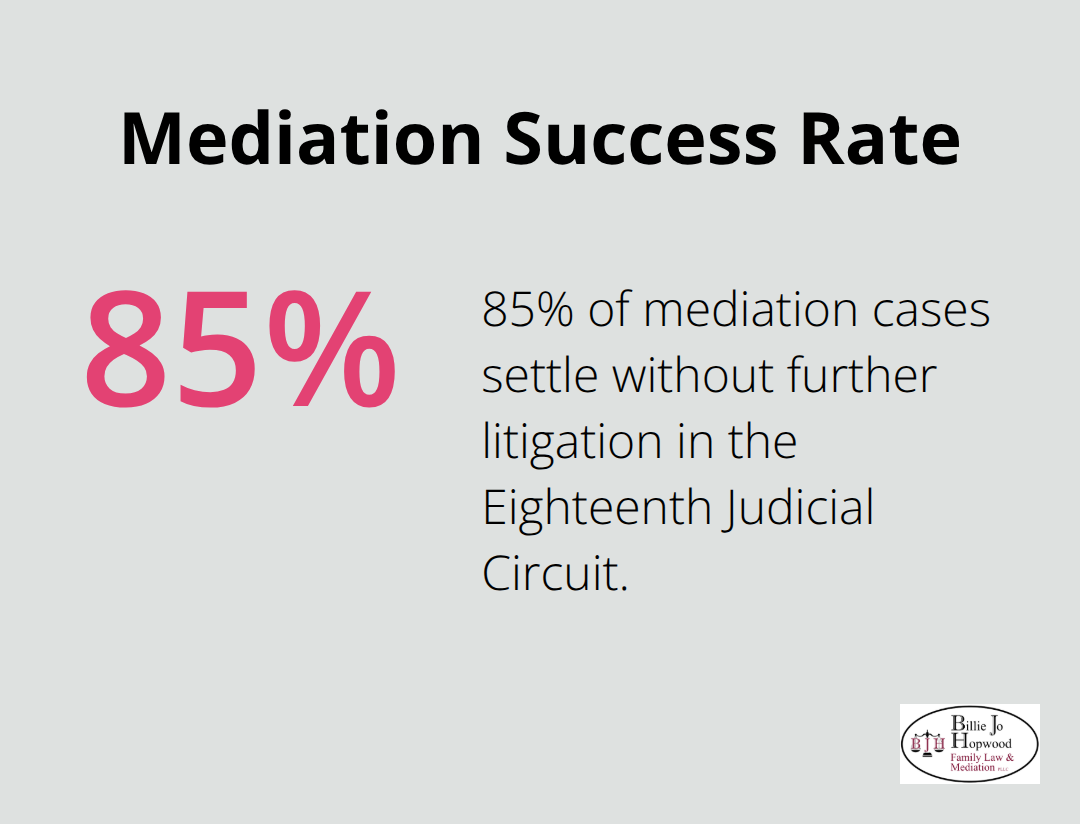
The Eighteenth Judicial Circuit reports that 85% of mediation cases settle without further litigation. Courts cannot force a settlement, but they can require good faith participation. Failure to attend mediation can result in sanctions or case dismissal (depending on the specific circumstances).
Confidentiality Protections Under State Law
Florida Statute 44.405 provides absolute confidentiality for mediation discussions. Nothing said during sessions can be used against you in court later. This protection encourages honest communication about finances, parenting concerns, and relationship issues.
The American Bar Association confirms that 90% of participants report higher satisfaction with mediated agreements compared to judge-imposed decisions. This confidentiality creates a safe space where both parties can explore creative solutions without fear of legal consequences.
Legal Enforceability of Mediated Agreements
Once signed, mediated agreements become legally binding court orders. Courts routinely enforce these agreements with the same authority as any judgment. The National Center for State Courts data shows mediated agreements have higher compliance rates than traditional court orders because both parties helped create the terms.
These agreements carry the full weight of the law (just like any court judgment). Violations can result in contempt of court charges and other legal penalties. This legal backing gives mediated agreements real teeth while maintaining the collaborative spirit of the process.
The next step involves understanding how mediation fits within the broader family law system and when it becomes part of your divorce proceedings.
When Does Mediation Happen in Your Case
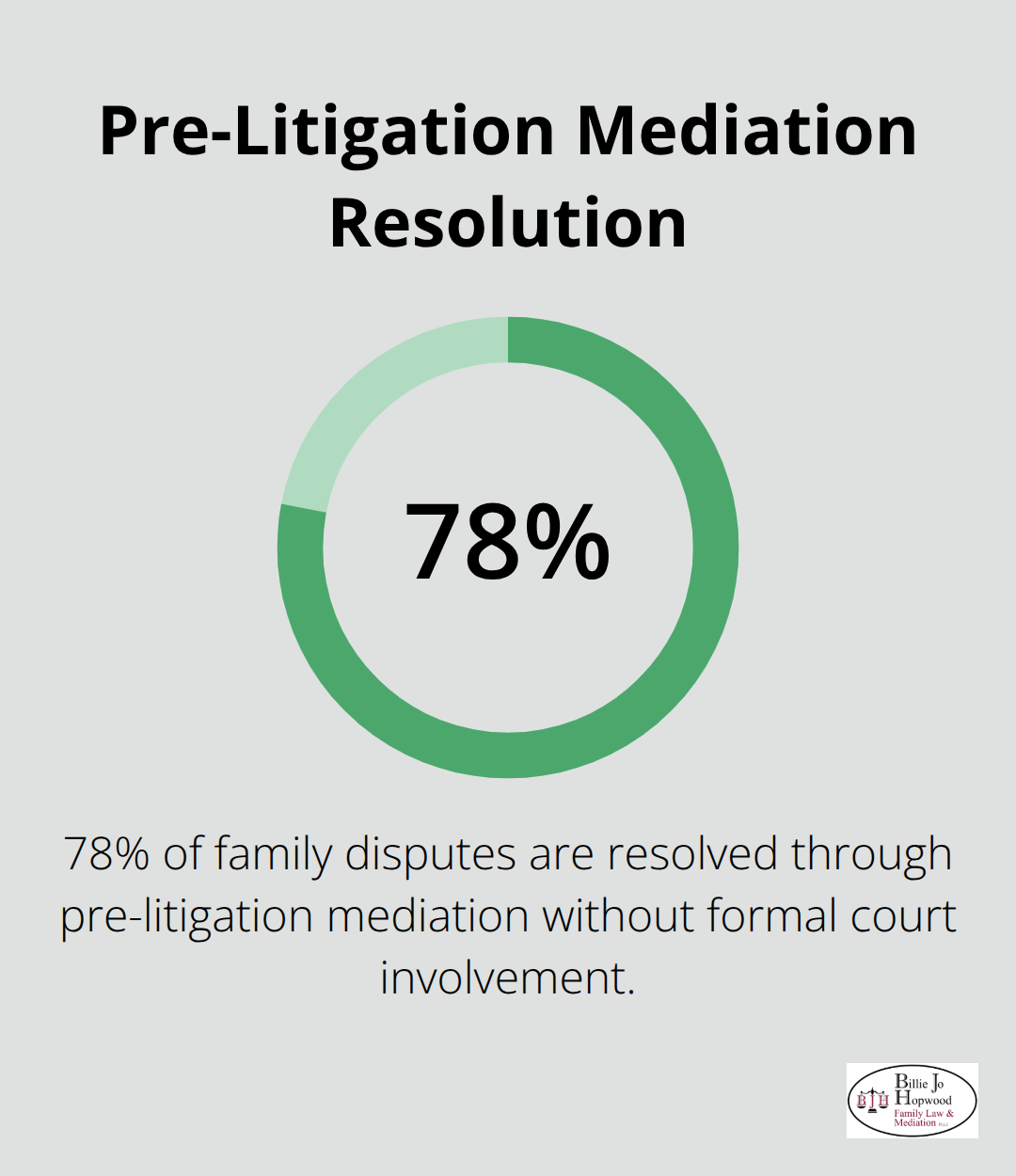
Mediation enters family law cases at three distinct stages. Each stage serves different purposes and offers unique advantages. Most Melbourne Florida couples first encounter mediation as a voluntary option before they file any court papers. The Florida Supreme Court data shows that pre-litigation mediation resolves 78% of family disputes without formal court involvement. This early intervention saves couples an average of $15,000 in legal fees compared to full litigation. Smart couples choose this path when they recognize their marriage ends but want to maintain control over the outcome.
Early Mediation Prevents Escalation
Couples who start mediation before litigation begins enjoy the greatest flexibility and lowest costs. They can address property division, parenting plans, and support issues in a private setting without court deadlines or formal discovery requirements. The American Bar Association reports that couples who mediate early spend 60% less time to resolve their divorce compared to those who start with litigation. This approach allows both parties to make decisions without the pressure of pending court dates or mounting legal bills. Pre-litigation mediation also preserves relationships (which becomes vital when children are involved and co-parenting will continue for years).
Court-Ordered Mediation During Active Cases
Once divorce papers are filed, Florida courts mandate mediation for most contested issues. Judges typically order mediation within 90 days of the initial filing. Couples must complete this process before they schedule trial dates. The Eighteenth Judicial Circuit requires mediation attendance but cannot force settlements. This court-ordered mediation costs between $60-120 per party based on combined income, which makes it affordable for most families. Failure to participate in good faith can result in sanctions, case dismissal, or unfavorable court rulings.
Post-Judgment Changes Through Mediation
Life changes after divorce often require modifications to custody, support, or parenting time arrangements. Florida law allows former spouses to use mediation for these post-judgment modifications instead of returning to court immediately. The National Center for State Courts finds that 92% of post-divorce modifications resolve through mediation without judge intervention (this process costs significantly less than filing modification motions). Families can adapt agreements as children grow or circumstances change.
These three mediation pathways offer Melbourne Florida families multiple opportunities to resolve disputes efficiently, but the benefits extend far beyond simple convenience.
Why Choose Mediation Over Court Battles
Financial Savings Add Up Fast
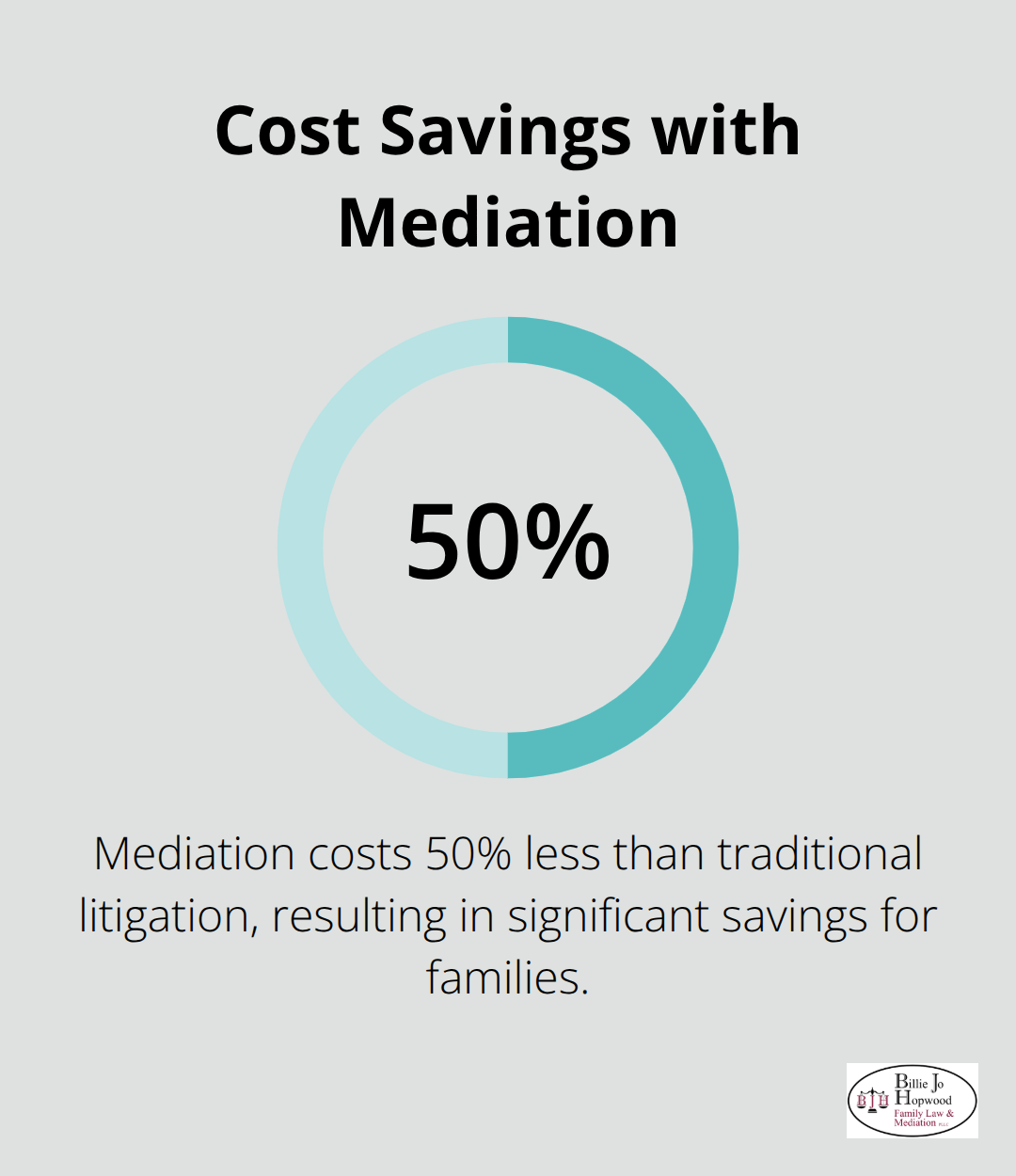
Mediation costs 50% less than traditional litigation according to the American Bar Association. A typical contested divorce through litigation runs $15,000-30,000 per spouse in legal fees alone. Court-ordered mediation in Florida costs just $60-120 per party based on combined income. The U.S. Department of Justice data shows families save an average of $12,000 when they choose mediation over courtroom battles.
These savings come from reduced attorney hours, eliminated discovery costs, and faster resolution times.
Litigation can drag on for 18-24 months while mediation typically resolves cases within 3-6 months. Courts impose rigid schedules and expensive procedural requirements that mediation avoids entirely.
You Control Your Family’s Future
Judges make decisions based on limited information and rigid legal standards. They don’t know your family dynamics or unique circumstances. Mediation puts decision-making power back in your hands. The National Center for State Courts reports 90% satisfaction rates with mediated agreements compared to 60% for judge-imposed orders.
You can create flexible parenting schedules that work with your work schedule and children’s activities. Property division reflects what matters most to your family rather than generic legal formulas. Payment schedules can accommodate seasonal income or business cycles that courts rarely consider (judges typically apply standard formulas without regard for individual circumstances).
Relationships Survive the Process
Litigation creates winners and losers which damages co-parenting relationships permanently. Children suffer when parents wage war in courtrooms. Studies show that mediated divorces result in 40% less ongoing conflict between former spouses. This reduced conflict translates to better outcomes for children who need both parents to work together.
Mediation teaches communication skills that serve families long after divorce papers are signed. The collaborative approach preserves extended family relationships with grandparents and relatives who often become casualties in bitter court fights (these relationships provide vital support networks for children during difficult transitions).
Final Thoughts
Mediation and the law create a powerful partnership that protects Melbourne Florida families during difficult transitions. Florida’s mandatory mediation requirements, confidentiality statutes, and enforceability standards establish a framework that safeguards your interests while it reduces conflict. These legal protections make mediation a strong alternative to expensive court battles.
Melbourne Florida families choose mediation because it provides real control over outcomes while it preserves relationships that matter most. The 85% success rate in our local courts demonstrates this approach delivers results. Families save thousands of dollars and months of stress while they create agreements that fit their unique circumstances (rather than accept generic court orders).
We at Billie Jo Hopwood Family Law & Mediation, PLLC guide Melbourne families through this process with compassion and understanding. Our firm assists families through challenging legal situations that include divorce, child custody, alimony, and child support matters. The legal framework that supports mediation provides the structure you need while it maintains the flexibility your family deserves.