
Florida family law cases require detailed financial disclosure through court-mandated affidavits. These documents directly impact alimony, child support, and property division decisions.
At Billie Jo Hopwood Family Law & Mediation, PLLC, we see how proper completion of your Florida family law financial affidavit can make or break your case outcome. Small errors often lead to significant legal complications and unfavorable rulings.
When Financial Affidavits Are Required in Family Law Cases
Florida Family Law Rules of Procedure require financial affidavits in all divorce, paternity, and child support cases without exception. The court mandates these documents within specific timeframes, and missed deadlines can derail your entire case. You must file Form 12.902(b) if your annual gross income falls below $50,000, while Form 12.902(c) applies to incomes of $50,000 or more. The Florida Supreme Court designed these two versions to capture different levels of financial complexity, with the long form that requires detailed asset valuations and comprehensive expense breakdowns that many people underestimate.
Court-Imposed Deadlines You Cannot Miss
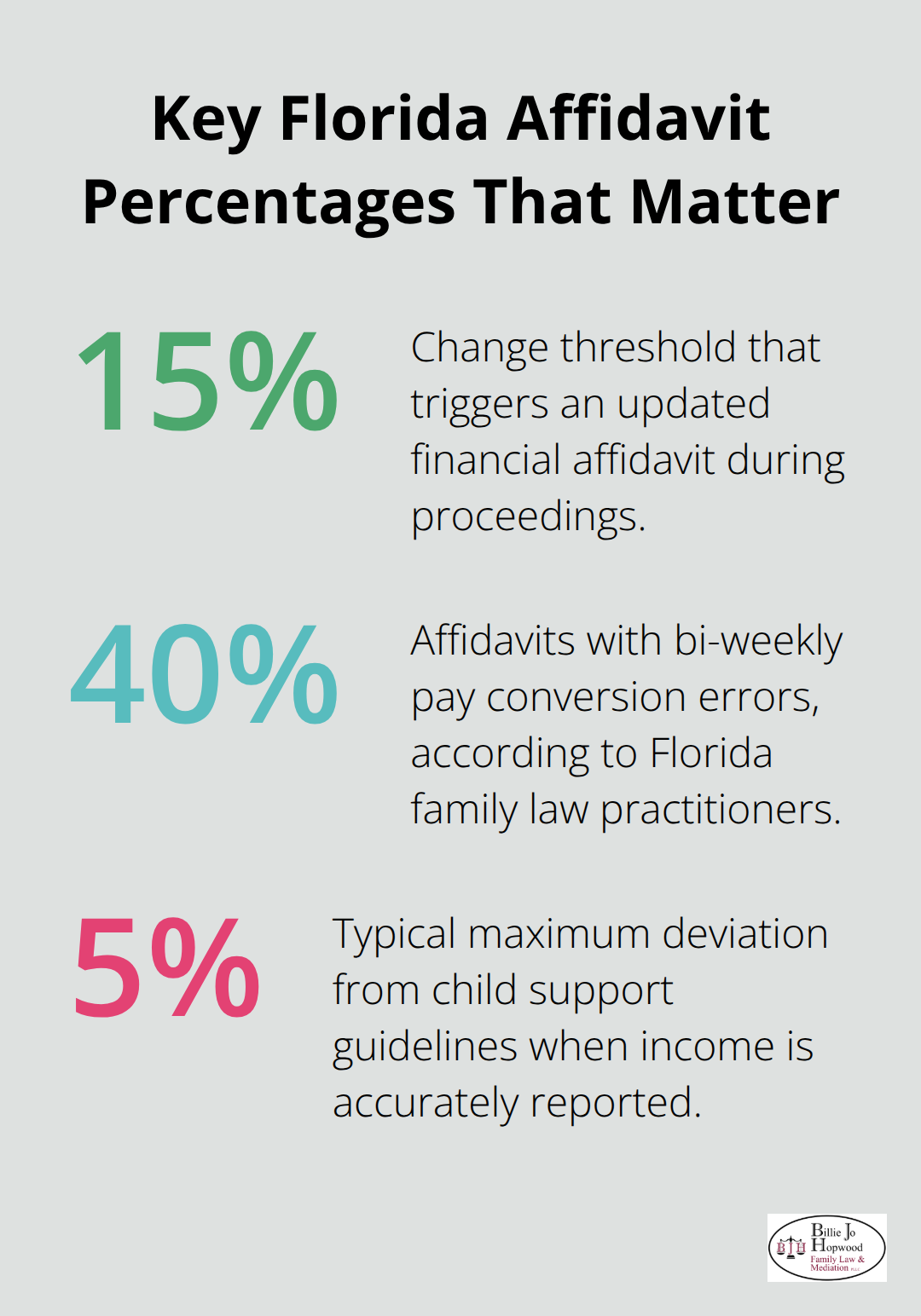
Courts typically require financial affidavits within 45 days of service in divorce cases, though specific counties may impose shorter deadlines. Updated affidavits become mandatory whenever your financial circumstances change more than 15 percent during proceedings. The Mason v. Mason case established that courts can set aside final judgments without time limits when parties provide inaccurate financial information (this makes precision non-negotiable from day one).
Income Thresholds and Form Selection
The $50,000 income threshold applies to total gross annual income from all sources, which includes wages, bonuses, rental income, and investment returns. Many people miscalculate bi-weekly payments when they multiply by 24 instead of 26, which creates immediate credibility issues. Seasonal income variations require careful calculation over 12 months, not cherry-picked favorable periods.
Penalties for Errors and Omissions
Florida Statute 61.30 imposes severe penalties for incomplete or false financial disclosures, which include contempt of court charges and attorney fee sanctions. Misrepresentation of income amounts (even small ones) can trigger perjury charges, since affidavits are signed under oath. Courts regularly cross-examine financial statements, and inconsistencies between tax returns and affidavits often result in case dismissals or unfavorable decisions that affect support calculations for years.
The accuracy of your financial affidavit directly determines how courts calculate your support obligations and divide marital assets.
Step-by-Step Guide to Completing Your Financial Affidavit
Document Collection Strategy That Works
Start with your most recent tax return, which serves as your financial foundation for the affidavit. Collect 12 months of bank statements from all accounts, including checking, savings, and investment accounts that many people forget to include. Gather pay stubs from the past three months, W-2 forms, 1099s, and any documentation of rental income or business profits.
The Florida Supreme Court forms require specific supporting evidence, and missing documents create immediate red flags during court review. Property deeds, vehicle titles, retirement account statements, and insurance policies complete your asset documentation. Credit card statements, loan documents, and mortgage information provide the liability details courts scrutinize heavily.
Income Calculation Methods That Pass Court Scrutiny
Calculate monthly income with year-to-date figures divided by weeks worked, not calendar months, which prevents the common error of understating seasonal fluctuations. Workers with bi-weekly pay must multiply by 26 pay periods annually, never 24, since this mistake appears in 40 percent of affidavits according to Florida family law practitioners.
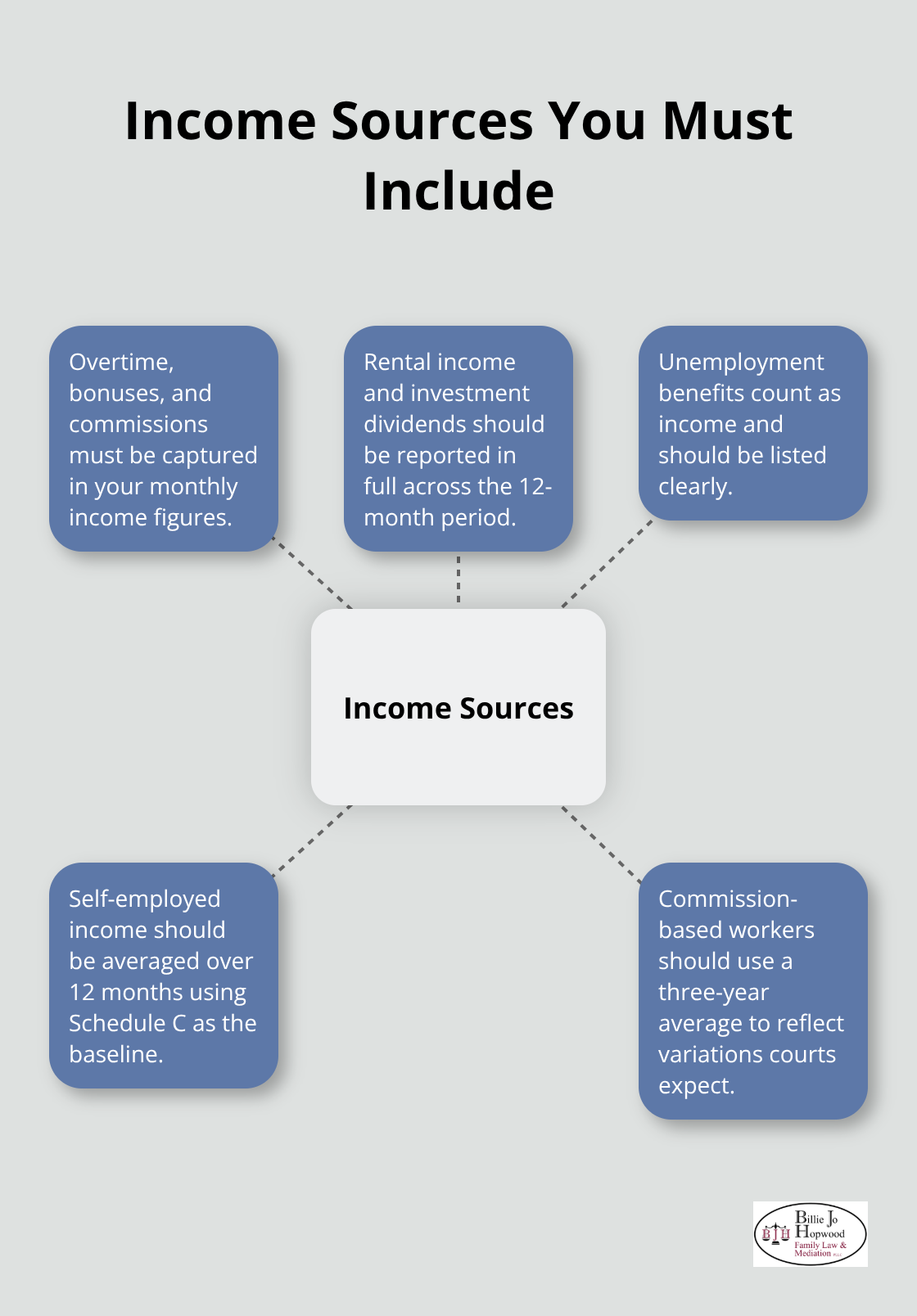
Include all income sources: overtime pay, bonuses, commissions, rental income, investment dividends, and unemployment benefits. Self-employed individuals must average their net business income over 12 months with Schedule C from tax returns as the baseline. Commission-based workers should calculate a three-year average to account for income variations that courts expect to see documented thoroughly.
Expense Reporting That Withstands Challenge
Monthly expenses require conversion of all irregular payments into monthly equivalents: annual insurance premiums divided by 12, quarterly property taxes divided by three. Housing costs include mortgage payments, property taxes, insurance, utilities, and maintenance expenses that total your actual monthly housing burden.
Transportation expenses cover car payments, insurance, fuel, and maintenance costs calculated from actual receipts over six months. Childcare, medical expenses, and debt payments must reflect current obligations with supporting documentation readily available for court inspection.
Common Mistakes to Avoid When Completing Forms
Courts reject affidavits that contain mathematical errors in income calculations (particularly bi-weekly pay conversions). Many filers underestimate their monthly expenses or fail to include all income sources, which creates credibility issues during hearings. Asset valuations must reflect current fair market values, not purchase prices or wishful thinking about property worth.
Never round numbers to convenient figures or estimate expenses without documentation. Courts compare your reported expenses against your income levels, and unrealistic ratios trigger additional scrutiny. The accuracy of these calculations directly affects how courts determine your support obligations and property division rights.
How Financial Affidavits Impact Your Case Outcome
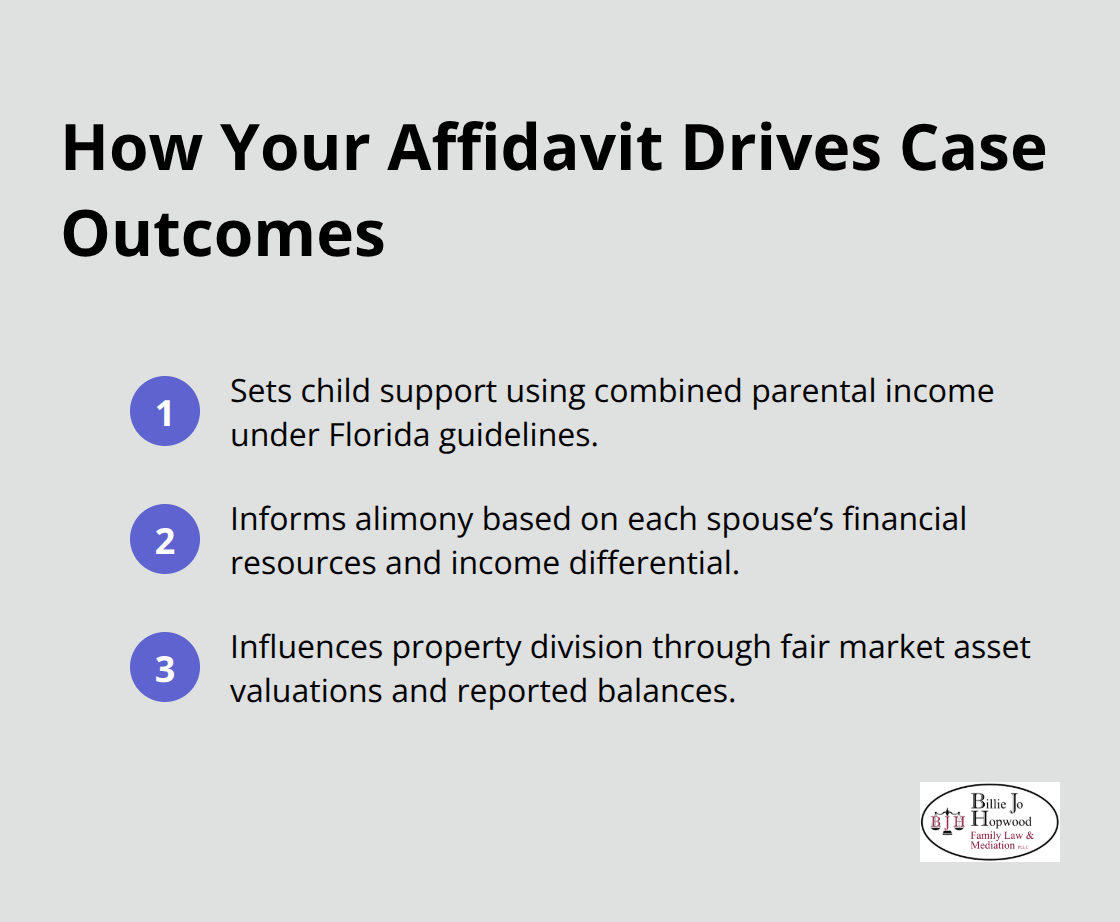
Your financial affidavit numbers convert directly into dollar amounts that determine your monthly support obligations and property division percentages. Courts apply Florida’s child support guidelines that calculate payments based on combined parental income, with deviations rarely exceeding 5 percent from guideline amounts when affidavits show accurate income reports. Alimony calculations rely heavily on the income differential between spouses, with Florida Statute 61.08 requiring courts to consider the financial resources of each party as disclosed in their affidavits.
Child Support Calculations Follow Your Income Reports
Child support amounts stem from your gross monthly income figures, and a $500 monthly income underreport can reduce your support obligation by $75 to $125 monthly according to Florida’s percentage-based guidelines. Courts multiply your combined monthly income by statutory percentages: 20 percent for one child, 25 percent for two children, and higher percentages for additional children.
The state’s child support worksheet uses your exact income figures to calculate obligations that remain in effect for years. Courts rarely deviate from these calculations when parties provide complete and accurate financial information in their affidavits.
Alimony Awards Depend on Income Differences
Alimony determinations factor your ability to pay based on net income after taxes and mandatory deductions, with permanent alimony awards typically ranging from 20 to 35 percent of the income difference between spouses. Temporary support orders during proceedings use the same affidavit data, making initial accuracy vital since these amounts often become baseline figures for final settlements.
Courts examine the standard of living established during marriage through your expense reports to determine appropriate alimony amounts. Higher reported monthly expenses can justify larger alimony awards when the requesting spouse demonstrates legitimate financial need.
Property Division Reflects Asset Valuations
Asset valuations you report directly affect your share of marital property, with Florida’s equitable distribution requiring fair market values rather than sentimental or purchase price figures. Real estate appraisals that differ significantly from your affidavit values can shift property division by tens of thousands of dollars.
Retirement account balances determine whether you receive offsetting assets or face division orders that affect your long-term financial security. Investment accounts, business interests, and personal property values all factor into the final distribution calculations that courts base on your affidavit figures.
Attorney Fee Awards Based on Income Disparity
Attorney fee awards depend on the income disparity shown in your affidavits, with higher-earning spouses often ordered to pay the other party’s legal costs when significant income gaps exist. Courts consider both parties’ ability to pay their own attorney fees when making these determinations.
Florida Statute 61.16 allows courts to award attorney fees based on the financial resources and need of each party as shown in their financial affidavits. Accurate income reporting protects you from unexpected fee obligations or helps you secure necessary legal representation when you cannot afford it.
Final Thoughts
Your Florida family law financial affidavit serves as the financial foundation for every major decision in your case. Courts base alimony calculations, child support amounts, and property division percentages directly on the numbers you provide. A single miscalculation can cost you thousands of dollars in support obligations or property rights that last for years.
The Mason v. Mason precedent demonstrates how inaccurate financial disclosure can void final judgments without time limits. This reality makes precision non-negotiable from your first filing through case resolution. Courts scrutinize every figure, compare affidavits against tax returns, and impose severe penalties for discrepancies that damage your credibility permanently.
Professional legal guidance becomes invaluable when you navigate Florida’s complex financial disclosure requirements (especially with income calculations and asset valuations). We at Billie Jo Hopwood Family Law & Mediation, PLLC help Melbourne families complete accurate affidavits that protect their financial interests throughout divorce and family law proceedings. Your financial future depends on accurate documentation, proper income calculations, and timely updates when circumstances change.