
A family law summons represents one of the most serious legal documents you can receive. This official court notice demands your immediate attention and response within strict deadlines.
We at Billie Jo Hopwood Family Law & Mediation, PLLC see many people make costly mistakes when they don’t understand their obligations after receiving a summons family law document. The consequences of mishandling this process can permanently affect your family’s future.
What Exactly Is a Family Law Summons
Legal Function and Court Authority
A family law summons acts as the official trigger for legal proceedings that will reshape your family structure. The Florida FL-110 form (effective since January 1, 2015) carries the full weight of court authority and legally binds you to participate in the case. This document transforms a private family matter into a public legal dispute under judicial oversight.
The summons grants the court jurisdiction over both parties and establishes the legal framework for decisions about your children, finances, and property. Florida courts process approximately 200,000 family law cases annually, with each summons marking the beginning of a process that typically takes 6-12 months to resolve.
Types and Timing in Florida Family Law
Florida family law summons appear in divorce proceedings, child custody modifications, paternity actions, domestic violence cases, and support enforcement matters. The state requires different summons forms depending on whether children are involved and the specific relief requested.
Courts issue summons when one party files a petition that seeks legal action against another family member. Divorce summons represent 65% of all family law filings in Florida, followed by custody modifications at 20% and paternity cases at 10%.

Response Deadlines and Default Consequences
The summons activates your 20-day response deadline if served within Florida or 30 days if served outside the state. This timeline starts from the date you receive the documents, not when they were filed with the court.
Missing this deadline triggers default proceedings where the court can grant the other party everything they requested without your input. Default judgments occur in approximately 30% of family law cases statewide, often because respondents fail to understand the urgency of their situation.
Once you receive this document in Melbourne, Florida, you face immediate legal obligations that demand swift action and careful consideration.
Receiving a Family Law Summons in Melbourne Florida
The moment a family law summons arrives at your Melbourne address, you become legally bound to participate in court proceedings whether you want to or not. Florida law treats service of process as complete delivery of legal notice, which means claims that you didn’t understand the document or hoped it would disappear carry zero legal weight. Your signature isn’t required on the summons itself – proper service occurs when the document reaches you through an authorized process server, sheriff’s deputy, or certified mail.
Immediate Legal Obligations After Service
Florida Statute 48.031 requires you to file a written response within the specified timeframe or face automatic default judgment. The court doesn’t care about your work schedule, vacation plans, or financial stress – these deadlines are absolute. Melbourne residents served on a Friday must still meet the same 20-day deadline as someone served on a Monday. The Brevard County Clerk’s office reports that 40% of family law respondents in the county miss their initial deadline, which creates unnecessary complications and expenses. You must file your response with the same court that issued the summons and serve a copy on the attorney for the other party (or the other party directly if they represent themselves). This dual requirement means simply mailing a letter to your spouse won’t satisfy Florida’s legal standards.
Default Judgment Consequences
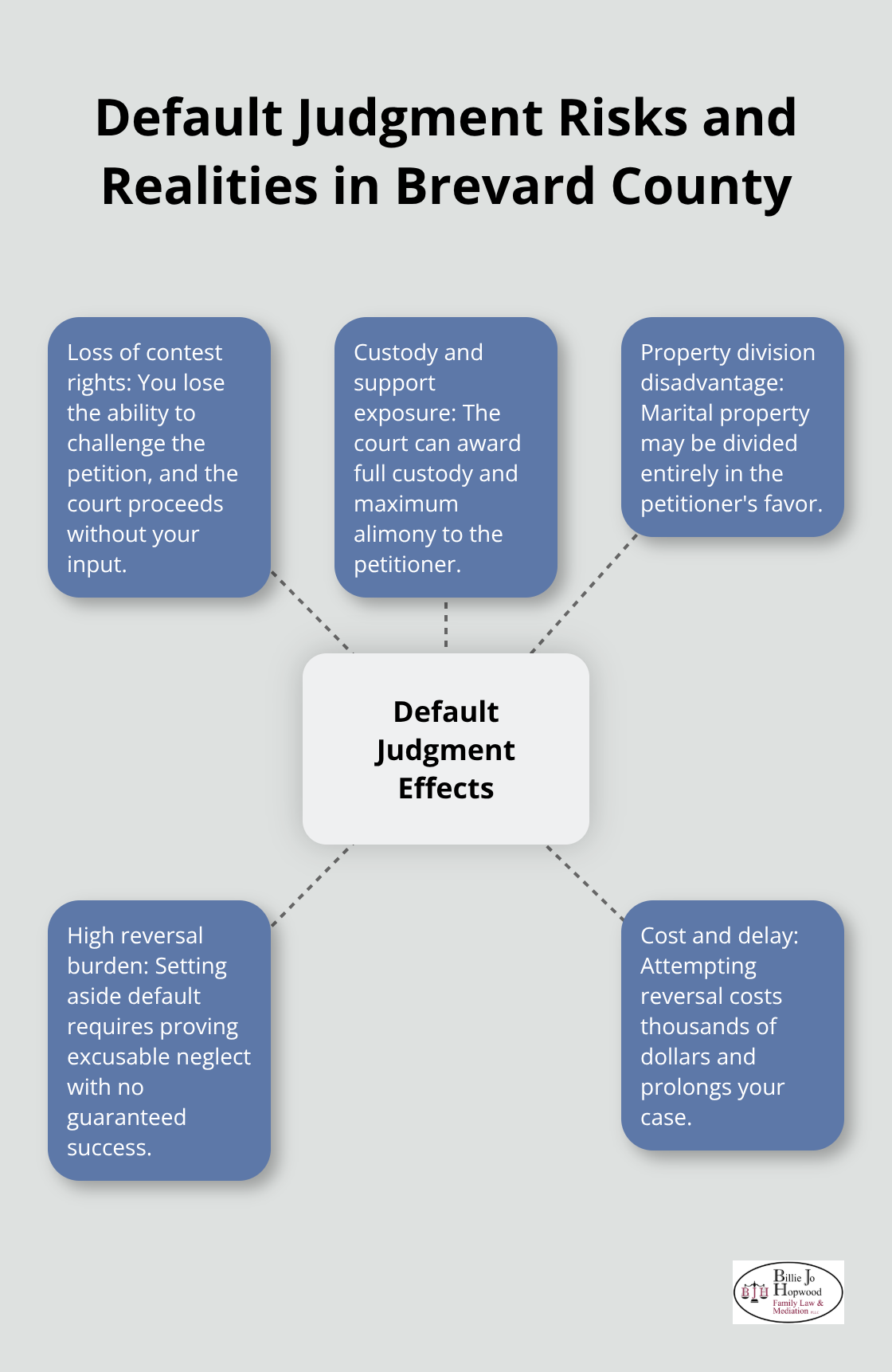
When you ignore a family law summons in Melbourne, you trigger default proceedings that strip away your right to contest any requests in the petition. The court can award the petitioner full custody of your children, maximum alimony payments, and division of marital property entirely in their favor without hearing your side. Brevard County courts granted default judgments in 35% of contested family law cases in 2024, with the majority involving respondents who simply failed to respond to their summons. To reverse a default judgment, you must prove excusable neglect to the court, a process that costs thousands in legal fees and offers no guarantee of success.
Time-Sensitive Actions Required
Once you receive your summons, you must immediately calculate your response deadline and begin preparation of your answer. Florida courts don’t accept late filings except in extraordinary circumstances, and judges rarely show sympathy for missed deadlines. You need to gather financial documents, identify witnesses, and determine what relief you want to request from the court. The clock starts ticking the moment you receive the summons, not when you decide to take action.
How to Respond to a Family Law Summons
Take Action Within 48 Hours of Service
Your first 48 hours after you receive a family law summons determine whether you maintain control over your case or surrender it to the other party. Photograph the summons and all documents that accompany it, then calculate your exact response deadline with a calendar. Florida courts don’t accept excuses about miscounted days or confusion about weekends and holidays.
Create a written timeline that includes your response deadline, the date you must serve the other party, and key preparation milestones. Contact the Brevard County Clerk’s office immediately to obtain the correct response forms for your case type. The clerk’s office processes over 15,000 family law documents annually and can provide the forms you need for divorce responses, custody modifications, or support enforcement cases.
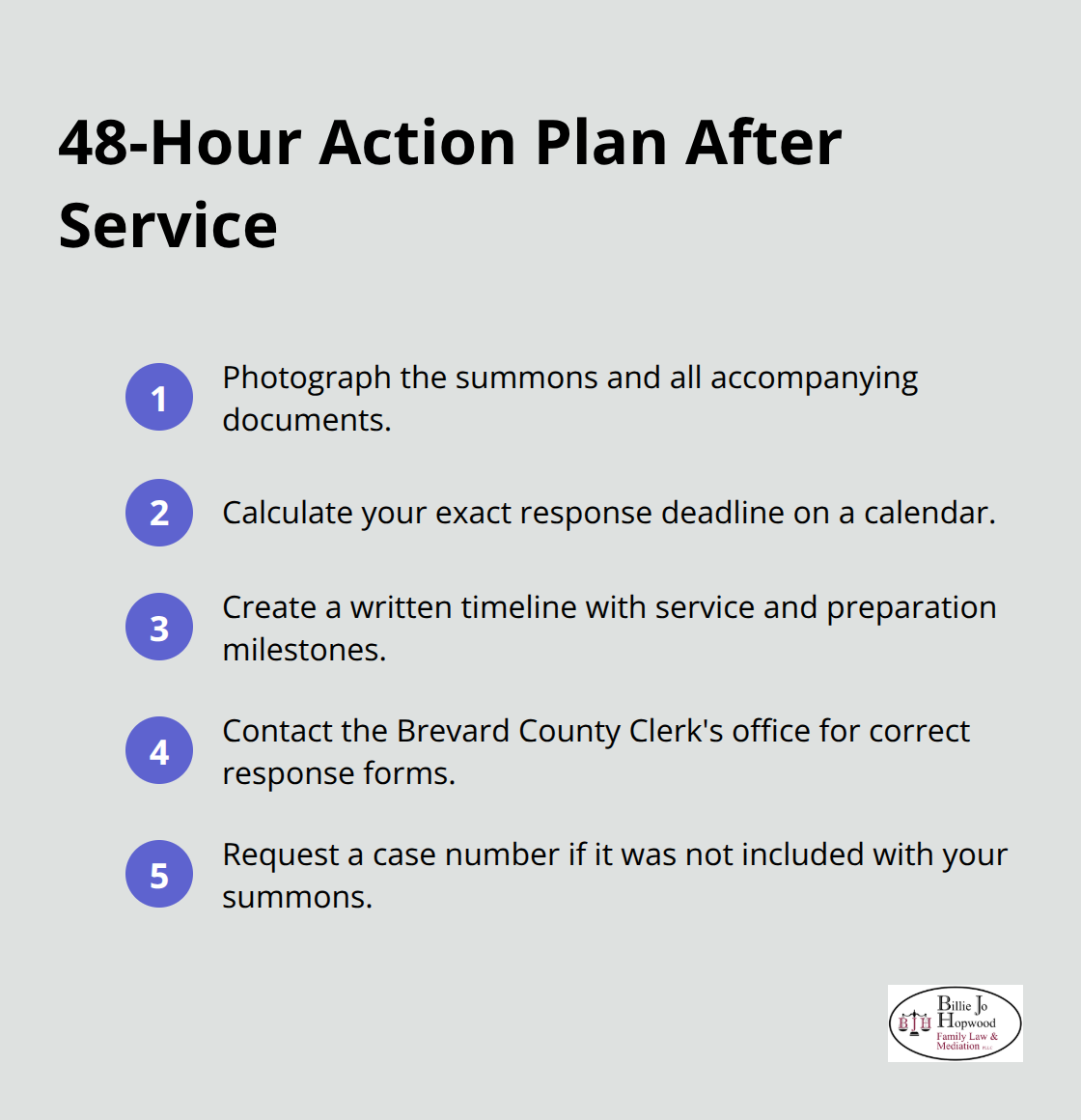
You must also request a case number if one wasn’t included with your summons, as all future documents require this identifier.
Complete Your Written Response Correctly
Your written response must address every single allegation in the petition. You must either admit, deny, or state you lack sufficient knowledge to form a belief about each claim. Florida law treats any unanswered allegation as automatically admitted, which means silence equals agreement in court.
The standard response form requires your full legal name, current address, telephone number, and case details exactly as they appear on the summons. You must also file any counterclaims or requests for relief in this initial response, as Florida courts rarely allow additional claims after the deadline passes.
Brevard County courts reject approximately 25% of initial responses for technical defects (missing signatures, incorrect case numbers, or incomplete address information). After you complete your response, make three copies: one for the court file, one for the other party or their attorney, and one for your records.
File and Serve Your Response
File the original with the clerk and pay the required fee, which ranges from $295 to $409 based on your case type and whether you request a jury trial. Florida law requires you to serve a copy of your response on the other party within the same timeframe as your court submission.
You can accomplish this through certified mail, personal service by a process server, or hand delivery to the attorney’s office. The person who serves the documents must complete an affidavit of service and file it with the court as proof of compliance.
Prepare for Case Management Conference
After you file your response, the court will schedule a case management conference within 90 days where both parties must appear. This conference covers settlement possibilities, discovery procedures, and trial schedules. Both parties must discuss these matters under judicial supervision, which makes proper preparation vital for protection of your interests throughout the remainder of the case.
Final Thoughts
A summons family law document demands immediate action that can protect or destroy your family’s future. The 20-day response deadline in Florida leaves no room for procrastination or wishful thinking. Default judgments strip away your parental rights, financial security, and voice in decisions that affect your children for years to come.
Professional legal guidance transforms an overwhelming process into manageable steps with clear outcomes. We at Billie Jo Hopwood Family Law & Mediation, PLLC help Melbourne families navigate divorce, child custody, alimony, and child support matters. Our approach protects your interests throughout the legal process while you face the stress and uncertainty that comes with family law proceedings.
Your next step involves immediate action to preserve your rights. Calculate your response deadline, gather required documents, and contact Billie Jo Hopwood Family Law & Mediation, PLLC for guidance tailored to your specific situation. The decisions you make in the coming days will shape your family’s future (making professional representation an investment in your long-term stability and peace of mind).