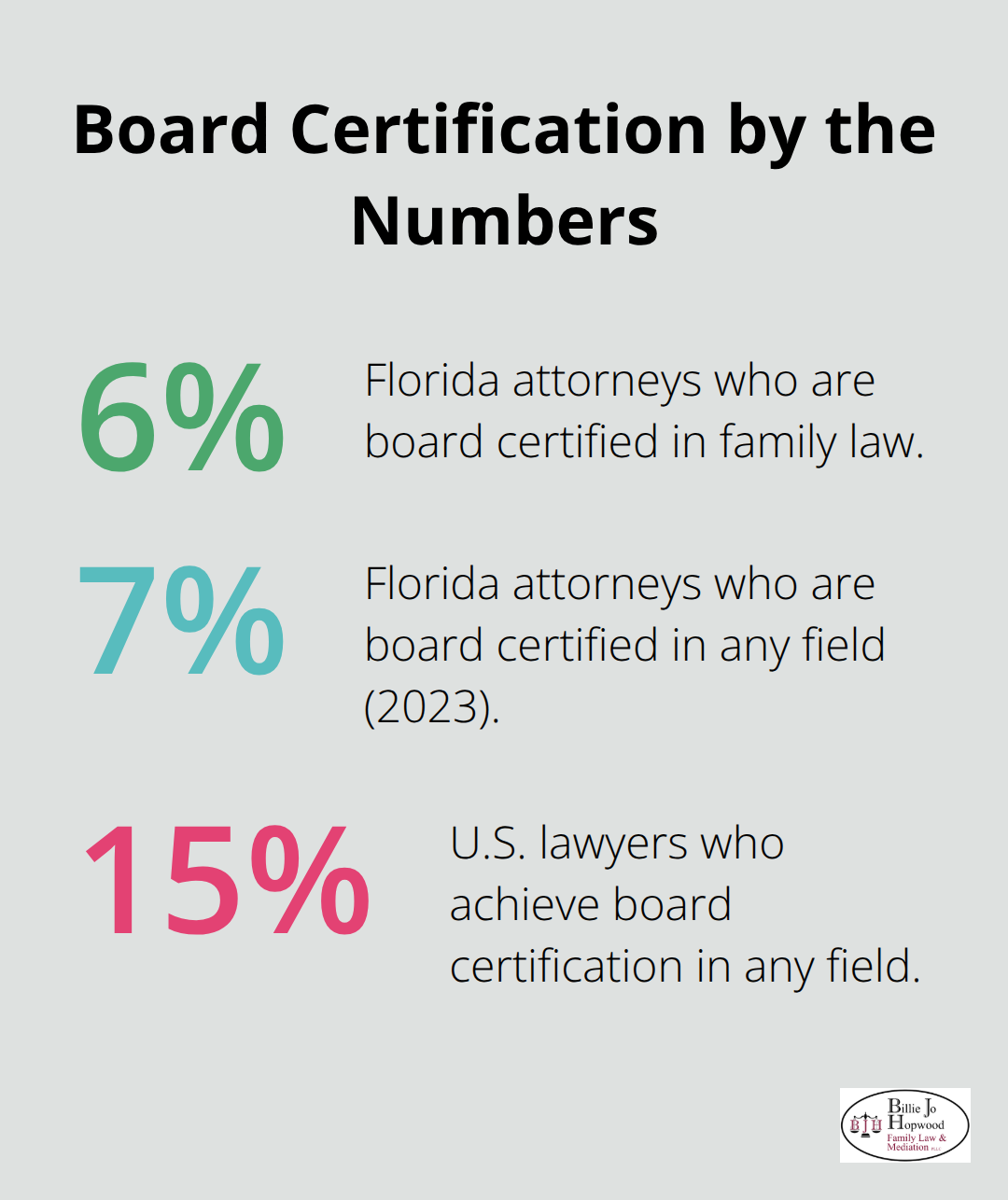
When facing divorce or custody matters in Melbourne Florida, your attorney’s qualifications can make or break your case. Only 6% of Florida attorneys hold board certified family law credentials.
At Billie Jo Hopwood Family Law & Mediation, PLLC, we understand how this distinction impacts your family’s future. Board certification represents the highest level of legal competence in family matters.
What Makes Board Certification Different
The Rigorous Path to Certification
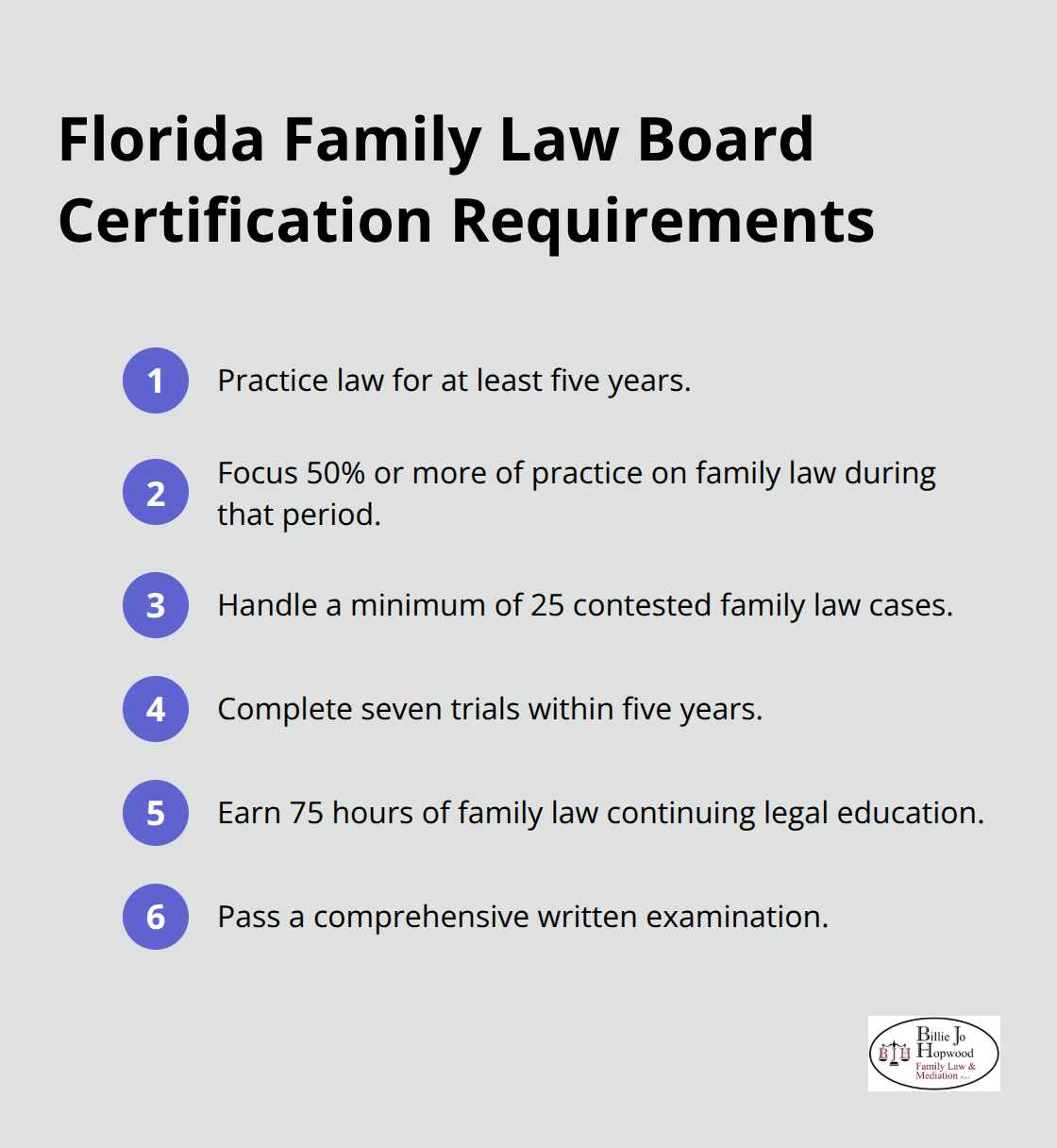
Board certification in family law requires far more than a law degree and state bar admission. The Florida Bar mandates that attorneys practice law for at least five years before they can apply, with 50% or more of their practice focused on family law matters during this period. Candidates must handle a minimum of 25 contested family law cases and complete seven trials within five years before their application. The Florida Bar requires 75 hours of continuing legal education in family law topics during this timeframe. Only after attorneys meet these requirements can they attempt the comprehensive written examination that tests their knowledge of Florida family law statutes and procedural rules.
Beyond Basic Legal Practice
Licensed attorneys can practice family law immediately after they pass the bar exam, but board certified attorneys have proven their competence through peer evaluations and rigorous tests. The American Bar Association reports that only about 15% of lawyers achieve board certification in any field (making these credentials rare). In Florida, merely 7% of all attorneys hold board certification as of 2023. This distinction matters because certified attorneys must recertify every five years and complete ongoing education to maintain their status.
The Peer Review Process
The certification process includes evaluations from judges, opposing counsel, and other legal professionals who can attest to the attorney’s skill level and ethical standards in actual practice situations. These professionals observe how attorneys handle cases, interact with clients, and conduct themselves in court proceedings. The review process examines not just legal knowledge but also professional behavior and ethical conduct throughout real family law cases.
This rigorous vetting process creates a clear advantage when you need to verify whether your attorney possesses the advanced qualifications necessary for complex family law matters.
Why Board Certification Delivers Superior Results
Board certified family law attorneys handle complex financial matters with precision that general practitioners cannot match. These attorneys possess advanced training in asset valuation, business appraisals, and property division strategies that prove invaluable in high-net-worth divorces. The Florida Bar requires certified attorneys to demonstrate trial experience in at least seven contested cases, which means they have proven courtroom skills under pressure. This trial experience translates directly to better negotiation outcomes, as opposing counsel recognizes the certified attorney’s willingness and ability to take cases to trial when necessary.
Strategic Advantages in Custody Disputes
Certified attorneys understand Florida’s custody statutes at a granular level, which includes recent changes to time-sharing calculations and parental responsibility guidelines. Their mandatory 75 hours of continuing education in family law topics means they stay current on evolving case precedents and procedural modifications. This knowledge becomes critical when they craft parenting plans that courts will approve or when they challenge custody arrangements that don’t serve children’s best interests. The peer review process these attorneys undergo includes evaluations from family court judges (providing insight into judicial preferences and courtroom dynamics that can influence case outcomes).
Financial and Settlement Outcomes
Studies from the American Bar Association show that clients represented by certified attorneys achieve more favorable financial settlements compared to those who use general practitioners. Certified attorneys leverage their deep understanding of Florida’s equitable distribution laws to identify hidden assets and protect clients from unfavorable property divisions. Their experience with complex financial instruments, retirement accounts, and business valuations helps clients avoid costly mistakes during asset division negotiations. The recertification requirement every five years means these attorneys maintain current knowledge of tax implications and financial strategies that impact long-term client outcomes (making their advice more valuable over time).
Courtroom Performance and Trial Skills
Board certified attorneys demonstrate superior courtroom performance due to their proven trial experience and ongoing education requirements. They understand evidence rules, procedural requirements, and judicial expectations that can make or break a case. Their certification process includes peer evaluations from judges who observe their courtroom conduct and legal arguments firsthand. This combination of trial experience and judicial feedback creates attorneys who can navigate complex family court proceedings with confidence and skill. When you need to verify your attorney’s qualifications and certification status, several reliable methods can help you make an informed decision.
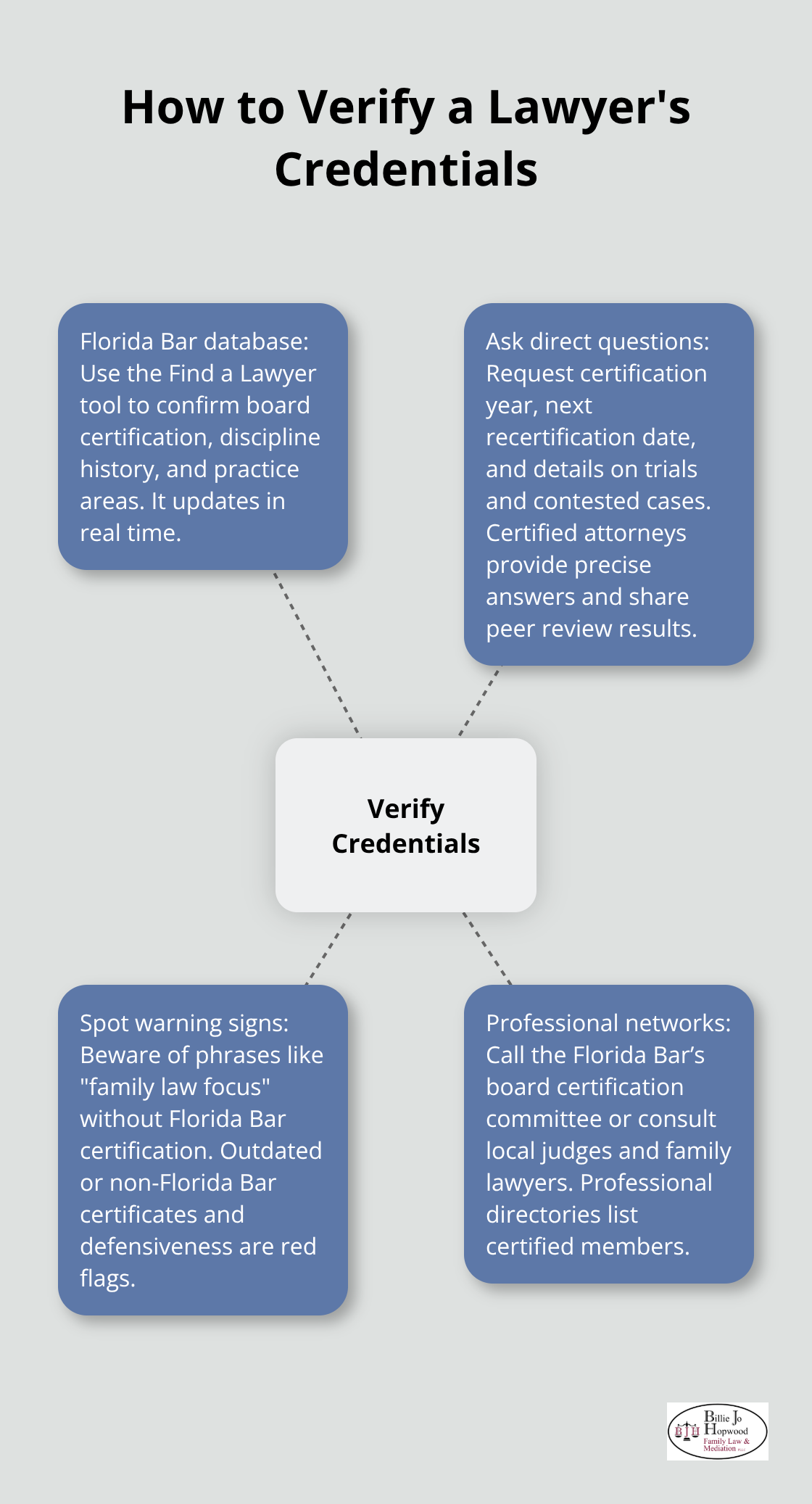
How Do You Check Your Attorney’s Credentials
The Florida Bar’s Official Database
The Florida Bar maintains a comprehensive online attorney search database that provides instant access to board certification status for all licensed attorneys in the state. Navigate to the Florida Bar website and use their Find a Lawyer tool, which displays certification details, disciplinary history, and practice areas for each attorney. This database updates in real-time, so you can verify current certification status rather than rely on outdated marketing materials or website claims.
Direct Questions That Reveal True Qualifications
Ask your prospective attorney specific questions about their certification timeline and maintenance requirements. Request the exact year they received board certification and when their next recertification comes due. Certified attorneys will provide precise dates and discuss their ongoing education requirements without hesitation. Ask how many contested family law cases they handled during their five-year certification period and request specific details about their trial experience. Legitimate board certified attorneys will readily share their peer review results and examination scores. If an attorney provides vague responses or deflects these questions, they likely lack proper certification credentials.
Warning Signs of Misleading Representation
Attorneys who claim to practice family law but cannot produce board certification documentation often use misleading language like “family law focus” or “family law concentration” instead of certified credentials. The Florida Bar reports that attorneys sometimes display outdated certificates or certifications from organizations other than the Florida Bar (which do not carry the same weight or requirements). Watch for attorneys who emphasize years of experience without mentioning board certification, as longevity alone does not indicate advanced competence. Any attorney who refuses to provide their Florida Bar number for verification or becomes defensive about credential questions should raise immediate concerns about their qualifications and transparency.
Verification Through Professional Networks
Contact local family court judges or other family law attorneys for references about your prospective attorney’s reputation and certification status. The Florida Bar’s board certification committee maintains records of all certified attorneys and can confirm certification status when you call their offices directly. Professional legal organizations often publish directories of board certified members (making verification straightforward for potential clients).
Final Thoughts
Board certified family law attorneys provide measurable advantages in divorce and custody proceedings through their proven competence and advanced training. The rigorous certification process creates attorneys who understand Florida’s complex family law statutes and deliver superior courtroom performance when your family’s future depends on skilled representation. These attorneys have met the highest standards that the Florida Bar establishes for family law practice.
You must verify your attorney’s credentials through the Florida Bar’s official database and ask direct questions about their certification status to make an informed decision about legal representation. The 6% of Florida attorneys who hold board certification have demonstrated their commitment to excellence through peer evaluations, comprehensive examinations, and ongoing education requirements. This verification process protects you from attorneys who may misrepresent their qualifications or experience levels.
When you face challenging family legal situations in Melbourne Florida, proper credentials matter significantly in complex family law proceedings. Board certified family law attorneys possess the advanced knowledge and proven trial experience that can influence the outcome of your case. Billie Jo Hopwood Family Law & Mediation, PLLC provides dedicated representation in divorce, child custody, alimony, and child support matters (with the understanding that your choice of attorney impacts your family’s future).