
Family law matters touch some of the most important decisions in your life. Whether you’re facing divorce, custody disputes, or property division, understanding what a family law lawyer does helps you navigate these challenges with clarity.
At Billie Jo Hopwood Family Law & Mediation, PLLC, we work with families throughout Melbourne, Florida who need guidance through complex legal situations. A family law lawyer’s job description covers far more than courtroom appearances-it includes strategy, negotiation, and protecting your interests at every step.
What Family Law Lawyers Actually Handle
Divorce and Separation Matters
Family law lawyers manage a broad range of legal matters that directly affect your finances, relationships, and custody of your children. Divorce cases require a lawyer to handle everything from filing initial paperwork to negotiating settlement terms or representing you in court if litigation becomes necessary. The American Bar Association confirms that family lawyers help with marriage dissolution, prenuptial agreements, and separation arrangements. A lawyer prepares detailed financial disclosures, reviews tax returns and retirement account statements, and negotiates terms that reflect both parties’ actual situations.
Custody, Support, and Alimony
Child custody and support represent another major responsibility. Lawyers work to establish custody agreements, visitation schedules, and child support calculations based on state formulas. In Florida, child support follows specific guidelines tied to each parent’s income and custody arrangement. Alimony and property division demand careful attention because Florida operates as an equitable distribution state, meaning marital assets and debts are divided fairly but not necessarily equally. Inheritances typically remain separate property unless you deposit them into joint accounts, which can change their status. A family lawyer also helps protect non-marital assets by documenting their origin and keeping them separate throughout the divorce process.
Beyond Core Divorce Issues
Lawyers handle adoption proceedings, establishment of paternity, guardianship matters, and estate planning that intersects with family concerns. They also manage cases involving domestic violence, restraining orders, and modification of existing custody or support orders when circumstances change significantly. This coordination with financial professionals, child specialists, or mediators matters because complex cases with substantial assets, business ownership, or custody disputes require perspectives that extend beyond legal documents alone.
Strategic Guidance and Realistic Expectations
A lawyer explains how Florida law applies to your specific circumstances-for example, how the length of your marriage, your standard of living, and each spouse’s earning capacity factor into alimony calculations. They advise you on the risks of proceeding to court versus settling through mediation, helping you understand realistic outcomes rather than unrealistic expectations. When selecting a lawyer, prioritize practitioners who handle 80% or more family law cases rather than general practice lawyers, as specialized experience directly impacts the quality of your representation. They draft custody proposals that align with your children’s needs and coordinate with other professionals when your case benefits from additional perspectives. Understanding these strategic choices positions you to make informed decisions about whether mediation, negotiation, or litigation serves your family’s interests best.
How Family Law Lawyers Support Your Case
Financial Analysis and Cost Management
A family law lawyer translates legal complexity into actionable strategy tailored to your situation. Your lawyer reviews financial documents like tax returns, pay stubs, and retirement account statements to build an accurate picture of marital assets and income. They identify which assets remain non-marital property and which fall under Florida’s equitable distribution rules. The National Law Journal reports that average attorney fees run around $391 per hour, making it essential that your lawyer works efficiently. During initial consultations, discuss billing structure upfront-whether hourly, flat fee, or retainer-based-so you understand costs before committing.
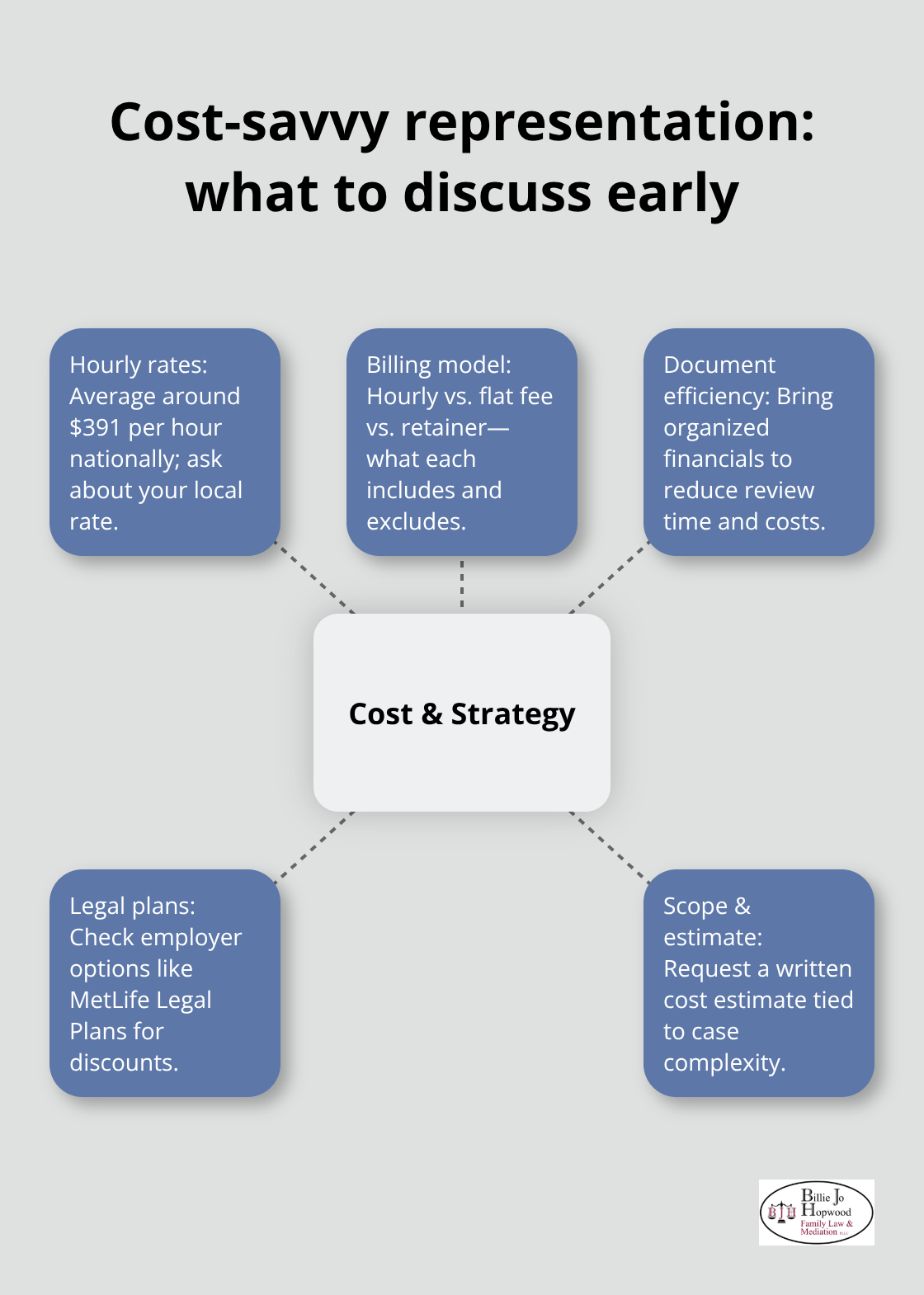
Many clients benefit from employer-provided legal plans like MetLife Legal Plans, which offer discounted access to family law counsel if budget concerns exist.
Understanding Florida Law and Your Position
Your lawyer explains how Florida law specifically impacts your case: the length of your marriage, your standard of living, and each spouse’s earning capacity directly influence alimony calculations. This guidance prevents you from pursuing unrealistic settlement terms or undervaluing your position before negotiations begin. Your lawyer also handles all documentation-filing divorce petitions, financial disclosure forms, custody proposals, and settlement agreements-ensuring paperwork meets Florida court requirements and deadlines.
Negotiation and Strategic Representation
Your lawyer negotiates directly with the opposing party’s counsel to resolve disputes over asset division, custody arrangements, and support amounts, which often prevents costly litigation. When mediation makes sense for your family, a lawyer experienced in mediation explains how that process works and what outcomes remain negotiable versus what state formulas dictate (like child support calculations).
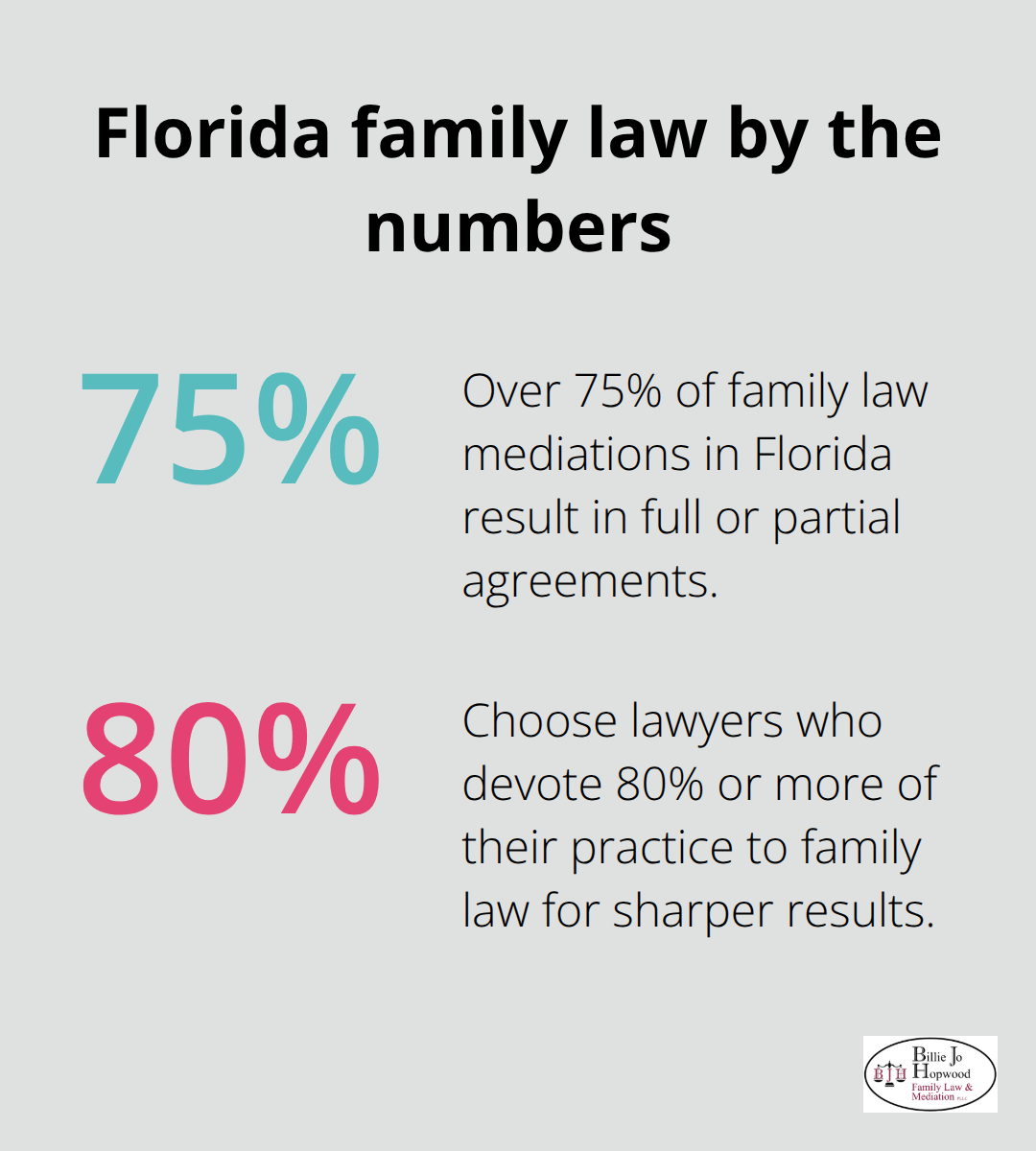
If your case proceeds to trial, your lawyer presents evidence, examines witnesses, and argues your position before a judge. The Florida Dispute Resolution Center reports that over 75% of family law mediations yield full or partial agreements, indicating that skilled negotiation frequently resolves matters without trial.
Building Effective Communication
Communication matters enormously-establish preferred contact channels early, typically email for substantive matters, to create records and reduce miscommunication. Ask your lawyer to explain the reasoning behind recommendations so you understand available options and likely consequences. If you disagree with a proposed strategy, discuss it openly; ultimately you decide how your case proceeds within ethical bounds. A responsive attorney adjusts communication frequency to your preferences rather than overwhelming you with unnecessary updates or leaving you in the dark.
When you’re ready to move forward with representation, selecting a lawyer who aligns with your communication style and understands your priorities sets the foundation for effective collaboration throughout your case.
How to Choose a Family Law Lawyer in Melbourne, Florida
Identify Your Priorities Before Consulting
Start by identifying what matters most to you in legal representation. Write down three non-negotiable qualities-responsiveness, cost transparency, and understanding of mediation-before you schedule any consultations. This approach prevents you from being swayed by charisma or reputation alone. Then schedule initial consultations with at least two, preferably three, lawyers to compare their approaches.
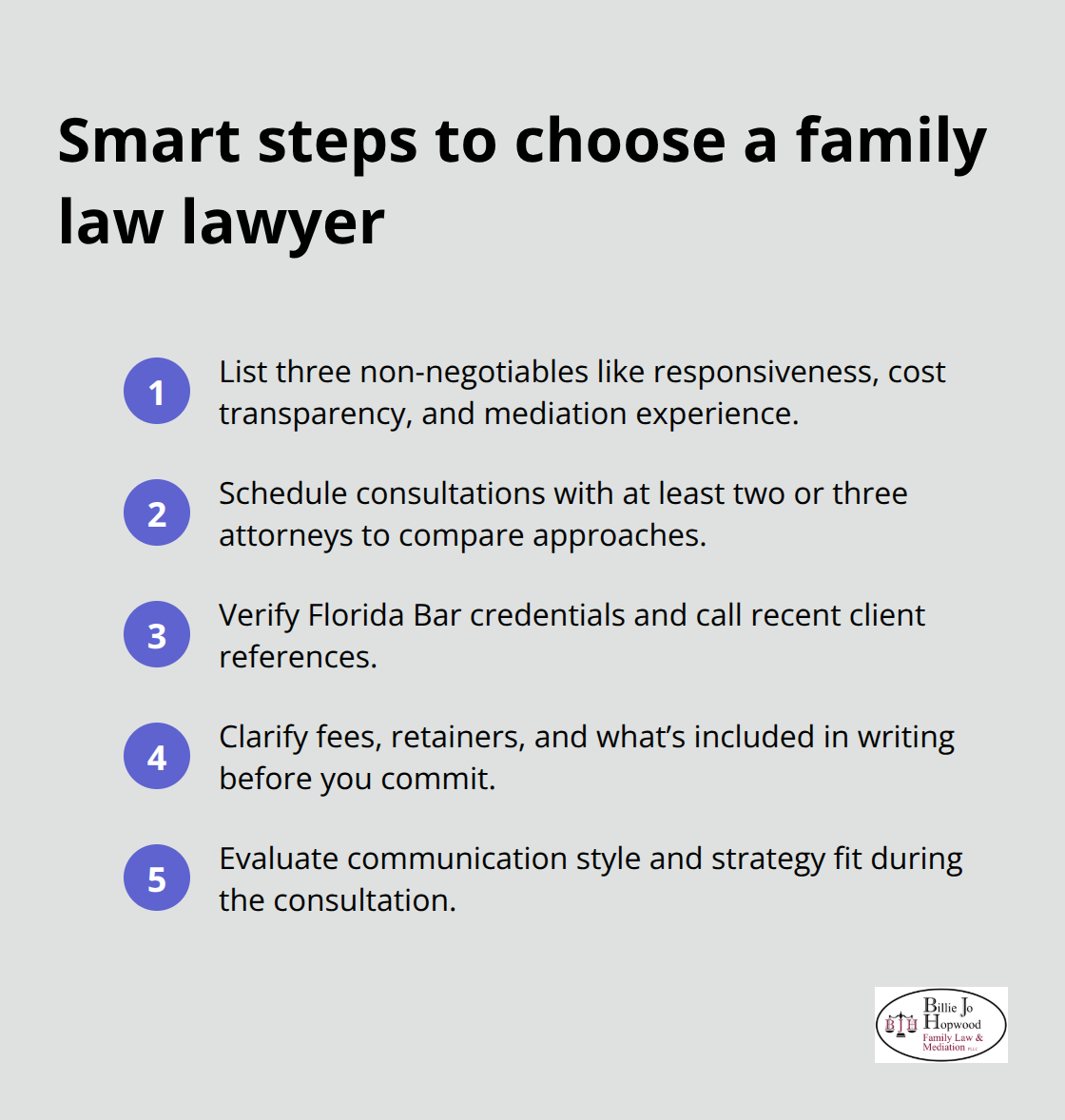
Many offer free or low-cost initial meetings, though be cautious about extremely inexpensive options with newer practitioners if your case involves substantial assets or custody disputes.
Assess Experience and Practice Focus
During consultations, ask directly about their experience with cases matching yours. How many divorces have they handled in the past year? What percentage of their practice focuses on family law? Lawyers who dedicate 80% or more of their practice to family law typically deliver sharper results than general practitioners juggling multiple practice areas. Ask about their typical timeline for cases similar to yours and whether they recommend mediation early or pursue litigation first. This reveals their philosophy and whether it aligns with your goals.
Verify Credentials and Check References
Request references from recent clients-not just names, but specific permission to contact them about their experience. Call at least two references and ask about responsiveness, whether the lawyer explained strategy clearly, and if the final outcome matched expectations. The Florida Bar Association website allows you to verify credentials, confirm active licensing, and check for disciplinary history or complaints. This step takes fifteen minutes and eliminates lawyers with ethical problems.
Understand Fees and Cost Structure
Cost transparency separates trustworthy lawyers from those who hide fees until you’re already committed. Ask upfront whether they bill hourly, use retainers, or charge flat fees for specific services. The National Law Journal reports average family law fees around $391 per hour, but Melbourne rates vary. Request a written estimate of likely total costs based on your case complexity and whether mediation or litigation seems probable. Discuss what services fall within the retainer and what costs extra. If your employer offers legal plans like MetLife Legal Plans, ask if the lawyer accepts them.
Evaluate Communication Style and Strategy Approach
During your consultation, assess how the lawyer explains Florida law to you. Can they articulate how the length of your marriage, your standard of living, and each spouse’s earning capacity factor into alimony without overwhelming you with jargon? Do they listen more than they talk, asking questions about your goals and concerns? A lawyer who spends the consultation explaining their credentials rather than understanding your situation is showing you how they’ll operate. Pay attention to how they handle your questions about strategy. Strong lawyers explain available options, realistic consequences of each path, and their recommended direction with clear reasoning. They don’t dismiss mediation as weak or push litigation as the only serious approach. If they seem defensive about your questions or dismiss your concerns, that’s a signal to move forward with another candidate. Trust your instinct about fit-a lawyer with an impressive track record won’t serve you well if their communication style creates stress rather than reducing it.
Final Thoughts
A family law lawyer’s job description extends far beyond courtroom appearances-these professionals guide you through financial analysis, negotiate settlements, manage complex paperwork, and explain how Florida law applies to your specific circumstances. Your lawyer protects non-marital assets, verifies that child support calculations follow state formulas accurately, and negotiates alimony terms reflecting your actual earning capacity and standard of living. Without this guidance, you risk accepting unfavorable terms, missing legal deadlines, or overlooking assets that should remain yours.
Starting your search for representation requires identifying your priorities first. Write down three qualities that matter most to you, then schedule consultations with at least two lawyers to compare their approaches. Ask about their experience with cases like yours, verify their credentials through the Florida Bar Association, and assess whether their communication style reduces stress rather than creating it.
We at Billie Jo Hopwood Family Law & Mediation, PLLC understand that family law matters demand compassionate guidance paired with strong legal knowledge. Based in Melbourne, Florida, we assist families through divorce, child custody, alimony, and child support matters. When you’re ready to move forward, contact our firm to discuss how we can support your family through this challenging time.