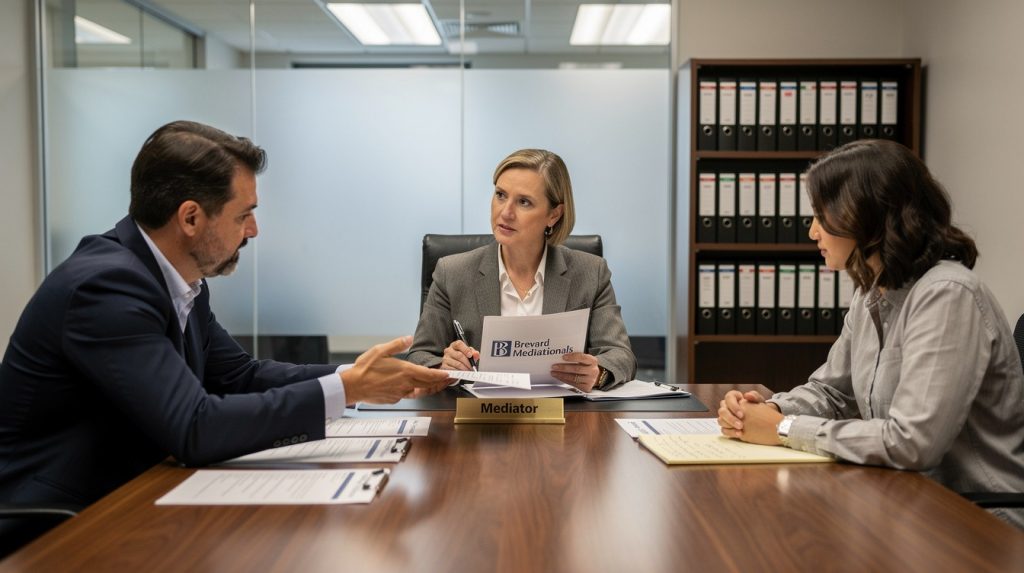
Family law matters demand clear guidance and someone who listens to your needs. At Billie Jo Hopwood Family Law & Mediation, PLLC, we work with Brevard mediation professionals who help families navigate divorce, custody, and support agreements without the courtroom battle.
Mediation offers a faster, more affordable path forward than litigation. This guide shows you what to look for in a mediation professional and how the process works in Brevard County.
What Credentials and Experience Actually Matter
Certifications Tell Only Part of the Story
Credentials matter, but not in the way most people think. A mediator doesn’t need a law degree to be effective-many of the best mediators in Brevard County hold certifications from organizations like the Florida Mediation Center or the Association for Conflict Resolution, which require 40 to 60 hours of specialized training plus ongoing education. What matters far more is whether they’ve actually handled cases like yours.
Someone who has mediated 200 divorce cases will navigate property division differently than someone who dabbles in mediation alongside other work. Ask directly: How many custody disputes have you mediated? How many property divisions? If a mediator hesitates or gives vague answers, that’s your signal to keep looking.
Why Case Experience Changes Everything
Experience with similar cases means they’ve seen what works and what derails negotiations. They know which financial disclosure documents matter most, which custody arrangements courts typically accept, and when to push back versus when to give ground.
Training in communication and conflict resolution also matters significantly. Look for mediators trained in facilitative mediation, which focuses on helping both parties reach their own solutions, rather than evaluative mediation, where the mediator pushes their own recommendations. Facilitative mediators work better for family law because they keep both people invested in the outcome.
How a Mediator Listens Reveals Everything
Communication style determines whether mediation actually works. A mediator who talks more than they listen will make one spouse feel unheard. A mediator who shows frustration or judgment will poison the entire process. The best mediators ask clarifying questions, remain neutral when emotions run high, and help translate what people really mean when they’re angry or scared.
During your initial consultation, notice how they listen. Do they interrupt? Do they take notes? Do they ask follow-up questions? Request a trial session or consultation before committing. Most mediators offer initial consultations for a modest fee, and that hour tells you everything you need to know about whether they’re the right fit for your situation.
Testing the Fit Before You Commit
The first meeting with a potential mediator reveals their actual approach. You’ll see whether they create space for both people to think clearly and negotiate fairly. Pay attention to how they handle disagreement or tension during that initial conversation. A mediator who remains calm and focused under pressure will serve you well when negotiations get difficult. This assessment phase matters because the wrong mediator can extend your process and increase costs, while the right one moves things forward efficiently. Once you’ve found someone who listens well and has handled cases similar to yours, you’re ready to understand how the actual mediation process unfolds in Brevard County.
How Mediation Actually Unfolds in Brevard County
The Three Phases of Mediation
The mediation process in Brevard County follows a structured path, though the timeline varies based on complexity. Three distinct phases shape the journey: the opening assessment where both parties and the mediator establish ground rules and identify core issues, the negotiation sessions where actual problem-solving happens, and the final agreement phase where terms get documented. Most mediations take between four and twelve weeks, depending on how many sessions you need.
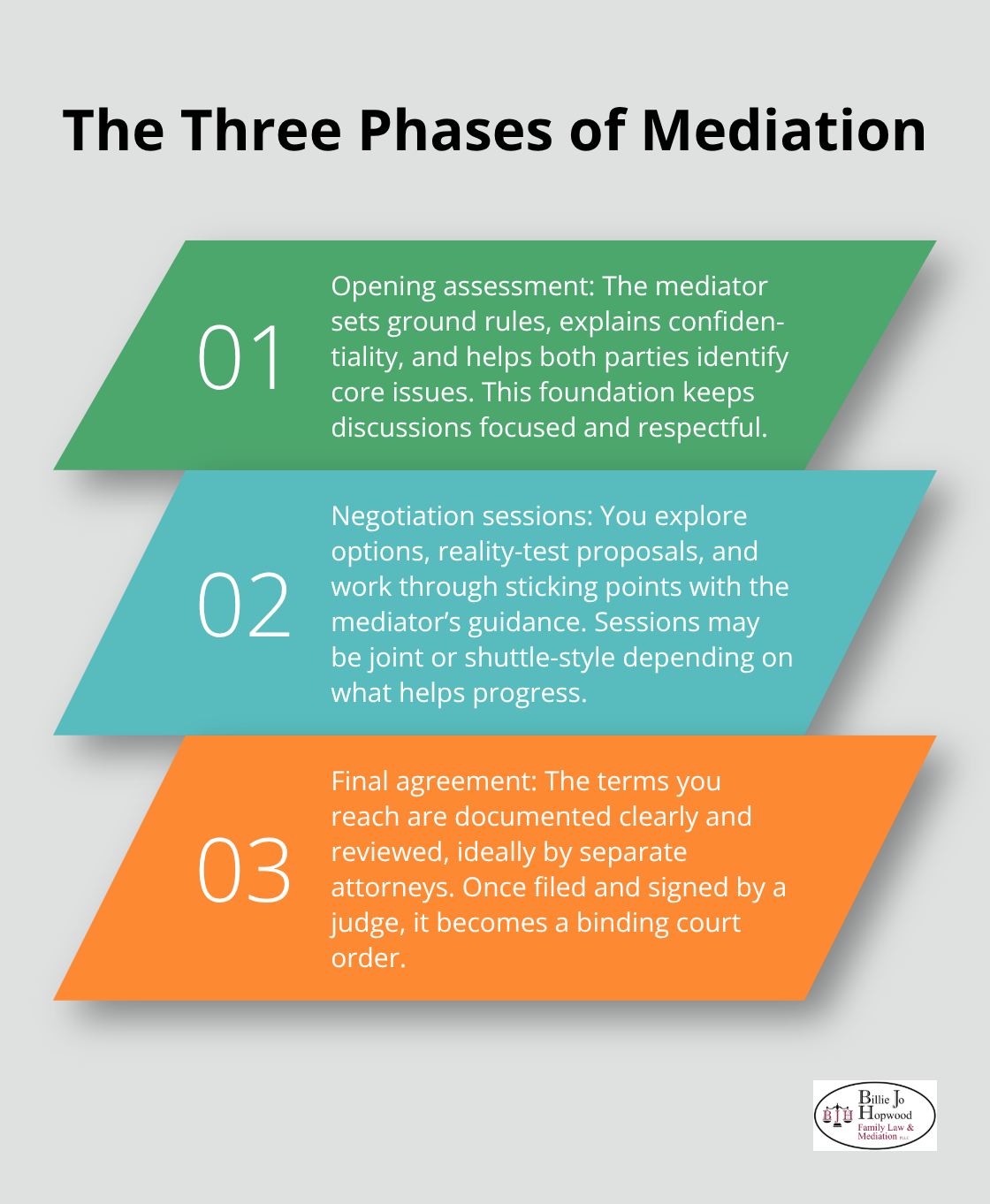
Straightforward cases resolve in two or three sessions; complicated property divisions with multiple assets may require six to eight meetings spaced weeks apart.
What Happens in Your First Session
Your first session focuses on getting organized and setting expectations. The mediator meets with both of you together to explain how mediation works in Brevard, establish confidentiality agreements, and identify what needs resolving. This opening meeting usually lasts two to three hours and costs between three hundred and six hundred dollars total, split between both parties. Each person gets to explain their perspective without interruption during this time. The mediator listens for the underlying interests beneath the positions people state. If you fight over custody, the real issue might be one parent’s fear about losing connection with the children, not a desire to punish the other parent. Identifying these deeper concerns changes everything about how negotiations proceed. After this initial session, you’ll know whether mediation feels right and what the next steps look like. The mediator will ask you to gather financial documents, custody schedules, and any other information relevant to your situation. Coming prepared to subsequent sessions saves significant time and money.
How Negotiation Sessions Move You Forward
Negotiation sessions happen separately or together, depending on what works best. Some mediators use shuttle mediation, meeting with each person individually to understand their limits and explore creative options before bringing everyone back together. Others keep both parties in the same room throughout, which can move things faster but requires stronger emotional regulation from everyone involved. During these sessions, the mediator helps you move past stuck positions. If one person demands the house and the other refuses to leave, the mediator asks questions like: What do you need from the house? Is it the financial equity, the stability, or the memories? Could you achieve those needs another way? This reframing opens doors that direct negotiation never does. Research shows that mediated agreements stick around ninety percent of the time, compared to court-ordered agreements where parties often return to court within two years fighting over modifications. This happens because mediated agreements reflect what both people actually agreed to, not what a judge imposed.
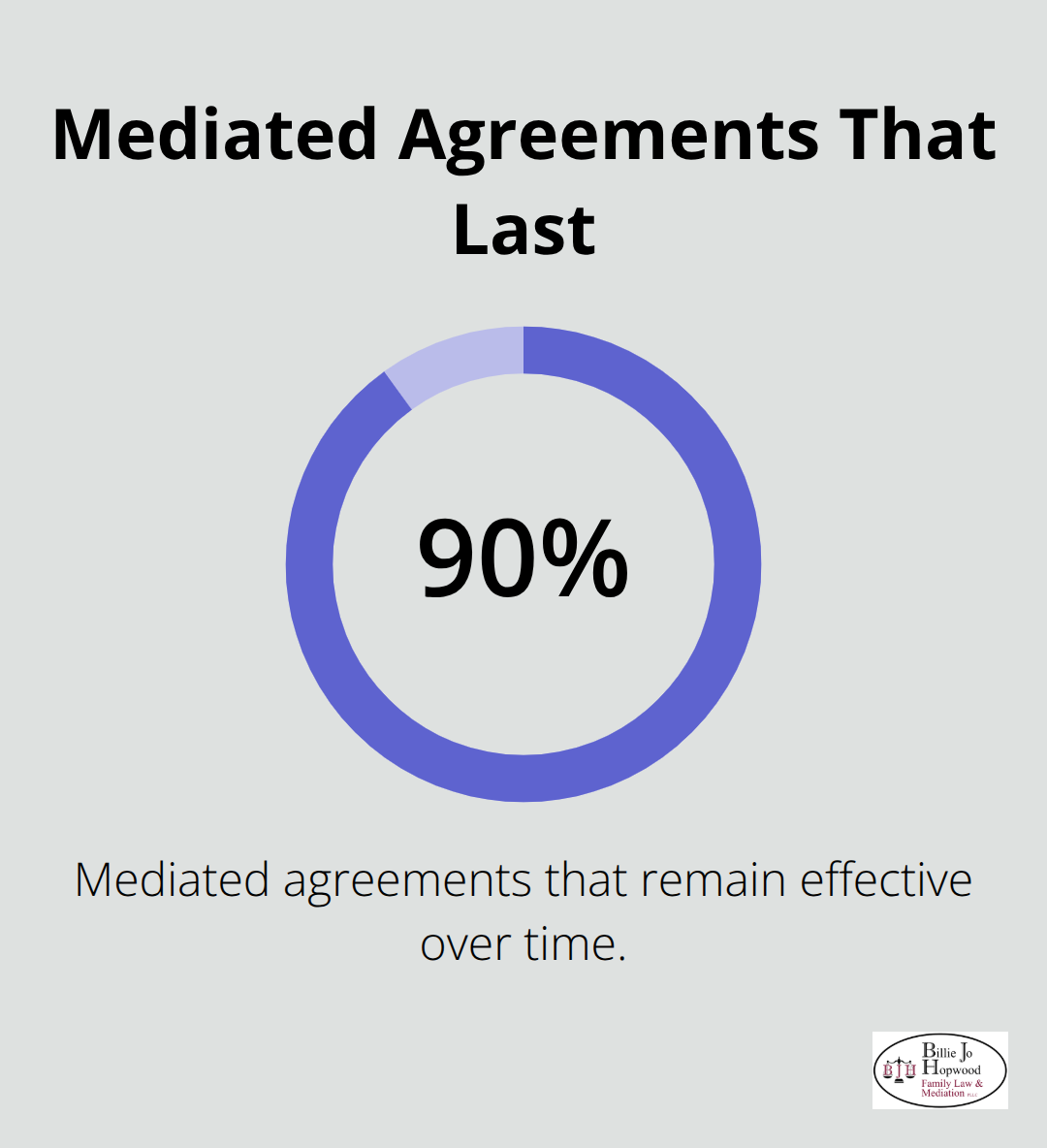
Each negotiation session typically runs one to two hours and costs three hundred to six hundred dollars per session. You’ll attend multiple sessions, often spaced one to three weeks apart, allowing time to think between meetings.
Finalizing Your Agreement
Once you’ve negotiated the major terms, the mediator works with you to document everything clearly. This agreement draft gets reviewed by both parties and, ideally, by separate attorneys before signing. Having an attorney review your mediated agreement before finalizing it (even if you didn’t use an attorney during mediation itself) catches language issues that could create problems later when one party interprets a clause differently. The final agreement in Brevard gets filed with the court, becoming a binding order. Once the judge signs off, your mediated settlement has the same legal weight as a litigated judgment. The whole process from initial consultation to signed final agreement typically costs between fifteen hundred and four thousand dollars for both parties combined, a fraction of litigation costs that frequently exceed twenty thousand dollars.
Understanding how mediation unfolds in Brevard County shows why this path works so well for families. The structured approach, combined with the mediator’s skill at reframing conflict, creates space for real solutions. Once you grasp the process itself, the next question becomes: which family law matters actually benefit most from mediation?
Which Family Law Issues Work Best in Mediation
Mediation works exceptionally well for the three most common family law matters that bring people to Brevard County mediators: divorce settlement negotiations, custody arrangements, and support agreements. The reason is straightforward-these issues require ongoing decisions and adjustments, not one-time judgments. When a judge orders custody terms or support amounts, parents and former spouses often return to court within two years seeking modifications because circumstances changed. Mediated agreements avoid this cycle because both parties helped shape the terms and understand the reasoning behind them. According to the American Bar Association, mediated agreements in family law have a compliance rate above ninety percent, while court-ordered agreements see modifications requested in roughly forty percent of cases within two years.
How Property Division Changes in Mediation
Property division during divorce settlements becomes far less contentious in mediation than in court battles. When a judge divides assets, one person usually leaves the courtroom feeling they lost. In mediation, you can structure property division in creative ways that work for both of you-one person keeps the house while the other gets retirement accounts plus cash, or you sell property and split proceeds in a way that reflects what each person actually needs. The financial disclosure phase takes time, but once both parties understand the complete picture, disagreements often shrink dramatically. Most people fighting over assets are actually fighting over security and fairness, not the specific items themselves. A skilled mediator in Brevard County helps translate that concern into solutions.
Custody and Visitation Arrangements That Actually Work
Custody and visitation arrangements demand this same flexibility. Courts typically order alternating weekends and Wednesday dinners, a schedule that works for nobody. Mediation allows you to build a schedule around your children’s actual activities, your work schedules, and what both parents genuinely need. One parent might need flexibility for shift work while the other prefers predictability for the children’s school routine. You can accommodate both in ways that serve everyone’s real interests.
Support Agreements That Last
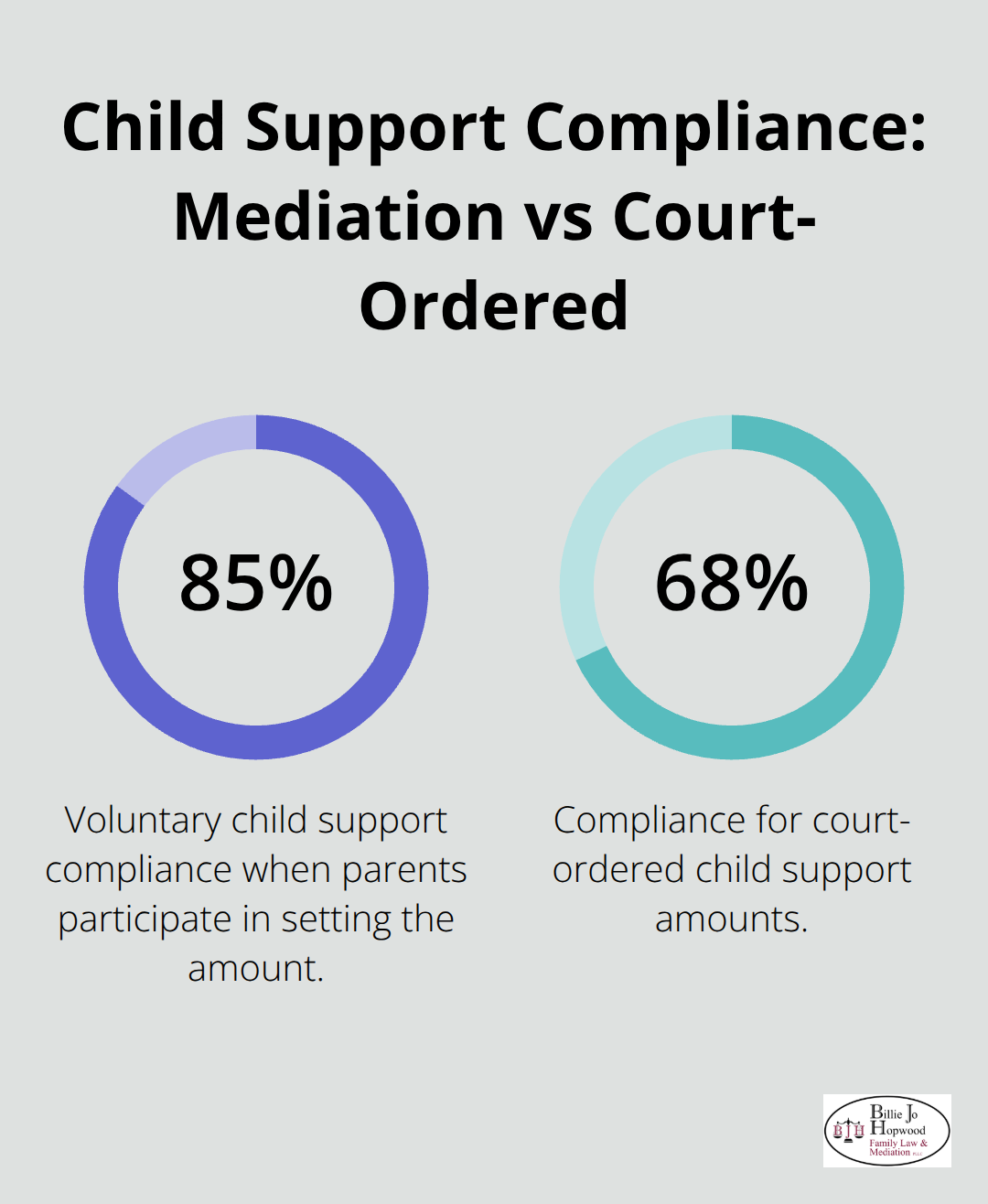
Alimony and child support agreements benefit equally from mediation because these payments continue for years or decades. If the amount feels arbitrary or punitive, resentment builds and payment becomes a constant friction point. When both people participate in determining support amounts and understand how those numbers were calculated, they tend to maintain those payments reliably. The Florida Department of Revenue reports that voluntary child support compliance rates exceed eighty-five percent when parents participate in determining the amount, compared to sixty-eight percent for court-ordered support. These numbers reflect something fundamental: people follow agreements they helped create far more consistently than orders imposed upon them.
Final Thoughts
Mediation offers families in Brevard County a fundamentally different path than litigation. Instead of fighting in court where a judge imposes decisions, mediation lets both people shape outcomes that actually work for their lives. The numbers speak clearly: mediated agreements have compliance rates above ninety percent because people follow agreements they helped create, while court-ordered arrangements see modification requests in forty percent of cases within two years.
The financial difference matters significantly. Litigation in family law cases frequently costs twenty thousand dollars or more per person, whereas mediation typically costs between fifteen hundred and four thousand dollars total for both parties combined. That savings extends beyond money to time, stress, and your relationship with your children or former spouse (when children are involved, this matters enormously).
Brevard mediation professionals who listen well, have handled cases similar to yours, and practice facilitative mediation offer the best foundation for your process. If you’re considering mediation for your family law situation, Billie Jo Hopwood Family Law & Mediation, PLLC in Melbourne, Florida can help you understand whether this approach fits your circumstances and what your next steps look like.