When a parent stops paying child support, families face real financial hardship. Child support enforcement in Brevard County exists to hold parents accountable and protect your family’s stability.
At Billie Jo Hopwood Family Law & Mediation, PLLC, we help parents navigate enforcement options when payments fall behind. This guide walks you through Florida’s enforcement methods, the court process, and what to expect in Brevard County.
What Makes Child Support Enforceable in Florida
Florida’s Legal Framework for Support Obligations
Florida law treats child support as a legal obligation, not a suggestion. The state views support payments as a fundamental responsibility tied directly to a parent’s income and ability to pay. When Florida courts establish a child support order, they create a court order backed by enforcement mechanisms that can include wage withholding, license suspension, asset seizure, and even jail time for willful nonpayment. The Florida Department of Revenue administers child support through the State Disbursement Unit, which has processed payments since 1999 and now handles collection across all Florida counties. This centralized system means every payment gets tracked, documented, and distributed to the custodial parent through a standardized process.
How Florida Courts Calculate Support Amounts
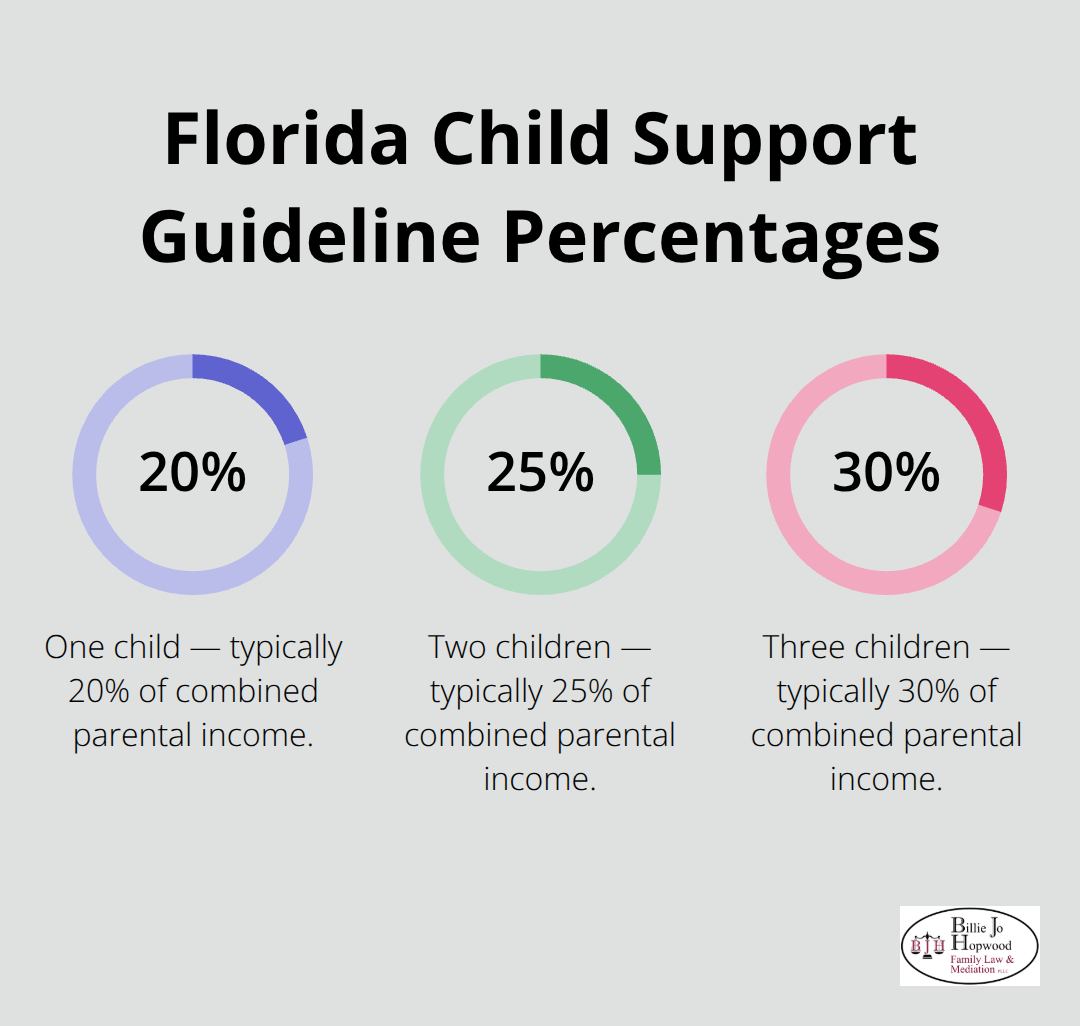
Courts calculate support amounts using Florida’s guidelines, which consider both parents’ gross monthly income, the number of children, custody arrangements, and health insurance costs. The calculation isn’t arbitrary-judges must follow statutory formulas that produce specific percentages of combined parental income. Florida uses an income shares model, which divides the total support amount between parents in proportion to their incomes. For one child, the guideline is typically 20 percent of combined income; for two children, 25 percent; for three children, 30 percent. These amounts adjust based on factors like extended custody time, special needs, or significant income disparities.
Distinguishing Between Hardship and Willful Nonpayment
Payments fall behind for various reasons, but Florida distinguishes between temporary hardship and willful nonpayment. A parent facing job loss or medical emergency might request modification, while a parent ignoring payment obligations faces enforcement action. The difference matters legally-courts can only impose jail time if they find the paying parent has the present ability to pay a specific dollar amount but refuses to do so.
Enforcement Actions That Take Effect Quickly
Once payments become delinquent, enforcement kicks in rapidly. After 15 days of nonpayment, the Clerk’s Office issues a Notice of Delinquency. If that debt remains unpaid for 20 days after the notice, a judgment enters against the nonpaying parent. This judgment can become a lien against property, vehicles, or boats.
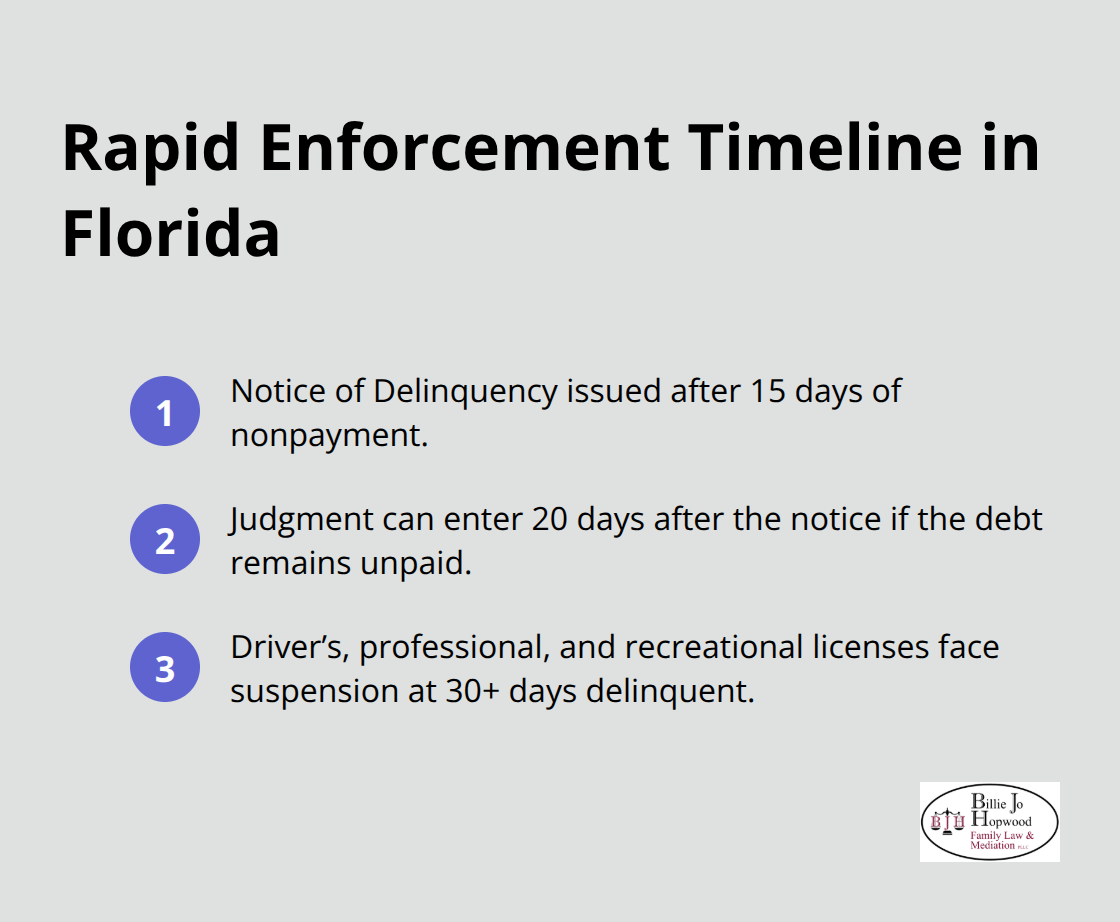
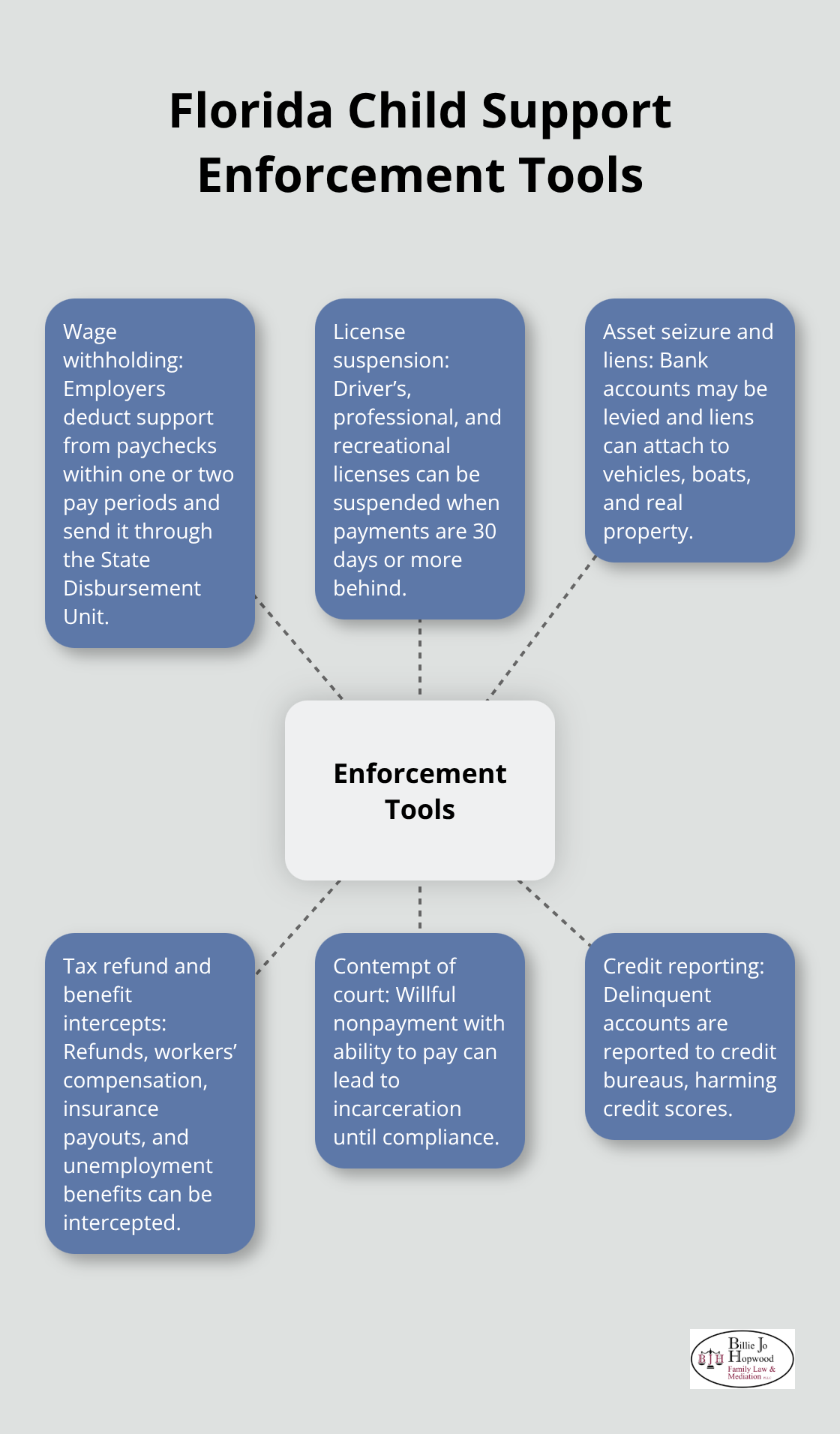
The Florida Department of Revenue intercepts tax refunds, workers’ compensation benefits, insurance settlements, and other income sources to satisfy past-due amounts. Wage withholding stands as the most common enforcement tool-employers receive an Income Deduction Order and must deduct child support directly from the employee’s paycheck before other deductions. The program also reports delinquent accounts to credit bureaus, which damages the nonpaying parent’s credit score and financial standing. Driver’s licenses, professional licenses, and recreational licenses face suspension when support payments fall 30 days or more behind.
Why Florida’s Approach Works
These enforcement tools exist because Florida recognizes that families depending on child support cannot wait for slow legal processes. The state’s approach is aggressive by design-it removes excuses and creates immediate consequences for nonpayment. If you’re owed child support and payments have stopped, understanding these enforcement options helps you take action quickly. The next section walks you through how to file an enforcement action and what happens when you work with Brevard County courts.
How Enforcement Actions Stop Nonpayment
Income Withholding: The Most Effective Tool
Income withholding stands as the most effective enforcement tool Florida uses, and it works because it removes the paying parent’s ability to ignore obligations. When the Florida Department of Revenue files an Income Deduction Order, employers must deduct child support directly from paychecks before any other deductions take effect, except taxes. This means the money goes to the State Disbursement Unit automatically, with no opportunity for the paying parent to spend it elsewhere or claim hardship. Wage withholding catches roughly 75 percent of all child support cases statewide because it eliminates the decision to pay or not to pay. The process moves fast: once the order reaches an employer, deductions typically begin within one or two pay periods. If a paying parent switches jobs, the Florida Department of Revenue tracks the change through employment databases and sends a new deduction order to the new employer, so the withholding continues without interruption.
When Wage Withholding Doesn’t Apply
For self-employed parents or those earning cash income, wage withholding doesn’t apply, which is why Florida pursues additional enforcement methods simultaneously. The state combines multiple tools to close gaps that single enforcement actions cannot address. This layered approach increases the likelihood that past-due amounts get collected regardless of how a parent structures their income.
License Suspension and Asset Seizure
License suspension kicks in when payments fall 30 days behind, and this penalty creates real pressure because it affects daily life immediately. The Clerk’s Office can suspend a Florida driver’s license upon request from the custodial parent, which means the paying parent cannot legally drive. Professional licenses for contractors, nurses, real estate agents, and other occupations face the same suspension. Recreational licenses for hunting and fishing also get suspended. Simultaneously, the Florida Department of Revenue intercepts tax refunds, workers’ compensation settlements, insurance payouts, and unemployment benefits to satisfy past-due amounts. Bank accounts get levied when balances exceed a certain threshold, and liens attach to vehicles, boats, and real property.
Contempt of Court: The Serious Enforcement Path
Contempt of court proceedings represent the most serious enforcement action because they can result in jail time. When a paying parent misses payments and has the ability to pay, the court issues a notice and holds a contempt hearing. The paying parent must appear and explain the nonpayment. If the court finds the person had the ability to pay but willfully refused, incarceration follows until payment occurs or the court lifts the order. The key word is willful-temporary job loss or documented hardship provides a defense, but ignoring the obligation does not. Courts typically give paying parents 30 days to come into compliance before incarceration takes effect, though that timeline can shift based on circumstances.
What Happens When Enforcement Actions Begin
Once enforcement actions begin, the paying parent faces mounting pressure from multiple directions simultaneously. The combination of wage withholding, license suspension, asset seizure, and potential court action creates a comprehensive system designed to motivate payment. Understanding these enforcement mechanisms helps custodial parents recognize which tools apply to their situation and when to escalate their case. The next section explains how to file an enforcement action in Brevard County and what the court process actually looks like.
How to Start Enforcement in Brevard County
Filing Through the Clerk’s Office
The Clerk’s Office in the county where the original child support order was established handles enforcement filings. You have two paths: file through the Florida Department of Revenue or work directly with the Clerk’s Office to request enforcement. The Clerk’s Office issues a Notice of Delinquency after just 15 days of nonpayment, which triggers the formal process without requiring you to hire an attorney. If you choose to file independently, you submit paperwork that documents the missed payments, the original court order, and evidence of the nonpaying parent’s current employment or assets. Florida law mandates action within specific timeframes, so the Clerk’s Office processes these filings quickly. Once filed, a judgment typically enters within 20 days if the delinquent amount remains unpaid after the Notice of Delinquency, meaning the court process moves faster than most people expect.
Payment Agreements and Early Intervention
You can request a Payment Agreement online without calling or visiting an office, which gives the paying parent a chance to catch up before harsher enforcement kicks in. This early intervention often prevents escalation to wage withholding or license suspension, though it won’t stop if nonpayment continues. The option to negotiate repayment demonstrates that Florida’s system allows flexibility when parents show willingness to comply.
The Florida Department of Revenue’s Role
The Florida Department of Revenue handles enforcement statewide and maintains databases that track employment changes, asset ownership, and income sources across all employers in Florida and out-of-state locations. When you involve the Department of Revenue, they pursue income withholding immediately while simultaneously pursuing other collection methods. Their enforcement portal allows you to apply for enforcement actions and monitor case progress without constant phone calls.
The Department intercepts tax refunds, workers’ compensation benefits, and unemployment payments automatically when someone owes past-due support.
Timeline and Court Hearings
Brevard County residents access the same enforcement tools as the rest of Florida, meaning your case receives the same systematic attention regardless of county location. The State Disbursement Unit processes all payments through a centralized system, so you can check payment status by calling 877-769-0251 or viewing the last three transactions online at myfloridacounty.com. The entire enforcement timeline spans several months from filing to resolution, though wage withholding typically begins within one to two pay periods once the order reaches an employer. Court hearings for contempt proceedings usually occur within 30 to 60 days of filing, depending on court availability. If the paying parent contests the enforcement action or claims inability to pay, the timeline extends because the court must hold a hearing to determine present ability to pay before imposing jail time.
Final Thoughts
Child support enforcement in Brevard County protects your family’s financial stability when payments stop. The tools available through Florida’s system-wage withholding, license suspension, asset seizure, and contempt proceedings-create a comprehensive framework designed to hold paying parents accountable. Understanding how these mechanisms work gives you confidence that the legal system takes nonpayment seriously and responds quickly.
You don’t have to chase down payments alone. The Florida Department of Revenue, the State Disbursement Unit, and your county Clerk’s Office handle enforcement systematically, and filing a Notice of Delinquency costs nothing while triggering action within days. Wage withholding begins within one or two pay periods once employers receive the Income Deduction Order, and tax refunds, workers’ compensation benefits, and other income sources get intercepted automatically.
Navigating enforcement successfully often requires guidance, as court procedures, documentation requirements, and strategic decisions about which enforcement tools to pursue first benefit from professional input. At Billie Jo Hopwood Family Law & Mediation, PLLC in Melbourne, Florida, we help families pursue child support enforcement when payments fall behind. Contact us to discuss your situation and explore your enforcement options.