
Divorce doesn’t have to mean a courtroom battle. At Billie Jo Hopwood Family Law & Mediation, PLLC, we help families in Melbourne, Florida find divorce mediation options that work for their situation.
This guide walks you through how mediation works, why it costs less than litigation, and how it can resolve the issues that matter most to your family.
How Divorce Mediation Works in Florida
The Mediator’s Role and Responsibilities
Mediation in Florida follows a structured process that keeps both spouses focused on solutions rather than conflict. A neutral third party, called a mediator, guides the conversation between you and your spouse to help you reach agreements on the issues that matter most. The mediator doesn’t make decisions for you, doesn’t favor either side, and doesn’t act as a judge. Instead, the mediator asks questions, identifies common ground, and helps both parties understand each other’s concerns. Florida Statutes Section 44.102 outlines the mediator’s responsibility to remain impartial and confidential throughout the process. This confidentiality stands as one of mediation’s biggest advantages-what you say during mediation sessions cannot be used against you in court if mediation fails.
What Happens During Mediation Sessions
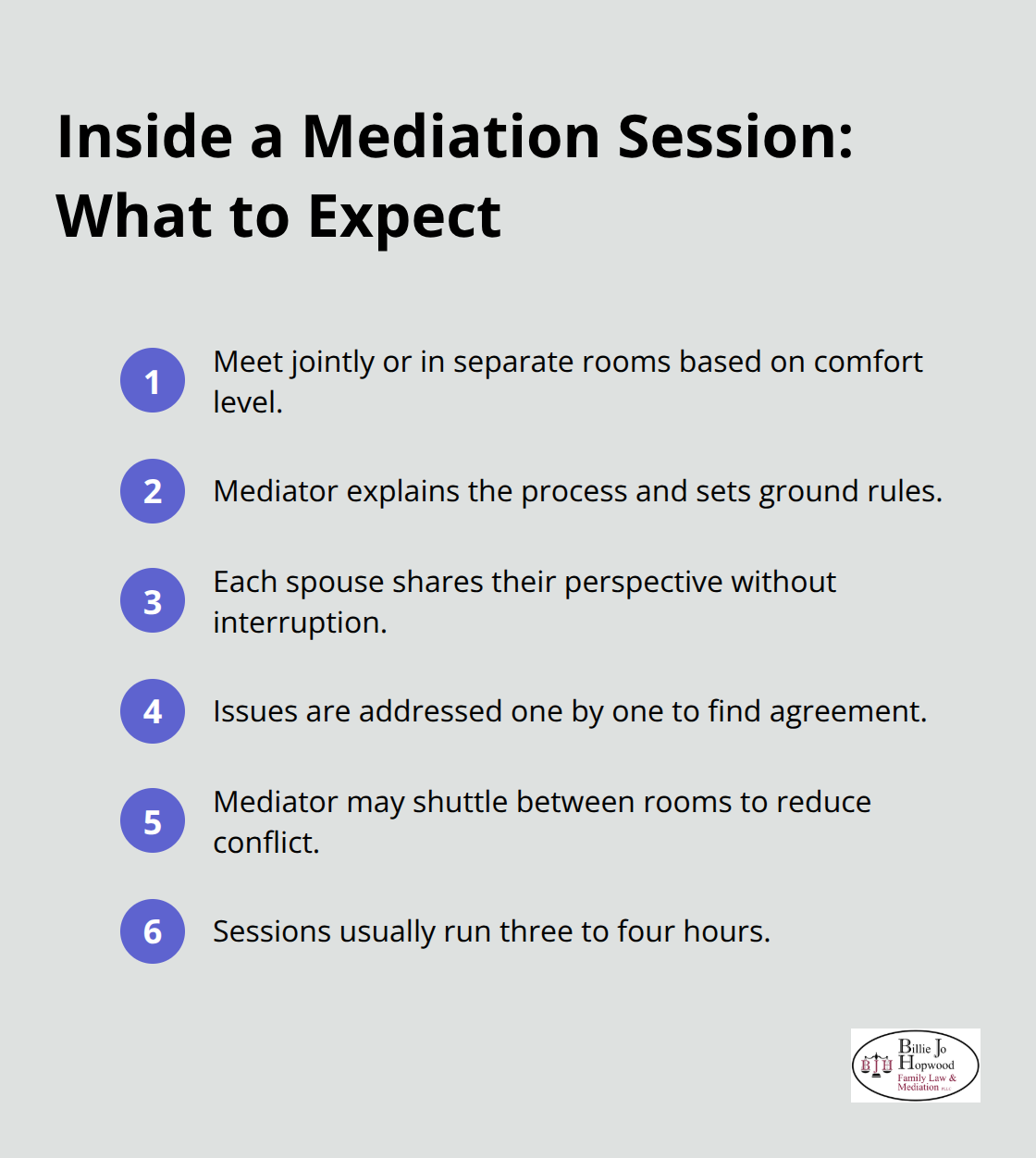
During a typical mediation session, both spouses sit in the same room with the mediator, or sometimes in separate rooms if emotions run high. The mediator opens the session by explaining the process and setting ground rules for respectful communication. Each spouse has the chance to explain their position without interruption. The mediator then works through each issue one by one, moving between rooms if needed to find areas of agreement and work through disagreements. A single mediation session typically lasts three to four hours, though complex cases may require multiple sessions.
Speed and Control in the Mediation Process
According to data from the American Bar Association, mediated divorces in Florida average 60 to 90 days from start to finish, compared to 6 to 12 months for litigated cases. This speed matters because it reduces legal fees, keeps children out of prolonged conflict, and lets both spouses move forward faster. Unlike litigation, where a judge makes final decisions about custody, property division, and support, mediation gives you control. You and your spouse decide what’s fair for your family, not a judge who knows nothing about your children or your financial situation. This control extends to how quickly you resolve matters and what solutions actually work for your household.
Key Benefits of Choosing Mediation Over Court
Lower Costs Compared to Traditional Divorce
Mediation in Florida typically costs between $1,500 and $5,000 total, while contested litigation averages $15,000 to $30,000 or more according to the Florida Bar. The difference stems from how each process unfolds. A litigated divorce requires filing fees, discovery costs, expert witnesses, court appearances, and multiple attorney billing hours spread across months or years.
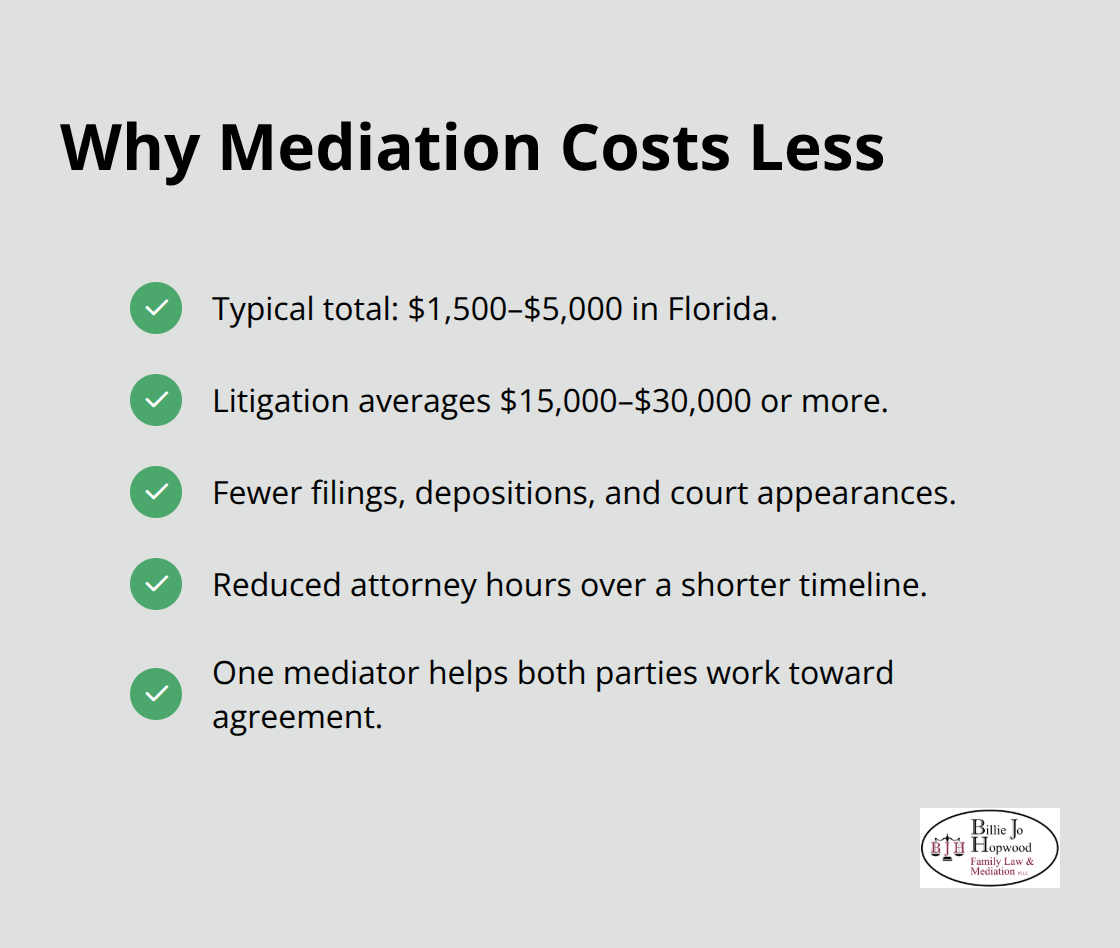
Mediation condenses this into a few sessions where both parties work toward agreement with one mediator present.
You avoid paying for depositions, court motions, or the endless back-and-forth that litigation demands. The hourly rates remain similar to litigation, but the total hours drop dramatically because mediation moves toward resolution rather than prolonging disputes. Families cut their legal expenses significantly simply by choosing mediation over court.
Faster Resolution Timeline
A litigated divorce in Florida can stretch 12 to 18 months or longer if either party appeals decisions or files additional motions. Mediation typically wraps up in 60 to 90 days according to data from the American Bar Association. This speed reduces stress on your children, who benefit from seeing parents cooperate rather than battle in court. It also gives you control over the outcome instead of waiting for a judge’s ruling months after your case concludes.
More Control Over the Outcome
You decide what’s fair for custody, property division, and support arrangements based on your family’s actual needs. Courts apply standard formulas and legal guidelines that may not fit your situation. When you mediate, you craft solutions that work for your household, your children’s school schedules, and your financial reality (not a judge’s template). This control transforms divorce from something imposed on you into something you shape for your family’s future.
Reduced Emotional Stress on Children
The faster timeline and cooperative nature of mediation shield children from prolonged conflict. Your kids see parents working together to solve problems rather than fighting in depositions and courtrooms. This approach protects their emotional wellbeing during an already difficult transition. The agreements you reach through mediation reflect what actually works for your children’s lives, not what a judge thinks is appropriate based on legal standards alone.
These advantages set the stage for understanding which specific issues mediation handles most effectively.
Common Divorce Issues Resolved Through Mediation
Asset and Property Division
Mediation handles the three heaviest issues in any divorce: how you split assets and property, who gets custody and how parenting time works, and what each spouse owes in alimony or child support. These aren’t theoretical discussions-they’re the concrete problems that determine your financial security and your relationship with your children after divorce. Mediation works because both spouses sit down and make decisions together rather than letting a judge impose them.
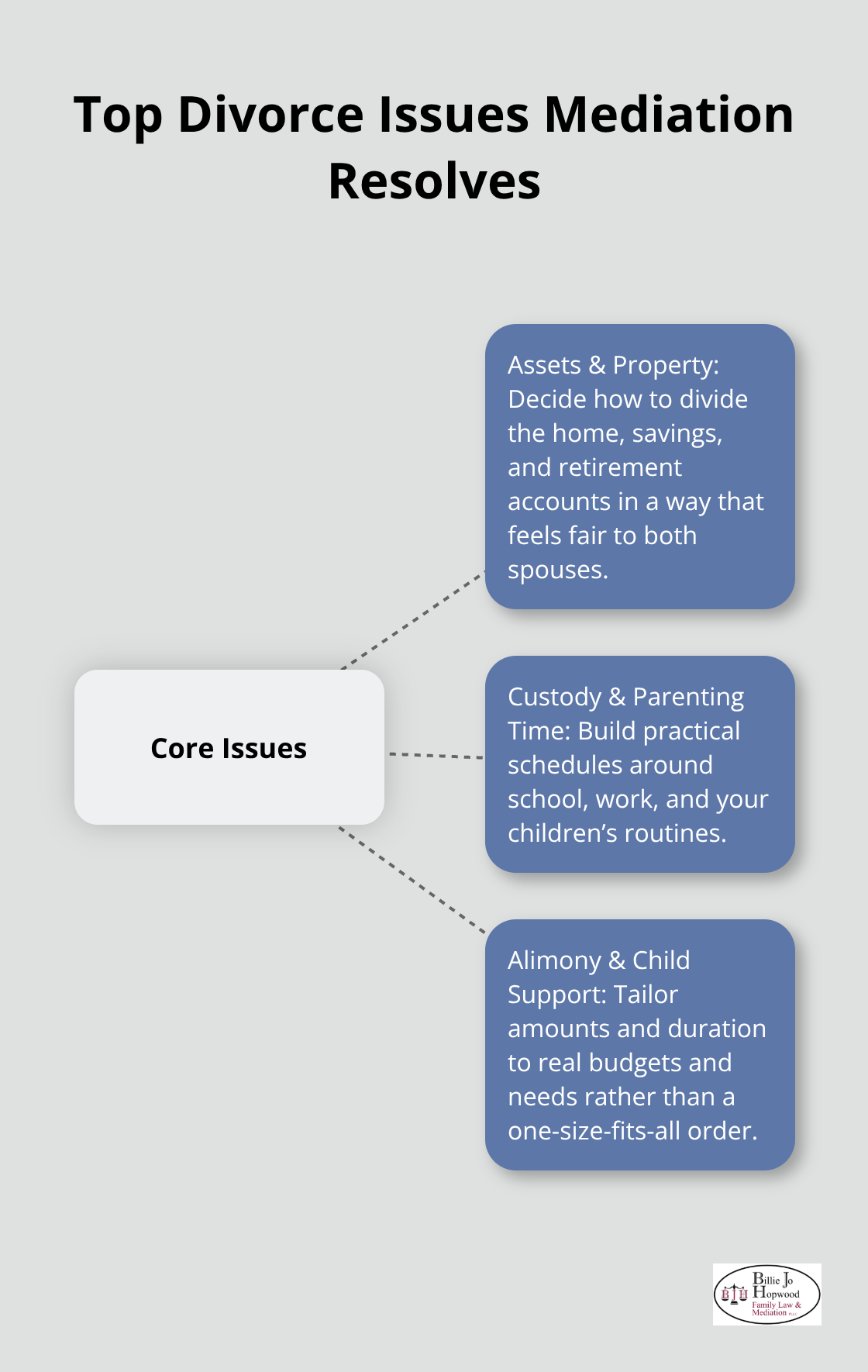
Florida courts apply equitable distribution rules, meaning courts split marital assets fairly but not necessarily equally. Mediation gives you the power to decide what fair looks like for your family. One spouse might keep the family home while the other takes retirement accounts of similar value, or you might sell property and split proceeds differently than a judge would order. These custom solutions stick because you both agreed to them, not because a court forced them.
Child Custody and Parenting Schedules
Child custody agreements developed through mediation reflect how your children actually live rather than legal categories. You determine which parent handles school decisions, medical choices, and major life events. You set parenting schedules around your children’s sports, your work hours, and what genuinely works for your household.
According to research from the Journal of Divorce and Remarriage, children adjust better when parents cooperate on custody arrangements, and mediated agreements show higher compliance rates than court orders. This cooperation matters because your children see parents working together to solve problems rather than fighting in depositions and courtrooms.
Alimony and Child Support Agreements
Florida courts apply child support guidelines that calculate payments based on income and custody percentages, but mediation lets you adjust these numbers if your situation demands it. For example, if one parent has significantly higher childcare costs or works irregular hours, you can build that reality into your agreement instead of following a formula.
Alimony calculations in Florida consider factors like marriage length, each spouse’s earning capacity, and the standard of living during marriage, but mediation lets you negotiate amounts and duration that reflect your actual circumstances. If one spouse plans to return to school or faces job loss, you can structure support differently than statutory guidelines suggest. The agreements you reach stick because they’re built on your real financial situation and mutual understanding, not a judge’s snapshot of your case.
Final Thoughts
Mediation replaces courtroom conflict with practical problem-solving that puts your family’s actual needs first. You control the outcome, your children avoid prolonged stress, and you reach agreements in weeks rather than months. The divorce mediation options available through mediation give you flexibility that court simply cannot match, since a judge applies formulas while you and your spouse apply real knowledge of what works for your children and finances.
Families choose mediation because the numbers speak clearly: you save thousands in legal costs, resolve disputes faster, and build agreements you both support. Your children see cooperation instead of courtroom battles, and asset division, custody arrangements, and support payments all reflect your family’s actual circumstances rather than legal templates. This approach transforms divorce from something imposed on you into something you shape together.
Start by identifying the issues that matter most to your family and write down what you want for your children’s future. Contact Billie Jo Hopwood Family Law & Mediation, PLLC to discuss your situation and explore whether mediation fits your circumstances.