
Dividing assets during a Florida divorce can feel overwhelming, especially when significant property and retirement accounts are at stake. Equitable distribution mediation offers a practical path forward that keeps both parties in control of the outcome rather than leaving decisions to a judge.
At Billie Jo Hopwood Family Law & Mediation, PLLC, we’ve seen firsthand how mediation produces fairer results and faster resolutions than courtroom battles. This guide walks you through how asset division works in Florida and why mediation often serves divorcing couples better.
What Counts as Marital Property in Florida
Understanding Marital Property Under Florida Law
Florida law treats marital property differently than separate property, and this distinction fundamentally shapes how your assets get divided. Marital property includes everything acquired during the marriage, regardless of whose name appears on the title or account. A home purchased during the marriage, retirement accounts funded while married, and even debt accumulated for marital purposes all qualify as marital assets, even if one spouse earned the income. Florida Statutes Section 61.075 defines marital property as the assets and liabilities acquired during the marriage, with specific exceptions for inheritances, gifts, and property owned before the marriage. Courts in Brevard County and throughout Florida apply this definition strictly, which is why many divorcing couples discover assets they thought were separate actually fall into the marital category.
Identifying Separate Property
Separate property remains with the spouse who owns it, but proving something qualifies as separate property requires clear documentation. Assets you owned before marriage, inheritances you received in your own name, and gifts specifically given to you alone stay separate. However, commingling separate property with marital property often destroys its separate status-a problem that occurs more frequently than people realize. A house you inherited from your parents becomes partially marital if you and your spouse paid the mortgage together or made significant improvements during the marriage.
The Commingling Problem
Retirement accounts present another common challenge because contributions made during the marriage are marital property, even if the account was opened before marriage. When you mix separate funds with marital funds (a process called commingling), courts typically treat the entire account as marital property. This happens with inherited money deposited into joint accounts, separate business income used for household expenses, or pre-marriage savings combined with marital earnings. Tracing the original source of funds becomes nearly impossible once commingling occurs, which shifts the burden to you to prove what portion remains separate.
How Courts Divide Marital Property
The court’s role in asset division involves determining what qualifies as marital versus separate, then dividing marital property fairly based on multiple factors. The length of the marriage, each spouse’s contributions (both financial and non-financial), and the economic circumstances of each party after divorce all influence how a judge distributes assets. Courts also consider whether one spouse sacrificed career opportunities to support the family or manage the household. These factors explain why two divorces with similar asset totals can result in very different divisions-the specific circumstances matter significantly.
Why Mediation Handles Asset Classification Better
Mediation offers a distinct advantage when it comes to identifying and protecting separate property before division occurs. Rather than waiting for a judge to make determinations, you and your spouse work together with a mediator to trace asset origins and reach agreement on classifications. This collaborative approach often preserves more separate property than litigation does, since both parties have incentive to document and protect their individual assets. When you understand exactly what counts as marital versus separate property, you can move forward to the practical steps of actually dividing those assets fairly.
Mediation vs. Litigation for Asset Division
How Judges and Mediators Approach Asset Division Differently
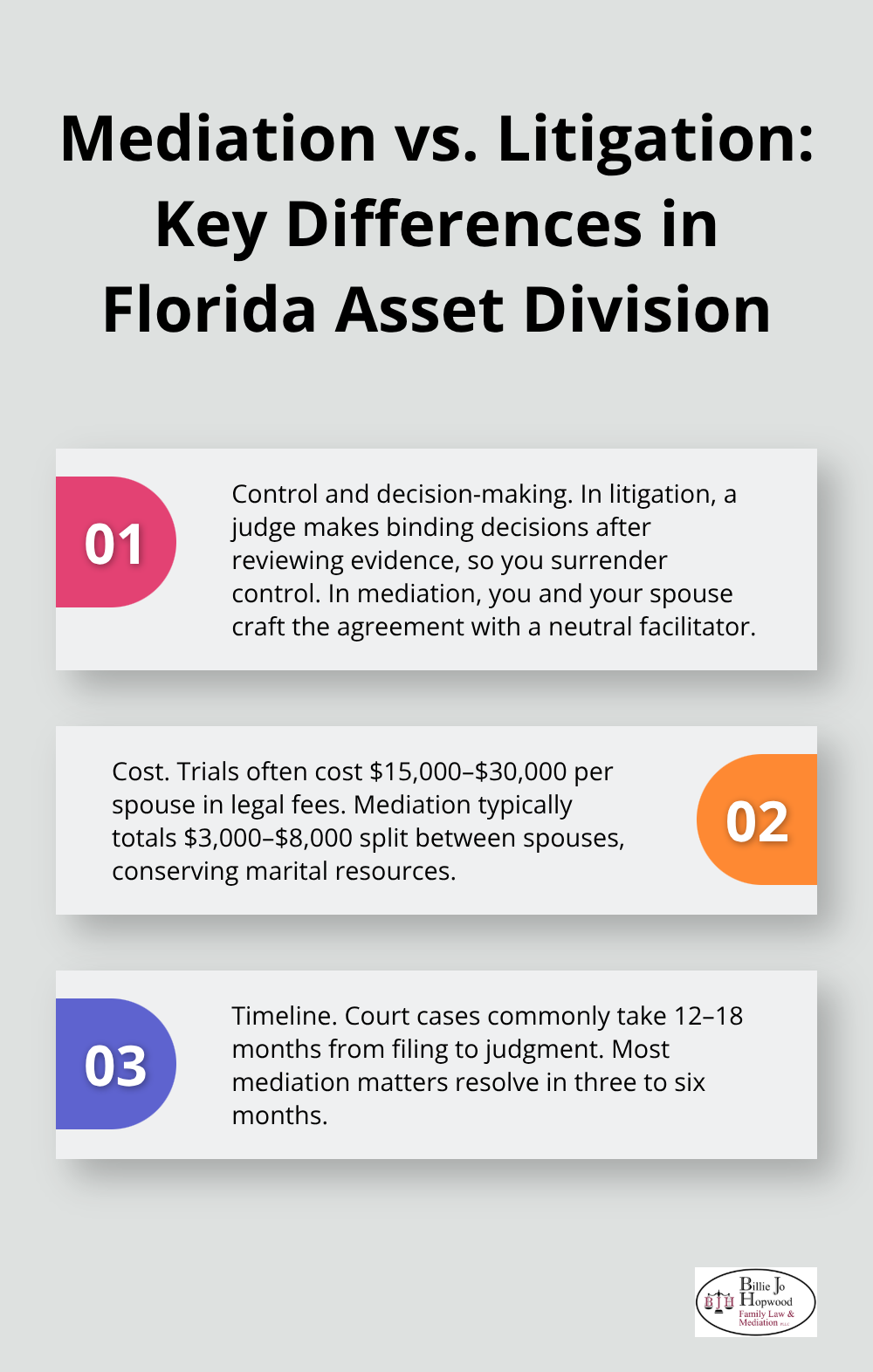
Mediation and litigation produce fundamentally different outcomes when you divide marital assets in Florida divorces. In litigation, a judge makes binding decisions about asset classification and distribution after reviewing evidence presented by both sides, which means you surrender control over the final result. The average Florida divorce that goes to trial costs between $15,000 and $30,000 per spouse in legal fees alone, according to data from the American Academy of Matrimonial Lawyers, and the process typically takes 12 to 18 months from filing to final judgment. Mediation operates on an entirely different model: you and your spouse work directly with a neutral mediator to reach mutually acceptable agreements about how assets will be divided. The mediator doesn’t make decisions for you but instead facilitates discussion, helps clarify financial information, and guides you toward solutions that satisfy both parties.
Cost and Timeline Differences
Most mediation cases in Melbourne, Florida resolve within three to six months, with total costs typically ranging from $3,000 to $8,000 when split between spouses. This cost difference matters substantially when you’re already dividing limited resources. The speed advantage reflects a fundamental reality: when both parties work toward agreement rather than fighting in court, resolution happens faster. You avoid the delays that litigation creates through discovery disputes, motion hearings, and court scheduling conflicts. Your attorney doesn’t need to prepare for trial or respond to extensive written discovery requests, which reduces billable hours significantly.
The Adversarial Problem in Litigation
In litigation, each attorney presents the strongest possible case for their client, which often means portraying assets in the most favorable light and downplaying the other spouse’s contributions or needs. Discovery disputes frequently arise when one party requests financial documents and the other side objects, creating delays and additional legal expenses. Mediation eliminates this adversarial dynamic because both spouses have financial incentive to be honest and transparent: inflating asset values or hiding property creates problems later when the court discovers the deception. You’ll sit across from your spouse with complete financial documentation visible to both sides, allowing realistic discussion about what each person actually needs after divorce.
Handling Complex Assets Through Mediation
Many couples find they can reach agreements about complex assets like family businesses or investment portfolios more effectively through mediation because the mediator can help both parties understand the true value and implications of keeping or dividing such holdings. When you maintain control over asset division decisions rather than having a judge impose them, you’re far more likely to feel satisfied with the outcome and comply fully with the agreement afterward. This control extends to how you structure the division itself-you might agree to keep certain assets intact, trade different property types, or phase the transfer over time in ways that work for your specific situation. A judge cannot offer this flexibility because court orders follow standard procedures and legal precedent rather than your individual circumstances.
Moving Forward With Your Asset Division Strategy
Once you understand how mediation differs from litigation, the next step involves examining which specific assets require division in your Florida divorce and how to value them accurately.
Assets That Need Division in Your Melbourne, Florida Divorce
Real Estate and the Family Home
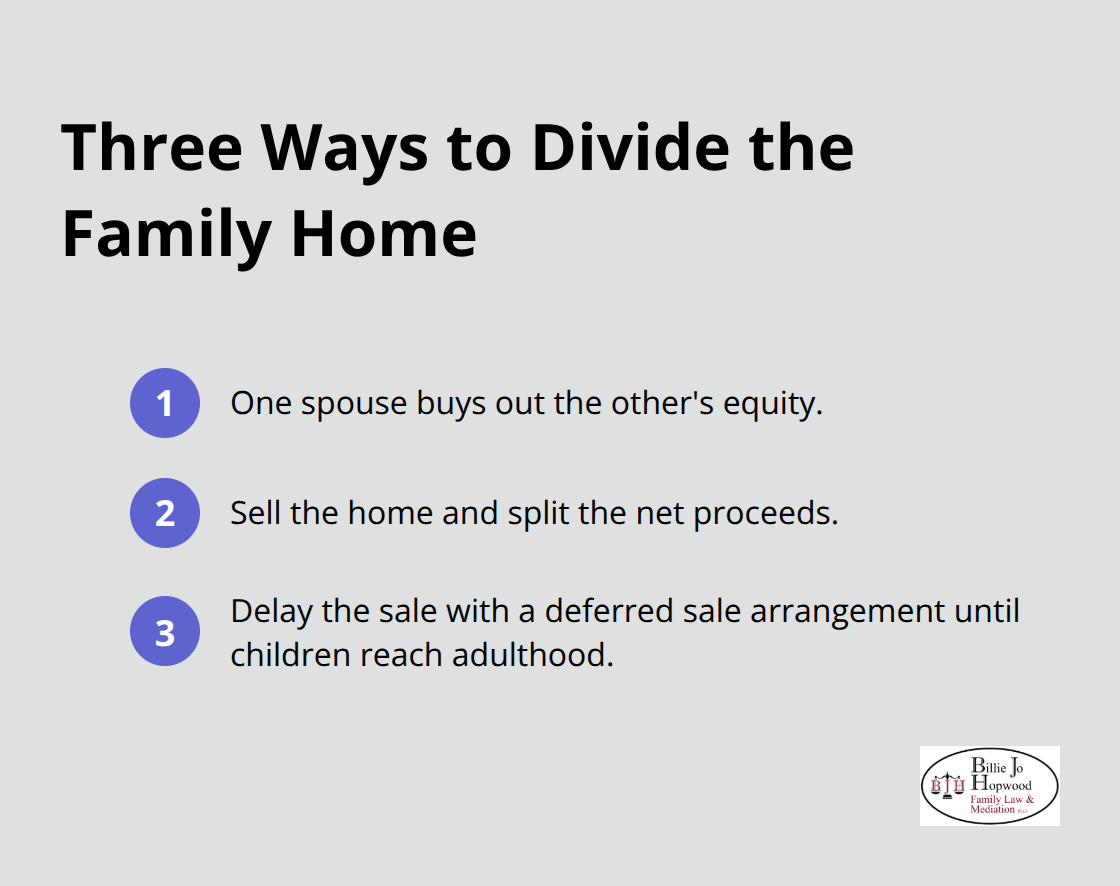
Real estate typically represents the largest asset couples divide, and the family home creates emotional complexity that complicates financial decisions. Most Florida homes purchased during marriage qualify as marital property subject to equitable distribution, regardless of whose name appears on the deed. You have three realistic options: one spouse buys out the other’s interest, you sell the home and split proceeds, or you delay the sale until children reach adulthood through a deferred sale arrangement.
The deferred sale approach requires detailed written agreements about maintenance costs, property taxes, and insurance during the holding period, since disputes over who pays what frequently derail these arrangements. According to the National Association of Realtors, the median home sale price in Florida reached $419,000 in 2025, making the family residence often worth more than all other assets combined. When you negotiate home division through mediation rather than litigation, you avoid the cost of court-ordered appraisals and maintain flexibility about timing and terms that judges cannot offer.
Retirement Accounts and Pensions
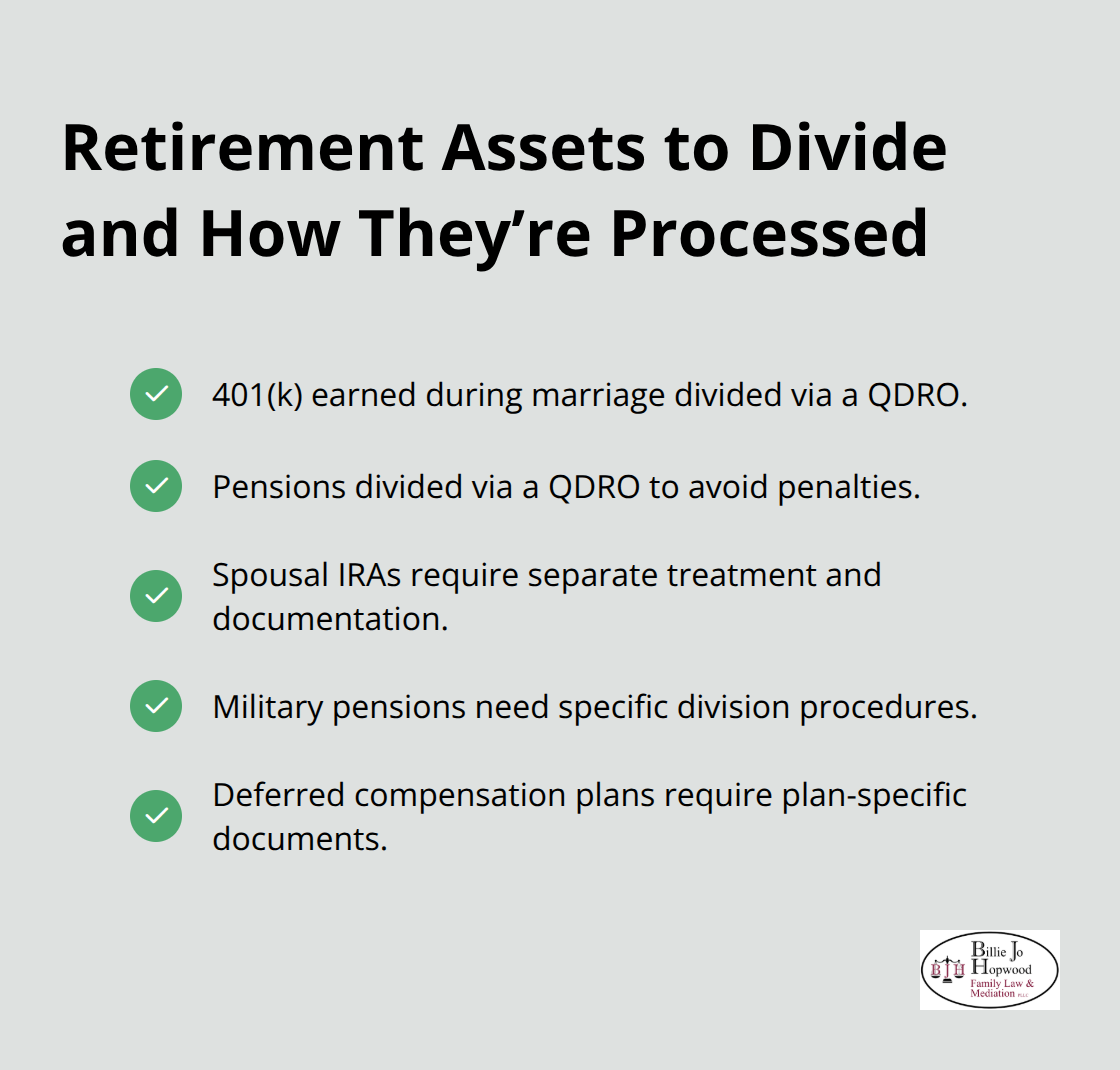
Retirement accounts accumulated during marriage constitute marital property that requires careful valuation and division, particularly when one spouse has substantially more retirement savings than the other. A 401(k) or pension earned during the marriage gets divided through a Qualified Domestic Relations Order, a specialized court document that instructs the plan administrator how to transfer the designated portion to the other spouse without early withdrawal penalties.
The Employee Benefit Research Institute reports that the average 401(k) balance for workers aged 55 to 64 was approximately $89,000 in 2023, meaning retirement account division significantly impacts post-divorce financial security for both parties. Many couples overlook that spousal IRAs, military pensions, and deferred compensation plans all require separate treatment and specific documentation to divide correctly.
Business Interests and Professional Practices
Business interests and professional practices demand valuation by a qualified appraiser who determines the enterprise value based on revenue, profitability, client base, and comparable business sales. You might retain the business while compensating your spouse through other assets, sell the business and split proceeds, or structure a buyout agreement where one spouse purchases the other’s ownership stake over time.
Mediation proves invaluable for business owners because the mediator can help both parties understand valuation implications and explore creative solutions that litigation cannot accommodate, such as phased buyouts or continued profit-sharing arrangements (which protect the business while fairly compensating the departing spouse). These flexible options allow you to preserve business operations while ensuring equitable treatment for both parties.
Final Thoughts
Equitable distribution mediation fundamentally changes how divorcing couples in Melbourne, Florida approach asset division. Rather than surrendering control to a judge who applies legal formulas to your unique circumstances, you and your spouse work together to reach agreements that actually reflect your needs and priorities. The financial advantage is substantial: mediation costs between $3,000 and $8,000 total compared to litigation expenses of $15,000 to $30,000 per spouse, and resolution typically happens within three to six months instead of 12 to 18 months.
When you negotiate asset division through mediation, you maintain flexibility that courtroom proceedings cannot offer. You can structure creative solutions for complex assets like family businesses, arrange phased buyouts, or delay home sales until children finish school. You avoid the adversarial dynamic that litigation creates, where each attorney presents the strongest possible case regardless of accuracy, and both parties have financial incentive to be transparent about assets and honest about needs.
Your specific assets require different approaches, and understanding these distinctions positions you to make informed decisions rather than accepting whatever a judge imposes. Real estate typically demands careful consideration of buyout options or sale timing, retirement accounts need specialized Qualified Domestic Relations Orders to divide without penalties, and business interests benefit enormously from mediation because creative arrangements preserve operations while maintaining equitable treatment. At Billie Jo Hopwood Family Law & Mediation, PLLC in Melbourne, Florida, we guide families through family law mediation with compassion and practical guidance.