
Divorce means dividing everything you’ve built together, and Florida law requires that division to be fair-not necessarily equal. Equitable distribution mediation gives you control over how your assets, debts, and property are split instead of leaving those decisions to a judge.
We at Billie Jo Hopwood Family Law & Mediation, PLLC help couples in Melbourne, Florida navigate this process with clarity and confidence. This guide walks you through how equitable distribution works and why mediation often produces better results than courtroom battles.
How Florida Defines and Divides Marital Property
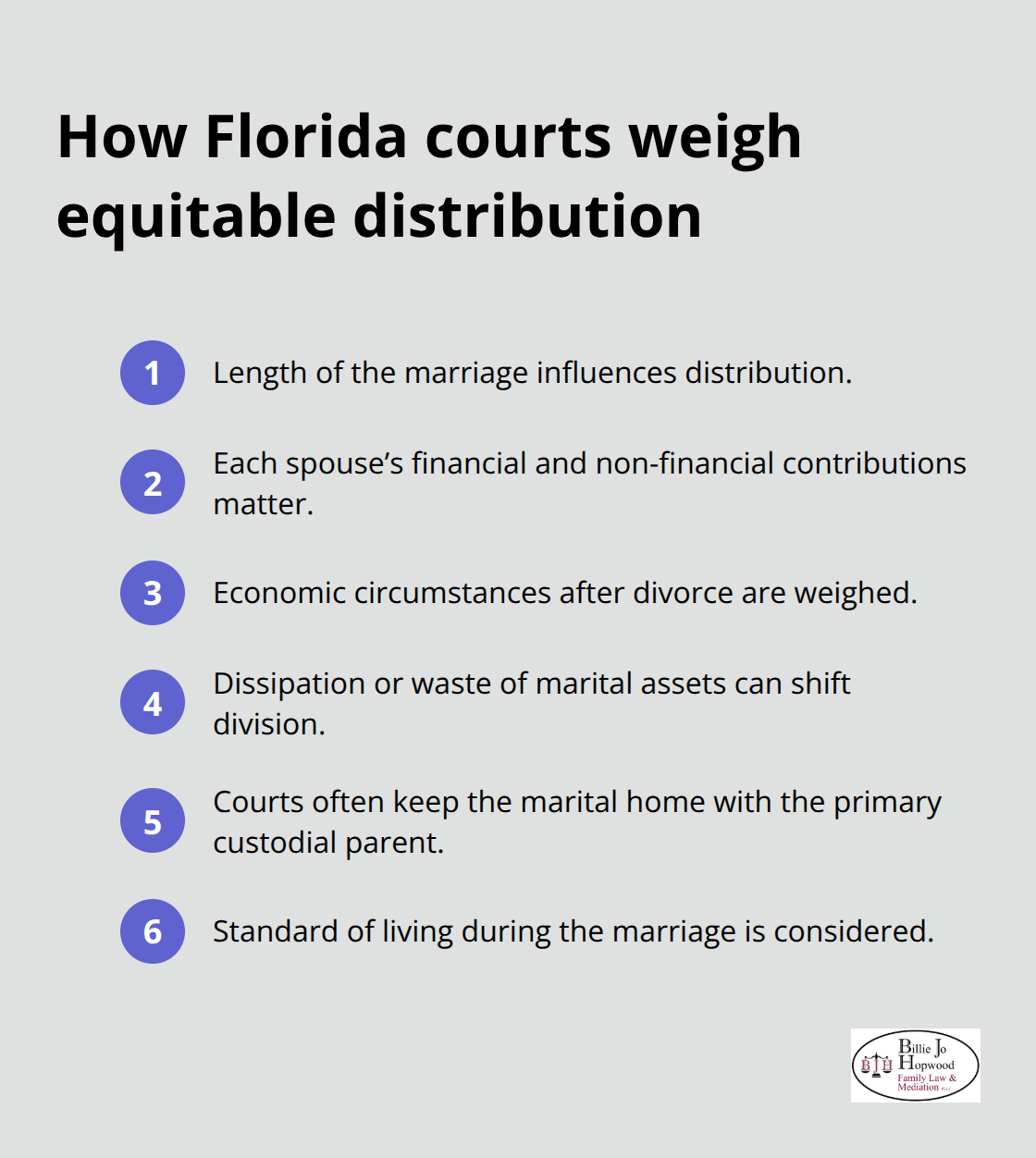
Florida Statute 61.075 controls equitable distribution, and the law is clear: only property acquired during the marriage gets divided. Anything you owned before marriage, inherited, or received as a gift stays yours. This distinction matters enormously because it determines what’s on the table. Courts examine ten specific factors when deciding how to split marital assets fairly, and the marriage’s length carries substantial weight. A 20-year marriage triggers different distribution considerations than a 5-year one. The statute also accounts for each spouse’s contributions-both financial and non-financial. If one spouse sacrificed career opportunities to raise children or support the other’s education, courts recognize that sacrifice in the division.
What Actually Counts as Marital Property
Commingling creates the biggest problem most people face. When you deposit an inheritance into a joint account or use pre-marriage savings to improve a home you bought together, those assets become harder to classify. Courts examine the source of funds and your intent. If you inherited money but kept it separate in your own account, it likely stays non-marital. If you mixed it with joint funds or used it to benefit the marriage, courts may view it differently.
Retirement accounts complicate things further. A 401(k) earned during the marriage is marital property, even if only one spouse’s name appears on it. The portion accumulated before marriage stays separate, but contributions made while married get divided. This is why detailed financial records matter-you need to show exactly when assets were acquired and whose money funded them.
How Courts Apply the Ten Distribution Factors
Courts do not split everything 50-50. Instead, judges weigh factors like each spouse’s economic circumstances after divorce, career interruptions, and whether one spouse sacrificed earning potential. If you stayed home while your spouse built a business, courts consider that contribution when deciding distribution. The statute also examines whether one spouse dissipated assets-spent marital money on affairs or wasteful purchases-which can shift the division in the other spouse’s favor.
Courts prioritize keeping the marital home with the parent who has primary custody of children, minimizing disruption to their routine. This practical approach recognizes that stability matters more than strict mathematics. The length of marriage and each spouse’s standard of living during the relationship shape how assets are allocated to maintain financial balance going forward.
Why Mediation Handles These Complexities Better Than Court
Understanding these factors helps you prepare for mediation, where you control the outcome rather than leaving decisions to a judge. The next section explains how the mediation process actually works and what steps you need to take to protect your financial interests.
Mediation Gives You Control Over Your Property Division
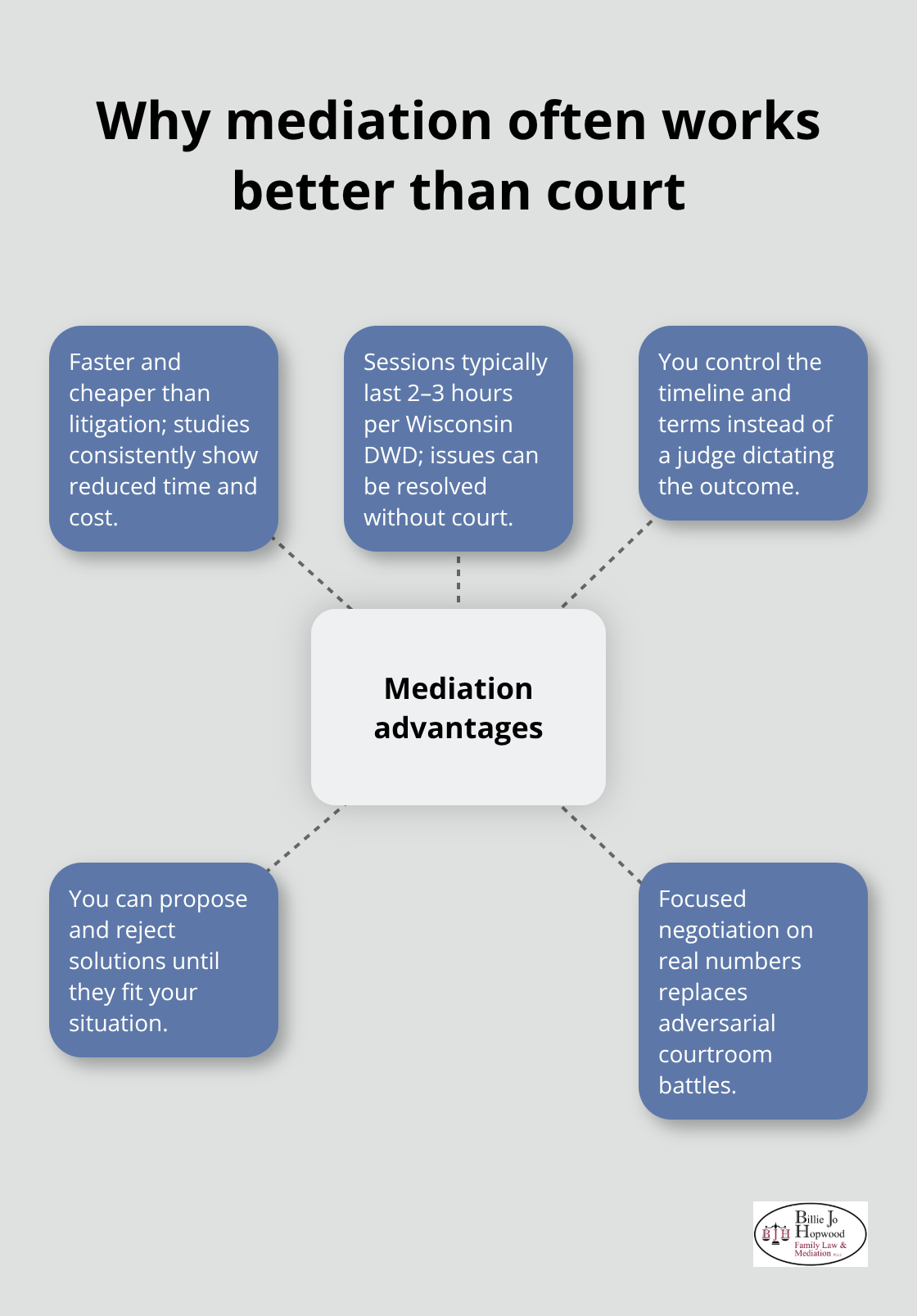
Mediation fundamentally shifts power from the judge to you and your spouse. In court, a judge reviews financial documents, hears arguments, and makes decisions based on the ten statutory factors-but you have no say in the outcome. Mediation lets you negotiate directly, propose solutions, and reject proposals that don’t work for your situation. Studies show mediation resolves property disputes faster and cheaper than litigation. The Wisconsin Department of Workforce Development tracks mediation statistics and confirms that mediation sessions typically run 2-3 hours and can resolve financial disagreements without court involvement. You control the timeline, the terms, and whether to accept an agreement.
Prepare Your Financial Records Before Mediation Starts
Complete financial documentation determines how efficiently your mediation sessions proceed. You need bank statements, property deeds, investment account statements, retirement account documentation, and loan records-everything showing what assets exist, when you acquired them, and whose money funded them. A qualified mediator will provide you with a detailed list of required documentation before your first session. Coming prepared with complete financial records cuts mediation costs significantly because your mediator spends less time hunting for missing information and more time facilitating fair negotiations.
Schedule Sessions When You Can Focus Fully
Mediation demands mental stamina, so you must schedule sessions when you’re alert and can focus for 2-3 hours without interruption. Avoid scheduling back-to-back sessions or sessions that overlap with other commitments, since property division discussions are mentally demanding and sessions sometimes run longer than planned. Your ability to think clearly directly affects the quality of agreements you reach.
Identify Your Priorities and Non-Negotiables
Know your priorities before walking into mediation. Identify which assets matter most to you-the family home, retirement accounts, business interests, or vehicles-and decide what you’re willing to trade. Flexibility improves your chances of reaching a mutually acceptable agreement, but clarity on non-negotiables prevents you from accepting unfair terms under pressure. Discuss property division basics with your spouse in advance if possible, so mediation sessions focus on unresolved disputes rather than rehashing fundamentals.
Understand the Legal Framework Before You Negotiate
Understanding Florida Statute 61.075 and the ten distribution factors helps you recognize when proposed divisions align with legal standards. This knowledge prevents you from accepting settlements that leave you financially vulnerable after divorce. The mediator guides identification, valuation, and negotiation to reach fair resolution, but your preparation determines whether that resolution protects your actual interests. With solid preparation complete, you’re ready to address the specific challenges that most couples face during property division-and how mediation strategies help you overcome them.
What Makes Property Division Disputes So Hard to Resolve
Valuing Complex Assets Requires Professional Analysis
A business owner might claim their company is worth $500,000 based on revenue, but actual value depends on profit margins, debt obligations, customer contracts, and whether the business survives without the owner’s involvement. If the owner leaves, does the business collapse? That reality determines true worth. Retirement accounts present similar complications because the portion earned during marriage differs from pre-marriage contributions, and dividing a 401(k) requires a Qualified Domestic Relations Order to avoid massive tax penalties. Many couples don’t realize that splitting a retirement account without proper documentation triggers immediate taxation and 10% early withdrawal penalties, potentially reducing the recipient’s actual benefit by 30-40%.
Mediation forces both parties to obtain professional appraisals and valuations before negotiating, which takes time but prevents accepting unfair numbers based on guesswork. A mediator will require current statements, historical contribution records, and often recommendations from financial professionals to establish true values. This transparency eliminates the temptation to hide asset value or claim inflated worth.
Debt Distribution Creates Equal Complications
Debt creates equal headaches because couples often disagree about who should shoulder mortgages, credit card balances, or business loans. Equitable distribution of both assets and liabilities means debts accumulated during marriage get divided fairly too. One spouse might argue they should keep the house free of the mortgage while the other takes cash assets, but that math rarely works without one party absorbing unfair burden.
Mediation requires full financial disclosure from both spouses, and mediators catch inconsistencies quickly when statements don’t match or accounts appear unexplained. The Wisconsin Department of Workforce Development reports that mediation sessions typically resolve 2-3 hours of discussion, which forces focused attention on actual numbers rather than emotional arguments. When both parties see complete financial pictures simultaneously, disputes over asset values and debt allocation become solvable problems rather than trust-based standoffs.
Documentation Prevents Commingling Problems
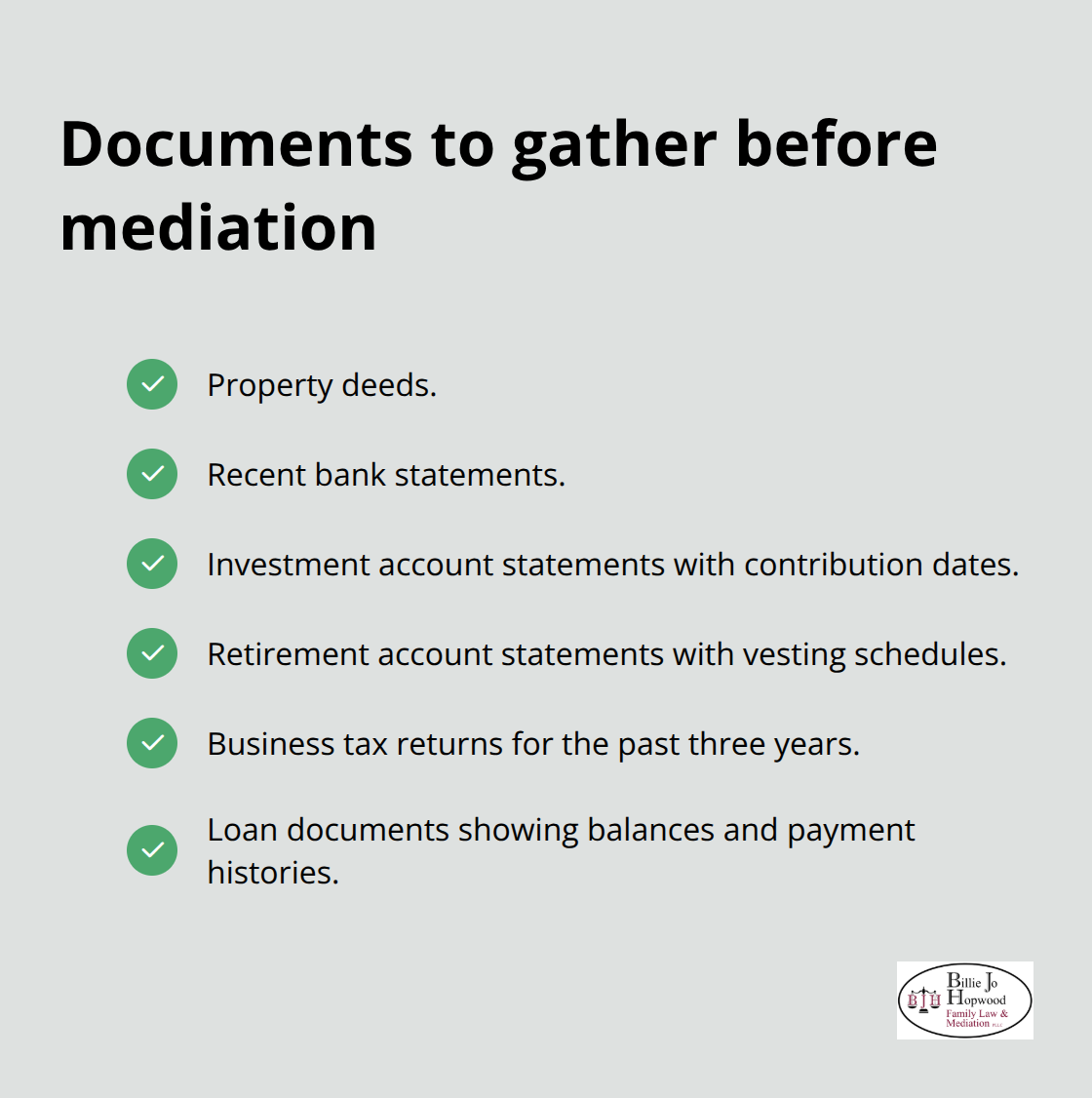
The strongest protection for both parties during property division is preparation and documentation before mediation starts. Gather property deeds, recent bank statements, investment account statements showing contribution dates, retirement account statements with vesting schedules, business tax returns for the past three years, and loan documents showing balances and payment histories.
Commingling of funds complicates everything, so trace the source of money used for major purchases. If you inherited $50,000 and deposited it into a joint account used for home improvements, courts may view that inheritance as marital property. Documentation proving separate deposit and use prevents this problem.
Tax Consequences Affect Real Settlement Value
Tax consequences matter enormously when dividing assets, and many couples overlook how selling real estate or liquidating investments creates tax liability. A home sale triggers capital gains tax, and certain retirement account transfers create unexpected tax bills. Mediators increasingly recommend consulting a tax professional before finalizing property division agreements to understand actual after-tax value of proposed settlements. Identify which assets carry tax consequences and which don’t, then adjust your negotiations accordingly. Some couples agree to a seemingly fair split only to discover one party received assets worth significantly less after taxes.
The mediator’s role includes guiding you toward valuations and divisions that account for these real-world consequences, not just nominal numbers on paper.
Final Thoughts
Equitable distribution mediation in Melbourne, Florida gives you control over your financial future after divorce that court litigation cannot match. Florida law requires fair division of marital assets and debts, but fairness looks different for every couple, and a judge cannot know whether you value the family home more than retirement security or whether your spouse’s career sacrifice deserves recognition beyond statutory minimums. Mediation accommodates these human realities because you propose solutions, reject unfair offers, and walk away only when you’ve reached genuine agreement.
The process works because transparency forces honesty and produces settlements both parties can live with long-term. When both spouses provide complete financial documentation and sit across from a neutral mediator, hidden assets surface and inflated valuations collapse under scrutiny. Studies confirm mediation resolves property disputes faster and cheaper than courtroom battles, and most sessions conclude within 2-3 hours of focused discussion where you see actual numbers, understand tax consequences, and negotiate from reality rather than emotion or fear.
If you’re facing property division and want to understand your options, contact us for guidance on protecting your financial interests through equitable distribution mediation rather than litigation. We at Billie Jo Hopwood Family Law & Mediation, PLLC help families in Melbourne, Florida navigate this process with confidence and clarity.