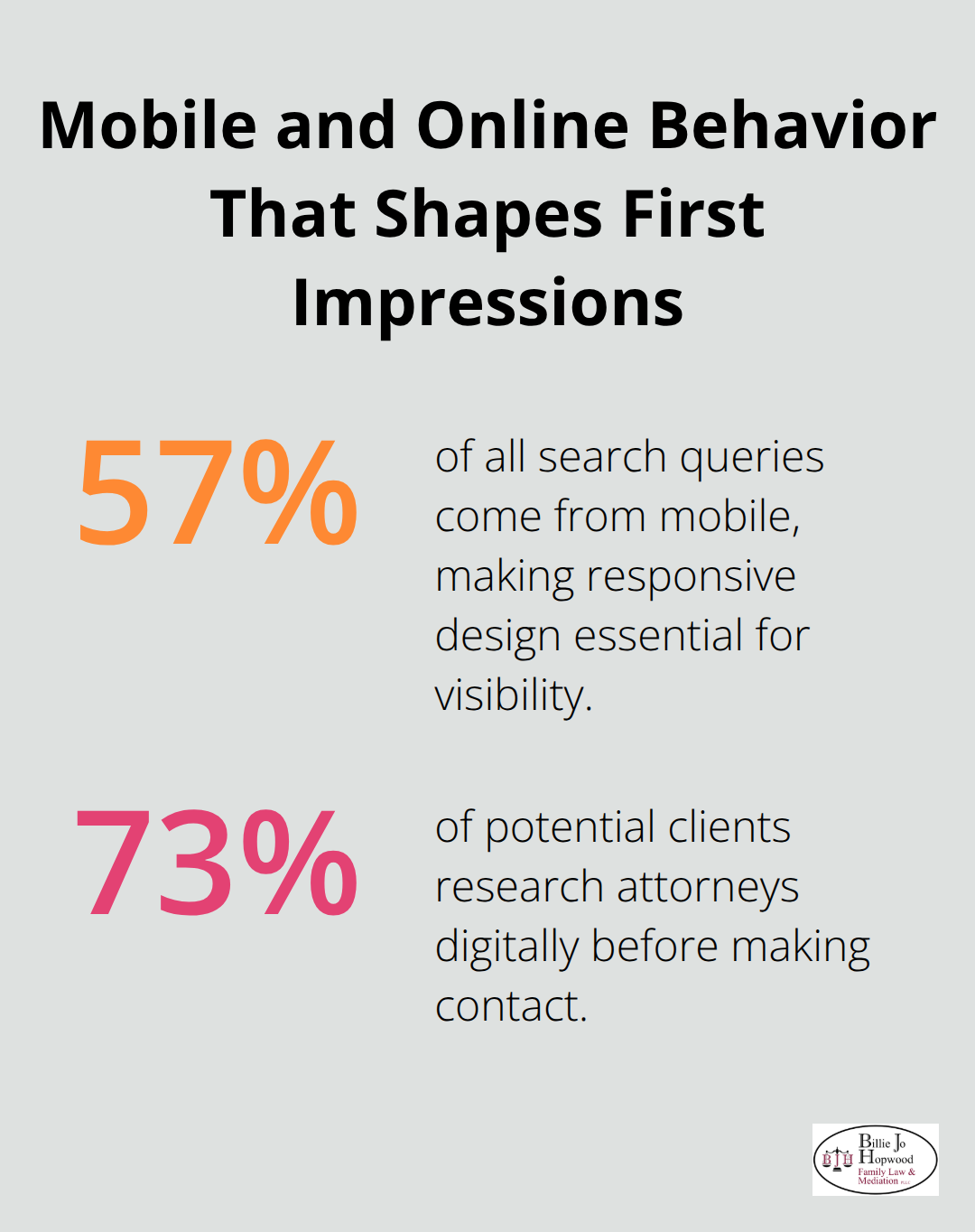
Family law practices face intense online competition, with 73% of potential clients researching attorneys digitally before making contact. Your website serves as the first impression for families navigating difficult legal situations.
At Billie Jo Hopwood Family Law & Mediation, PLLC, we understand that effective family law web design directly impacts client acquisition and trust-building. A well-crafted digital presence can transform how potential clients perceive your practice and influence their decision to seek your services.
What Makes a Family Law Website Actually Work?
Navigation That Guides Distressed Clients
Mobile search accounts for 57% of all search queries, which makes responsive design non-negotiable for family law practices. Your website must adapt seamlessly across smartphones, tablets, and desktops without compromising functionality. Google prioritizes responsive websites in search rankings, directly affecting your visibility when potential clients search for legal help.
Sites that load within 2 seconds have bounce rates of just 9%, while those taking 5 seconds see bounce rates jump to 38%. Compress images, implement caching, and optimize your hosting to achieve sub-3-second loading times consistently. Fast loading speeds prevent frustrated clients from abandoning your site before they can access your services.
Contact Methods That Drive Immediate Action
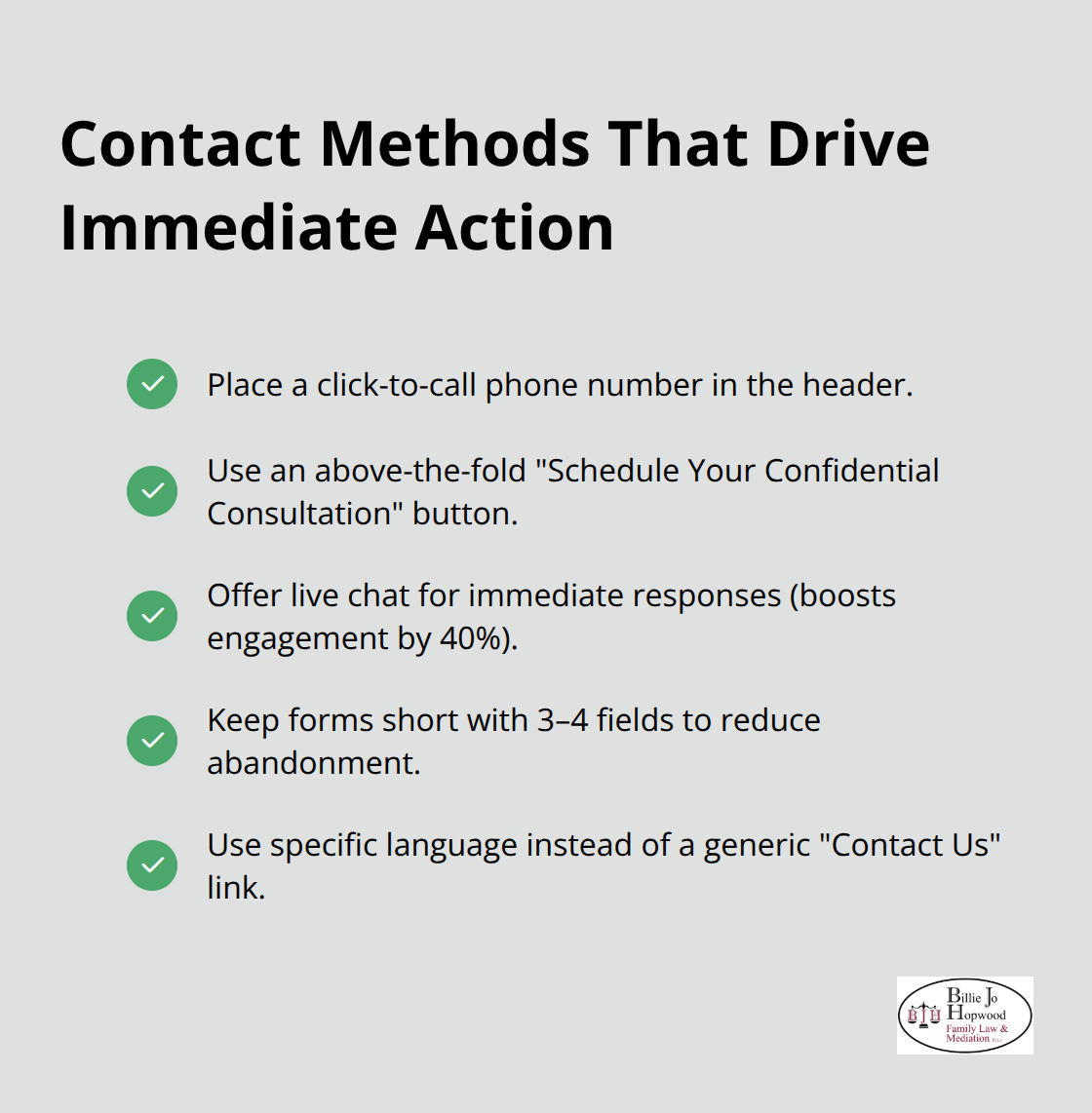
Clear contact methods drive conversions more effectively than complex forms. Place your phone number prominently in the header with click-to-call functionality for mobile users. Schedule consultation buttons should appear above the fold and use specific language like “Schedule Your Confidential Consultation” rather than generic “Contact Us” text.
Live chat features increase engagement by 40% and allow immediate response to urgent family law questions. Simplified contact forms with just 3-4 fields reduce abandonment rates compared to lengthy intake questionnaires that overwhelm already stressed clients.
Mobile Optimization That Converts Visitors
Mobile users expect instant access to attorney information and contact options. Design your mobile interface with thumb-friendly buttons and readable fonts (minimum 16px) that don’t require zooming. Touch targets should measure at least 44px to prevent accidental clicks that frustrate users.
Mobile-first design principles guide successful family law websites because distressed clients often search for legal help during emotional moments when desktop access isn’t available. This foundation sets the stage for building the trust elements that transform website visitors into committed clients.
How Trust Converts Website Visitors Into Clients
Client Testimonials That Drive Conversions
Testimonials from real clients convert 34% more visitors than websites without social proof. This makes client feedback your most powerful trust-building tool. Display specific testimonials that mention outcomes like custody arrangements or mediation success rates rather than generic praise.
Include first names and last initials with photos when possible. Faces increase credibility by 89% according to Nielsen research. Position testimonials strategically near consultation forms and contact sections where conversion decisions happen.
Professional Credentials That Establish Authority
Attorney credentials work differently than testimonials because they establish competence before emotional connection. List bar admissions, certifications, and professional memberships prominently on attorney bio pages. Professional headshots should convey approachability while maintaining authority.
Avoid overly formal courtroom photos that distance you from stressed families who seek help. The right balance creates immediate trust while maintaining professional standards that family law clients expect.
Security Features That Close Hesitant Clients
Secure client portals and SSL certificates directly impact conversion rates because family law clients worry about privacy more than other legal clients. Display security badges and encryption notifications visibly on contact forms and consultation pages.
Implement two-factor authentication for client portals and prominently advertise this protection. Privacy policies should use plain language that explains how you protect sensitive family information rather than legal jargon that confuses potential clients.
Case Results That Demonstrate Success
Case results displays require careful balance between success demonstration and client confidentiality maintenance. Use anonymous case summaries with specific outcomes like settlement amounts or custody percentages achieved (rather than vague statements like “achieved favorable outcome”).
Specify concrete results such as “reduced child support by 40%” or “secured primary custody rights.” This concrete approach demonstrates competence while respecting privacy boundaries that family law demands.
These trust elements work together to convert visitors, but they need visibility to generate leads. Strategic search optimization makes your trustworthy website discoverable when families need legal help most.
How Search Optimization Drives Family Law Leads
Local search optimization generates 80% more leads than traditional advertising for family law practices according to Google research. Geographic targeting starts with Google My Business optimization where your listing must include accurate practice areas, hours, and location data.

Google My Business Optimization That Converts
Add high-quality photos of your office interior and team to increase click-through rates by 35%. Respond to every review within 24 hours because Google factors response time into local ranking algorithms. Negative reviews require professional responses that demonstrate accountability while positive reviews need specific acknowledgment that mentions the client’s situation type (like custody or divorce mediation).
Content Marketing That Captures Search Traffic
Legal blog posts that target long-tail keywords convert 67% better than general practice pages. Write posts that address specific questions like “Florida child support modification requirements” rather than broad topics like “family law basics.” Two blog posts published monthly increase organic traffic by 45% within six months according to HubSpot data.
Each post should target one primary keyword with 1,500-2,000 words that directly answer client questions. Include location-specific content like local court procedures or state law changes that competitors often ignore. This approach captures search traffic when families need immediate legal guidance.
Review Management That Builds Authority
Online reviews influence 93% of family law client decisions which makes reputation management non-negotiable. Automated review requests sent 48 hours after case completion generate 40% more responses than manual outreach. Monitor review platforms including Google, Avvo, and Martindale-Hubbell weekly because delayed responses damage credibility permanently.
Encourage satisfied clients to mention specific outcomes and attorney names in reviews rather than generic praise. Five-star ratings with detailed content rank higher in local search results than brief positive reviews that lack substance (detailed reviews also provide more social proof for potential clients).
Final Thoughts
Family law web design directly impacts your practice’s ability to attract and convert clients during their most vulnerable moments. The data shows clear patterns: mobile-responsive sites with fast loading speeds, strategic local SEO, and prominent client testimonials generate significantly more leads than basic attorney websites. These digital foundations create the trust and accessibility that distressed families seek when they search for legal help online.
We at Billie Jo Hopwood Family Law & Mediation, PLLC focus on divorce, child custody, alimony, and child support cases in Melbourne, Florida. Our practice understands that families need immediate access to trustworthy legal guidance online. The right digital strategy transforms how potential clients perceive your services and influences their decision to contact your firm.
Google My Business optimization, mobile-first design implementation, and consistent content marketing should take priority in your digital strategy. Review management and secure client portals build the trust foundation that converts website visitors into committed clients (these elements work together to create sustainable practice growth). Family law practices that implement these strategies reach families precisely when they need legal help most.