
Legal fees can create significant financial stress during family disputes. Many Melbourne Florida families struggle to afford quality legal representation when they need it most.
We at Billie Jo Hopwood Family Law & Mediation, PLLC understand that finding a family law attorney that takes payments requires careful research. The right payment arrangement can make professional legal help accessible without overwhelming your budget.
What Payment Methods Do Family Law Attorneys Accept?
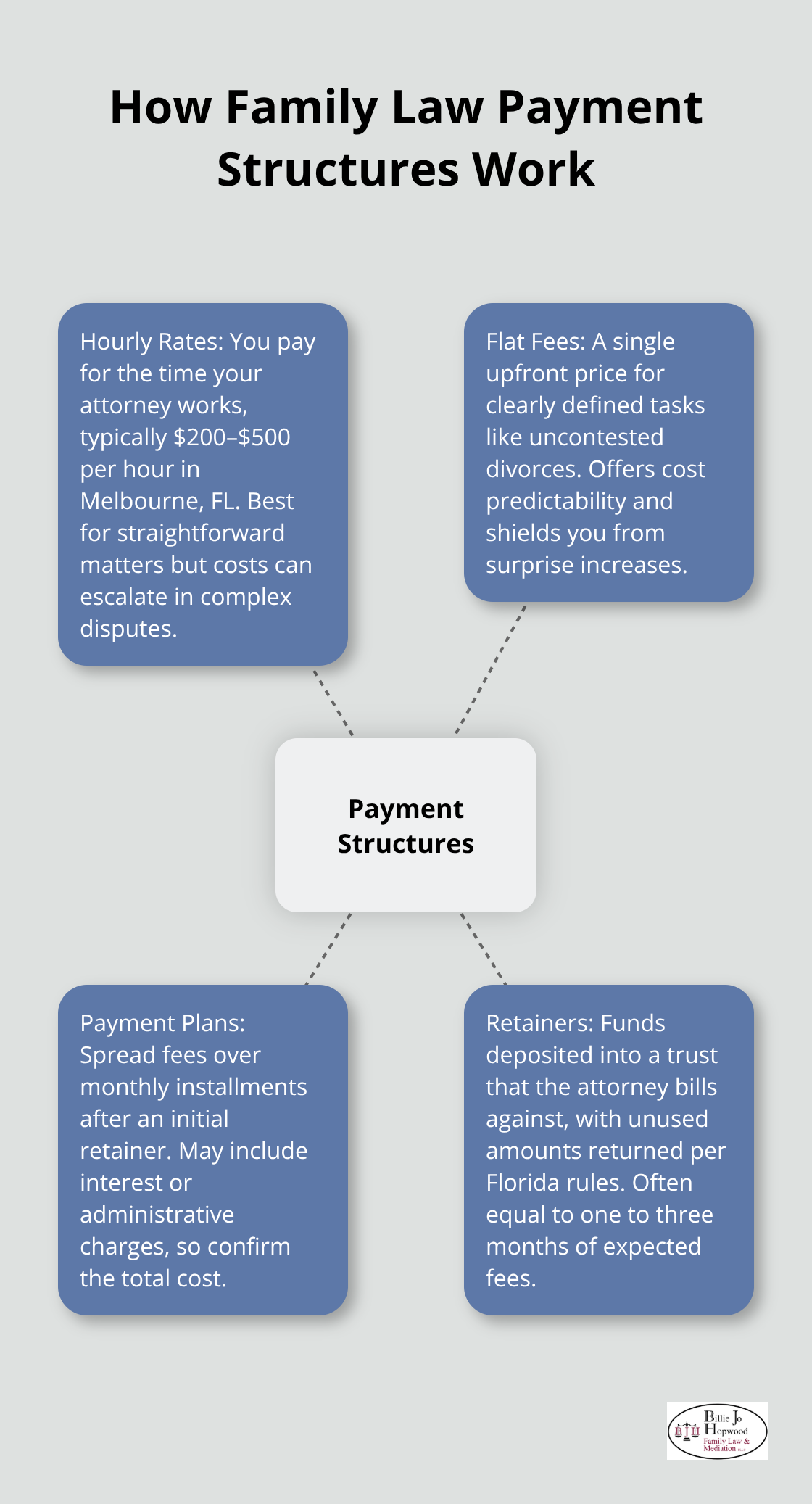
Family law attorneys in Melbourne Florida typically offer three primary payment structures, each with distinct advantages and drawbacks. Hourly rates remain the most common approach, with fees that range from $200 to $500 per hour based on attorney experience and case complexity. The American Bar Association reports that approximately 35% to 50% of these hourly fees cover overhead costs (office rent and staff salaries). This structure works best for straightforward cases but can become expensive during lengthy disputes or complex negotiations.
Flat Fee Arrangements Provide Cost Predictability
Flat fee arrangements offer complete cost transparency upfront, which makes them ideal for uncontested divorces and simple custody modifications. These fixed payments typically range from $1,500 to $5,000 for uncontested cases in Florida. Unlike hourly rates, flat fees protect clients from unexpected cost increases if complications arise. However, attorneys may charge additional fees for services beyond the original scope, so clients must clearly define what services the flat fee covers before they sign any agreement.
Payment Plans Make Legal Services Accessible
Monthly payment plans allow families to spread legal costs over several months rather than pay large sums upfront. Most attorneys require an initial retainer of 25% to 50% of the total expected fees, with the remainder paid in installments. Payment plans often include interest charges or administrative fees, so clients should calculate the total cost before they commit. Some firms accept credit card payments (which provide additional flexibility but potentially increase overall costs through credit card interest rates).
Retainer Agreements Function as Legal Fee Insurance
Retainer agreements require clients to deposit funds into a trust account before legal work begins. Attorneys draw from this account as they complete billable hours and provide detailed monthly statements that show the balance. Florida law requires attorneys to keep retainer funds in separate trust accounts and return unused portions to clients. Retainers typically equal one to three months of expected legal fees, with most family law cases that require $2,500 to $10,000 initial deposits based on case complexity and anticipated duration.
Understanding these payment structures helps families make informed decisions, but equally important is knowing what questions to ask potential attorneys about their fee arrangements. For families seeking cost-effective alternatives, divorce mediation offers significantly lower costs compared to traditional litigation.
How Do You Choose Payment-Flexible Attorneys
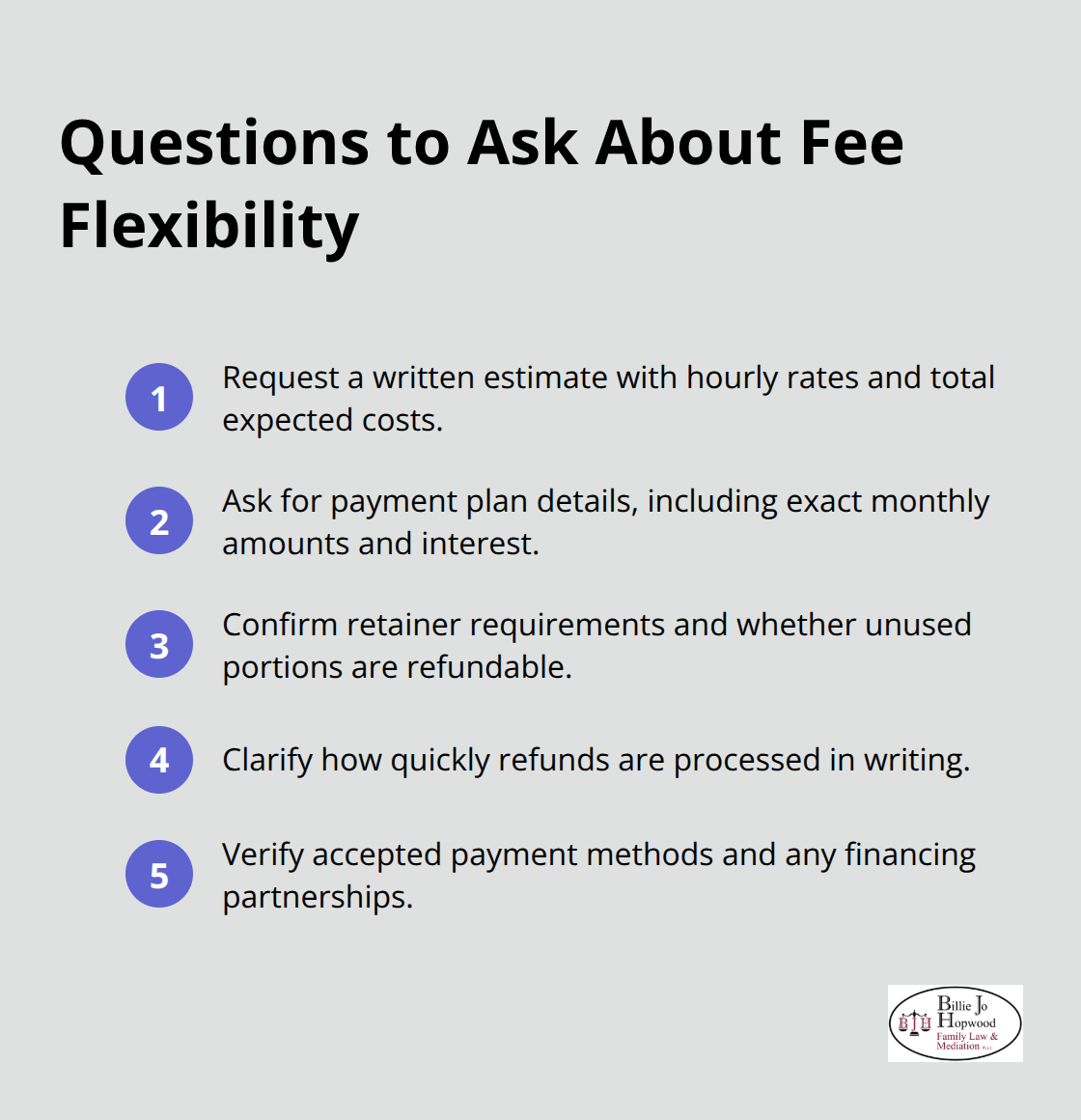
Attorneys who accommodate flexible payments require direct questions about specific fee arrangements and payment options during initial consultations. Ask potential attorneys to provide written estimates that break down hourly rates, anticipated total costs, and available payment plans with exact monthly amounts and interest rates. The Florida Bar Foundation reports that clients who receive detailed fee breakdowns upfront experience 40% fewer billing disputes later. Request information about retainer requirements (including whether unused portions are refundable and how quickly refunds are processed). Ask about accepted payment methods, as attorneys who accept credit cards or offer financing partnerships typically demonstrate greater payment flexibility.
Warning Signs During Fee Discussions
Attorneys who refuse to discuss fees during consultations or provide only vague cost estimates often lack transparency in their billing practices. Avoid lawyers who demand full payment upfront without payment plans, as this indicates inflexibility that could create financial strain during your case. The American Bar Association found that 60% of client complaints involve billing disputes, with unclear fee agreements as the primary cause. Red flags include attorneys who cannot explain their billing procedures clearly, refuse to provide written fee agreements, or pressure clients to sign retainer agreements immediately without review time. Attorneys who dismiss questions about costs or seem uncomfortable when they discuss payment options may not prioritize client financial concerns throughout the legal process.
Written Payment Agreements Protect Your Interests
All payment arrangements must be documented in writing before legal work begins, as verbal agreements often lead to misunderstandings and disputes. Written agreements should specify hourly rates, flat fee amounts, payment schedules, interest charges on installments, and consequences for missed payments. Florida law requires attorneys to provide written fee agreements for cases expected to exceed $100, and these agreements must clearly outline the scope of services covered. The agreement should include details about additional costs such as court filing fees, copying charges, and expert witness fees (which can add hundreds of dollars to your total legal costs). Clients have the right to request modifications to payment terms before they sign, and attorneys who refuse reasonable payment arrangement requests may not suit budget-conscious families.
These payment considerations become even more important when you explore alternative approaches to traditional legal representation that can significantly reduce your overall costs.
What Cost-Saving Alternatives Exist Beyond Traditional Legal Representation
Legal aid organizations in Melbourne Florida provide free or reduced-cost family law services to individuals who qualify, with income limits typically set at 125% of the federal poverty level (approximately $37,000 annually for a family of four). The Legal Aid Society of Brevard County offers comprehensive family law assistance that includes divorce proceedings, custody modifications, and domestic violence protection orders at no cost to eligible clients. Pro bono programs through the Florida Bar connect low-income families with volunteer attorneys who donate their time, though waiting lists often extend three to six months due to high demand. The National Legal Aid & Defender Association reports that only 20% of individuals who seek legal help receive assistance, which makes early application for these services essential.
Family Law Mediation Reduces Costs by 70%
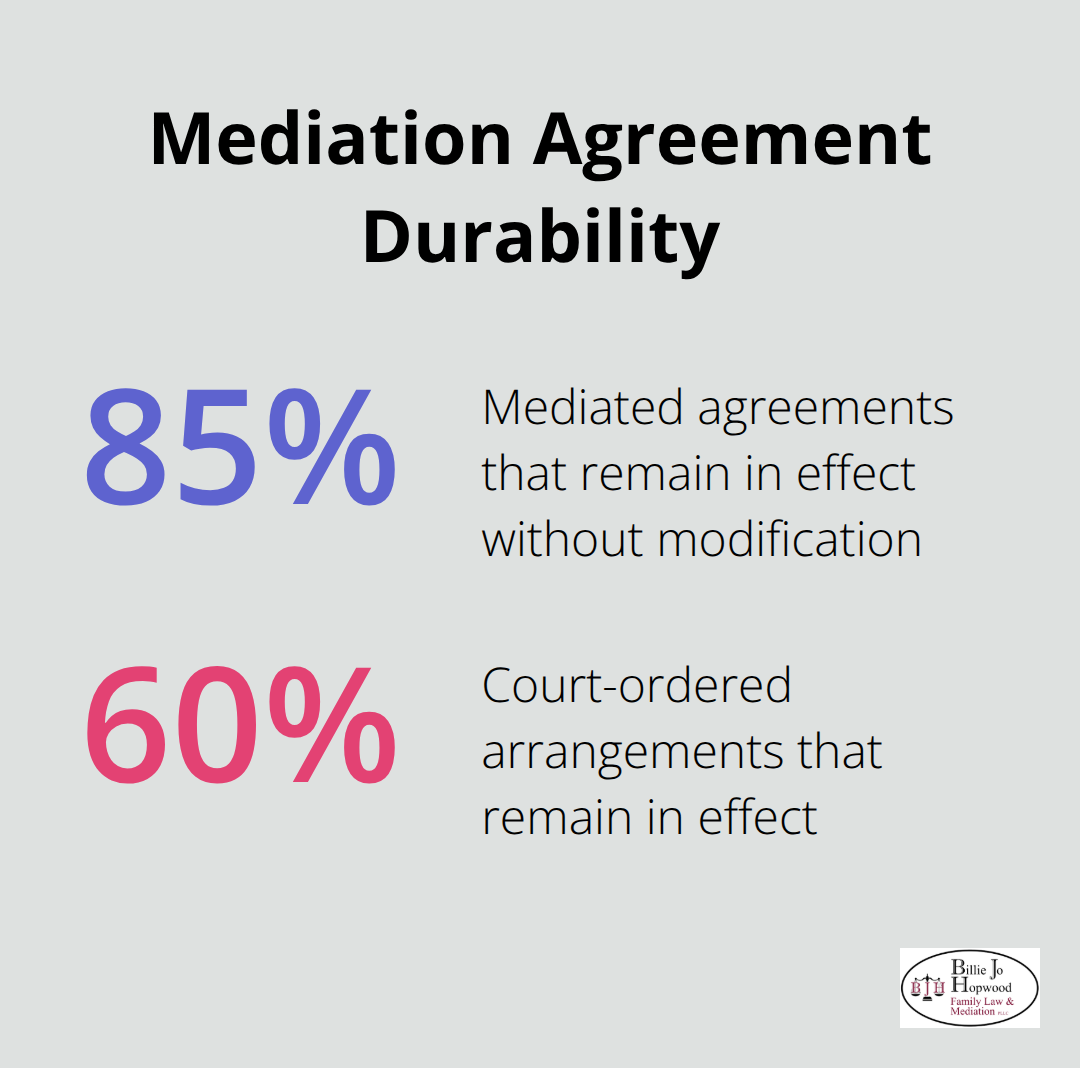
Family law mediation costs between $150 and $300 per hour compared to $400 to $600 per hour for traditional litigation, with most cases that resolve in four to eight sessions rather than months of court battles. The Florida Dispute Resolution Center found that mediated divorces average $3,000 in total costs while litigated divorces often exceed $15,000 per spouse. Mediation eliminates court fees, reduces attorney hours, and speeds resolution time from 12-18 months to 2-4 months for typical cases. Couples who choose mediation retain control over decisions rather than leave outcomes to judges, and 85% of mediated agreements remain in effect without modification compared to 60% of court-ordered arrangements.
Unbundled Legal Services Target Specific Needs
Unbundled legal services allow clients to purchase specific legal tasks rather than full representation, which reduces costs by 50% to 80% compared to traditional arrangements. Common unbundled services include document preparation ($500 to $1,000), legal research ($200 to $400), and limited court appearances ($800 to $1,500). Clients handle routine tasks themselves while attorneys focus on complex legal issues that require professional guidance. The American Bar Association reports that unbundled services work best for motivated clients who can follow instructions and meet deadlines independently, which makes this option unsuitable for individuals who need extensive support throughout their case.
Final Thoughts
Melbourne Florida families need a family law attorney that takes payments to make legal representation affordable during difficult times. Direct communication about fee structures prevents misunderstandings and builds trust with your legal counsel. Multiple attorney consultations allow you to compare payment options and find arrangements that fit your budget.
Cost-effective legal help combines traditional representation with alternative approaches that reduce expenses. Legal aid organizations serve qualifying families, mediation cuts costs by 70% compared to litigation, and unbundled services let you purchase only necessary legal assistance. These options make professional guidance accessible without overwhelming financial strain.
Melbourne Florida families who face family law matters should contact attorneys to discuss payment structures and available options. We at Billie Jo Hopwood Family Law & Mediation, PLLC provide guidance through divorce, child custody, alimony, and child support cases (with payment arrangements designed to help families access quality legal representation). Professional legal support becomes achievable when attorneys offer flexible payment solutions that work with your financial situation.