
Family law disputes don’t have to mean months in court and thousands in legal fees. Florida family law mediation offers a faster, more affordable path to agreements that work for your family.
We at Billie Jo Hopwood Family Law & Mediation, PLLC help families in Melbourne, Florida navigate this process with clarity and confidence.
How Mediation Differs From Litigation in Florida Family Law
Lower Costs Compared to Court Proceedings
Litigation in Florida family courts drains finances quickly. The American Bar Association reports that contested divorce cases average between $15,000 and $30,000 per person when both parties hire attorneys for full court representation. Mediation typically costs between $3,000 and $7,000 total for both parties combined. This difference matters because every dollar spent on legal fees is a dollar removed from what families can actually divide or invest in their children’s future.
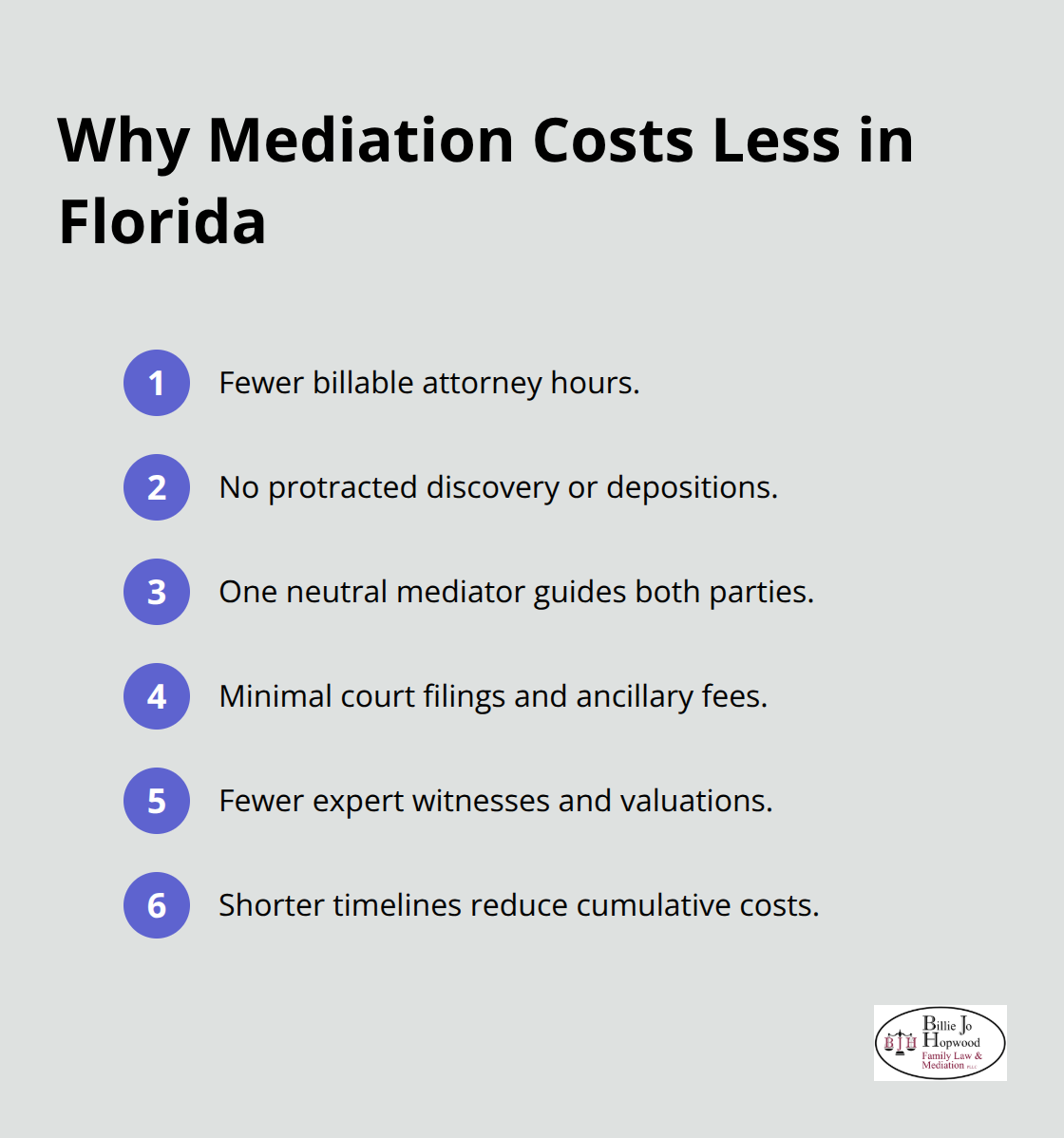
Court proceedings require extensive attorney time for discovery, depositions, motions, and trial preparation. Mediation eliminates these layers of expense by having both parties work directly with a neutral mediator who guides conversation rather than an adversarial process that pits attorneys against each other. You also avoid court filing fees, expert witness costs, and the ongoing billable hours that accumulate across months or years of litigation.
Faster Resolution and Timeline
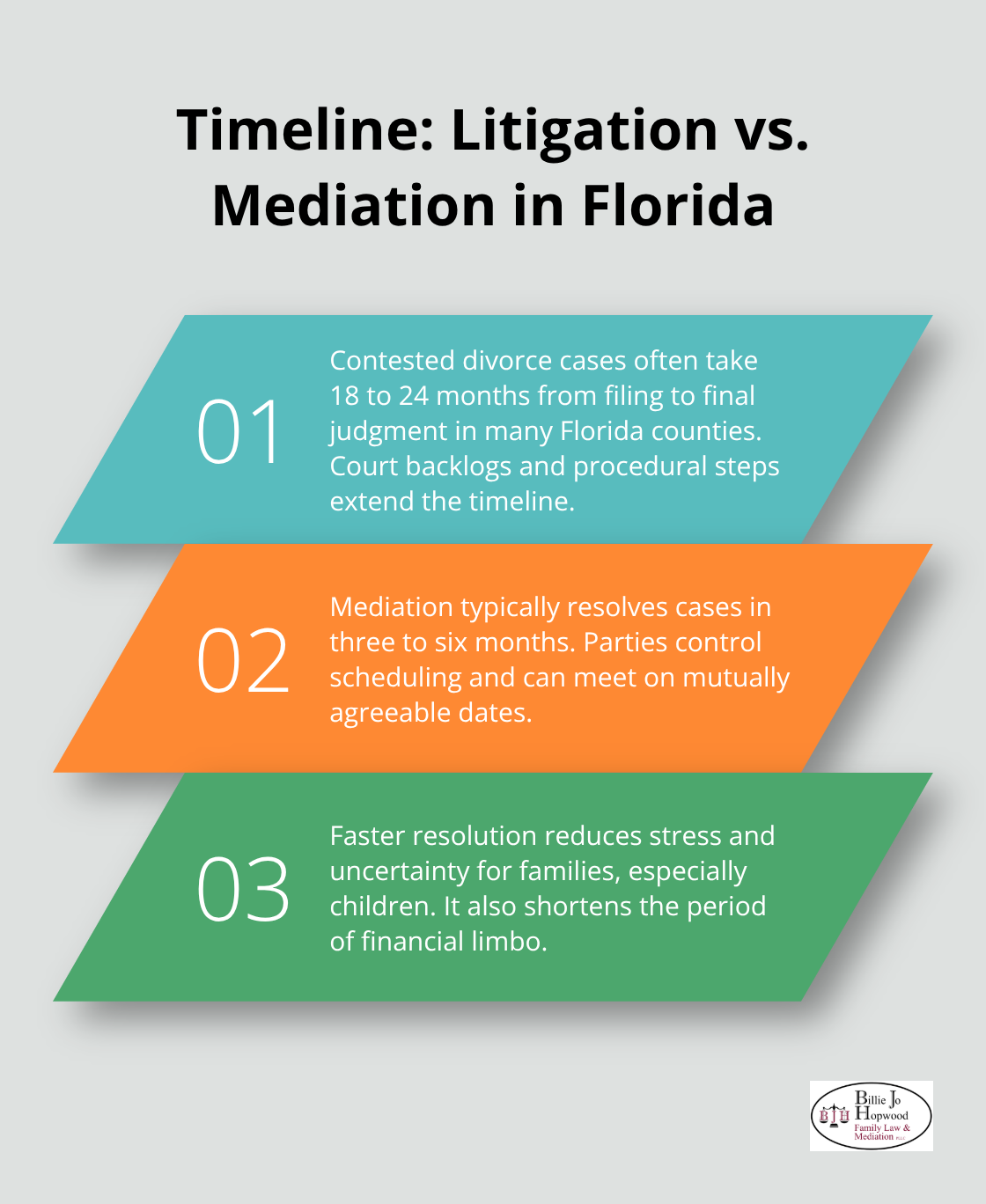
Florida courts face significant backlogs. A contested divorce case takes 18 to 24 months from filing to final judgment in many Florida counties. Mediation typically resolves cases in three to six months because both parties control the timeline and attend sessions on mutually agreed dates. This speed matters tremendously for families with children, as prolonged uncertainty affects school stability, emotional well-being, and financial planning.
You also regain control over your schedule instead of working around court dockets. When you reach agreement through mediation, that agreement becomes binding once formalized, which eliminates the appeals process that can extend litigation by years. Families in Melbourne, Florida who choose mediation report less stress during the resolution period and can move forward with their lives while litigation-bound families remain suspended in legal proceedings.
More Control Over Outcomes
Litigation hands your family’s future to a judge who spends perhaps a few hours hearing your case and knows nothing about your family’s actual values or needs. That judge applies Florida law to reach a decision on custody, property division, and support that may satisfy neither party. Mediation flips this dynamic entirely.
You and your spouse negotiate every detail of your agreement directly, creating solutions that reflect your family’s unique circumstances. If you care deeply about your children spending summers with their grandparents, mediation allows you to build that into a custody arrangement. If you own a family business, you can structure the asset division in ways that preserve the business rather than forcing a sale to split proceeds (which protects both your interests and your employees’ livelihoods).
These customized outcomes are impossible in court, where judges apply standard formulas and legal precedent. You maintain dignity throughout the process because mediation focuses on problem-solving rather than proving the other person wrong. This foundation of cooperation sets the stage for how you’ll work together on the practical details that follow.
The Mediation Process in Florida Family Law
Initial Consultation and Agreement to Mediate
Your first step involves meeting with a mediator to confirm you both want to proceed outside the courtroom. During this initial consultation, the mediator explains confidentiality rules, outlines what to expect, and answers questions about how mediation actually works. This matters because many people arrive with misconceptions formed by television courtroom drama.
The mediator isn’t a judge making decisions for you, and mediation isn’t a watered-down version of litigation. It’s an entirely different process where a neutral third party facilitates conversation between you and your spouse to reach mutually acceptable solutions. You’ll sign a mediation agreement that legally protects what you discuss during sessions, meaning nothing said in mediation can be used against you in court if mediation fails and litigation becomes necessary. This confidentiality protection gives both parties permission to speak honestly without fear of ammunition being gathered for trial.
Information Gathering and Document Exchange
Once you’ve committed to mediation, the information gathering phase begins. You and your spouse exchange financial documents, custody information, asset lists, and other materials relevant to your situation. The mediator typically requests specific documents upfront, which prevents the discovery delays that plague litigation for months.
If you own property, businesses, retirement accounts, or investments, provide clear documentation of current values and how these assets were acquired. For custody matters, share information about each parent’s work schedule, involvement in children’s activities, and existing arrangements. The mediator reviews these materials and identifies areas of agreement and disagreement before negotiation sessions start, which saves time during paid mediation hours.
Negotiation Sessions and Working Toward Settlement
The negotiation phase brings you to sessions with the mediator present. These aren’t contentious battles but structured conversations where the mediator guides discussion, asks clarifying questions, and helps both parties understand each other’s priorities. Most families in Melbourne, Florida resolve their cases within two to four mediation sessions, though complex situations involving significant assets or custody disputes may require more sessions.
Between sessions, the mediator often meets privately with each party to explore flexibility and creative solutions that neither side initially considered. When you reach agreement on a particular issue, the mediator documents it in writing to prevent misunderstandings later. This incremental progress builds toward a complete settlement agreement that addresses all major issues-one that your attorneys then formalize into legal documents ready for court approval.
With your agreement taking shape through these structured sessions, you’re now ready to address the specific family law issues that mediation resolves most effectively.
Common Issues Resolved Through Family Law Mediation in Melbourne, Florida
Child Custody and Visitation Arrangements
Mediation in Melbourne, Florida handles child custody decisions more effectively than courtroom battles because both parents retain control over solutions that fit their actual lives. When judges decide custody, they apply Florida Statute 61.13, which establishes a presumption of shared parental responsibility but leaves substantial discretion about time-sharing schedules. Mediation allows you to create schedules that reflect your family’s specific rhythms instead of generic formulas.
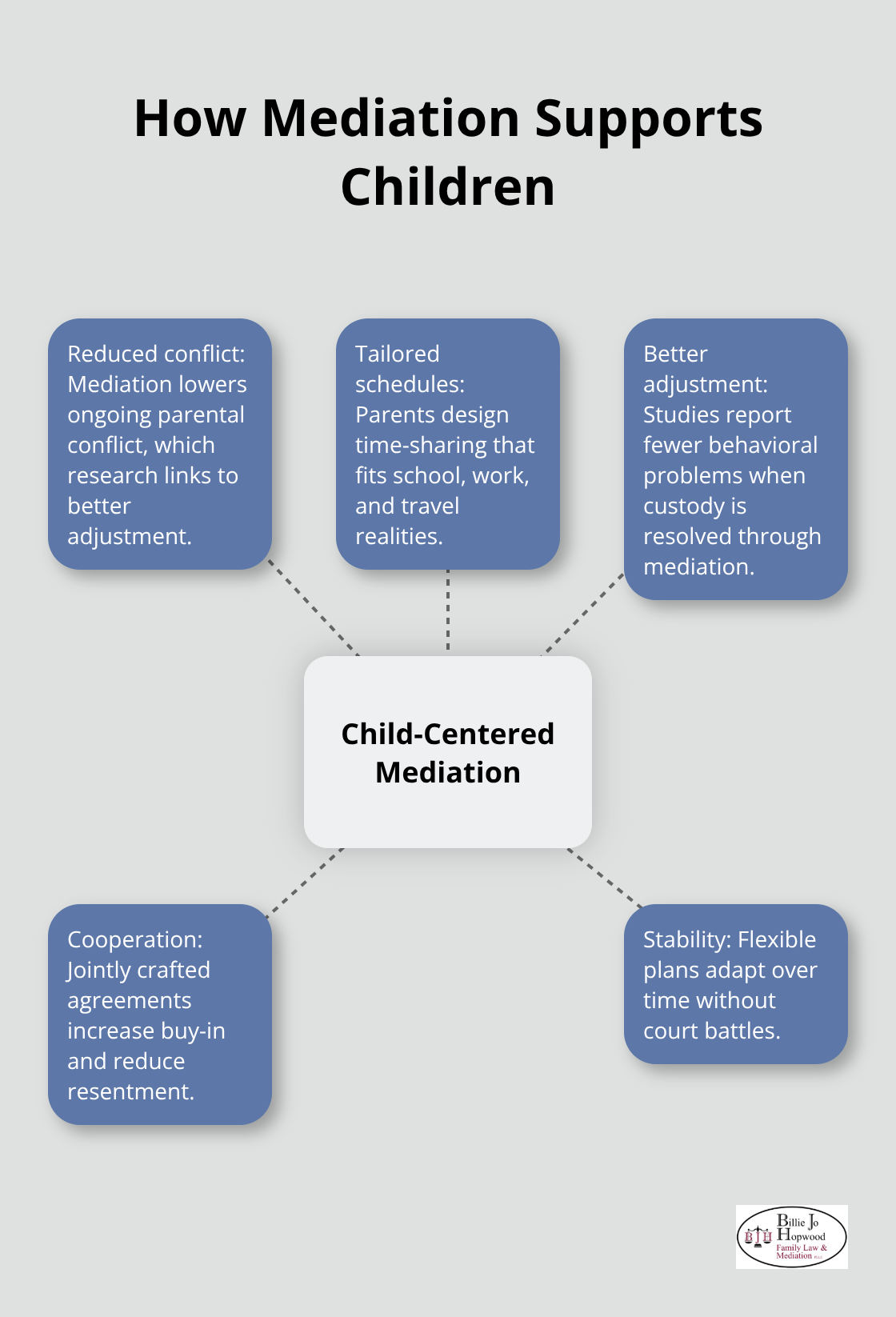
If your child attends school in one district but a parent works near another, mediation lets you build transportation logistics into the custody arrangement. If one parent travels for work two weeks monthly, the agreement adapts to that reality rather than forcing a rigid schedule that creates conflict. Research from the American Journal of Family Therapy found that children in families who resolved custody through mediation showed better adjustment and fewer behavioral problems than children whose parents litigated, primarily because mediation reduces ongoing parental conflict and produces agreements both parents helped create rather than resent.
Spousal Support and Alimony Decisions
Spousal support and alimony decisions involve complex calculations that courts handle through statutory formulas, yet mediation produces fairer results because it accounts for your actual financial picture. Florida’s alimony guidelines calculate payments based on combined income and the length of marriage, but these formulas ignore individual circumstances that matter enormously. If you’re the higher-earning spouse but face a major career transition or health issue, mediation allows you to negotiate durational support rather than permanent payments.
If you’re the lower-earning spouse and plan to increase your income through education or career advancement, mediation lets you structure declining payments tied to actual income growth rather than fighting in court years later to modify a rigid order. This flexibility transforms alimony from a source of ongoing conflict into a practical arrangement both parties accept.
Asset Division and Property Settlement
Asset division through mediation avoids the adversarial discovery process where both sides hire appraisers and financial experts, each producing inflated valuations that drive up costs without improving outcomes. In a family business situation, mediation lets one spouse continue operating the business while the other receives a buyout structured over time, preserving employment and avoiding forced sales that destroy value. You control how retirement accounts, real estate, investments, and personal property transfer between parties rather than accepting a judge’s application of Florida’s equitable distribution statute.
Final Thoughts
Mediation transforms how families resolve disputes by replacing courtroom adversity with collaborative problem-solving. Florida family law mediation costs significantly less than litigation, resolves cases in months rather than years, and produces agreements that reflect your family’s needs rather than generic court orders. These advantages compound when you consider the emotional toll litigation takes on children and the ongoing resentment that comes from having a judge impose solutions neither parent wanted.
We at Billie Jo Hopwood Family Law & Mediation, PLLC guide families through every step of this process with clarity and compassion. Based in Melbourne, Florida, we help you navigate mediation by explaining your options, preparing necessary documents, and supporting your understanding of the agreements you make. Our role is to support your family’s transition forward, whether that means facilitating mediation directly or representing your interests throughout the process.
Contact Billie Jo Hopwood Family Law & Mediation, PLLC to discuss whether mediation fits your situation and what the next steps look like for your family. Many families in Melbourne, Florida find that mediation offers the path forward they’ve been searching for, one that preserves resources, protects children from prolonged conflict, and allows both parents to move ahead with dignity intact.