
Pursuing a degree in family law opens doors to meaningful work helping families navigate difficult transitions. At Billie Jo Hopwood Family Law & Mediation, PLLC, we know that this career path requires more than just classroom learning.
The journey involves law school, bar certification, and hands-on experience in real cases. This guide walks you through each step toward building a family law career.
Getting Your Foundation Right Before Law School
Your undergraduate degree matters far less than you think. Family law firms do not care whether you majored in political science, business, engineering, or nursing-the American Bar Association does not require any specific undergraduate path either. What matters is that you complete a bachelor’s degree from an accredited institution and maintain a solid GPA, since law school admissions committees weight your undergraduate performance heavily. Some students find that majoring in subjects like accounting or real estate gives them an edge later when handling complex asset divisions in divorce cases, but this advantage is modest compared to performing well on the Law School Admission Test (LSAT). If you are still in undergraduate school, focus on developing strong writing and communication skills through coursework and volunteer work rather than chasing a “perfect” major.
Choosing a Law School with Real Family Law Training
Law school is where your family law foundation actually gets built. Not all law schools offer the same depth in family law coursework. Florida State University College of Law, for example, offers ten credits from courses like Divorce Law, Children and the Law, Domestic Violence, and Family Law that specifically prepare you for this field. When you evaluate law schools, look for programs that offer clinical experience-hands-on work with real clients under attorney supervision. A Family Law Clinic where you draft restraining orders or negotiate custody agreements teaches you more in one semester than a year of lectures. Many law schools also offer externships that place you at the intersection of family law and criminal justice, which is valuable since domestic violence cases often cross both areas. Start this clinical work early in law school so you can confirm family law is actually the right fit before you graduate and accumulate debt.

Passing the Bar and Building Credentials
Florida requires you to pass the General Bar Examination, which consists of three parts: the Florida-prepared section, the Multistate Bar Examination (MBE), and the Multistate Professional Responsibility Examination (MPRE). You must complete your law school graduation requirements before you sit for the exam. If you target February 2026, the final filing deadline is January 15, 2026, so plan ahead. After you pass the bar, you are not done learning. Many family law practitioners pursue additional certifications or coursework in mediation, estate planning, and tax law to handle the full range of issues that arise in divorce cases. Attorneys who combine family law with mediation training serve clients far better than those who only litigate. Consider taking mediation courses early in your career-some law schools offer them during your final year, and many state bar associations recognize mediation credentials that strengthen your practice.
Moving Forward Into Your First Position
The credentials you earn in law school and through bar passage open doors to different career paths. Your next decision involves choosing where to apply those skills and which type of legal work aligns with your values and goals.
How to Build Real Skills That Courts and Clients Respect
Internships Teach You What Classrooms Cannot
Internships during law school matter far more than you realize. A summer spent filing motions at a family law firm teaches you how cases actually move through the system-something no classroom lecture can replicate. Courts in Florida see thousands of cases annually, and judges notice when attorneys come unprepared or miss procedural deadlines. Working under a practicing attorney for even one summer forces you to understand discovery timelines, child custody evaluation processes, and how to communicate with clients who are emotionally vulnerable. The American Bar Association recognizes that early experiential learning through internships, fellowships, and part-time work helps you determine whether family law fits your temperament before you graduate with significant debt. If your law school offers a Family Law Clinic, take it. Clinics provide real client work under supervision-you draft actual restraining orders, negotiate custody agreements, and see the consequences when you miss a filing deadline.
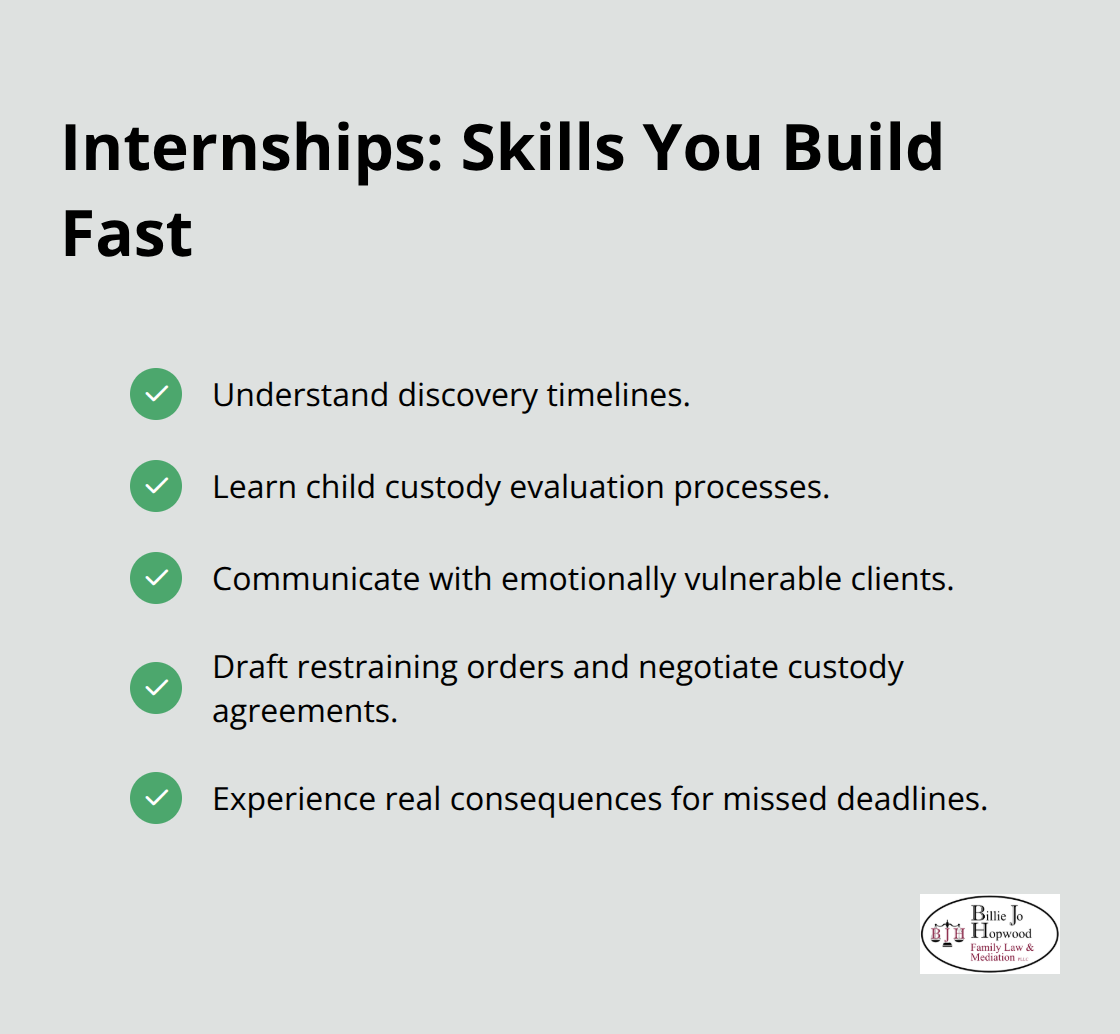
This is not theoretical practice; courts enforce your work.
Mediation Training Transforms Your Entire Practice
Mediation training should start during law school, not after you pass the bar. Many attorneys wait years before learning mediation, then discover it transforms how they handle every case. Family law accounts for about one-third of civil filings and trials in the United States, yet alternative dispute resolution resolves the majority of these cases before trial. Courts favor mediators who understand both the legal framework and the emotional dynamics of family conflict. Take mediation courses while still in law school-many programs offer them in your final year-and pursue credentials recognized by your state bar association. Communication skills matter more than legal knowledge in family law. You need to hear what clients actually need beneath their stated demands, recognize when a custody proposal protects children versus when it punishes an ex-spouse, and write agreements that families can follow for years. These skills develop through practice, not reading.
Staying Current Keeps You Competitive
As you move into your first position, stay current with Florida family law changes through continuing legal education hours required for bar membership. The field evolves constantly as courts address new reproductive technologies, same-sex marriage implications, and digital asset division in divorce. Attorneys who ignore these shifts fall behind quickly. Your first job will test whether you can apply what you learned in law school to real clients with real problems. The transition from student to practicing attorney demands that you continue learning long after you pass the bar exam.
Where Family Law Careers Actually Lead
Your first job after passing the bar determines whether you build a sustainable career or burn out within five years. The three main paths-private practice, government work, and mediation-attract different personalities and offer vastly different financial outcomes. Private practice at a boutique family law firm typically pays more but demands longer hours and constant client acquisition. Government positions offer stability and predictable schedules but lower salaries, often 40 to 50 percent less than private practice. Mediation roles sit between these extremes: mediators in Florida earn between 60,000 and 120,000 annually depending on volume and reputation, with far greater flexibility than litigators. The American Bar Association data shows that most family law practitioners work in small firms with fewer than ten attorneys, not large corporate law departments. This matters because small firms force you to handle every aspect of a case yourself-from initial client intake through trial-rather than narrowing your focus to one task.
Small Firms and Solo Practice Demand Real Business Skills
Private practice attorneys in family law must understand business fundamentals that law school never teaches. You need to manage client trust accounts, understand billing structures, and actually collect payment from clients going through financial crisis. Many family law clients delay paying bills during divorce because their assets are frozen or they lack immediate cash. Solo practitioners report that approximately 20 to 30 percent of their cases result in fee disputes or collection problems. The profit margin for a solo family law practice sits around 30 to 40 percent after overhead, making volume critical to survival. Small firms succeed when they develop reputation through consistent results and strong communication, not aggressive marketing. Attorneys in private practice handle mediation, negotiation, and litigation within the same case-you might mediate a custody arrangement one week and prepare trial exhibits the next. This demands mental flexibility and comfort with uncertainty.
Government and Nonprofit Roles Offer Different Rewards
Government agencies employ family law attorneys in child protective services, state attorney offices handling domestic violence prosecution, and public defender offices representing parents in dependency cases. These positions offer job security, defined benefits, and predictable 40-hour weeks that private practice rarely provides. However, caseloads in government positions often reach 200 to 300 cases per attorney annually, compared to 30 to 50 cases for private practitioners. This volume means less individual attention per client and more administrative work. Attorneys working in child welfare agencies navigate constant ethical tension between protecting children and preserving family unity. Nonprofit legal services organizations pay slightly more than government work but still significantly less than private practice. The trade-off is meaningful work-you represent clients who cannot afford attorneys, often immigrants, low-income families, or abuse survivors. Career satisfaction in nonprofit roles tends to be higher than in private practice, though financial stress is greater.
Mediation Creates the Highest Client Satisfaction
Mediators resolve more family law cases than litigation ever will. When both parties voluntarily participate in mediation rather than fighting through trial, settlement rates exceed 80 percent.
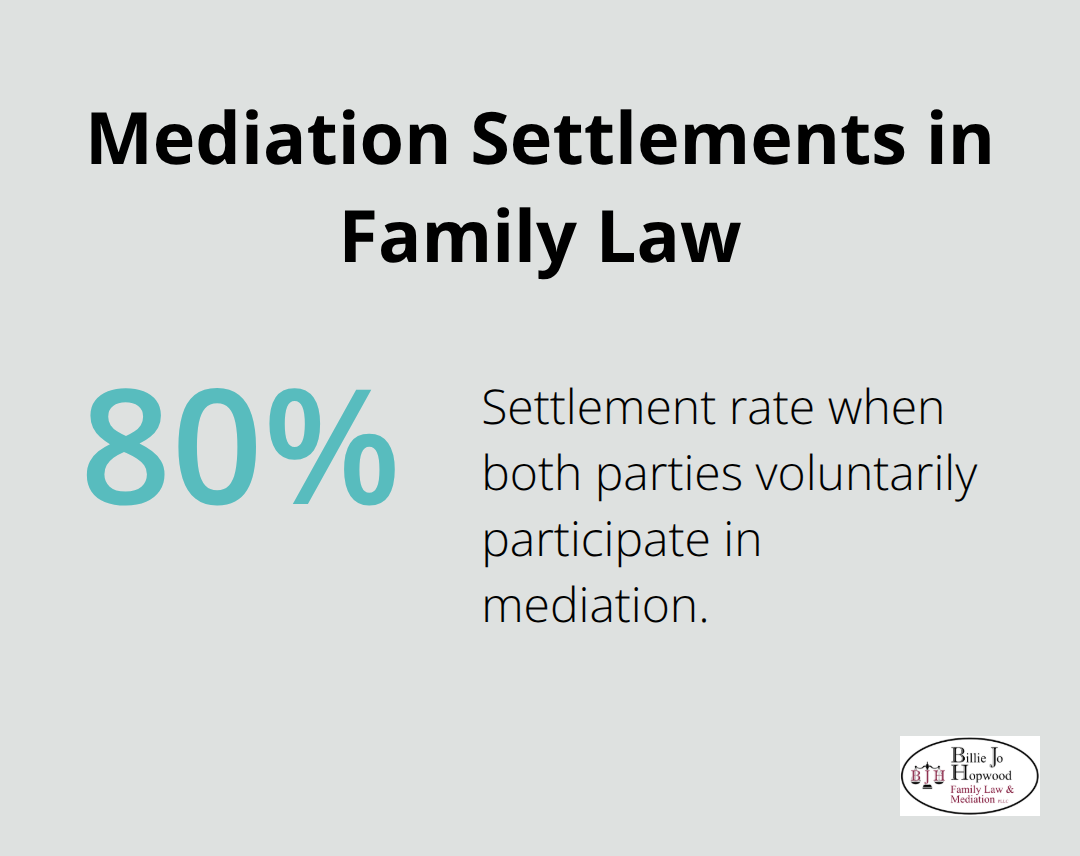
Mediators earn income through hourly fees, typically 150 to 300 per hour in Florida, charged equally to both parties. This creates an incentive structure completely opposite to litigation-your income rises when cases resolve quickly, not when they drag on. Attorneys transitioning from litigation to mediation often report dramatically reduced stress and better work-life balance. Mediation training teaches you to identify the actual interests beneath stated positions, a skill that transforms how you handle any legal matter. Courts increasingly mandate mediation before trial, making mediation credentials valuable for any family law attorney. The Florida Supreme Court recognizes family law mediators through certification programs that require specific training hours and demonstrated competence. Mediators who understand both legal frameworks and emotional dynamics of family conflict command higher fees and build strong referral networks (this path suits attorneys who find litigation exhausting but want to remain involved in family law).
Final Thoughts
A degree in family law opens doors to work that genuinely matters. You complete your bachelor’s degree, attend law school with strong clinical training, pass the Florida bar exam, and build practical skills through internships and mediation coursework. The path demands commitment across multiple stages, but the work itself transforms families navigating their most difficult moments.
Career prospects in family law remain strong because family law accounts for roughly one-third of all civil filings in the United States. Your income potential varies significantly by career choice-private practice offers the highest earning potential but demands business acumen and tolerance for uncertainty, while government positions provide stability with lower compensation, and mediation roles sit between these extremes with flexibility and strong hourly rates. The most successful family law attorneys combine legal knowledge with genuine communication skills and emotional intelligence that develop through real experience, not classroom study.
If you are in Melbourne, Florida and considering family law representation or mediation services, Billie Jo Hopwood Family Law & Mediation, PLLC offers guidance in divorce, child custody, alimony, and child support matters. We combine legal knowledge with compassionate representation for families navigating challenging transitions.