
Divorce brings complex financial decisions that can overwhelm even the most prepared couples. Financial mediation divorce offers a collaborative path forward that protects both your assets and your family’s well-being.
At Billie Jo Hopwood Family Law & Mediation, PLLC, we guide Melbourne Florida families through this process with clarity and compassion. The right approach can save you thousands in legal fees while preserving important relationships.
What Makes Financial Mediation Different
Financial Mediation Saves Time and Money
Financial mediation in Melbourne Florida transforms how couples handle divorce finances. Traditional litigation costs an average of $15,000 to $30,000 per spouse, while mediation typically runs $3,000 to $8,000 total for both parties. The process takes 2-4 months compared to 12-18 months in court.
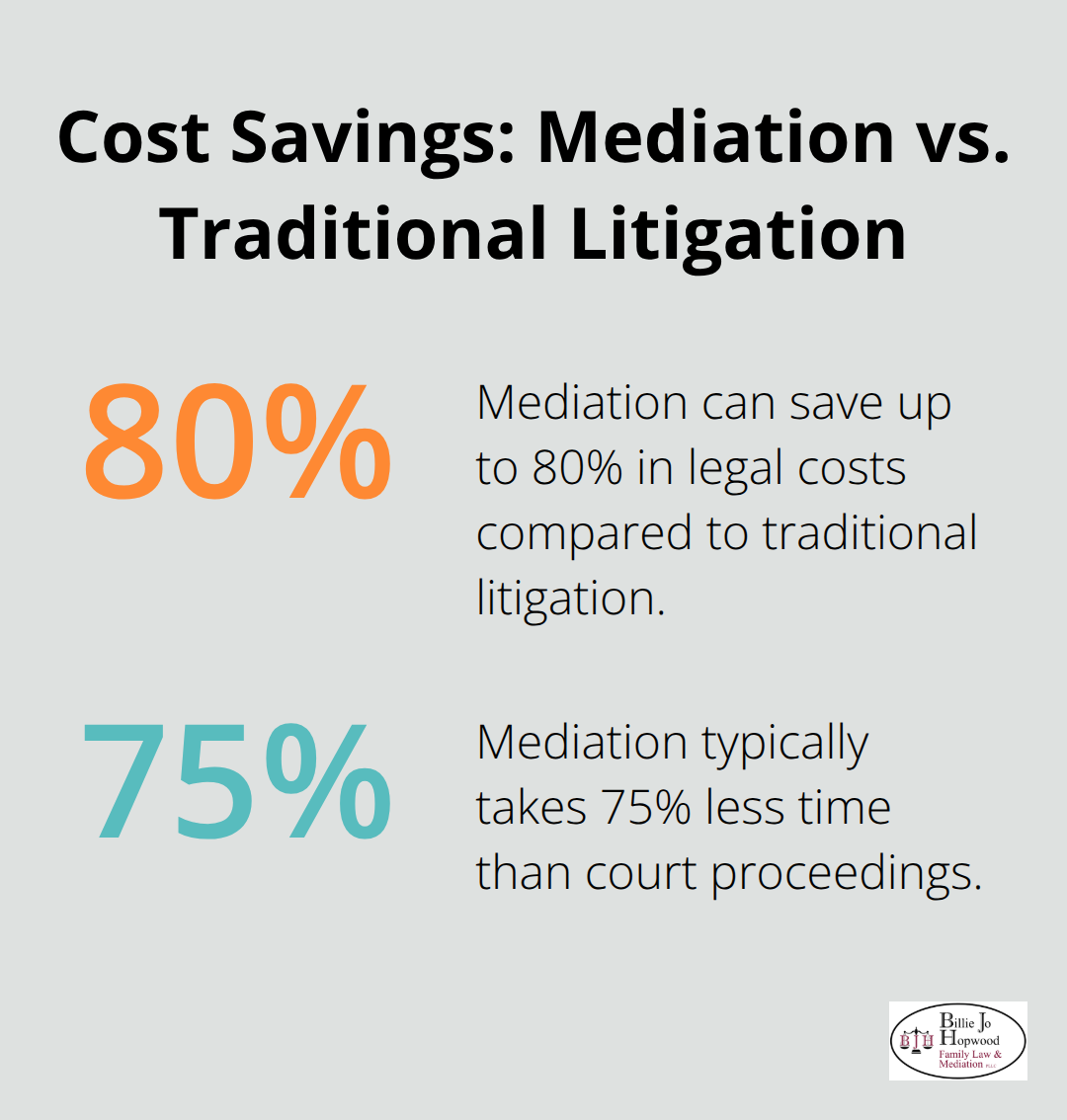
You meet with a neutral mediator who helps both spouses reach agreements on asset division, debt allocation, and support payments. Florida courts mandate mediation for custody disputes, and many judges now require it for financial matters before they allow trials. The mediator doesn’t make decisions but facilitates productive conversations between you and your spouse.
You Control Your Financial Future
Mediation puts you in the driver’s seat. Court battles leave financial decisions to a judge who doesn’t know your family’s unique circumstances. In mediation, you craft solutions that work for your specific situation.
You can structure asset division over time, create flexible support arrangements, or protect business interests through creative agreements. The process remains confidential (unlike public court hearings where your financial details become part of the permanent record). Florida’s equitable distribution law still applies, but mediation allows you to negotiate what fair means for your family rather than accept a judge’s interpretation.
When Mediation Works Best
Financial mediation succeeds when both spouses can communicate respectfully and share complete financial information. It works particularly well for couples with complex assets, business ownership, or retirement accounts that need careful division.
Mediation fails when domestic violence exists, when one spouse hides assets, or when someone refuses to negotiate in good faith. High-conflict situations where emotions override logic also benefit more from structured litigation (though these cases often cost significantly more). The key is honest financial disclosure – when you hide income or assets, you destroy trust and derail the entire process.
The success of your mediation depends heavily on the preparation you complete before your first session.
Key Financial Issues Addressed in Mediation
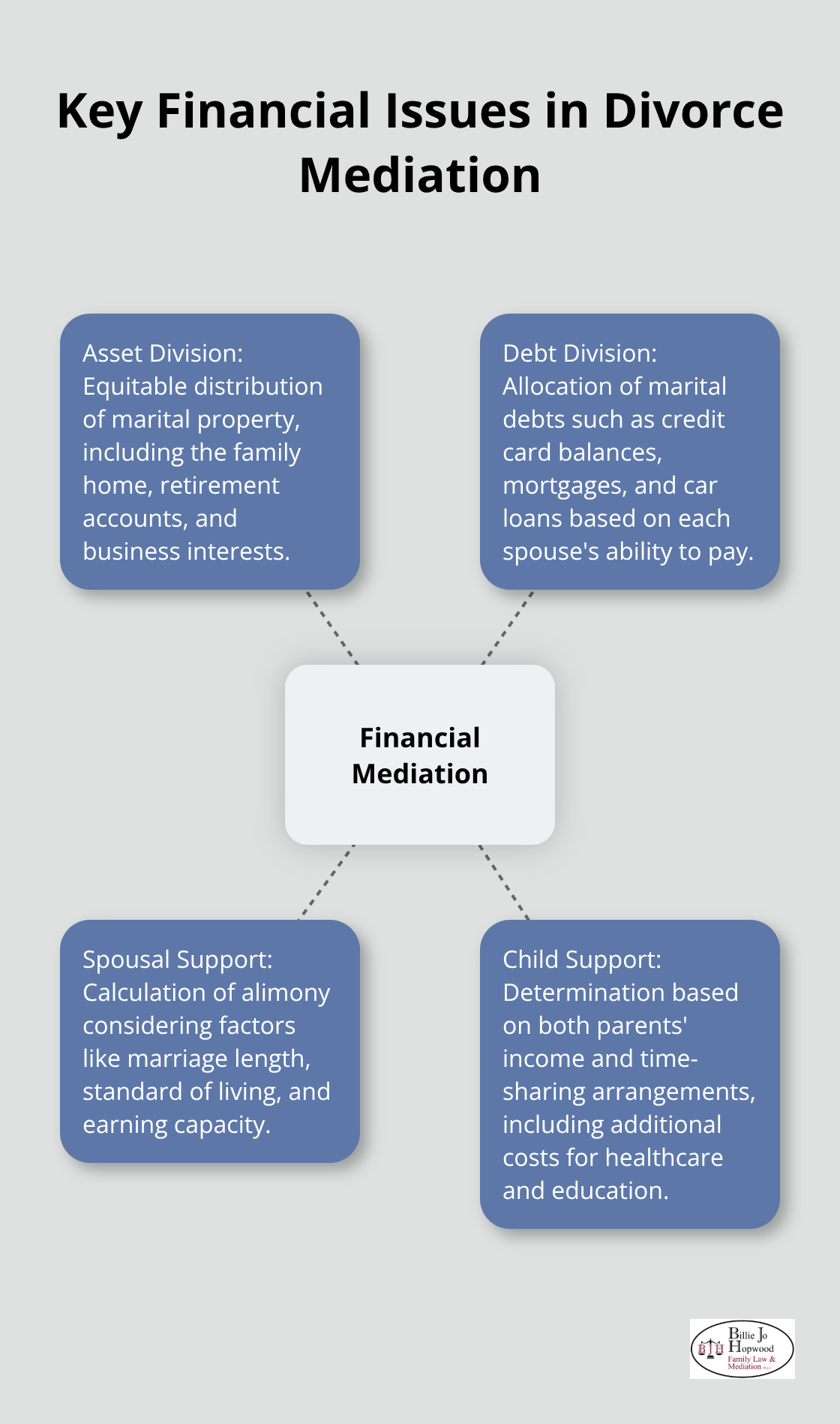
Mediation addresses three major financial areas that determine your post-divorce financial stability. Asset division covers everything from your home equity to retirement accounts, with Florida’s equitable distribution law requiring fair but not necessarily equal splits. Marital assets include anything acquired during marriage regardless of whose name appears on the title, while separate property like inheritances or pre-marital assets typically stays with the original owner. Debt division follows the same principles – credit card balances, mortgages, and car loans accumulated during marriage get allocated based on each spouse’s ability to pay and benefit received from the debt.
Asset Division Requires Strategic Planning
Florida courts divide marital property based on multiple factors including each spouse’s economic circumstances, contributions to the marriage, and future financial needs. Your family home often represents the largest asset, and couples must decide whether to sell and split proceeds or allow one spouse to buy out the other’s interest. Retirement accounts need careful handling since early withdrawals trigger tax penalties (401k plans require Qualified Domestic Relations Orders to avoid these penalties). Business valuations become complex when one spouse owns a company, as the court must determine whether appreciation resulted from marital efforts or separate property growth.
Spousal Support Calculations Follow Strict Guidelines
Alimony calculations in Florida consider eleven statutory factors including marriage length, standard of living, and each spouse’s earning capacity. Marriages lasting less than seven years rarely qualify for permanent alimony, while marriages over seventeen years often do. The 2023 alimony reform eliminated permanent alimony for most cases and capped duration at 75% of marriage length for long-term marriages. Tax implications changed dramatically after 2018 – alimony payments are no longer tax-deductible for payers or taxable income for recipients, making the true cost much higher than pre-2019 divorces.
Child Support Follows State Guidelines
Florida uses an income shares model that calculates support based on both parents’ combined monthly income and overnight time-sharing. The state’s child support guidelines cover children up to age 18 or graduation from high school, whichever comes later. Health insurance, daycare costs, and extracurricular activities get added to base support amounts. Educational expenses beyond high school require separate agreements since Florida law doesn’t mandate college support. Parents often negotiate private school tuition, tutoring costs, and college savings contributions during mediation rather than leave these decisions for future court battles.
Success in these financial negotiations depends heavily on thorough preparation before you enter the mediation room.
Preparing for Financial Mediation Sessions
What Documents Do You Need for Financial Mediation
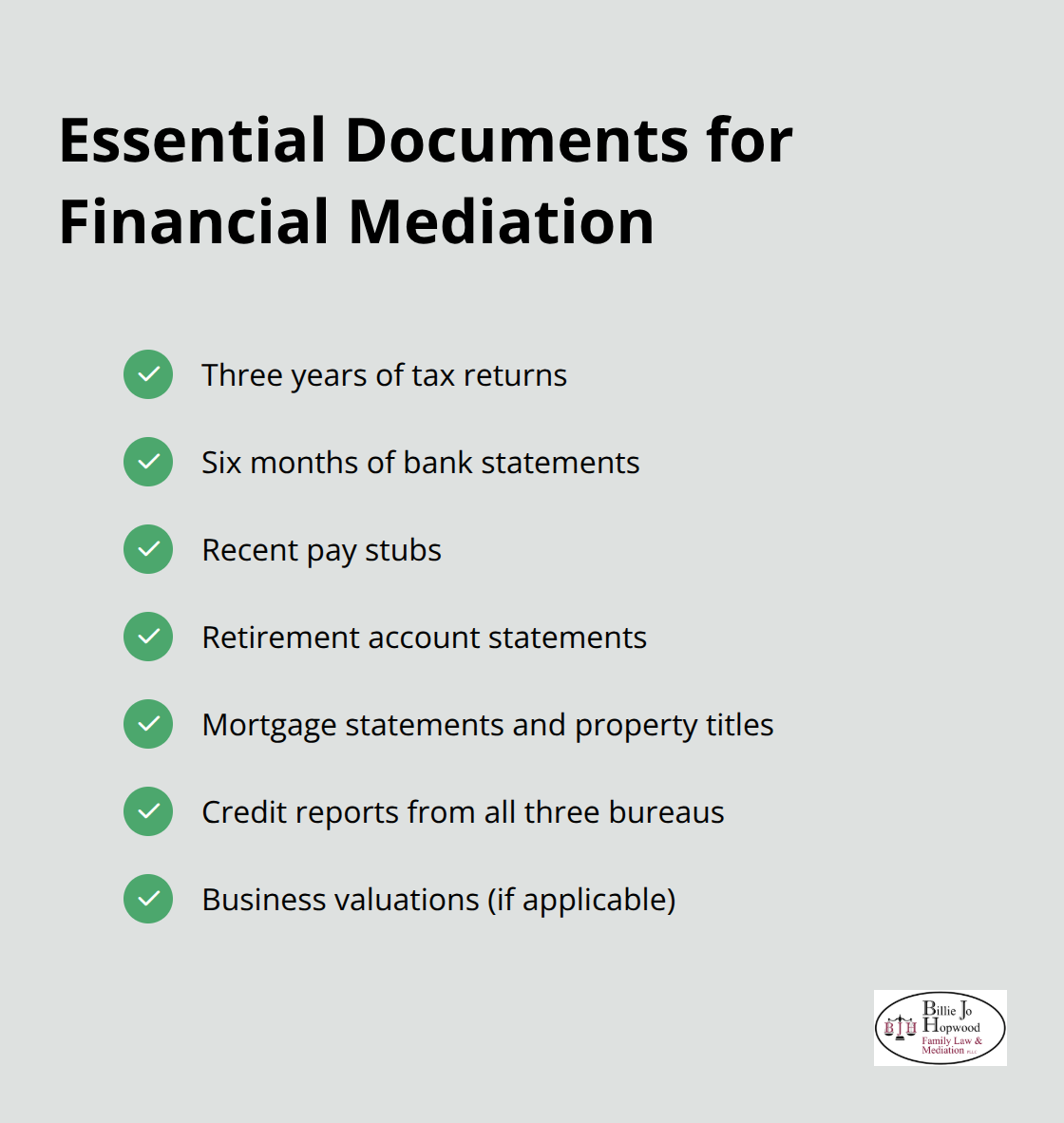
Financial mediation demands complete documentation of your financial life, and missing paperwork stops negotiations before they begin. Florida Family Law Rules require both parties to submit comprehensive Financial Affidavits within 45 days of the divorce petition (this includes three years of tax returns, six months of bank statements, pay stubs, retirement account statements, and complete records of all assets and debts). You must provide mortgage statements, vehicle titles, business valuations, and insurance policies alongside these core documents. Credit reports from all three bureaus expose hidden debts that catch many couples off guard during disclosure. Property appraisals become necessary for real estate, collectibles, or business interests worth more than $10,000. Courts impose sanctions for incomplete disclosures, and judges routinely reject settlements based on inadequate financial information.
Set Specific Financial Goals Before Your First Session
Successful mediation begins with clear priorities rather than vague hopes for fairness. Write down your three most important financial objectives – whether you want to keep the family home, protect retirement savings, or minimize child support modifications. Research comparable divorce settlements in your income bracket and asset range to understand realistic outcomes. Florida’s equitable distribution law considers eleven factors including marriage duration, economic circumstances, and contributions to marital assets, so a 50-50 split rarely occurs. Calculate your post-divorce budget including housing, transportation, and childcare costs to understand what support amounts you actually need versus what sounds fair. Identifying your priorities helps you focus negotiations on what matters most rather than getting distracted by minor issues.
Choose Your Mediator Based on Financial Complexity
Your mediator’s background determines whether complex financial issues get resolved effectively or create future disputes. Mediators with accounting or financial planning experience handle business valuations, tax implications, and retirement division more competently than those with general mediation training. Ask potential mediators about their largest asset division case and how they handled Qualified Domestic Relations Orders for retirement accounts. Schedule initial consultations with at least two mediators to compare their approaches to debt allocation and spousal support calculations. The cheapest mediator costs more in the long run when agreements fail or require court intervention to resolve ambiguities.
Final Thoughts
Financial mediation divorce delivers measurable advantages over traditional litigation that extend far beyond immediate cost savings. Court battles average $15,000 to $30,000 per spouse and drag on for 12-18 months, while mediation typically costs $3,000 to $8,000 total and resolves within 2-4 months. These savings preserve resources for your family’s future rather than fund prolonged conflict.
The collaborative approach protects your children from courtroom drama while it maintains privacy around sensitive financial matters. Unlike public court records that expose your assets and debts permanently, mediation discussions remain confidential. You retain control over creative solutions that judges might never consider (from flexible payment schedules to business protection strategies).
We at Billie Jo Hopwood Family Law & Mediation, PLLC guide Melbourne Florida families through this process with the compassion and clarity you deserve. Our firm assists families through challenging legal situations that include divorce, child custody, alimony, and child support matters. The path forward begins when you understand your options and take that first step toward resolution.