
Family law mediation works best when you arrive prepared. We at Billie Jo Hopwood Family Law & Mediation, PLLC know that understanding how to prepare for mediation in family law cases reduces stress and leads to better outcomes.
This guide walks you through gathering documents, understanding what happens during sessions, and approaching mediation with a clear strategy.
What Documents Do You Need Before Mediation
Gathering the right documents before mediation is non-negotiable. You cannot negotiate effectively without understanding your financial position, and the mediator cannot help you reach a fair agreement without complete information. Start by collecting every financial record from the past six months: pay stubs, bank statements for all accounts, credit card statements, and investment account statements. Proper preparation can cut mediation time by up to 30%, which means less time spent in sessions and lower overall costs. If you own retirement accounts like a 401(k) or IRA, pull those statements too. Pension information matters equally. Many people underestimate how much these accounts factor into property division, and missing them during mediation creates problems later when your agreement needs court approval.
Organize Your Financial Picture Completely
Create a spreadsheet listing every asset and liability with current values. Include your home, vehicles, jewelry, business interests, and any accounts held jointly or separately. For liabilities, list mortgages, car loans, credit card debt, and personal loans with outstanding balances. Do not omit small accounts or old debts thinking they are insignificant. The completeness of your disclosure directly affects settlement fairness and legal compliance. Gather health and life insurance documents showing premiums, deductibles, and beneficiaries, since these costs factor into child support and alimony calculations. Pull any existing prenuptial or postnuptial agreements and prior court orders. Organize everything in a labeled binder or digital folder with clear tabs so you can locate information quickly during mediation sessions.
Document Your Children’s Needs and History
If custody or child support is part of your mediation, compile school enrollment records, medical records, and proof of any special needs or ongoing treatments. Create a timeline showing how caregiving responsibilities have been divided since separation and who primarily cared for the children. Gather documentation of your work history, current employment status, and education level. If you have concerns about the other parent’s parenting, prepare a factual list with specific examples and dates rather than general complaints. Keep communication records like text messages or emails that demonstrate parenting patterns or relevant agreements. This evidence helps the mediator understand your situation without relying on he-said-she-said arguments. An attorney can review your preparation materials before mediation begins so you understand which documents strengthen your position and which ones raise questions you should address upfront.
Prepare Your Position for Productive Discussions
Organize your documents in a labeled binder with clear tabs for quick reference during sessions. Wear business-appropriate attire and arrive early to settle in before mediation starts. Prepare clarifying questions about terms like “child support guidelines” or “equitable distribution” so you understand proposals when they arise. This groundwork positions you to discuss solutions rather than spend session time searching for information or asking basic questions about how Florida law applies to your case.
What Happens Inside a Mediation Session
The Mediator’s Role and Neutrality Standards
A certified mediator in Melbourne, Florida follows strict neutrality rules set by the Florida Supreme Court and cannot favor either party or give legal advice. The mediator keeps discussions moving forward rather than deciding who wins. The mediator asks clarifying questions, helps you understand the other parent’s perspective, and suggests solutions when conversations stall. This neutrality protects both parties and creates space for honest negotiation without fear of bias.
How Sessions Flow and What to Expect
Initial sessions typically run two to four hours. The mediator explains ground rules, sets a confidential tone, and allows each party to share their perspective without interruption. This structure matters because about 70 percent of family law mediations reach full or partial agreements according to the Florida Dispute Resolution Center, which means most people who show up prepared actually walk out with solutions. Sessions happen in person or increasingly via video, with Brevard and Seminole County courts now offering online family mediation as standard practice. When scheduling, contact your county court administration or clerk’s office directly by email to confirm dates and whether your case qualifies for court mediation or requires private mediation.
Topics the Mediator Will Guide You Through
Expect discussions to cover property division, child custody arrangements called parenting plans in Florida, time-sharing schedules, child support, alimony, and debt allocation.
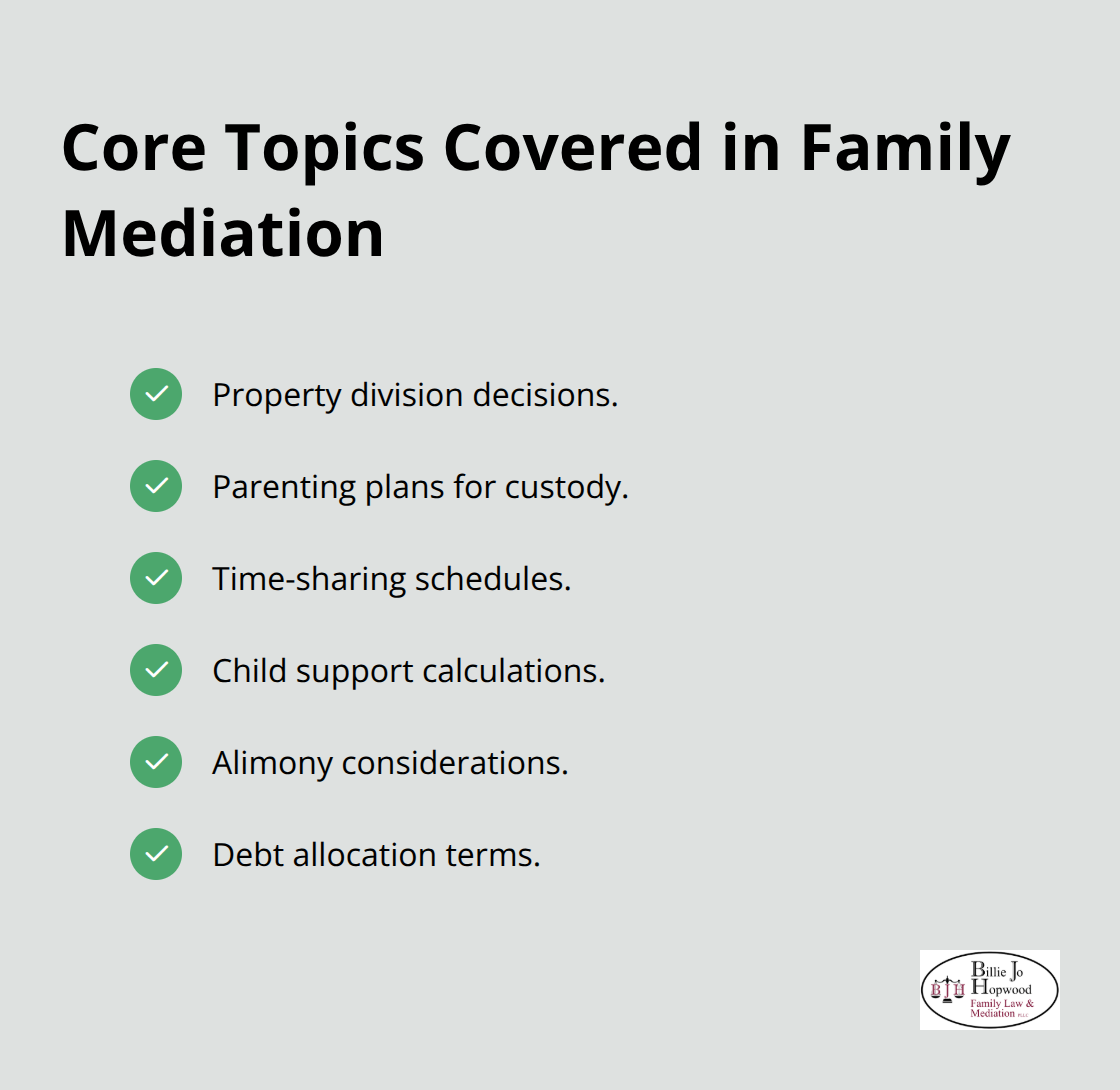
The mediator guides you through each topic methodically rather than jumping around, which keeps negotiations focused and efficient. If emotions escalate, request a short break to regroup, or the mediator may use caucusing-a technique where the mediator meets privately with each party to understand concerns and explore solutions without the other person present. This approach prevents arguments and allows people to speak candidly about fears or flexibility points they would not voice in joint sessions.
Your Control Over the Outcome
Bring your organized binder of documents because the mediator will reference financial records, parenting timelines, and asset lists to ground discussions in facts. You control the outcome entirely-you are never required to agree to anything that feels unfair, and the mediator cannot force a settlement. This means your preparation, realistic goals, and willingness to listen directly determine whether mediation succeeds or whether you move toward litigation. Understanding these dynamics helps you approach sessions with confidence and clarity about what you can influence.
How to Win at Mediation Before You Walk In
Mediation outcomes depend almost entirely on preparation, not on luck or the mediator’s preferences. The difference between people who leave with agreements and those who leave frustrated is the clarity they bring to the table. Start by ranking your priorities ruthlessly. Do not list everything as equally important. Identify the three to five issues that actually matter to your financial future or your children’s wellbeing, then assign each one a realistic outcome you could accept. For example, if child custody matters most, decide what time-sharing schedule works with your job and living situation, then identify which financial concessions you would make to secure that arrangement. If property division is your primary concern, calculate what percentage of assets you need to feel the settlement is fair, then determine which custody or support terms would offset a smaller share. This ranking forces honest conversations with yourself before you sit down with the mediator.
People who enter mediation without this clarity waste session time circling back to the same points, which costs money and extends timelines. Mediation sessions in Melbourne, Florida cost between $60 and $120 per party depending on income level for court mediation, or higher for private mediators, so every wasted hour directly affects your wallet.
Build Your Negotiation Strategy with an Attorney
Contact a family law attorney at least two weeks before your first mediation session. Bring your organized documents and your ranked priorities, then ask the attorney to identify which proposals are realistic under Florida law and which ones courts would reject. An attorney will tell you that Florida’s child support guidelines follow a specific formula based on income and time-sharing percentages, so proposing child support outside that range wastes mediation time. The same applies to alimony and property division, where Florida courts start from a 50/50 assumption but allow deviations for specific reasons.
Your attorney should explain what those reasons are and whether your situation qualifies. This conversation prevents you from anchoring negotiations on unrealistic numbers that damage your credibility. If you propose something the mediator knows violates Florida law, you lose leverage in all future proposals because the other party and mediator will assume you do not understand the process. Develop two to three alternative proposals for each major issue before mediation starts. For property division, prepare different asset split scenarios so you can respond to counteroffers without requesting breaks to recalculate. For child custody, draft different time-sharing calendars that accommodate your work schedule and your children’s school calendar. This flexibility signals you came prepared and willing to problem-solve, which increases the likelihood that the other party will reciprocate with reasonable offers instead of rigid positions.
Master the Communication Patterns That Work
Enter every mediation session with a mindset that the other parent or spouse is not your enemy; they are a problem to solve alongside you. This shift changes how you speak and listen. Use active listening by restating what the other person said before responding, which accomplishes two things: it confirms you understood correctly, and it signals respect even if you disagree. When emotions rise, which they will in custody or alimony discussions, request a break instead of pushing through anger. The mediator expects this and will not judge you for stepping out for ten minutes to breathe.
When you resume, keep your language factual and specific. Instead of saying the other parent is irresponsible, describe the specific incident or pattern that concerns you with dates and details. This approach prevents arguments and gives the mediator concrete information to work with when meeting privately with the other party during caucusing sessions. Avoid absolute language like always or never, which triggers defensiveness. Say the other parent has missed three school events in the past year rather than claiming they never show up. The mediator will use your factual statements to help the other party understand your concerns without feeling attacked, which opens doors to compromise. People who stay calm and specific reach agreements about 70 percent of the time according to the Florida Dispute Resolution Center, while those who become emotional or accusatory see mediation collapse and move toward litigation.
Final Thoughts
Preparing for mediation in family law cases requires three concrete actions: organize your documents completely, rank your priorities honestly, and develop realistic proposals with an attorney before your first session. People who complete this groundwork walk into mediation with confidence and leave with agreements roughly 70 percent of the time. Those who skip preparation waste session time, damage their credibility, and often end up in litigation anyway, which costs significantly more money and takes months longer to resolve.
The documents you gather, the communication patterns you practice, and the strategy you build with legal counsel directly determine whether mediation succeeds. You control the outcome entirely-the mediator cannot force you to accept anything unfair, and the other party cannot surprise you if you understand Florida law and have thought through your alternatives beforehand. This preparation transforms mediation from a stressful guessing game into a structured problem-solving process where both sides know what is realistic and what is not.
After mediation concludes and you reach an agreement, a Memorandum of Understanding is drafted and reviewed by both parties and their attorneys to confirm clarity and legal compliance. Once signed, the agreement becomes legally binding after court approval, which typically takes two to three weeks in Melbourne, Florida. We at Billie Jo Hopwood Family Law & Mediation, PLLC guide families through every stage of this process, and we help you understand how to prepare for mediation in family law cases while ensuring your agreement protects your interests and your children’s wellbeing-contact us today to discuss your situation and begin moving toward resolution.