
Family law cases involve significant financial commitments, and understanding how attorneys bill for their services matters. A retainer fee for a family law attorney is one of the most common billing structures, yet many people find it confusing.
We at Billie Jo Hopwood Family Law & Mediation, PLLC want to break down how retainers work, what you can expect to pay, and how to manage these costs throughout your case.
What Retainers Actually Mean for Your Budget
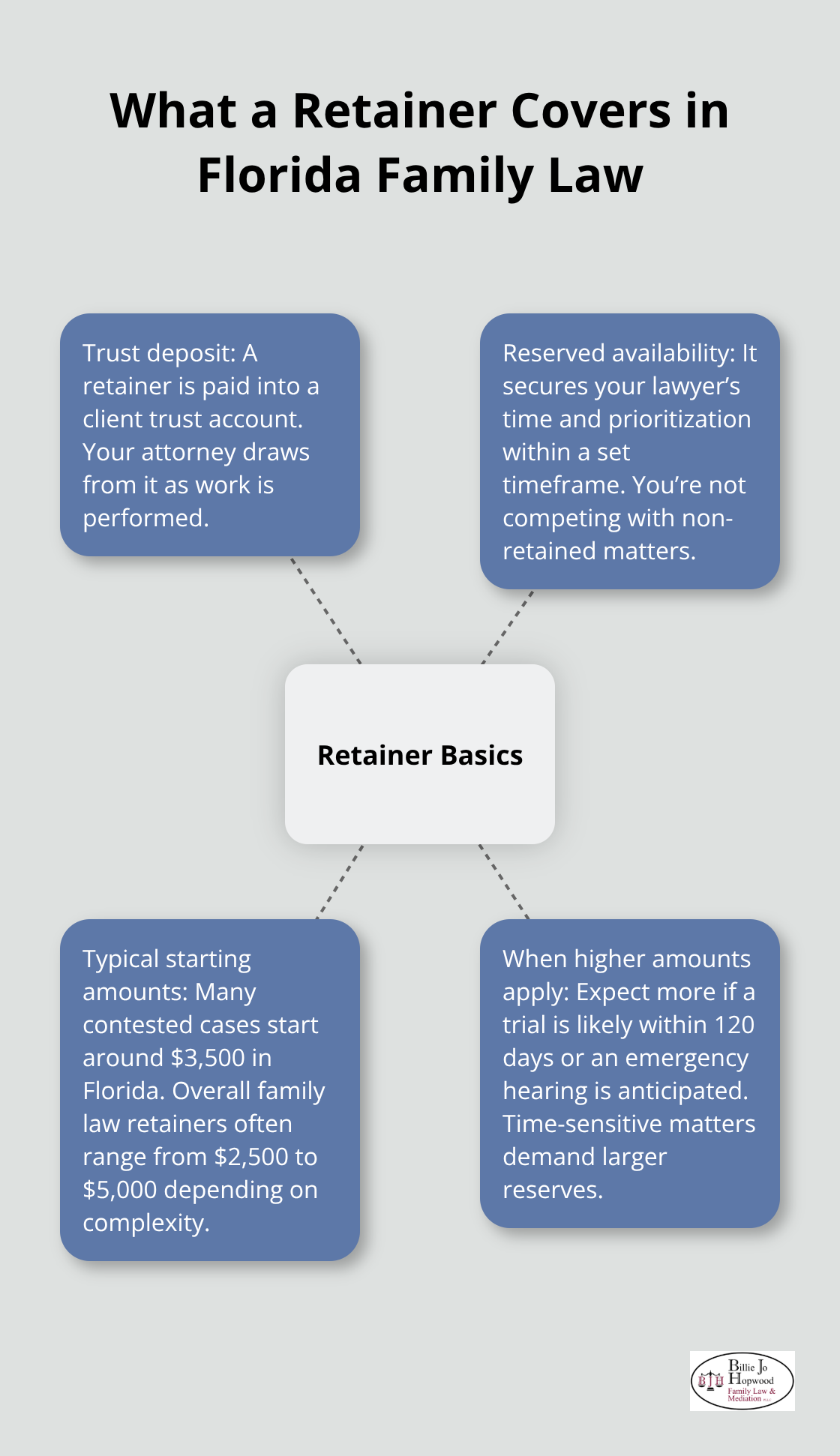
A retainer is a down payment deposited into a trust account that your attorney draws from as they work on your case. Unlike paying per task, a retainer reserves your attorney’s availability and guarantees they’ll work on your matter within a specific timeframe. Florida family law retainers typically start at $3,500 for most contested divorces, custody disputes, and paternity cases, though this amount increases if a significant trial is likely within 120 days or an emergency hearing is needed. According to LegalMatch, retainer fees in family law generally range from $2,500 to $5,000, though the actual amount depends entirely on your case’s complexity and the issues pending before the court.
How Your Retainer Gets Used
The retainer isn’t a flat fee you pay once-it’s a reserve that gets drawn down monthly as your attorney logs billable hours. Most family law attorneys in Florida bill hourly rates between $254 and $500 per hour, with rates in the Tampa Bay area running higher than rural regions. Your attorney typically sends an itemized invoice between the 1st and 15th of each month showing exactly what work was performed and how much was charged against your retainer. If your case requires more hours than the retainer covers, you’ll need to replenish it or pay additional amounts as the work progresses.
Why Retainers Protect Both Sides
Retainers exist because family law cases are unpredictable. Your attorney can’t know whether your case will settle in two months or drag into a contested trial lasting six. A retainer secures the firm’s commitment to having time available for your case while you commit to covering anticipated work. This structure creates accountability on both sides. The retainer also means you’re not paying for every phone call or email individually-those communications get bundled into your hourly rate and charged against the reserved amount.
Fee Awards Can Offset Your Costs
Courts in Florida may award attorney fees and costs to the party with greater financial need, which can offset some of your retainer costs if you’re the lower-earning spouse. This fee-shifting provision exists specifically to ensure equal access to competent counsel, so discussing your financial circumstances with your attorney during the initial consultation matters significantly. A $150 consultation fee is standard, and that amount gets credited toward your retainer if you hire the firm, making it easy to start the conversation without major upfront investment.
Understanding how your retainer applies to your case is only half the battle-knowing what happens when that initial reserve runs low and how to track expenses along the way will help you stay in control of your budget throughout the process.
How Retainer Fees Compare to Other Billing Methods
Hourly Billing Without a Retainer
Retainers aren’t the only way family law attorneys charge for their services, and understanding the alternatives helps you make the right choice for your situation. Hourly billing without a retainer means you pay for time as it’s logged, with no upfront commitment or reserved availability. This approach sounds cheaper initially, but it creates real problems in family law cases.

Your attorney has no guaranteed time set aside for you, so your case may sit idle while they handle retained clients. You also face unpredictable monthly bills that fluctuate based on case activity.
With retainers, you know roughly what to expect each month since you’re drawing down a set amount, and your attorney prioritizes your case because they’ve reserved time for it. In Tampa Bay, where hourly rates range from $254 to $500 per hour according to LegalMatch, a retainer actually protects your budget better than paying hourly without one.
Flat-Fee Arrangements and Their Limitations
Flat-fee arrangements work differently and appeal to people who want certainty. An attorney quotes a single price to handle your entire case from start to finish, which works only for straightforward, uncontested matters. Most family law cases don’t qualify because custody disputes, property division, and alimony negotiations create unpredictability that flat fees can’t accommodate. If your case involves significant disagreement between parties, a flat fee becomes risky for the attorney, so they won’t offer one.
Some firms offer unbundled flat-fee services for specific tasks (like document preparation or limited consultation), giving you flexibility depending on your case’s complexity and budget constraints.
Why Contingency Fees Don’t Apply to Family Law
Contingency fees, where attorneys take a percentage of money recovered, simply don’t exist in family law. Florida courts don’t allow contingency arrangements for divorce, custody, or support cases because these matters involve rights and relationships, not money damages. This means you’ll always pay either a retainer, hourly rate, or flat fee regardless of the outcome. That’s why discussing fee structure upfront matters so much, because you’re committing to payment regardless of whether your case settles favorably or requires litigation.
Understanding which billing method fits your case sets the foundation for managing costs effectively, which brings us to the practical steps you’ll take to track your retainer and handle expenses as your case moves forward.
Managing Your Retainer and Understanding Costs
How Your Retainer Depletes Each Month
Your retainer sits in a trust account, untouched until your attorney begins work. Once they do, the clock starts and hours accumulate against that reserve. Most Florida family law attorneys bill in one-hour increments, meaning a 45-minute phone call rounds to one billable hour. This matters because those increments add up fast. If your attorney charges $350 per hour and handles three brief emails, a short phone call, and document review in a single day, you could lose $700 from your retainer even though the actual work time felt minimal.
The itemized invoice you receive monthly should list each task separately with the date, description, and time spent, so you can see exactly where your money went. If you notice inconsistencies or tasks you don’t recognize, raise the issue immediately. Courts in Florida expect attorneys to bill fairly, and most firms will correct errors if you catch them.
Comparing Your Costs Against Real Case Outcomes
Uncontested custody cases resolved through mediation or negotiation cost roughly $2,500 to $7,500 total according to LegalMatch, while contested matters with significant disagreement can reach $10,000 to $50,000 or more. The difference comes down to hours spent, which is why tracking every charge matters. Request an estimate of total anticipated costs during your initial consultation, then compare monthly invoices against that projection. If your case tracks higher than expected, discuss it with your attorney before the problem compounds.
What Happens When Your Retainer Runs Out
When your retainer depletes, you face a critical decision point. Some attorneys require immediate replenishment before continuing work, while others allow you to pay additional amounts as invoices arrive. This variation matters significantly for your cash flow.
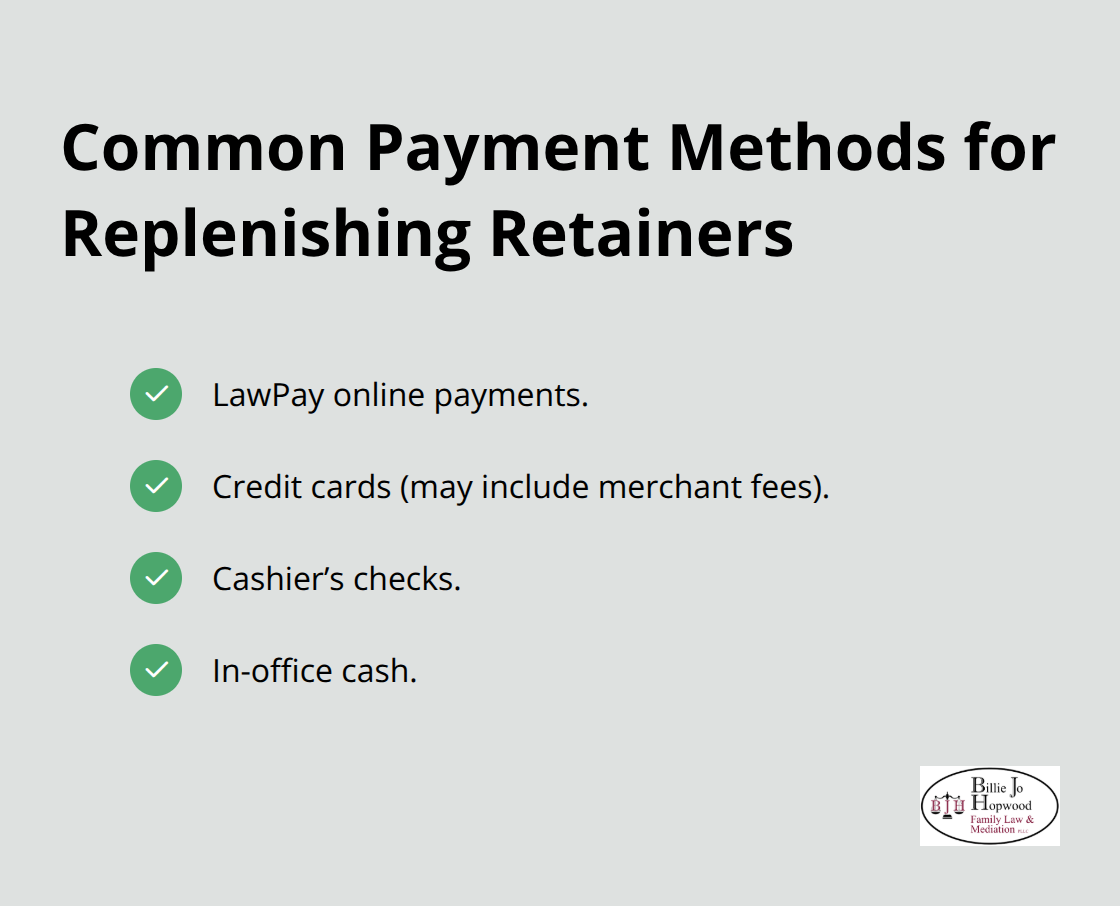
Before signing any retainer agreement, ask whether the firm accepts installment payments or requires lump-sum replenishment, what payment methods they accept (LawPay, credit cards with merchant fees, cashier’s checks, and in-office cash are common options), and whether a second retainer will be necessary if your case extends beyond the initial estimate.
Separate Costs Beyond Your Retainer
Court costs and expenses like filing fees, deposition costs, subpoena fees, and expert witness charges are billed separately from attorney time, so budget for those additional expenses beyond your retainer. If you face financial hardship, discuss fee awards with your attorney. Florida courts may shift attorney fees and costs to the higher-earning spouse to ensure equal access to competent counsel, which could offset your remaining obligation.
Planning for Unpredictable Case Expenses
A stable income helps manage retainer replenishment, but delays or unexpected complications can increase costs beyond initial projections. Discuss your attorney’s typical settlement versus litigation split before committing, since cases that settle quickly drain retainers far more slowly than those requiring extensive discovery and trial preparation.
Final Thoughts
Retainer fees for family law attorneys in Melbourne, Florida work best when you understand exactly what you’re paying for and why that structure protects your case. A retainer reserves your attorney’s time and creates predictability in an unpredictable process, so you know roughly what to expect each month while your attorney prioritizes your matter. Before committing to any retainer agreement, ask what hourly rate applies to your case, what happens when your retainer runs out, and what costs beyond the retainer you should anticipate, such as filing fees or expert witness charges.
Making an informed decision about billing structure means comparing your specific situation against the options available. If your case involves significant disagreement, a retainer protects you better than hourly billing without one because your attorney has guaranteed time set aside. Fee awards from the court can offset your costs if you’re the lower-earning spouse, so discuss your financial circumstances openly with your attorney during your initial consultation.
Contact Billie Jo Hopwood Family Law & Mediation, PLLC in Melbourne, Florida to discuss your case and understand exactly what a retainer fee for family law attorney services will look like for your situation.