
You’ve reached a settlement in mediation, but you’re wondering if that agreement actually holds legal weight. The answer depends on several factors, and we at Billie Jo Hopwood Family Law & Mediation, PLLC want you to understand what makes a mediation agreement legally binding.
A handshake and good intentions won’t protect your rights. Knowing the difference between a binding agreement and one that courts will reject is the foundation of a secure settlement.
What Makes Your Mediation Agreement Legally Binding
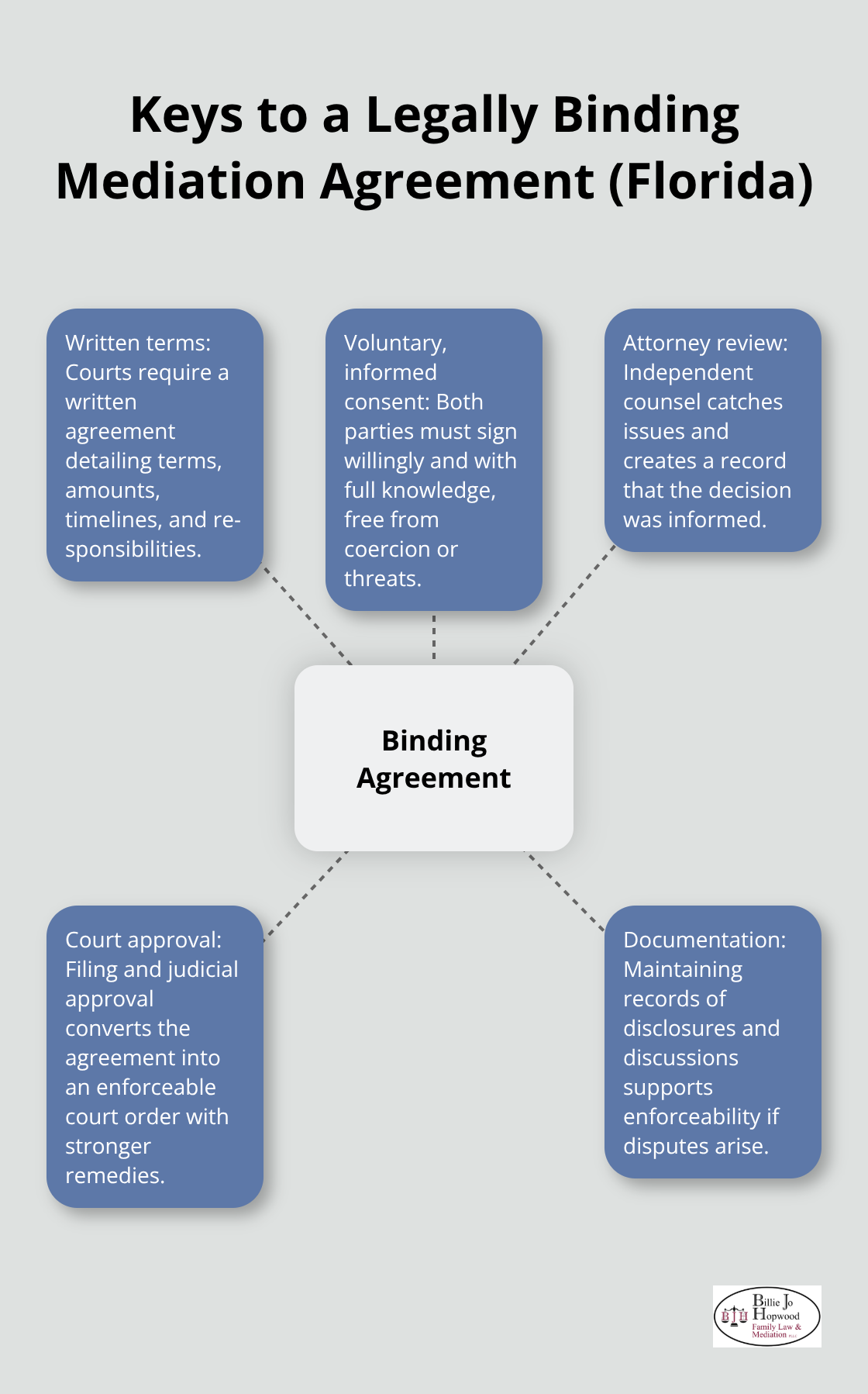
A mediation agreement becomes legally binding only when it meets specific legal requirements that courts will enforce. The first requirement is written documentation-verbal agreements, no matter how sincere both parties are, will not hold up in court. Florida courts require mediation agreements to be in writing, clearly stating all terms, amounts, timelines, and responsibilities. Without a written record, you have no proof of what was agreed upon, and disputes over what was said become impossible to resolve.
Both parties must sign voluntarily and with full knowledge
The second requirement is that both parties must enter the agreement voluntarily and with full knowledge of what they’re signing. This means you cannot face coercion, threats, or misleading information when you accept terms. Courts will reject agreements reached under duress or where one party failed to disclose important financial information. Your signature alone is not enough-both parties must sign, and ideally, both should have independent legal counsel review the agreement before signing. Courts take this seriously because they want assurance that both sides understood the implications.
If you later claim you didn’t understand what you signed, courts will look at whether you had the opportunity to consult an attorney. Having an attorney present during mediation or reviewing the final agreement before you sign creates a clear record that you made an informed decision. Many family law attorneys recommend requesting time between the final mediation session and the signing to review all terms with counsel. This pause prevents rushed decisions and catches potential problems, like child support calculations that don’t comply with Florida guidelines or property divisions that are unconscionable.
Court approval transforms your agreement into an enforceable order
Not all mediation agreements require court approval, but those involving children or support obligations benefit greatly from it. When you file your mediation agreement with the court and a judge approves it, it becomes a court order. This matters because if someone violates a court order, the court can impose penalties including contempt of court charges, fines, or wage garnishment (depending on the violation’s severity). A mediation agreement that sits unsigned and unfiled is merely a contract, and enforcing it requires a separate breach-of-contract lawsuit.
Court incorporation gives you stronger enforcement options if problems arise later. The difference between a signed mediation agreement and a court-approved one is substantial-one relies on contract law, while the other carries the full power of judicial authority. When you move forward with filing your agreement, you’ll want to understand what happens when agreements fail to meet these standards.
When Courts Won’t Enforce Your Mediation Agreement
Not every mediation agreement survives judicial scrutiny. Courts in Florida will refuse to enforce agreements tainted by fraud, hidden information, or coercion, and they’ll also reject terms that violate state law. Understanding what disqualifies an agreement from enforcement protects you from signing something that looks binding but crumbles under pressure.
Fraud and incomplete financial disclosure kill enforceability
Courts take a hard line on fraud and undisclosed assets. If one party hides income, minimizes property value, or deliberately misrepresents financial circumstances during mediation, the entire agreement can be voided. The American Bar Association found that financial deception ranks among the top reasons mediation agreements fail enforcement challenges. If your ex-spouse failed to disclose a business account, investment property, or significant debt before you signed, you have grounds to challenge the agreement in court.
The burden falls on the disclosing party to provide complete financial documentation before settlement discussions conclude. Courts expect both parties to exchange tax returns, bank statements, retirement account statements, and documentation of all major assets. If disclosure happens after signing, judges view this as a red flag that undermines the entire agreement’s validity. One party claiming they forgot about an asset or didn’t think it mattered won’t satisfy a court. Intentional concealment carries even heavier consequences because judges may impose sanctions beyond simply voiding the agreement.
Duress, threats, and power imbalances render agreements unenforceable
If you signed under threat, intimidation, or extreme pressure, courts will invalidate the agreement regardless of what the paper says. Duress doesn’t require physical violence. Courts recognize psychological coercion, financial threats, custody threats, or threats to report immigration status as sufficient grounds to void mediation agreements.
If your spouse threatened to drain joint accounts, take children out of state, or expose personal information unless you agreed to unfavorable terms, that constitutes duress. Courts examine the totality of circumstances surrounding the signing-they ask whether you had reasonable time to consult an attorney, whether you felt pressured to sign immediately, and whether the agreement heavily favors one party. Domestic violence history between parties strengthens duress arguments because courts understand the power dynamics involved. If a protective order exists or existed, courts scrutinize mediation agreements more carefully. This is why Florida law allows courts to exempt couples from mandatory mediation when domestic violence is present.
Terms violating Florida law cannot survive enforcement
Some provisions, no matter how willingly both parties signed, cannot be enforced because they conflict with Florida statutes. Child support cannot be waived or eliminated through private agreement, even if both parents consent. Florida Statute 61.08 mandates that child support calculations follow state guidelines based on income and custody percentages. Courts will modify or reject any mediation clause attempting to avoid this obligation.
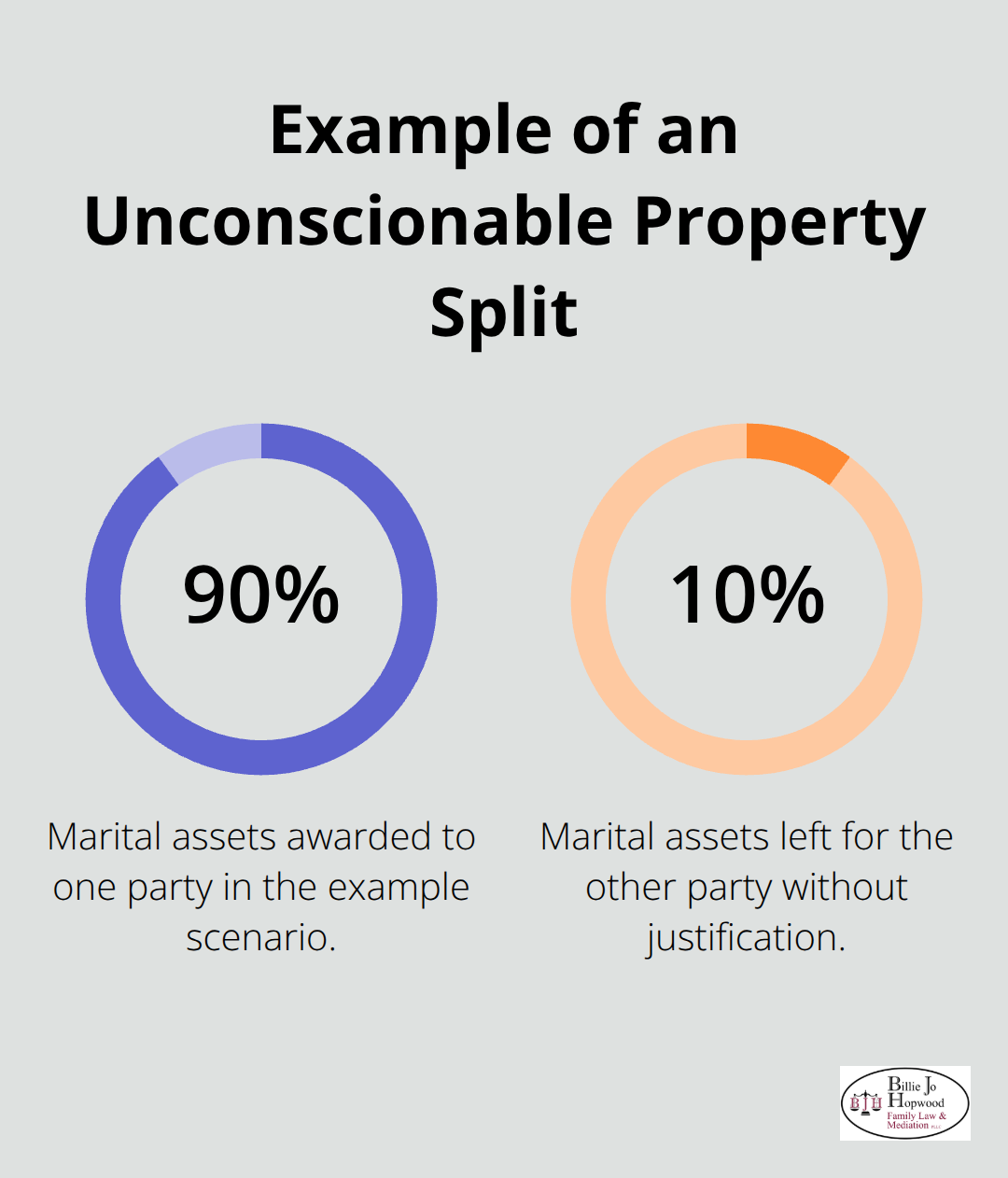
Similarly, unconscionable property divisions may be challenged. If one party receives 90 percent of marital assets while the other receives 10 percent without legitimate justification, courts view this as potentially unconscionable and may refuse enforcement.
Custody arrangements that fail to serve the child’s best interests also face rejection. Courts will not enforce agreements where both parents agreed to custody terms that endanger the child or provide inadequate support for the child’s needs. Before you sign any mediation agreement, verify that support calculations match Florida guidelines and that property divisions reflect equitable distribution principles. These legal safeguards exist to protect you, but only if you understand them before you commit to terms that courts may later refuse to honor.
How to Protect Your Mediation Agreement
Bring an Attorney into Your Mediation Process
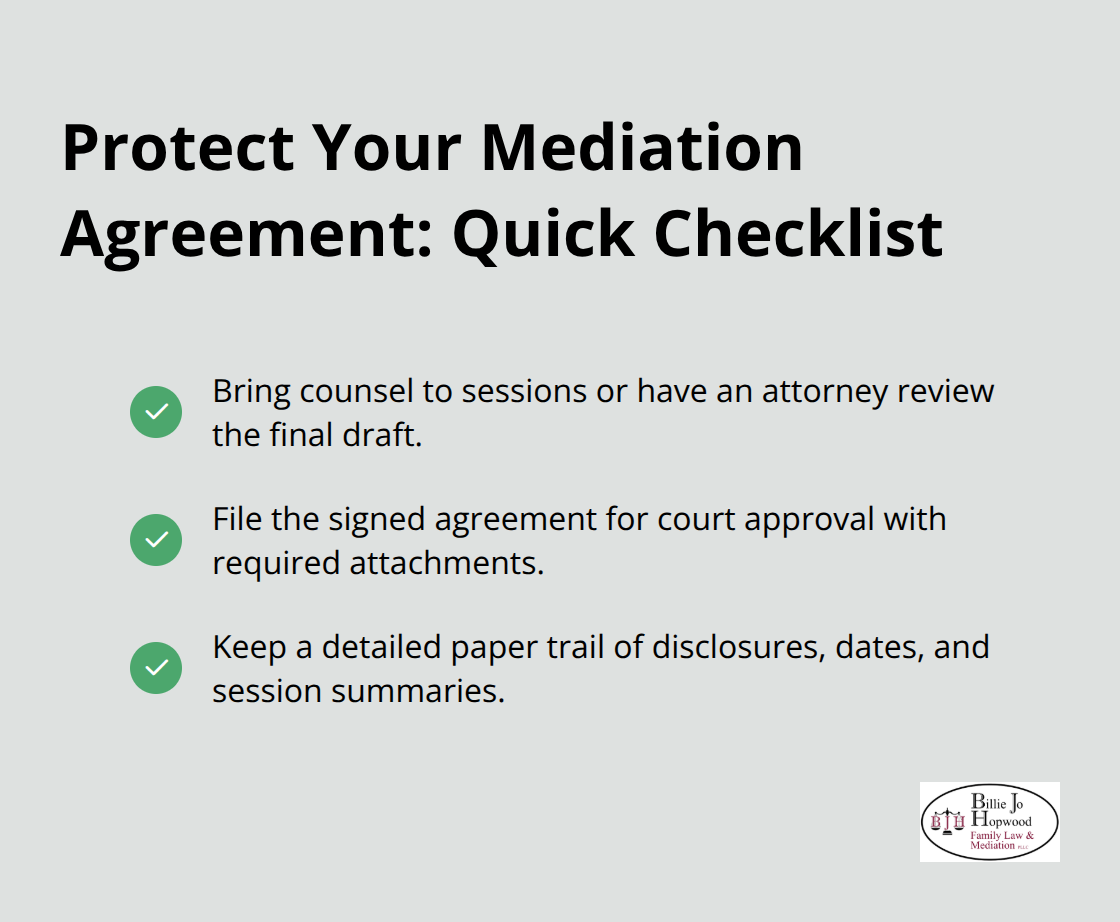
An attorney’s involvement during mediation transforms your protection from theoretical to concrete. Having counsel present during settlement discussions-or at minimum reviewing the final agreement before you sign-strengthens your position significantly. When an attorney participates in mediation sessions, they catch problematic language, verify financial disclosures are complete, and flag terms that conflict with Florida law. Many mediators expect both parties to bring counsel because it reinforces the agreement’s enforceability.
If you cannot afford an attorney during the entire process, prioritize having one review the draft agreement for two to three hours before signing. This targeted review costs significantly less than litigation but identifies major issues like child support calculations that deviate from Florida guidelines, property divisions lacking equitable distribution, or custody provisions that courts will reject. Your attorney should verify that all assets were disclosed, that income figures match tax returns, and that neither party faced pressure when agreeing to terms.
Understand the Enforceability Difference Between Signed and Court-Approved Agreements
A signed mediation agreement and a court-approved one offer vastly different enforcement options if problems arise later. A signed but unfiled agreement functions as a contract enforceable through breach-of-contract lawsuits, which require proving damages and often take months to resolve. A court-ordered agreement carries judicial authority, meaning violations trigger contempt of court proceedings and judges can impose immediate remedies like wage garnishment or fines without requiring you to file a separate lawsuit.
File your mediation agreement with the court promptly after both parties sign. Include a cover letter requesting judicial approval and attach all supporting documents showing the agreement complies with Florida law. Courts typically approve agreements within two to four weeks if they contain no red flags.
Once approved and entered as a court order, your agreement gains enforcement muscle that a standalone contract lacks. If your spouse violates a court-ordered provision months or years later, you can file a motion to enforce rather than starting fresh litigation.
Document Everything Throughout the Mediation Process
Documentation creates the paper trail that protects you if disputes arise later. Keep copies of all financial disclosures exchanged, notes on what was discussed, and proof of when each party received information. These records become critical if someone later claims they didn’t understand terms or weren’t fully informed. Courts examine documentation to determine whether both parties had genuine opportunity to make informed decisions.
Write down dates when you received financial statements, emails confirming what was discussed, and any agreements reached during preliminary sessions. If your mediator sends written summaries after each session, save those documents. This documentation proves that you acted in good faith and had access to complete information when you signed the final agreement. Courts rely heavily on these records when evaluating whether an agreement should be enforced or challenged.
Final Thoughts
A mediation agreement’s enforceability rests on three pillars: proper documentation, voluntary consent, and compliance with Florida law. Whether family mediation is legally binding depends entirely on how you structure and execute your agreement. A written document signed by both parties creates a contract, but filing that agreement with the court transforms it into an enforceable order backed by judicial authority.
An attorney reviewing your draft agreement catches problems that could render it unenforceable and verifies financial disclosures are complete. You don’t need counsel present for every mediation session, but having someone examine the final agreement before you sign protects your rights substantially. Courts expect both parties to have had opportunity to consult independent counsel, and documentation of that review strengthens your agreement’s enforceability.
We at Billie Jo Hopwood Family Law & Mediation, PLLC assist families through family law matters including divorce, child custody, alimony, and child support in Melbourne, Florida. If you need guidance formalizing your mediation settlement or want to discuss whether your agreement meets enforceability standards, contact our office to schedule a consultation.