
Family law cases in Florida often involve mediation, but the question remains: is mediation compulsory in family law?
The answer depends on your specific situation and the type of case you’re facing. At Billie Jo Hopwood Family Law & Mediation, PLLC, we help families understand when courts require mediation and when you can choose it voluntarily.
When Florida Courts Order Mediation
Florida courts don’t universally mandate mediation in every family law case, but many situations require it before trial proceeds. The 18th Judicial Circuit, which covers Brevard and Seminole counties, handles mediation in dissolution of marriage and paternity cases as part of the court process. Courts typically order mediation when disputes remain unresolved after initial filings, particularly in custody and visitation disagreements where the child’s interests are at stake. Some counties may require at least one mediation session before contested issues move forward in court, though temporary orders can still be issued while mediation occurs. The decision to mandate mediation depends on your case type and location within Florida, so checking with your local court clerk or mediation program is essential to understand your specific requirements.
Cases That Trigger Mediation Requirements
Custody and parenting disputes almost always trigger mediation requirements because courts prioritize arrangements that serve children’s welfare. When parents cannot agree on time-sharing schedules or parenting plans, mediation becomes the expected step before judicial decisions are imposed. Divorce cases involving contested property division, spousal support, or child support often require mediation for unresolved issues. The 18th Judicial Circuit reports that family mediations address these matters regularly, with sessions currently conducted online via video conference in Seminole County and scheduled through county-specific processes in Brevard County. Cases involving domestic violence, child abuse, neglect, substance abuse concerns, or significant power imbalances may be exempt from mediation to protect safety, with courts providing alternative resolutions instead.
Exemptions That Courts Recognize
Courts don’t force mediation when safety concerns outweigh collaboration benefits. Domestic violence cases typically qualify for exemptions because the power imbalance makes genuine negotiation impossible. Child abuse or neglect allegations, serious substance abuse issues, or documented mental health crises can also disqualify cases from standard mediation requirements. Emergency situations involving immediate child safety threats allow courts to skip mediation and proceed directly to protective orders or temporary rulings. You can request an exemption through a motion filed with the court and supported by documentation of the barrier to mediation. The court determines exemptions on a case-by-case basis, so your specific circumstances matter more than general rules.
Understanding Your Local Requirements
Your location within Florida significantly affects whether mediation becomes mandatory in your case. The 18th Judicial Circuit serves Brevard and Seminole counties with specific mediation programs and procedures that differ from other regions. Contact your local court clerk or mediation program to confirm whether your case type requires mediation before proceeding to trial. Some jurisdictions screen cases before mediation to identify barriers to participation and determine appropriateness. Understanding these local requirements early in your case helps you prepare financially and emotionally for the mediation process ahead.
Voluntary Mediation as an Alternative Path
Many families assume mediation only happens when a court orders it, but choosing mediation voluntarily often produces better outcomes than waiting for mandatory requirements. Voluntary mediation puts you in control of the process and timeline rather than following a court’s schedule. The Florida Dispute Resolution Center reports that over 75% of family law mediations result in full or partial agreements, meaning most families who enter mediation actually resolve their disputes without trial. When you initiate mediation before court involvement, you avoid the delays inherent in litigation schedules, which can stretch cases across months or years. Voluntary mediation also means you choose your mediator based on experience and compatibility rather than accepting a court-assigned option, giving you influence over someone who will facilitate deeply personal decisions about your family’s future.
The Financial Reality of Choosing Mediation Early
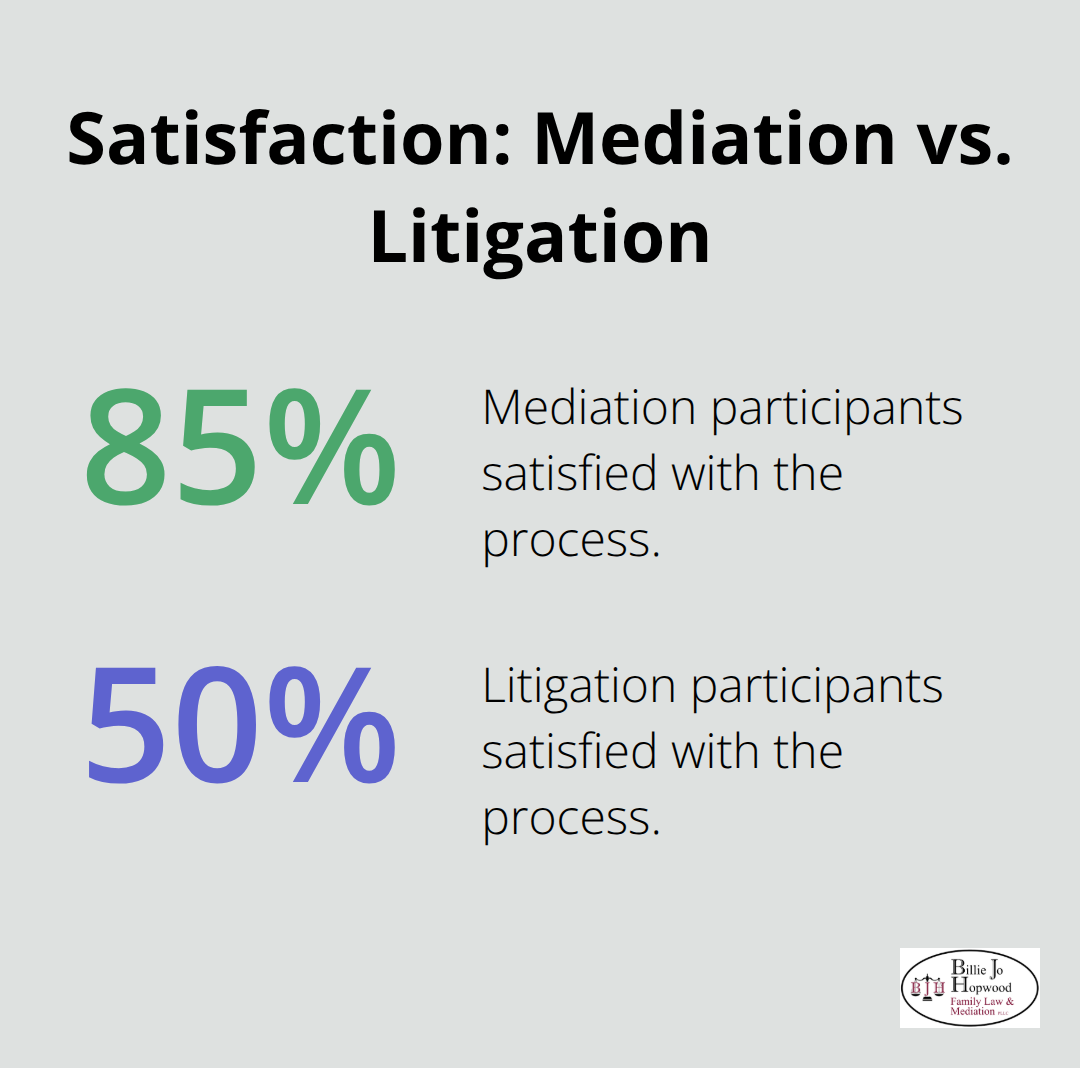
The cost difference between voluntary mediation and court litigation is substantial and measurable. Florida mediation fees start at around $300 per hour for unrepresented parties, though the 18th Judicial Circuit offers court-administered mediation at significantly lower rates depending on household income: $60 per party for combined income under $50,000, and $120 per party for income between $50,000 and $100,000. A typical mediation session lasts about three hours, meaning you might spend $900 at private rates or just $180 to $360 through court programs. Court litigation, by contrast, involves discovery costs, multiple court appearances, attorney fees that accumulate across months, and expert witness expenses that routinely exceed $5,000 to $15,000 or more. Families who complete mediation within two to four sessions spend a fraction of what litigation demands, and this savings increases dramatically if you avoid trial preparation and courtroom proceedings. About 85% of mediation participants express satisfaction with the process compared to just 50% satisfaction with litigation, according to available research, meaning you save money while feeling better about the outcome.
Speed and Control in Your Own Hands
Mediation typically resolves issues within months rather than the one to three years litigation often requires. You schedule sessions around your availability instead of waiting for court dockets, and you can negotiate directly with your former partner or spouse through the mediator’s guidance rather than exchanging information through formal discovery processes. The mediator facilitates discussion and keeps conversations productive without making decisions for you, which means every agreement reflects what you actually want rather than what a judge imposes. If mediation reaches a full agreement, you draft a memorandum of understanding that becomes legally binding once signed and filed with the court, eliminating the uncertainty of waiting for a judge’s ruling. This speed matters especially in custody situations where prolonged disputes create instability for children, and in financial matters where market conditions and business values shift during lengthy litigation.
How Voluntary Mediation Works in Melbourne, Florida
You initiate the process by contacting a Florida Supreme Court-certified mediator or requesting mediation through your local court system. The mediator schedules sessions that work for both parties and conducts the process (often online via video conference in Seminole County) in a neutral setting.
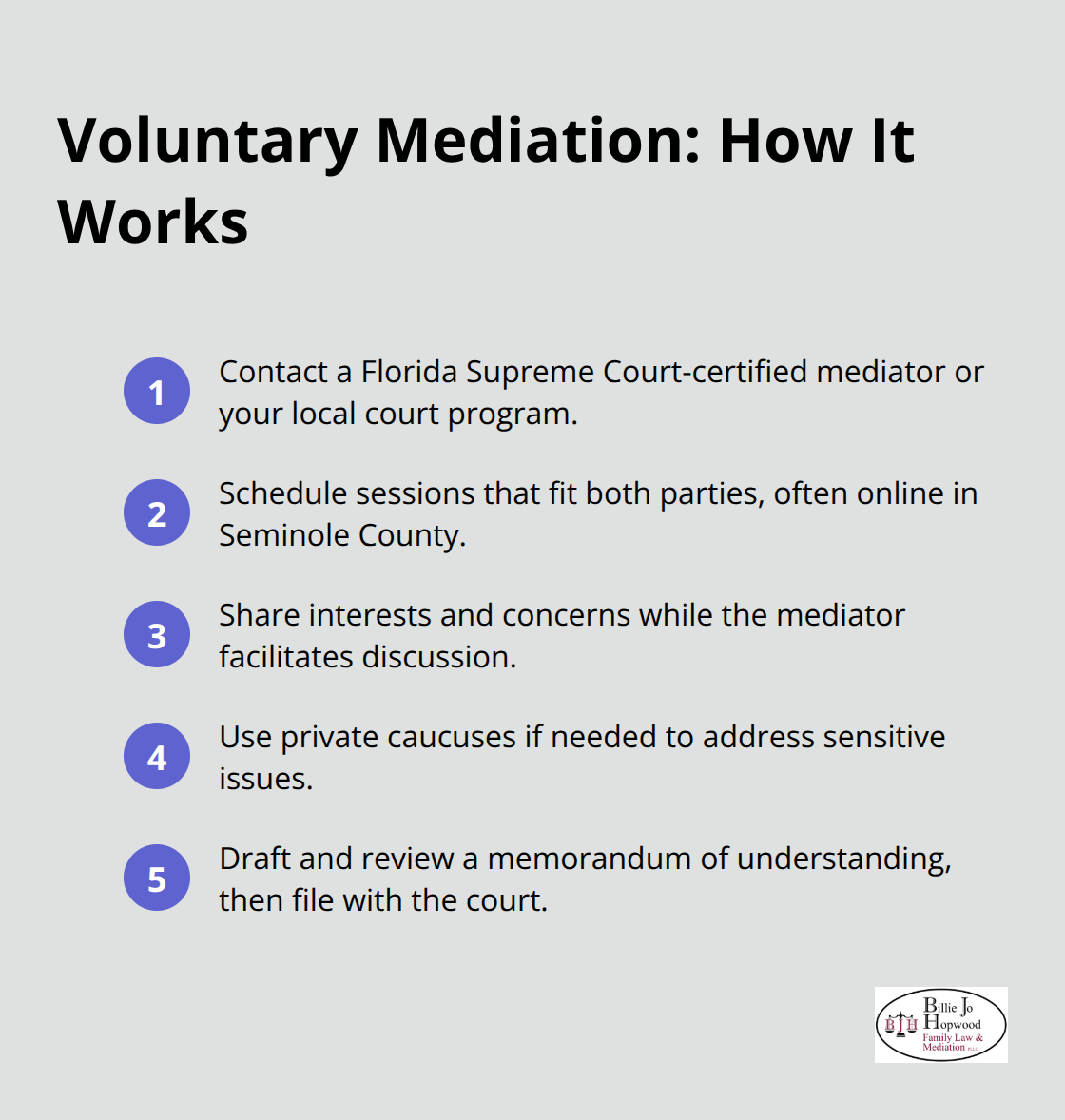
During sessions, you present your interests and concerns while the mediator helps you understand each other’s positions and explore solutions that satisfy both sides. The mediator may hold private caucuses with each party to address sensitive issues or clarify positions without the other person present. Once you and your former partner reach agreement on contested issues, the mediator helps draft the memorandum of understanding, which you can then have reviewed by an attorney before signing and filing with the court.
Why Mediation Produces Better Long-Term Outcomes
Mediation empowers you to solve problems yourselves by focusing on mutual interests and future arrangements rather than adversarial positions. Customized solutions that you both create tend to stick better than court-imposed decisions because you feel ownership over the outcome. This matters tremendously in custody situations where you and your former partner must maintain ongoing collaboration for years to come. Mediation also preserves family relationships and reduces public exposure of personal matters, keeping your disputes out of public court records. When both parties participate in creating the agreement, compliance rates increase and future disputes over the terms decrease significantly.
What to expect during the mediation process itself requires understanding the mediator’s role and how confidentiality protections work to keep your family’s private matters private.
What Happens During Mediation Sessions
The Mediator’s Role in Family Disputes
Florida Supreme Court-certified mediators do not act as judges or decision-makers. Instead, they facilitate conversations between you and your former partner to help you both understand each other’s positions and explore workable solutions. The mediator keeps discussions organized and productive, prevents conversations from becoming hostile, and helps you identify common ground you might not see on your own.
During a typical session in Melbourne, Florida, the mediator explains the process and ground rules, then asks each party to describe their interests and concerns without interruption. This structured approach often reveals that both parents care deeply about children’s stability or that both spouses want fair financial outcomes-points of agreement that become the foundation for settlement.
The mediator may hold private caucuses with each party separately to address sensitive issues, test the strength of your positions, or explore creative solutions without the other person present. These private meetings let you speak candidly about your bottom-line needs without strategic posturing, which frequently leads to breakthroughs that seemed impossible in joint sessions. Mediators trained in family law understand the emotional complexity of divorce and custody disputes, so they adjust their approach based on each party’s communication style and emotional state.
Confidentiality Protections in Mediation
Confidentiality protections during mediation are absolute and legally binding under Florida law. Everything discussed in mediation sessions stays confidential-the mediator cannot disclose what you said, what offers you made, or what positions you explored to anyone outside the process, including judges if the case later goes to trial. This confidentiality applies to both joint sessions and private caucuses, meaning you can speak freely without worrying that your words will be used against you in court.
The only exceptions to confidentiality occur when someone discloses abuse, threatens harm, or reveals ongoing criminal activity, at which point the mediator has legal obligations to report. This protection fundamentally changes how people negotiate in mediation compared to litigation, where every statement becomes a court record and potential ammunition. You can admit mistakes, acknowledge the other party’s valid concerns, or explore creative solutions without fear that these conversations will haunt you later.
Once you reach agreement and sign a memorandum of understanding, that document becomes legally binding and enforceable through the court system, but the negotiation process itself remains private. This privacy extends to keeping your family’s financial details, parenting disagreements, and personal circumstances out of public court records, which matters tremendously for protecting your reputation and children’s privacy.
Mediation Versus Litigation in Melbourne, Florida
In litigation, a judge makes binding decisions about custody, property division, and support based on the evidence presented and applicable law, which means you surrender control to someone unfamiliar with your family’s unique circumstances. The judge applies legal standards that may not align with what you believe is fair or what your children actually need, and you have limited ability to customize the outcome.
Litigation also creates an adversarial environment where attorneys present competing narratives and attack each other’s credibility, which damages relationships you may need to maintain, especially in custody situations. Court proceedings become public record, meaning neighbors, colleagues, or anyone with internet access can read details about your finances, parenting disputes, or personal conflicts.
Mediation reverses these dynamics entirely-you and your former partner control the outcome through direct negotiation, which means agreements reflect what actually works for your family rather than what legal standards dictate. You maintain relationships because you solve problems together rather than fight in court, which produces dramatically better long-term cooperation in co-parenting arrangements. The process stays private, protecting your dignity and your children’s privacy.
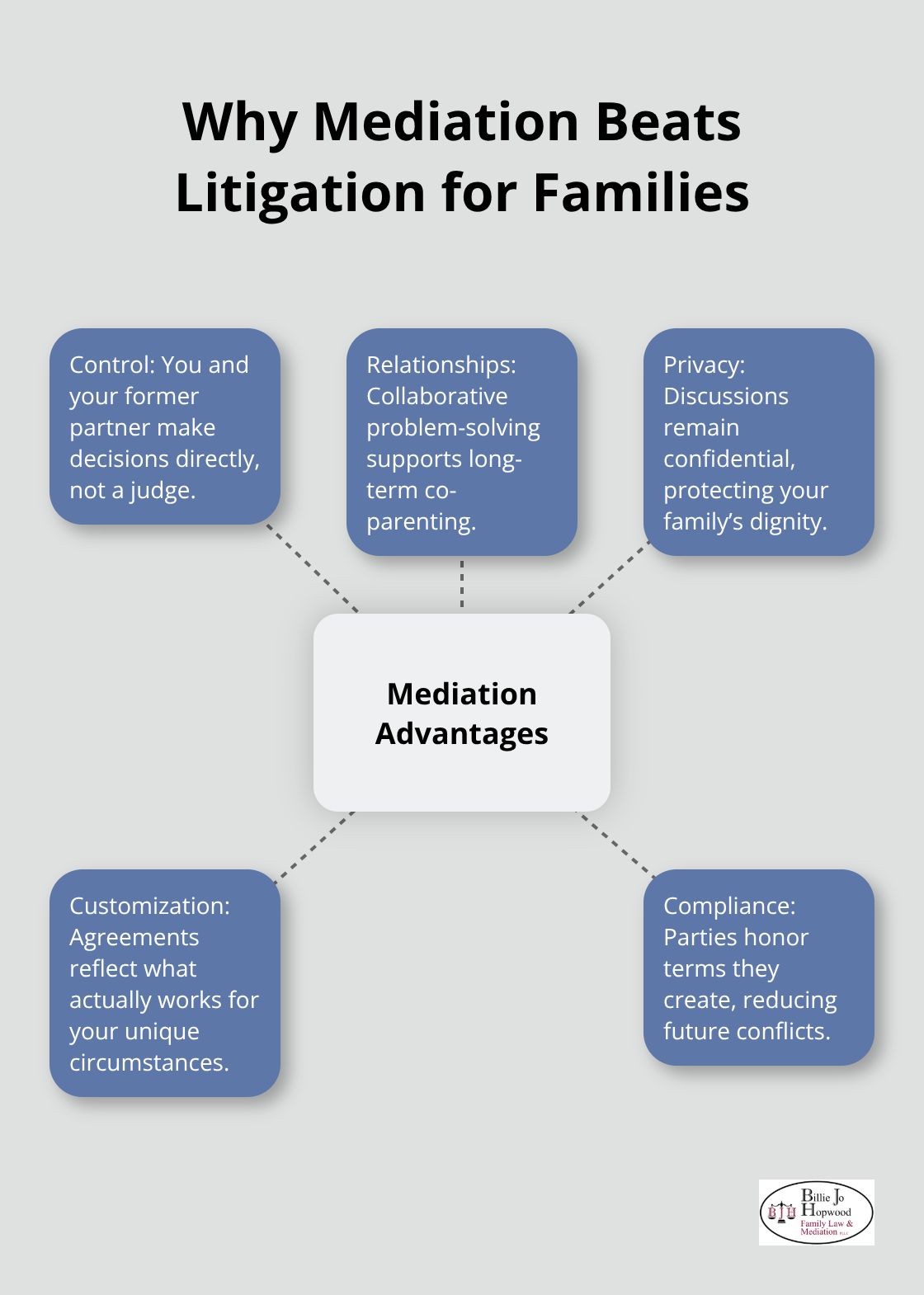
Most importantly, mediated agreements have significantly higher compliance rates because both parties feel ownership over terms they created themselves, whereas court-ordered decisions generate resentment and frequent violations that lead to expensive enforcement battles.
Final Thoughts
The answer to whether mediation is compulsory in family law depends on your case type, location within Florida, and the specific circumstances you face. Florida courts don’t universally require mediation in every family law matter, but custody disputes and contested divorces typically trigger mandatory mediation requirements before trial proceeds. Understanding your local court’s requirements matters because the 18th Judicial Circuit serving Brevard and Seminole counties operates differently than other Florida regions, so contact your court clerk to confirm what applies to your situation.
Voluntary mediation makes sense for families who want to avoid the expense and emotional toll of litigation while maintaining relationships that matter for co-parenting. Mediation costs $300 per hour at private rates or as little as $60 to $120 per party through court programs, whereas litigation routinely exceeds $5,000 to $15,000 in total expenses. Speed matters too-mediation typically resolves disputes within months rather than the years litigation demands, and about 85% of mediation participants express satisfaction with the process compared to just 50% with litigation.
If you’re considering mediation in Melbourne, Florida, contact a Florida Supreme Court-certified mediator or your local court’s mediation program to understand your specific requirements and options. We at Billie Jo Hopwood Family Law & Mediation, PLLC help families navigate these decisions by explaining when courts require mediation and when voluntary mediation makes financial and emotional sense. Contact us to discuss your family law matter and explore whether mediation aligns with your goals.