
Florida family law cases often leave parents wondering: is mediation compulsory in family law disputes? The answer depends on your specific situation and the judge’s discretion.
We at Billie Jo Hopwood Family Law & Mediation, PLLC see many Melbourne families required to attempt mediation before their case reaches trial. Understanding these requirements can save you time and money while protecting your family’s interests.
When Is Mediation Required in Florida Family Cases
Court Authority to Order Mediation
Florida statutes grant judges broad discretion to order mediation in family law cases. The Eighteenth Judicial Circuit (which includes Brevard County where Melbourne is located) routinely requires mediation before trial in dissolution of marriage and paternity cases. Judges can mandate mediation at any point during proceedings, typically after initial pleadings but before trial preparation begins. This requirement applies to contested divorces, child custody disputes, and modification cases where parties cannot reach agreements independently.
Financial Thresholds and Fee Structure
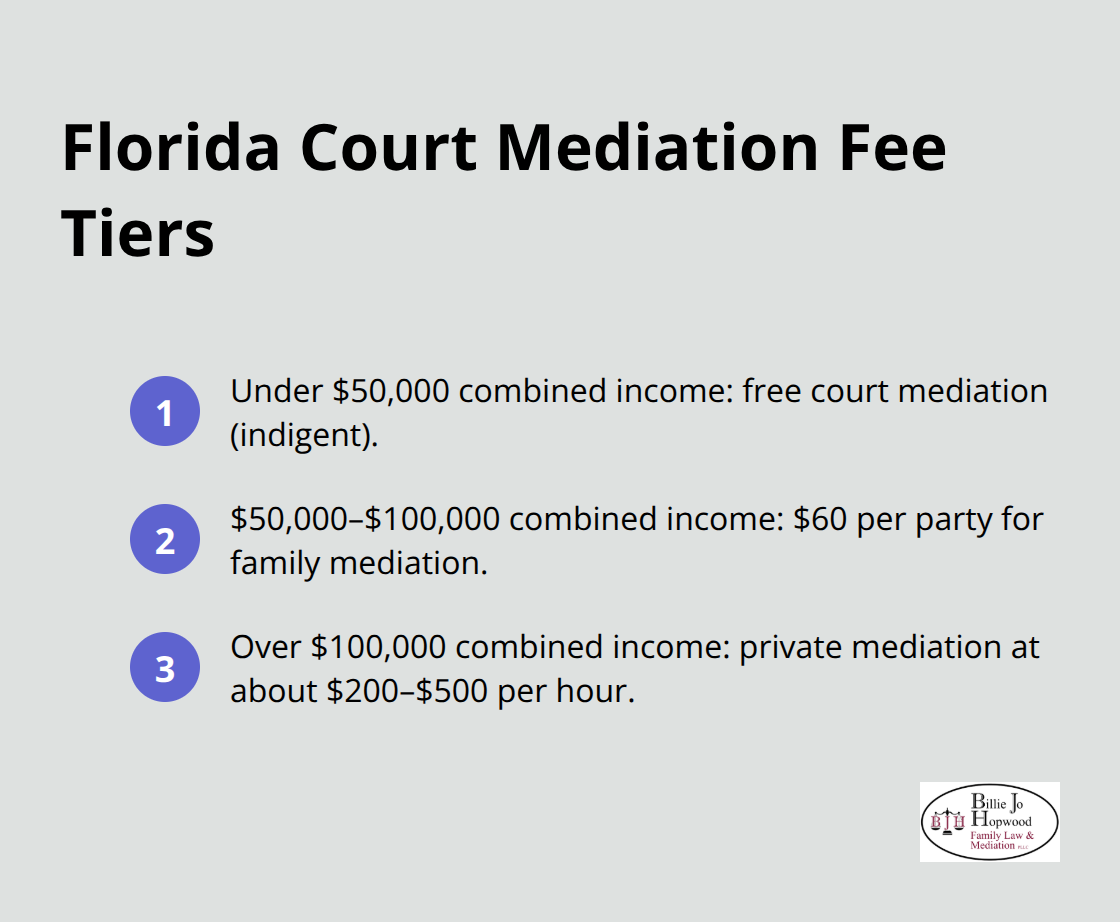
The court mediation program operates on an income-based fee system that determines eligibility. Couples with combined incomes under $50,000 qualify for free mediation as indigents. Those who earn between $50,000 and $100,000 pay $60 per party for family mediation services. Families with combined incomes that exceed $100,000 become ineligible for court-provided mediation and must seek private mediators at significantly higher costs, often from $200 to $500 per hour.
Domestic Violence and Safety Exceptions
Courts waive mediation requirements when domestic violence allegations exist or child safety concerns arise. These exceptions protect vulnerable parties from power imbalances that could compromise fair negotiations. Judges can bypass mediation entirely in urgent situations that require immediate protective measures. However, parties must prove domestic violence with documentation such as police reports, restraining orders, or medical records. Without substantial evidence, courts rarely grant these exceptions, which makes mediation mandatory for most family disputes in Melbourne.
The specific types of family law cases that trigger these mediation requirements vary significantly based on the nature of your dispute and the complexity of issues involved.
Which Family Cases Trigger Mediation Requirements
Melbourne family courts mandate mediation for three primary categories of disputes that create the highest conflict levels and court backlogs. Dissolution of marriage cases automatically trigger mediation requirements when couples cannot agree on asset division, debt allocation, or retirement account distribution. The Eighteenth Judicial Circuit requires mediation in 85% of contested divorce cases, with property disputes that involve businesses, real estate, or investments over $50,000 that receive immediate mediation orders. Courts also mandate mediation when one spouse seeks alimony modification or disputes the duration of spousal support payments.
Child Custody Disputes Drive Most Mediation Orders
Parenting time conflicts generate the highest number of court-ordered mediations in Brevard County family courts. Judges require mediation when parents disagree on overnight schedules, holiday arrangements, or relocation requests that affect time-sharing. Florida courts mandate mediation for all parenting plan modifications, whether parents seek changes to primary residence, school district decisions, or extracurricular activity participation. Child custody mediations resolve successfully in 78% of cases (according to Florida State Courts data), which makes them highly effective for reduction of trial backlogs.

Support Modification Cases Face Automatic Mediation
Child support and alimony modification petitions trigger automatic mediation requirements when the party who requests demonstrates substantial income changes that exceed 15% or involuntary job loss. Courts require mediation for parents who seek child support adjustments due to shared custody changes, medical expense disputes, or college cost disagreements. Melbourne judges mandate mediation for all retroactive support claims and contempt actions before they schedule enforcement hearings, which gives parties one final opportunity to negotiate payment plans or modification agreements without trial intervention.
Emergency Situations Override Standard Requirements
Courts bypass standard mediation requirements when immediate protection becomes necessary for children or vulnerable family members. Judges can order temporary relief in cases that involve domestic violence allegations, child abuse reports, or threats to family safety. These emergency orders allow courts to establish temporary custody arrangements, protective measures, or financial support without the typical mediation process (though mediation may still be required later for permanent arrangements).
The advantages of mediation extend far beyond simple court compliance, particularly when families consider the financial and emotional costs of traditional litigation.
Why Choose Mediation Over Court Battles
Financial Reality Check
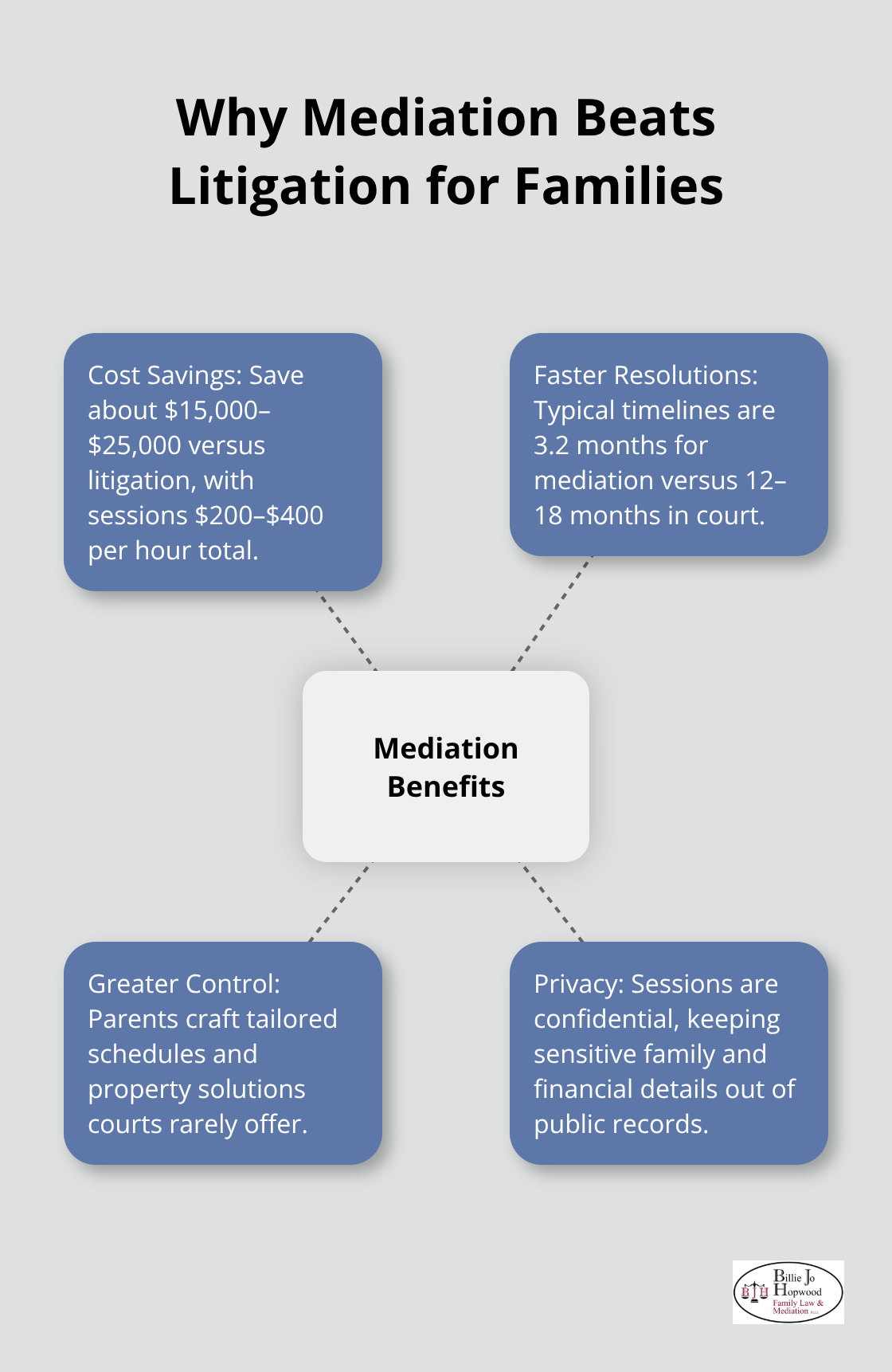
Melbourne families save an average of $15,000 to $25,000 when they choose mediation instead of litigation. Court proceedings drag on for 12 to 18 months and accumulate attorney fees that range from $300 to $500 per hour for each party. Mediation sessions cost between $200 to $400 per hour total (split between parties), and most family disputes resolve within 4 to 8 sessions. The Florida State Courts report that mediated cases conclude in an average of 3.2 months compared to traditional litigation that stretches beyond one year. Discovery costs, court fees, and depositions add another $8,000 to $12,000 in litigation expenses that mediation completely eliminates.
Speed Advantage That Matters
Mediation sessions can be scheduled within 2 to 4 weeks, while court dates often get pushed out 6 to 9 months due to overcrowded dockets in Brevard County. The Eighteenth Judicial Circuit handles over 3,500 family law cases annually and creates significant delays for trial schedules. Mediated agreements become legally bound once signed and filed with the court (typically within 1 to 2 weeks after the final session). Litigation requires multiple court appearances, motions, and procedural delays that keep families in limbo for extended periods.
Control Your Own Outcome
Judges make final decisions based on Florida statutes and precedent, not your family’s unique circumstances. Mediation allows parents to craft creative schedules that work around shift work, travel demands, or special needs children. Property division through mediation can accommodate sentimental attachments, business partnerships, or retirement plans that courts rarely consider. The success rate for voluntary compliance with mediated agreements reaches 87% according to Florida State Courts data, while court-ordered arrangements see violation rates above 40% within the first year after judgment.
Privacy Protection Benefits
Court proceedings become public record and expose sensitive family information to anyone who requests case files. Mediation sessions remain completely confidential (except as required by law for disclosure). Private mediation protects children from public scrutiny of custody disputes and shields financial details from business partners or employers. This privacy advantage becomes particularly valuable for families with professional reputations or business interests that could suffer from public litigation exposure.
Final Thoughts
Florida family courts maintain broad authority to order mediation in contested cases, though the question “is mediation compulsory in family law” depends on your specific circumstances and judicial discretion. The Eighteenth Judicial Circuit routinely requires mediation for dissolution of marriage and paternity disputes, with income-based fees that range from free services for families who earn under $50,000 to $60 per party for moderate-income households. Voluntary mediation offers significant advantages over court orders that families must wait to receive.
Melbourne families who choose mediation early save $15,000 to $25,000 compared to litigation while they resolve disputes in 3.2 months instead of 12 to 18 months. The 87% compliance rate for mediated agreements demonstrates the effectiveness of collaborative solutions. Action before court intervention allows families greater control over outcomes and preserves relationships that matter most for children’s wellbeing.
We at Billie Jo Hopwood Family Law & Mediation, PLLC guide Melbourne families through both voluntary and court-ordered mediation processes. Our compassionate approach helps families navigate divorce, child custody, alimony, and child support matters while we protect their interests and minimize conflict. Contact us today to discuss how mediation can benefit your family’s unique situation (before the court makes that decision for you).