The immediate family definition law varies significantly across different legal contexts, creating confusion for many families navigating their rights and obligations.
At Billie Jo Hopwood Family Law & Mediation, PLLC, we see how these varying definitions impact inheritance disputes, medical decisions, and employment benefits daily. Understanding who qualifies as immediate family under different laws protects your family’s interests and prevents costly legal complications.
Who Qualifies as Immediate Family Under Law
Blood Relations and Adoptive Relationships
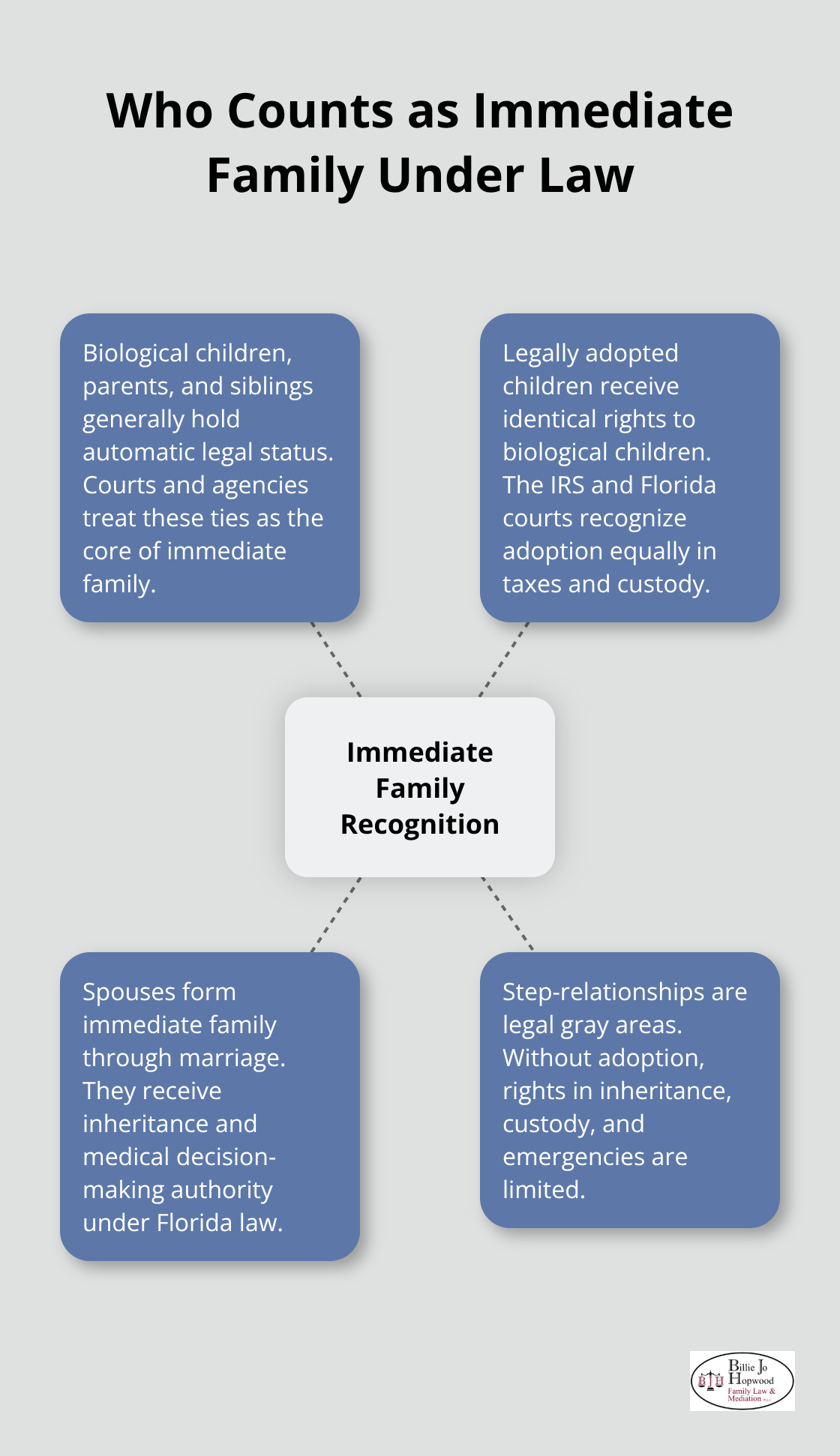
The legal system recognizes specific blood relations and adoptive relationships as immediate family members with equal rights and protections. Biological children, parents, and siblings hold automatic legal status, while legally adopted children gain identical rights to biological offspring under federal and Florida state law. The Internal Revenue Service treats adopted children the same as biological children for tax purposes, and Florida courts prioritize adoptive parents equally with biological parents in custody decisions.
Step-relationships create legal gray areas that often surprise families during medical emergencies or inheritance disputes. Courts view these relationships differently than biological or adoptive connections, which affects legal rights significantly.
Marriage and Partnership Recognition
Florida law grants spouses full immediate family status with automatic inheritance rights and medical decision-making authority. When no children exist from previous relationships, spouses inherit entire estates under Florida’s intestate succession laws. The state recognizes marriage as the primary legal bond that creates immediate family status between non-blood relatives.
Domestic partners and unmarried couples receive no automatic legal recognition as immediate family, regardless of relationship duration or emotional bonds. This distinction becomes problematic during medical emergencies when hospitals may deny visitation rights to long-term partners without legal documentation (such as healthcare directives or power of attorney forms).
Blended Family Legal Realities
Step-parents without formal adoption hold no automatic custody rights or inheritance claims, which creates vulnerabilities during divorce or family crises. Florida courts treat step-children as legal strangers to step-parents unless adoption occurs, despite years of caregiving relationships. The Family and Medical Leave Act excludes step-relationships from its immediate family definition, which prevents unpaid leave for step-parent caregiving.
These limitations force blended families to pursue formal adoption or legal guardianship to secure family protections that biological families receive automatically. The next section examines how these family definitions translate into specific legal rights and responsibilities across different areas of law.
What Legal Powers Do Immediate Family Members Hold
Inheritance Rights That Matter Most
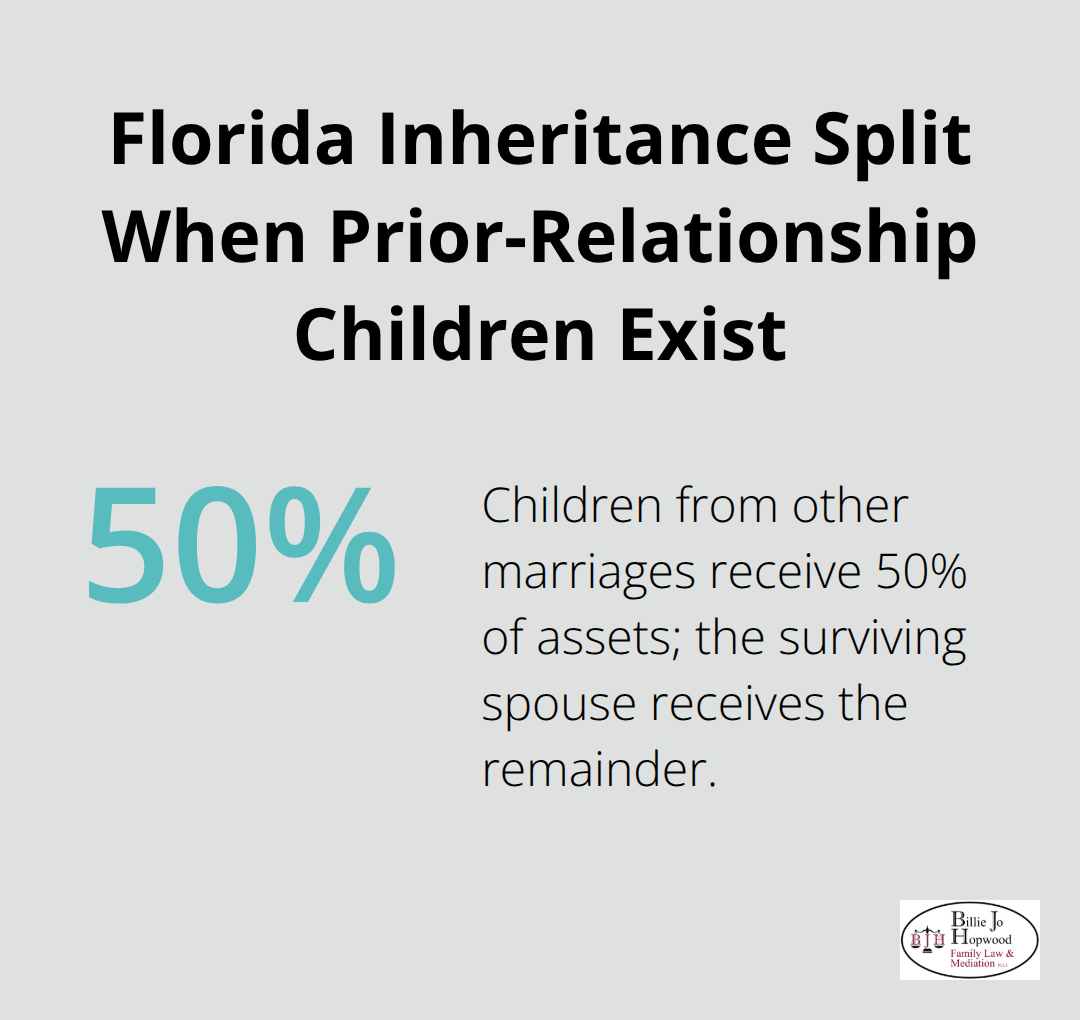
Florida’s intestate succession laws grant immediate family members automatic inheritance rights that bypass probate complications. Spouses receive the entire estate when no children from previous relationships exist, while children from other marriages split 50% of assets with the surviving spouse who receives the remainder. Parents inherit everything only when no spouse or children survive, and siblings gain rights solely when parents, spouses, and children are absent.
Joint accounts and payable-upon-death designations transfer directly to spouses without court intervention. These tools provide powerful estate planning options that avoid lengthy probate processes. The Family and Medical Leave Act provides 12 weeks of unpaid leave for care of spouses and dependent children under 21, but excludes step-relationships and unmarried partners entirely.
Federal Tax Benefits and Recognition
Federal tax benefits extend to spouses and biological or adopted children through Internal Revenue Service regulations. Step-children receive no automatic recognition without formal adoption proceedings. The IRS treats adopted children identically to biological children for tax purposes, which affects deductions and filing status options.
Tax law recognizes immediate family members for various benefits including dependency exemptions and medical expense deductions. These financial advantages can result in substantial savings for families who qualify under federal definitions.
Medical Decision Authority During Emergencies
Florida law grants immediate family members automatic authority to make medical decisions when you cannot communicate your wishes. Spouses hold primary decision-making power, followed by adult children and parents in the established hierarchy. Unmarried partners and divorced spouses hold zero authority in medical emergencies unless healthcare directives or power of attorney documents exist beforehand.
Emergency rooms routinely deny visitation rights to long-term partners who lack legal documentation. This creates devastating situations during medical crises when emotional bonds mean nothing without legal recognition. Healthcare insurance policies typically extend coverage to spouses and dependent children, but definitions vary between employers and insurance providers.
Step-Parent Limitations in Medical Decisions
Step-parents without adoption papers cannot make medical decisions for step-children, regardless of years spent in caregiving roles. The Centers for Disease Control and Prevention recognizes immediate family members for public health emergency purposes (affecting quarantine and treatment decisions), but step-relationships fall outside these protections.
These medical authority gaps highlight why blended families need formal legal documentation to protect their interests. State and federal laws create different immediate family definitions that affect these rights in various ways.
How Do State and Federal Laws Define Family Differently
Florida State Versus Federal Family Classifications
Florida state law defines immediate family more broadly than federal regulations, which creates significant complications for families who navigate multiple legal systems. Under Florida Statutes Section 104.0616, immediate family includes spouses, parents, children, grandparents, grandchildren, and siblings for voting purposes. The Family and Medical Leave Act restricts federal recognition to spouses and dependent children under 21, which excludes grandparents and siblings entirely. This gap means Florida residents can assist grandparents with votes but cannot take federal family leave to care for them during medical emergencies.
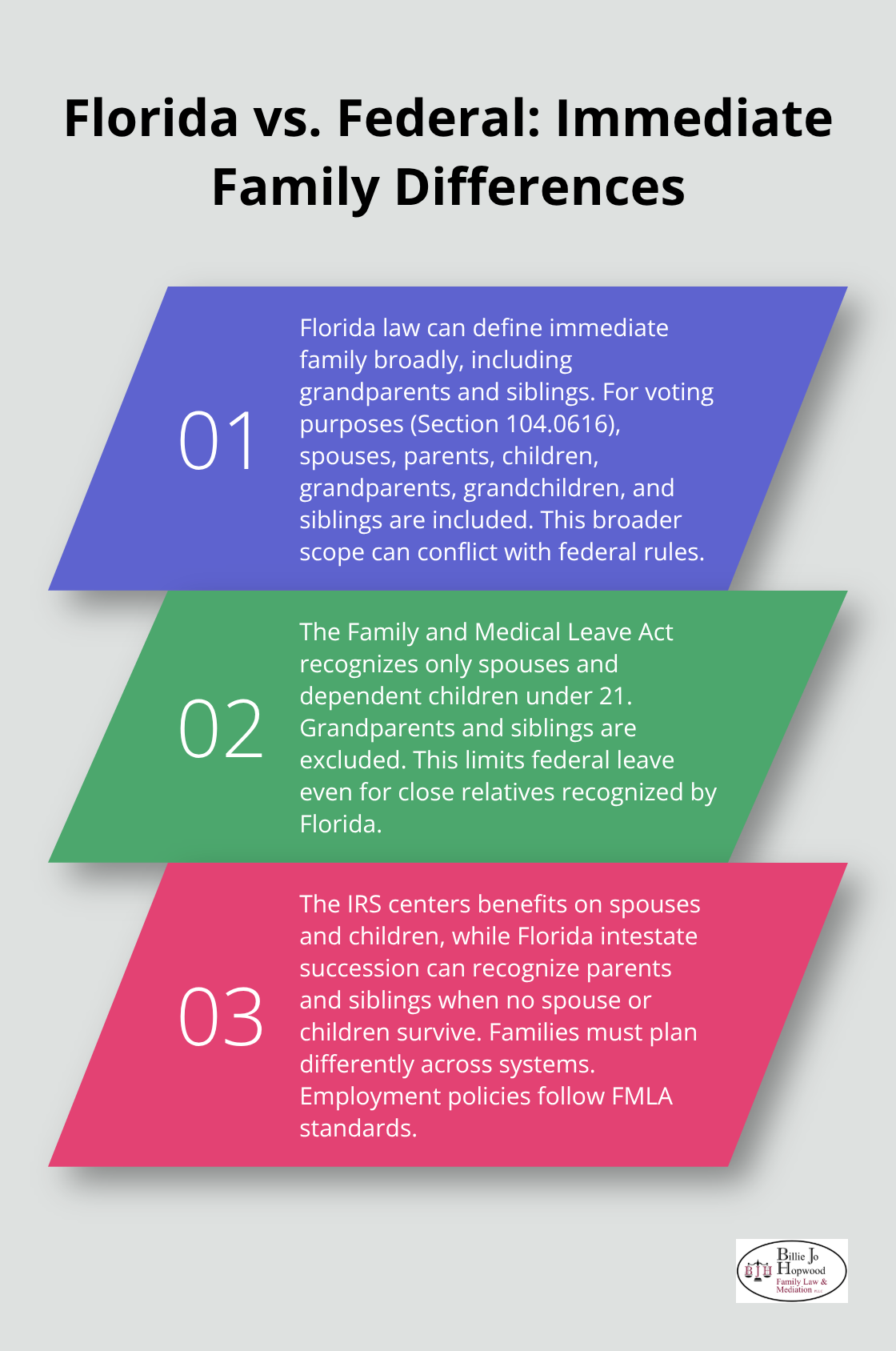
The Internal Revenue Service limits immediate family to spouses and children for tax benefits, while Florida intestate succession laws recognize parents and siblings as heirs when spouses and children are absent. These conflicting definitions force families to plan differently for state versus federal legal matters. Employment policies must comply with federal FMLA standards, which often provide fewer protections than Florida families expect based on state definitions.
Immigration Law Family Classifications
United States immigration law grants immediate family status exclusively to spouses and unmarried children under 21 for permanent resident petitions. This creates the narrowest definition across all legal contexts. Parents of US citizens over 21 qualify separately but face longer processing times than immediate relatives. Siblings, grandparents, and married children fall into preference categories with waiting periods that can exceed 20 years.
Immigration attorneys report that families frequently misunderstand these restrictions. Many assume broader state law definitions apply to federal immigration cases, which leads to disappointment and delays in family reunification efforts.
Insurance Coverage Disparities
Healthcare insurance policies vary dramatically between employers, with some extending coverage to domestic partners while others restrict benefits to legally married spouses only. The Centers for Disease Control and Prevention recognizes immediate family during public health emergencies, but individual insurance companies create their own definitions that may exclude step-children or adopted children (depending on policy language).
These inconsistencies require families to review each policy carefully rather than assume uniform coverage across different legal contexts. Workers’ compensation benefits also follow varying immediate family definitions that affect death benefits and medical coverage eligibility.
Final Thoughts
The immediate family definition law creates a complex web of rights and obligations that varies dramatically between state and federal contexts. Florida families face different protections under state intestate succession laws compared to federal employment benefits, while immigration law imposes the strictest limitations on family recognition. These legal inconsistencies demand proactive planning to protect your family’s interests.
Blended families need formal adoption or legal documentation to secure rights that biological families receive automatically. Unmarried couples must create healthcare directives and power of attorney documents to gain medical decision-making authority during emergencies. Estate planning becomes more complex when state and federal definitions conflict, as joint accounts and payable-upon-death designations provide powerful tools that bypass probate complications only for legally recognized immediate family members.
Step-parents without adoption papers hold no automatic inheritance or custody rights, regardless of emotional bonds or caregiving history. We at Billie Jo Hopwood Family Law & Mediation, PLLC help Melbourne families navigate these challenging legal situations through compassionate guidance and representation in divorce, child custody, and family law matters. Professional legal counsel becomes essential when family structures don’t align with standard legal definitions (or when multiple jurisdictions create conflicting obligations).