You reached a mediation agreement in your divorce, and now you need to know it will actually hold up in court. A mediation agreement is only as strong as the foundation you build during and after the process.
At Billie Jo Hopwood Family Law & Mediation, PLLC, we see families protect their settlements by understanding what makes mediation agreement enforceability possible under Florida law. This guide walks you through the legal requirements, common pitfalls, and concrete steps to keep your settlement secure.
What Florida Law Actually Requires for Your Settlement
The Written Agreement Standard
Florida Statute 44.102 sets a clear standard: your mediation agreement must be in writing and signed by both parties to be enforceable. This isn’t optional. Courts in Florida will not enforce a handshake or a verbal agreement, no matter how sincere both sides were during mediation. The statute requires that the agreement contain all material terms-exact dollar amounts, deadlines, asset descriptions, and custody schedules with specific days and times.
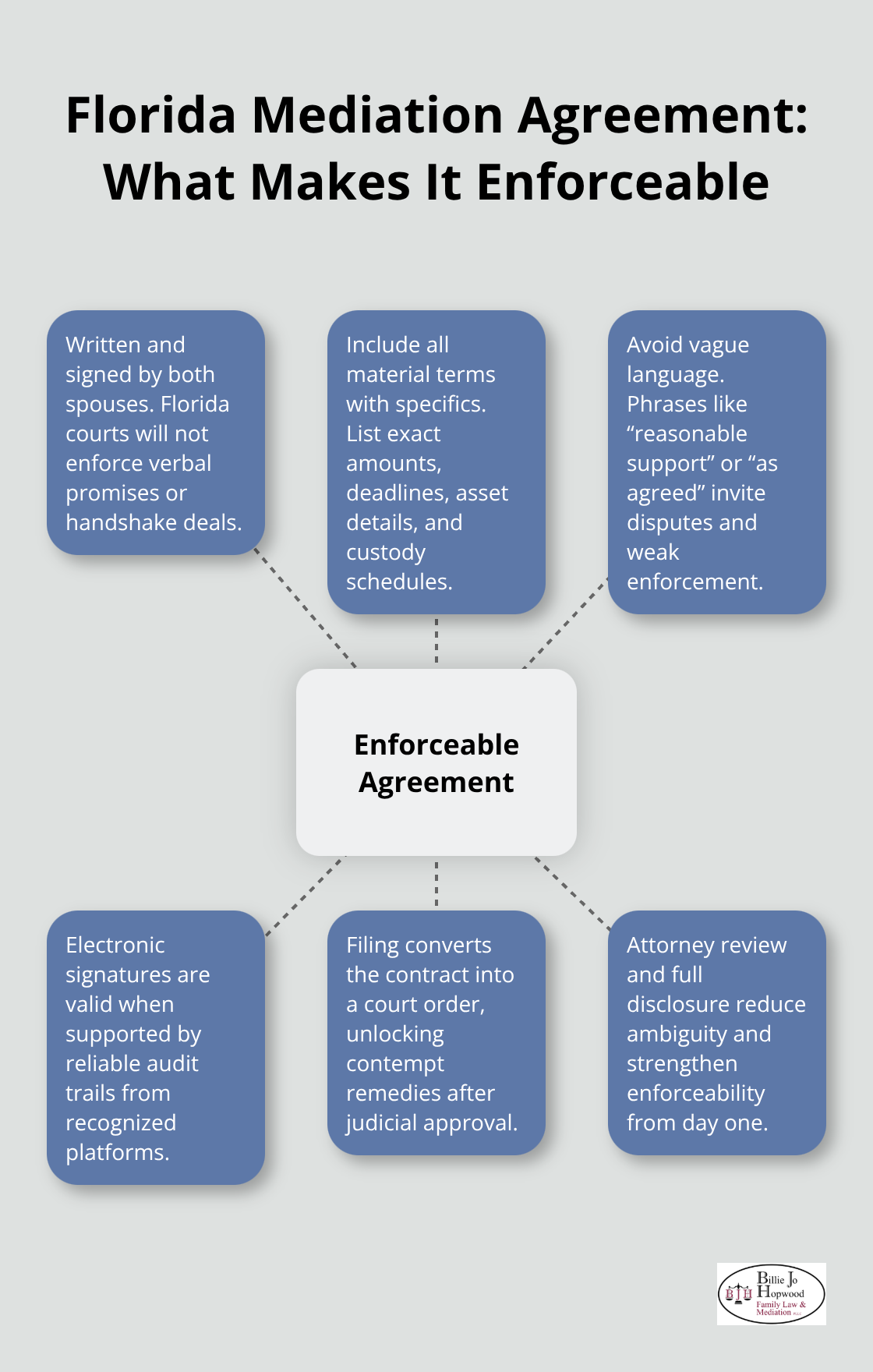
Vague language like “reasonable support” or “as agreed” creates enforceability problems later. When one party refuses to follow the agreement, you file a Motion to Enforce the Mediation Settlement in the original court, and the judge will examine whether your written document actually says what you claim it says. If the terms are ambiguous, the court may refuse to enforce them or interpret them against the party who drafted the agreement. This is why drafting matters from day one.
Signatures and Electronic Documentation
Signatures carry real weight in Florida mediation law. Both spouses must sign the final agreement; as of April 1, 2025, authorized representatives with full settlement authority can sign in civil mediations, but family law mediations in divorce still require both parties’ signatures. Electronic signatures are valid if the platform provides a reliable execution record-DocuSign and Adobe Sign both create audit trails that courts accept. The signed agreement becomes a contract immediately, but it gains stronger enforcement power once you file it with the court and a judge approves it, which typically takes two to four weeks. At that point it becomes a court order, giving you access to contempt findings and wage garnishment if the other party violates it.
Intent, Disclosure, and Legal Review
Your mutual intent and good faith during mediation also matter, though courts will not second-guess a settlement just because one party later regrets the bargain. What courts do examine is whether both parties had full financial disclosure, understood the terms they were signing, and signed voluntarily without coercion or threats. Your attorney should review the final agreement before you sign-even if they were not present at the mediation table-to catch calculation errors, missing terms, and language that could haunt you later. This step prevents costly disputes over what the agreement actually obligates you to do, and it protects your interests before you commit to the settlement. Understanding these requirements positions you to identify the common pitfalls that derail many mediation agreements after they leave the mediation room.
Common Reasons Mediation Agreements Fail and How to Prevent Them
Ambiguous Language Destroys Enforceability
Vague language destroys enforceability faster than almost anything else. Courts in Florida refuse to guess what you meant when you wrote terms like “reasonable support” or “flexible custody arrangements.” The American Bar Association reports that financial deception ranks among the top reasons mediation agreements fail enforcement, but poor drafting runs a close second. When you sit down to sign your agreement, every dollar amount must be exact, every deadline must specify a date and time, and every asset must be described with precision.
Instead of writing “John receives the house,” write “John receives the residence located at 1234 Maple Street, Brevard County, Florida, with legal description provided as Exhibit A, transfer to occur by June 15, 2026, with deed prepared by John’s attorney and recorded within five business days.” This level of detail prevents the other party from later claiming they thought something different or that the terms were too vague to enforce. If you file a Motion to Enforce the Mediation Settlement and the language is ambiguous, the judge interprets it against the drafter, which means sloppy wording costs you money and time.
Hidden Assets and Incomplete Financial Disclosure
Hidden assets and incomplete financial disclosure create a second category of failure that leads directly to court challenges. One party fails to disclose retirement accounts, rental properties, or business interests during mediation, signs the agreement anyway, and later the other party discovers the concealment. Florida courts can void the agreement or reopen it for modification if fraud or nondisclosure is proven, but proving it requires evidence and additional litigation.
Before you walk into mediation in Melbourne or anywhere in Florida, both parties must exchange complete tax returns for the past three years, bank statements, retirement account statements, real estate deeds, and documentation of any business ownership. This exchange should happen before the mediation session, not during it, so both sides have time to review and verify.
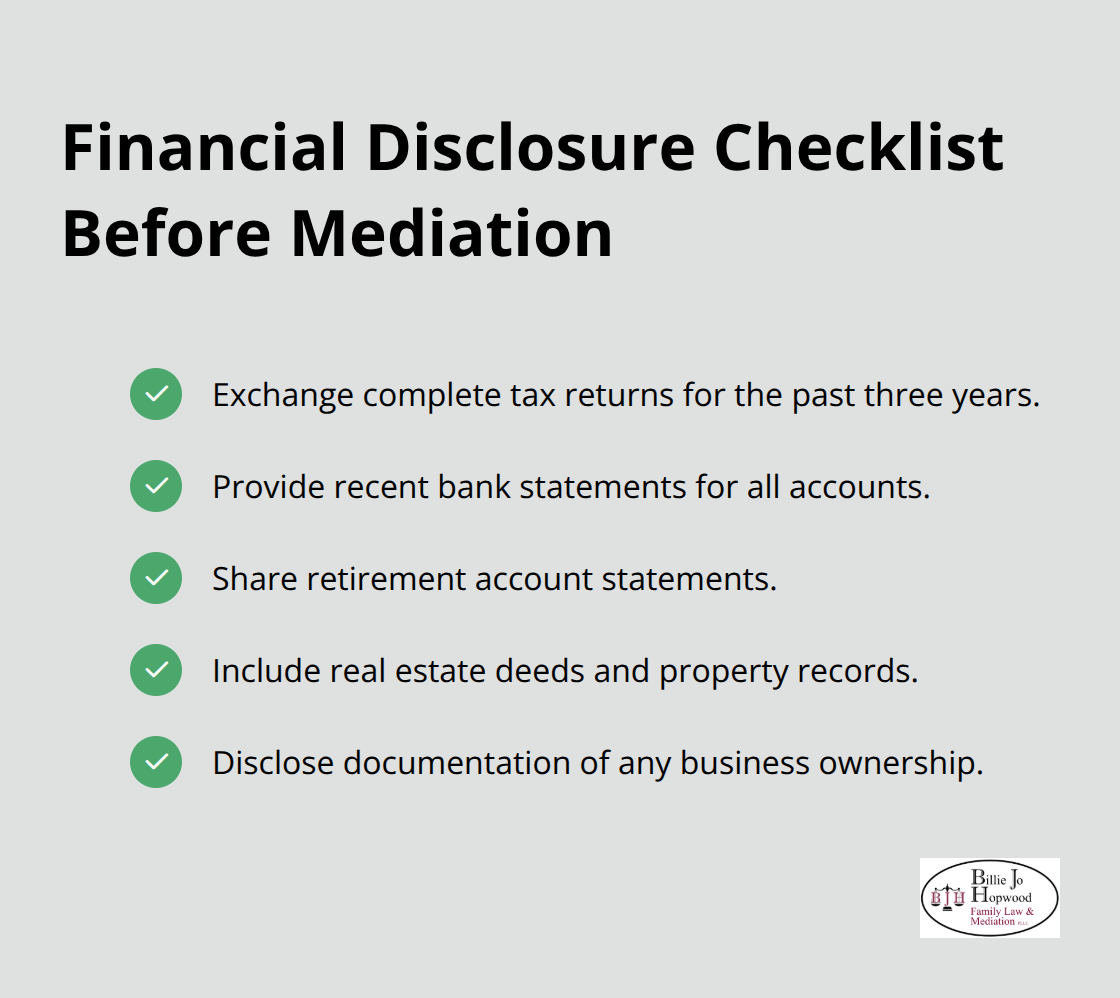
If one party refuses to disclose or produces incomplete documents, your attorney must flag this immediately and insist on full disclosure before any agreement is signed. The burden of proof falls on the party claiming disclosure was complete, which means you need a documented paper trail showing what was exchanged and when.
Legal Review Before Signing Prevents Costly Mistakes
Signing without legal review is the mistake most parties make, and it is entirely preventable. Your attorney does not need to sit at the mediation table to protect you, but they absolutely must review the final agreement before you sign. Courts cannot undo a settlement just because you later regret it, but they can enforce it against you with full force.
An attorney catches calculation errors in child support that deviate from Florida guidelines, identifies missing terms like health insurance responsibility or tax filing status, and spots language that obligates you in ways you did not intend. Two hours of legal review before signing saves thousands in enforcement disputes afterward. This review step transforms a risky handshake into a defensible contract that holds up when tested in court.
Once you understand what causes agreements to fail, the next step is taking concrete action to protect your settlement after mediation concludes.
Securing Your Agreement After Mediation
Act Within 24 Hours of Signing
The mediation room door closes behind you, agreement in hand, and the real work starts immediately. Within 24 hours of signing, you need a clear action plan. First, obtain a fully executed copy with all signatures from the mediator or the other party’s attorney. Second, have your attorney review it right away for any last-minute errors or missing terms that slipped through. Do not wait days or weeks to do this review; ambiguities that seemed minor in the mediation room become expensive problems once the agreement is filed.
Organize Your Documentation Package
Gather all supporting documents referenced in the agreement-asset schedules, parenting plans, property descriptions, and support calculations-and organize them in a single folder with the original signed agreement. This documentation package becomes your evidence if enforcement becomes necessary later. Calendar every deadline in the agreement with reminders set for two weeks before each one, so you stay ahead of performance obligations and catch any delays immediately.
File Your Agreement with the Court
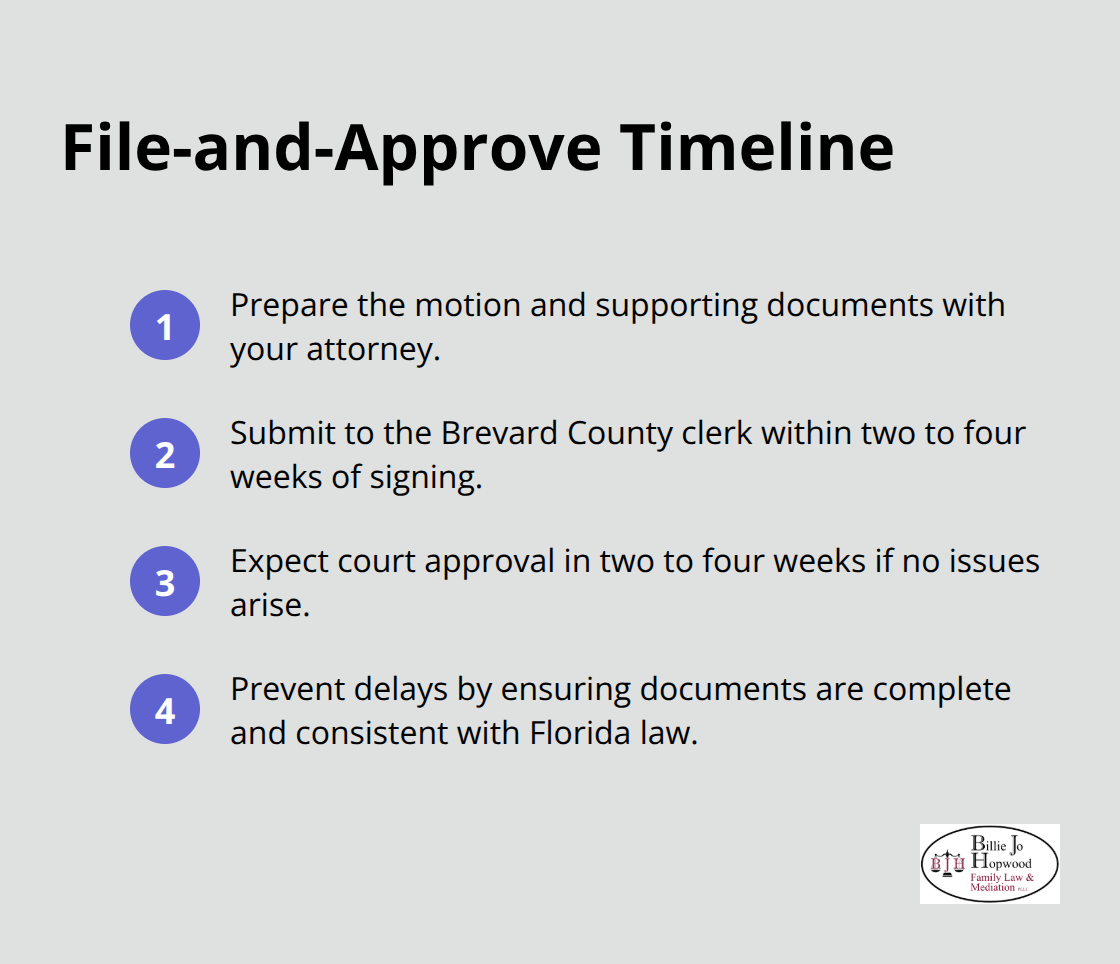
Filing the agreement with the court transforms a binding contract into a court order, which gives you access to enforcement tools that a standalone contract does not provide. Work with your attorney to prepare the Motion to File Mediation Settlement Agreement and supporting paperwork, then submit it to the clerk in Brevard County within two to four weeks of signing-the sooner you file, the sooner the judge can approve it. Courts typically process and approve mediation agreements within two to four weeks if there are no issues, but delays happen when documents are incomplete or terms appear inconsistent with Florida law.
Leverage Court Order Enforcement Power
Once a judge signs the order, you move from contract enforcement to contempt enforcement, meaning the other party faces fines or wage garnishment for violations instead of just a damages claim. This shift in enforcement power makes court approval worth the effort and paperwork. The other party now faces real consequences for non-performance, not merely a civil lawsuit.
Build Your Enforcement Documentation Trail
Documentation throughout the entire process-emails confirming performance, photos of completed obligations, bank statements showing payments, dated text messages-creates the paper trail you need if you ever file a Motion to Enforce the Mediation Settlement. Keep copies of every communication with the other party about implementation, every receipt for payments made, and every confirmation of assets transferred. If the other party fails to perform, this documentation proves the breach and strengthens your position in enforcement court.
Final Thoughts
Your mediation agreement holds up in court only when you treat it as a legal document from the moment you sign it, not as a handshake that will sort itself out later. The foundation for mediation agreement enforceability rests on three pillars: a written agreement with precise terms, complete financial disclosure from both parties, and legal review before you commit. Courts in Florida will not rewrite a settlement because you regret it, but they will enforce it with full force once it becomes a court order.
The moment to seek legal guidance is before you sign, not after. Your attorney should review the final agreement while you still have the chance to request changes, catch errors in child support calculations, and verify that all material terms are included. If you are in Melbourne or anywhere in Brevard County, this review step is non-negotiable, because after you sign, your options narrow significantly and courts will hold you to the language you agreed to.
We at Billie Jo Hopwood Family Law & Mediation, PLLC understand that mediation offers a path forward that avoids the cost and conflict of trial, but only when the agreement that results is actually enforceable. If you are preparing for mediation or have already reached a settlement that needs protection, contact us to review your agreement and move forward with confidence in your settlement.