
Co-parenting schedules shape how children develop and how families function day-to-day. When parents can’t align their schedules and responsibilities, stress builds quickly for everyone involved.
We at Billie Jo Hopwood Family Law & Mediation, PLLC help families in Brevard work through these conflicts without going to court. Mediation for parenting in Brevard gives parents the tools to create workable agreements that actually stick.
Why Misaligned Parenting Schedules Damage Child Stability
How Inconsistent Schedules Harm Children
Inconsistent schedules between households create measurable harm to children’s development and family functioning. When one parent maintains a rigid weekday routine while the other operates loosely, children experience confusion about basic expectations. They arrive at school tired because bedtime rules differ, they miss medical appointments because neither parent tracked them, and they feel the tension when parents blame each other for mix-ups. Research on child development shows that predictability matters more than perfection, and children thrive when they know what to expect. The American Academy of Pediatrics emphasizes that stable routines reduce behavioral problems and improve academic performance, yet many co-parenting arrangements lack any coordinated structure.
The Cost of Responsibility Gaps
Responsibility gaps amplify this damage significantly. When one parent assumes all healthcare decisions while the other handles school communication, critical information falls through cracks. A child misses a dentist appointment because Parent A thought Parent B scheduled it. A teacher’s concern about reading level goes unaddressed because neither parent knew the other wasn’t informed. These gaps don’t just create logistical headaches; they signal to children that their needs matter less than parental conflict. Misaligned responsibilities also breed resentment between parents, who end up blaming each other for negligence rather than recognizing they never established who was responsible for what. The stress compounds when unexpected changes occur, forcing parents into reactive arguments instead of proactive solutions.
Brevard’s Unique Scheduling Pressures
Brevard families face specific scheduling pressures that make alignment harder. Work schedules in the area vary widely, from retail and hospitality shifts to professional positions with unpredictable hours. Transportation distances matter in Brevard, where some parents live 30 minutes apart, making last-minute schedule swaps difficult. School calendars, sports commitments, and seasonal tourism patterns create additional complexity. Without a structured approach to managing these pressures, parents drift toward rigid, uncooperative arrangements that leave no room for life’s realities.
Moving Forward With Intentional Planning
Intentional planning becomes non-negotiable when families want to break this cycle. Parents who sit down and map out responsibility ownership before conflicts arise avoid the blame cycles that damage their relationship and hurt their children. Defining who makes healthcare decisions, who communicates with teachers, who handles transportation, and how unexpected changes get managed removes ambiguity. Adding shared calendar tools that both parents can access prevents the excuse of not knowing about appointments. Building flexibility into agreements, rather than fighting every schedule change through conflict, teaches children that their parents can cooperate even when plans shift.
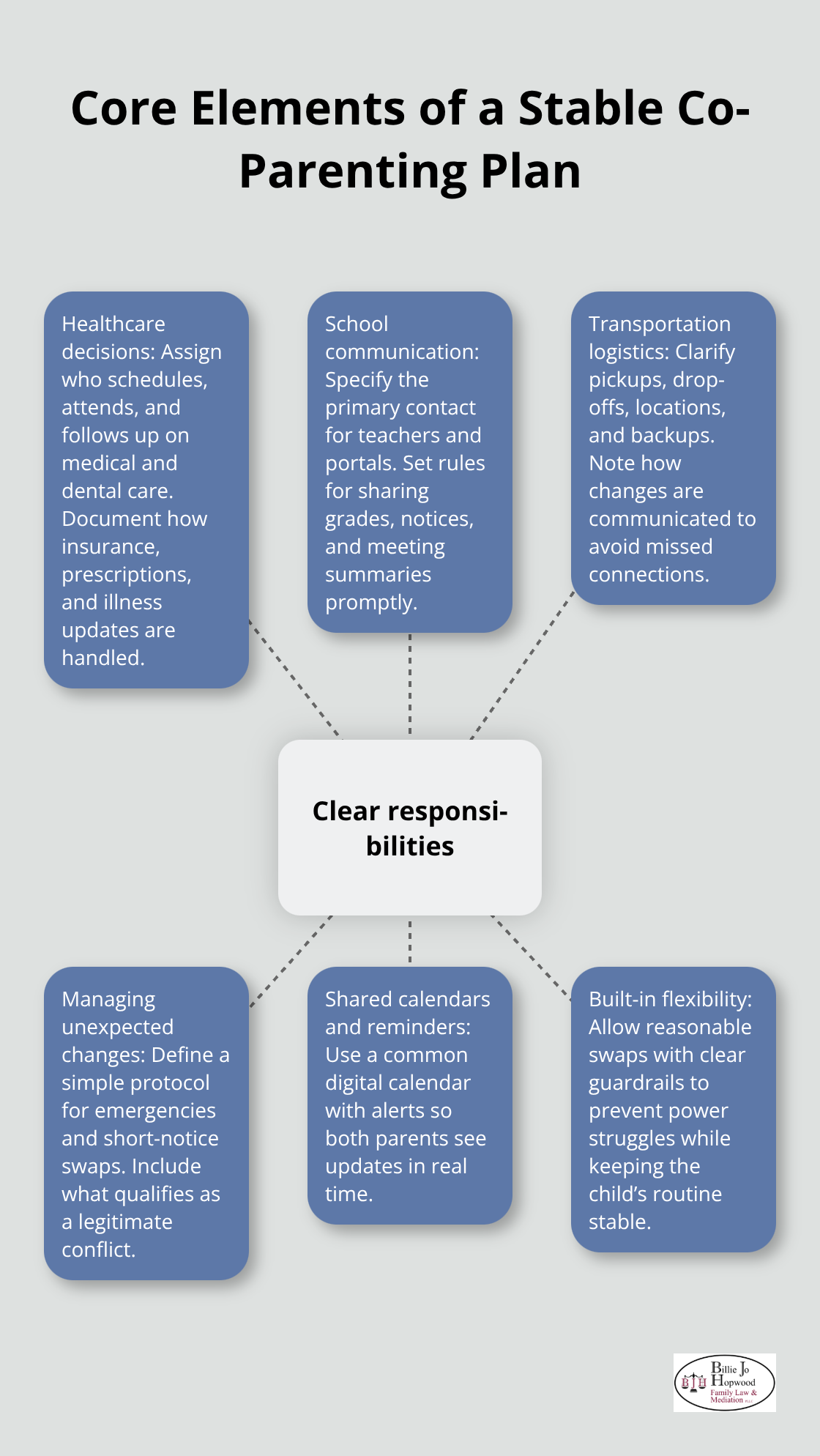
The families in Brevard who move past scheduling chaos are those willing to invest time upfront in creating clear, collaborative structures that put the child’s stability first. This foundation of clarity and cooperation sets the stage for mediation to work effectively.
How Mediation Stops the Blame Cycle
Breaking the Communication Breakdown
Mediation cuts through the communication breakdown that destroys co-parenting arrangements. When parents try to negotiate schedules alone, conversations quickly turn into blame sessions where one parent accuses the other of being irresponsible and the other responds defensively. A neutral mediator shifts this dynamic entirely. The mediator does not make decisions for you, but instead helps each parent articulate what they actually need from a schedule without the accusations. In Brevard County mediation, this process typically takes three hours per session, which is enough time to map out responsibility ownership, identify scheduling conflicts, and draft a workable parenting plan. The mediator focuses on identifying the real issues beneath the conflict, not winning points.
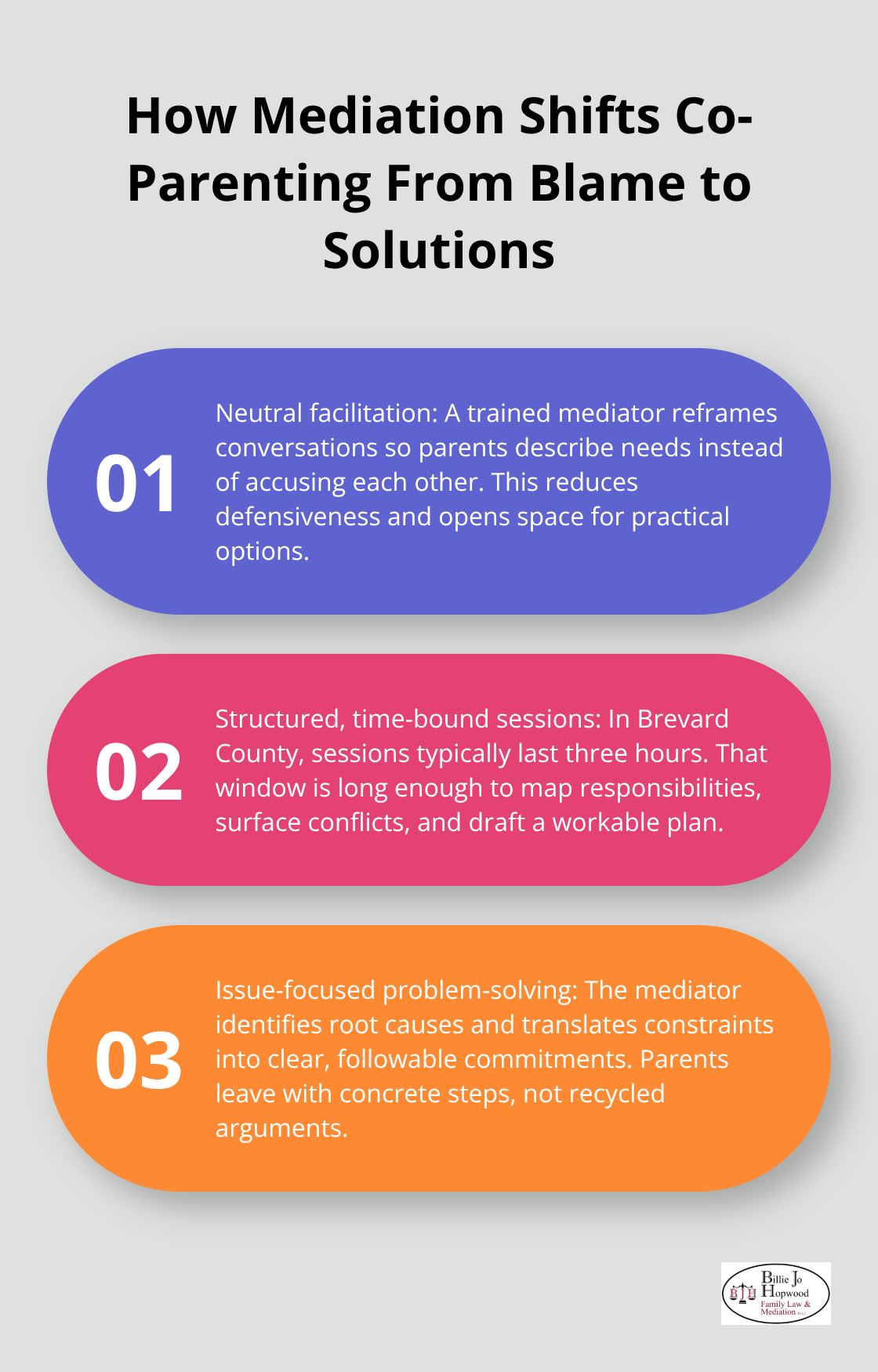
This approach works because parents stop performing for an audience and start problem-solving together.
Why Mediation Produces Lasting Agreements
When parents communicate through a mediator rather than directly, they reach agreements at higher rates. The confidentiality protections in Florida mediation mean neither parent can use statements made during the process against the other in court, which removes the fear that honesty will be weaponized later. This safety allows parents to speak candidly about their actual constraints and priorities instead of maintaining defensive positions. The mediator helps translate these needs into concrete solutions that both parents can follow long-term.
Documenting Responsibility Through Mediation
A mediator helps you document exactly who makes healthcare decisions, who communicates with schools, who handles transportation logistics, and how unexpected changes get managed. This is not theoretical discussion; it is concrete assignment of tasks. Instead of both parents assuming the other scheduled the dental appointment, mediation establishes that Parent A owns all healthcare scheduling and Parent B owns school communication. If the plan needs to change because a work schedule shifts or a child’s needs evolve, mediation provides a framework for renegotiating rather than reverting to conflict.
Making Your Agreement Legally Binding
Once you reach an agreement in mediation, the mediator can draft a memorandum or mediation agreement that gets submitted to the court as a binding order. This means your plan has legal teeth without the cost and stress of litigation. Brevard families with combined income under $50,000 pay $60 per person per session, and those between $50,000 and $100,000 pay $120 per person per session. Families avoid court intervention entirely when mediation produces a signed agreement, which saves thousands in legal fees and eliminates the unpredictability of a judge making decisions about your child’s schedule. With your parenting plan now formalized and legally enforceable, the next step involves the practical tools that keep both households synchronized day-to-day.
Tools That Keep Both Households Synchronized
Digital Calendars Eliminate Coordination Failures
Digital calendars designed for co-parenting solve the coordination problem that derails most agreements. Google Calendar or Apple Calendar allows both parents to view the same schedule in real-time, eliminating the excuse that neither parent knew about an appointment. When Parent A adds a soccer game or doctor’s visit, Parent B sees it immediately on their phone. This transparency prevents the situation where one parent schedules something during the other’s time without realizing a conflict exists.
Co-parenting apps like OurFamilyWizard or 2Houses extend this capability further. They include built-in messaging, expense tracking, and automatic reminders that notify both parents about upcoming events. These apps also create a permanent record of who agreed to what, which matters if disputes arise later. Parents in Brevard who switched from text messages and phone calls to shared digital tools report fewer missed appointments and reduced arguments about whether something was actually scheduled.
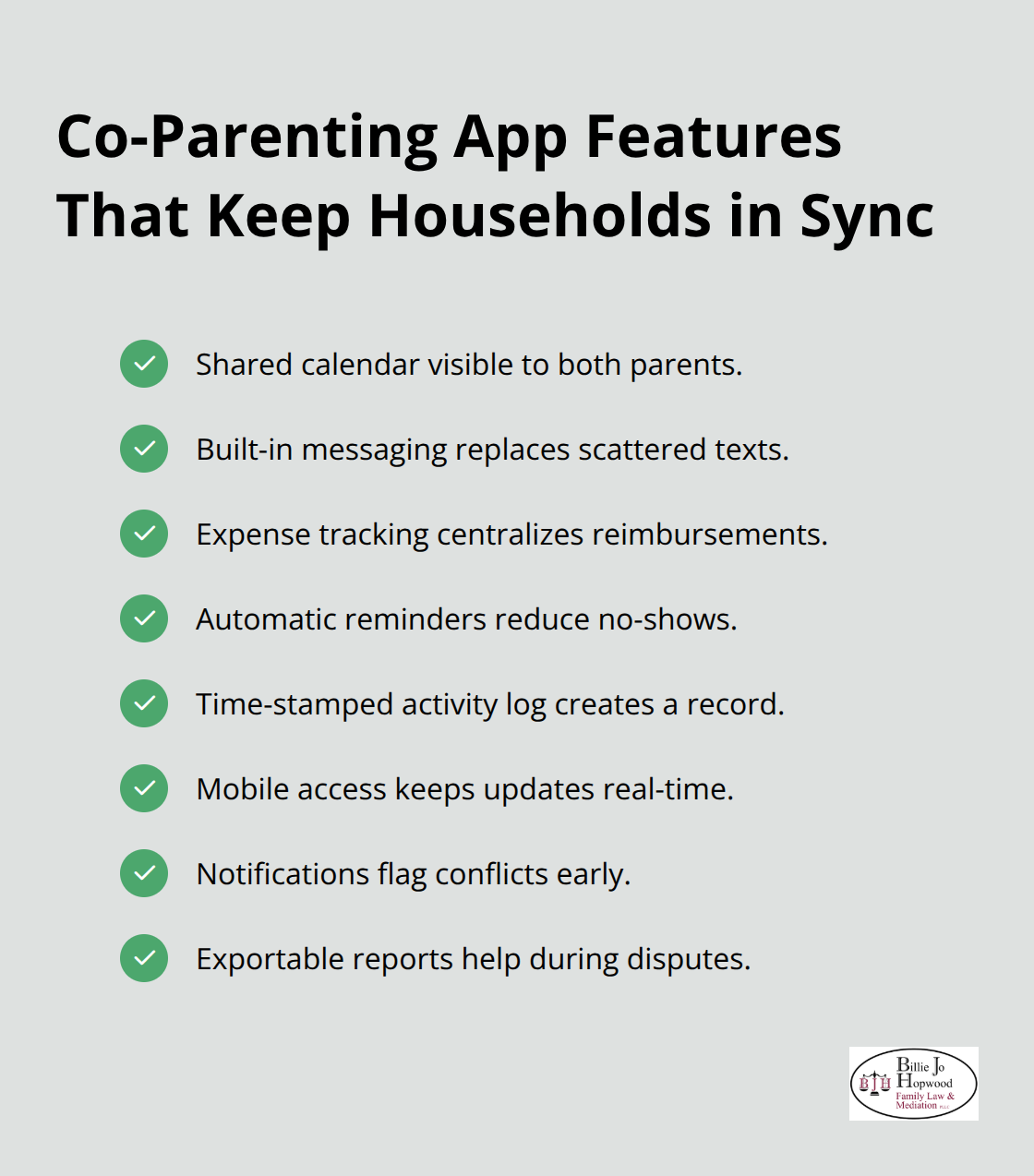
The investment takes minutes to set up but eliminates hours of frustration. Start with whichever platform both parents already use; switching to a new app fails when one parent resists the change. The calendar becomes useless if only one parent updates it, so establish a rule that whoever schedules something owns the responsibility to enter it within 24 hours. Set phone reminders for both parents 48 hours before major events and 24 hours before routine appointments. This redundancy catches oversights before they become problems.
Building Flexibility Into Your Parenting Plan
Flexibility built into the parenting plan separates agreements that survive reality from those that collapse under pressure. The most detailed schedule fails when a parent gets sick, a work emergency happens, or a child needs to switch days for a special event. Plans that require written consent and a week’s notice for any change guarantee constant conflict because life does not operate on a week’s timeline.
Instead, establish a protocol that allows reasonable schedule swaps with 48-hour notice and informal communication through your shared calendar or app. Define what counts as reasonable: switching a Tuesday for a Thursday counts, but moving an entire weekend requires more planning. Specify that neither parent can deny a reasonable swap unless they have a documented conflict. This approach removes the power dynamic where one parent uses schedule control as leverage.
When both parents know they can adjust the schedule without fighting, they stop viewing the plan as a rigid weapon and start treating it as a working document. Include a clause that addresses how transportation logistics change if schedules shift, so swapping days does not create confusion about who picks up the child. Document what happens if a parent needs to change their regular schedule temporarily due to work or travel; having a preset response prevents arguments about fairness.
Managing Last-Minute Changes Without Conflict
The parenting plan should address how you handle last-minute changes when neither parent anticipated the need. A parent might suddenly need to pick up the child early due to an illness or family emergency. Rather than requiring formal approval, establish that either parent can request an emergency change and the other parent will accommodate it unless they have a legitimate safety concern. Communication happens after the change, not before.
This removes the gatekeeping that turns co-parenting into a power struggle. When both parents know they can request flexibility without rejection, they stop asking for changes defensively and start asking for them as a practical reality. The parenting plan now functions as a living document that both parents can adjust as circumstances shift, rather than a source of ongoing conflict.
Final Thoughts
Mediation for parenting in Brevard transforms how parents approach their most important responsibility. When you move through mediation, you stop fighting about who failed and start building systems that prevent failure. The agreements you create together carry weight because you designed them, not because a judge imposed them, and both parents understand why each responsibility was assigned the way it was.
Children benefit most from this shift. When their parents communicate through a mediator and emerge with a clear, documented parenting plan, children experience immediate relief from the uncertainty that damages their development. They stop wondering if they will be picked up on time, stop hearing accusations about who forgot what, and see their parents cooperating around their schedule. This stability reduces behavioral problems, improves academic performance, and gives children the predictability they need to develop normally.
Families in Brevard County have access to mediation services that fit different income levels and schedules, with sessions typically taking three hours and agreements submitted to the court as binding orders. If scheduling conflicts and responsibility gaps create stress in your family, Billie Jo Hopwood Family Law & Mediation, PLLC in Melbourne, Florida helps families navigate these decisions with clarity and compassion.