
Military families face distinct legal challenges that civilian families rarely encounter. Frequent relocations, deployments, and complex benefit structures create obstacles in divorce and custody proceedings.
At Billie Jo Hopwood Family Law & Mediation, PLLC, we understand how military family law requires specialized knowledge of federal protections and interstate regulations. These cases demand strategic planning to protect both service members and their families.
What Makes Military Family Law So Complex?
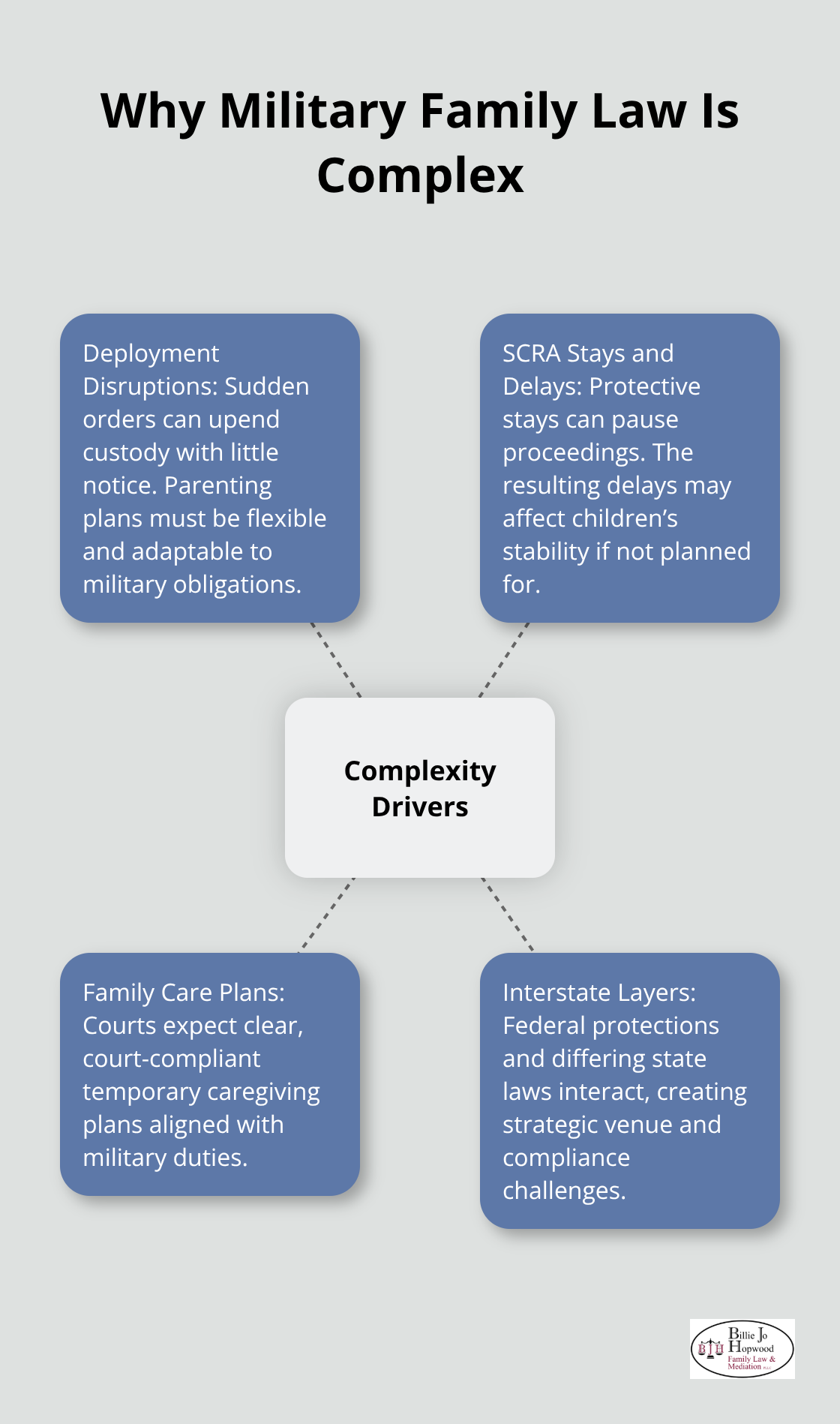
Military families face three interconnected legal challenges that civilian families never encounter. Deployment schedules disrupt custody arrangements without warning, and courts must adapt traditional parenting plans to unpredictable military obligations. The Servicemembers Civil Relief Act provides some protection when service members request stays of proceedings, but this protection creates delays that can harm children’s stability. Courts increasingly require military parents to establish Family Care Plans before deployment, which outline temporary custody arrangements that must comply with existing court orders while they accommodate military duties.
Jurisdiction Shopping Creates Strategic Advantages
Service members can file for divorce in their state of legal residency, where they’re currently stationed, or where their spouse resides. This jurisdictional flexibility creates significant strategic opportunities since property division laws vary dramatically between states. Community property states like California split assets 50-50, while equitable distribution states like Florida consider multiple factors (including marriage length and economic circumstances). Military families often choose jurisdiction based on which state offers the most favorable laws for their specific situation, which makes early legal consultation essential for protecting financial interests.
Military Benefits Transform Property Division Calculations
Military retirement pay division follows the Uniformed Services Former Spouses Protection Act, which treats pensions as marital property regardless of marriage duration. The 10/10 Rule allows former spouses married for at least 10 years during creditable service to receive direct payments from the Defense Finance Accounting Service. However, the 2017 frozen benefit rule caps former spouse benefits at the service member’s rank and years of service at divorce time (preventing them from benefiting from future promotions). Veterans disability benefits remain non-divisible, but service members can waive retirement pay to receive disability compensation, potentially eliminating the former spouse’s pension share entirely.
These complex legal frameworks set the foundation for understanding how military families must approach custody and support decisions differently than civilian families.
How Do Military Families Navigate Custody and Support
Military custody arrangements demand aggressive advance planning because traditional parenting schedules fail under deployment pressures. Courts now require military parents to submit detailed Family Care Plans before deployment, which must designate temporary caregivers and maintain compliance with existing custody orders. The Department of Defense requires service members to consult with the other parent when they create these plans, but conflicts still arise when Family Care Plans contradict court orders. Smart military parents establish delegation clauses in their original custody agreements, which allow grandparents or other family members to exercise visitation rights during deployments.
Child Support Calculations Include Military-Specific Income
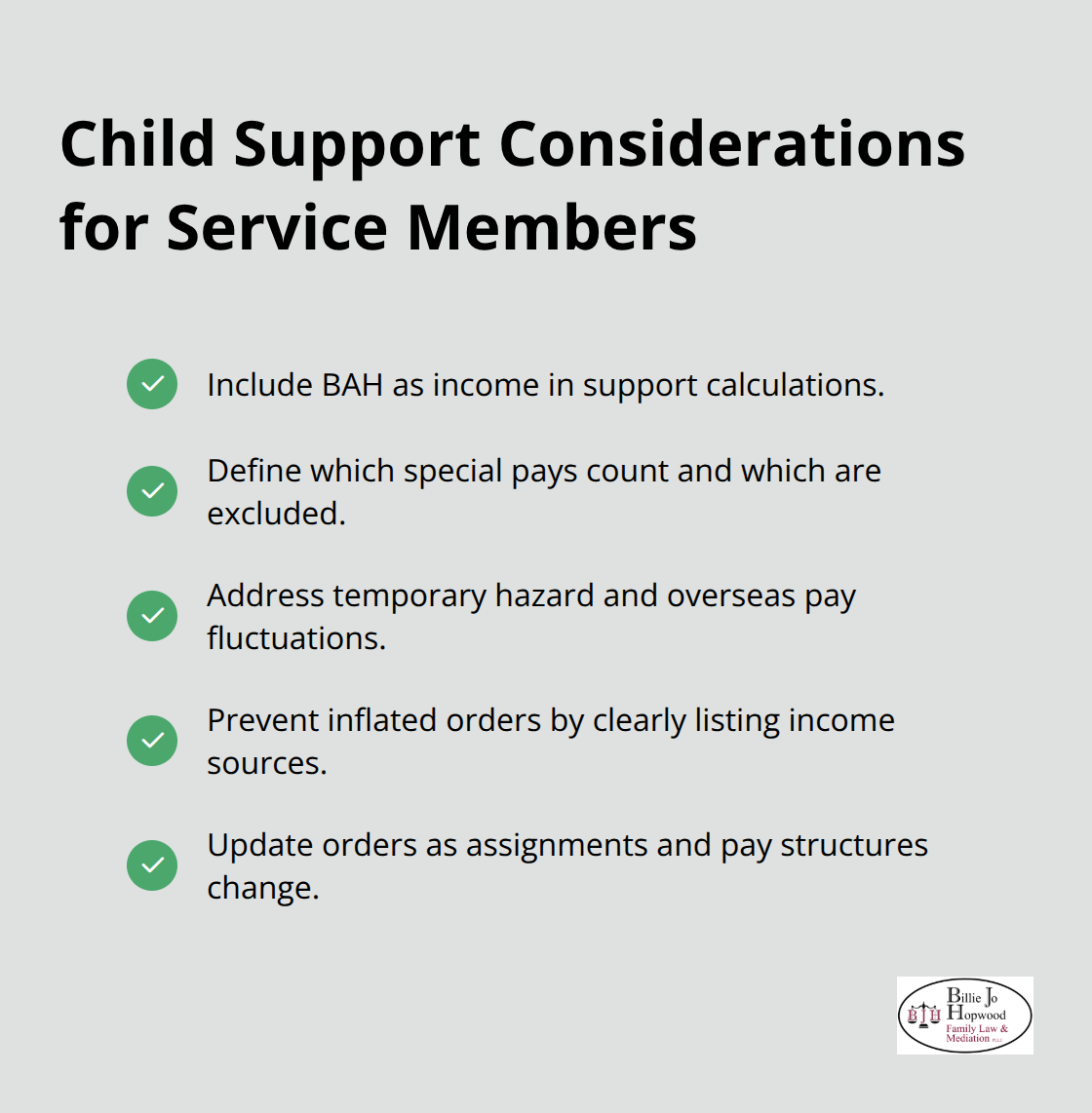
Military child support calculations must include Basic Allowance for Housing and other military-specific compensation beyond base pay. Courts treat BAH as income even though it’s tax-free, which significantly increases support obligations for service members. The challenge intensifies when service members receive overseas duty pay or hazard pay, as these temporary increases can inflate support calculations unfairly. Military parents should request that support orders specify which types of military pay count as income and which should be excluded (preventing future disputes when pay structures change with new assignments).
Interstate Enforcement Creates Collection Problems
Military families face unique interstate custody enforcement problems because frequent relocations complicate court jurisdiction and payment processing. The Uniform Interstate Family Support Enforcement Act helps, but delays occur when military parents move between states with different enforcement mechanisms. Service members must update their Defense Finance Accounting Service information immediately after custody modifications to prevent payment errors that can take months to resolve. Military parents should establish automatic payment systems through military pay systems rather than rely on state enforcement agencies (which often struggle to locate frequently moving service members).
Deployment Schedules Disrupt Standard Parenting Plans
Standard parenting plans collapse when deployment orders arrive with little notice. Courts increasingly require military parents to address deployment scenarios in their original custody agreements rather than modify orders each time military duties interfere. The Servicemembers Civil Relief Act allows service members to request stays of proceedings, but this protection creates delays that can harm children’s stability. Military parents who proactively plan for deployment scenarios avoid emergency court hearings and protect their parental rights during extended absences.
These custody and support challenges highlight why military families need legal protections that go beyond standard family law remedies.
What Legal Protections Do Military Families Actually Have
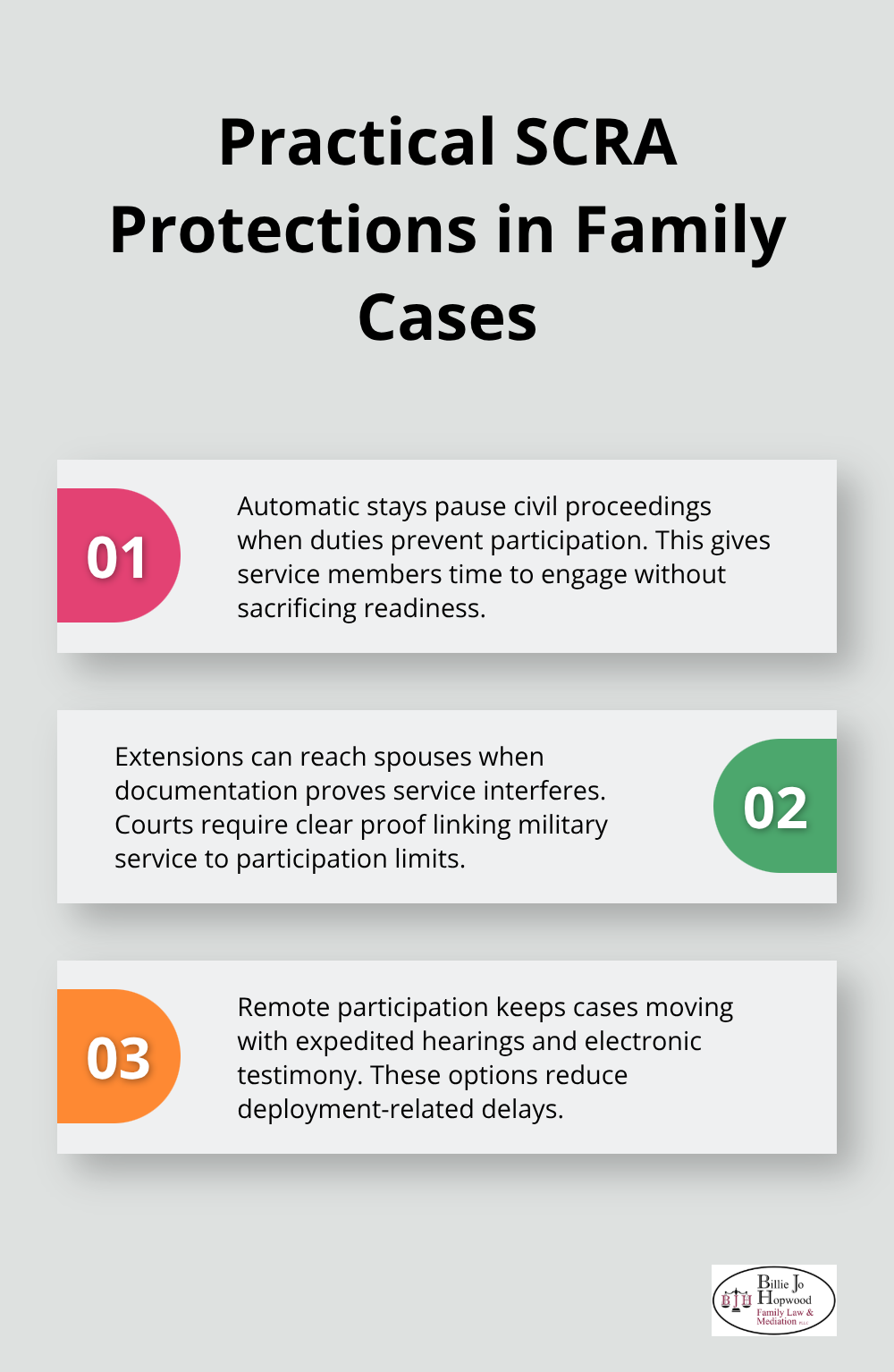
The Servicemembers Civil Relief Act provides military families with powerful but limited legal shields that many families fail to use effectively. Service members can request automatic stays of all civil proceedings, including divorce and custody cases, when military duties prevent their participation. This protection extends to spouses in some circumstances, but courts require specific documentation that proves military service directly interferes with legal participation. The SCRA also allows military parents to request expedited court hearings and electronic testimony when they cannot appear in person, which prevents cases from stalling indefinitely during deployments.
Military Family Life Counselors Offer Strategic Advantages
Military Family Life Counselors provide confidential support services that can strengthen your position in family law proceedings. These counselors help families develop communication strategies and document family dynamics, which courts often consider when they make custody decisions. MFLCs cannot testify in court proceedings, but their documentation of family counseling efforts demonstrates good faith attempts to resolve conflicts outside of litigation. Smart military families use MFLC services to create paper trails that show their commitment to family stability, which influences judges during custody evaluations.
Base Legal Assistance Office Limitations
Base Legal Assistance Offices provide free initial consultations and document preparation, but they cannot represent service members in contested family law cases or provide strategic litigation advice. These offices excel at preparation of simple divorce paperwork and explanation of military benefit divisions, but they refer complex cases to civilian attorneys. Military legal assistance attorneys cannot advise on state-specific family law variations or represent clients in court (which limits their usefulness for contested custody battles or property division disputes). Service members need civilian attorneys for complex cases that require courtroom representation and strategic planning.
State-Specific Military Protections Vary Significantly
Many states have enacted their own laws that enhance protections for servicemembers beyond federal SCRA requirements. These state laws often prevent permanent custody changes during military deployment and require courts to reinstate original custody orders upon return from deployment. The burden of proof lies with the non-deployed parent when they seek to alter custody arrangements in states with military-specific laws. Service members must research their state’s specific military family law protections because these laws vary dramatically across jurisdictions.
Final Thoughts
Military family law success demands proactive action and strategic decisions that civilian families never face. Service members must establish comprehensive Family Care Plans before deployments, create delegation clauses in custody agreements, and document all military-specific income sources for accurate support calculations. The most successful military families address deployment scenarios in their original custody agreements rather than seek emergency modifications when orders arrive.
Attorneys who understand both federal military protections and state-specific family law variations make the difference between favorable outcomes and costly mistakes. Base Legal Assistance Offices provide valuable initial guidance, but contested cases require civilian representation with courtroom experience and strategic litigation skills. Complex military family law cases need attorneys who can navigate both federal regulations and state court systems effectively.
We at Billie Jo Hopwood Family Law & Mediation, PLLC help military families through divorce, custody, and support matters in Melbourne, Florida. Military families should maintain ongoing relationships with Military Family Life Counselors and stay informed about state laws that affect their rights (particularly during relocations between different jurisdictions). Regular consultation with knowledgeable attorneys prevents small issues from becoming major legal problems during deployments or relocations.