
Unmarried fathers in Melbourne, Florida often face uncertainty about their legal standing and rights to their children. Without established paternity, fathers have no automatic claim to custody, visitation, or decision-making authority.
At Billie Jo Hopwood Family Law & Mediation, PLLC, we help fathers navigate paternity mediation in Melbourne by working through this process outside the courtroom. Mediation offers a faster, more affordable path to establishing fatherhood while protecting everyone’s interests.
What Paternity Means Under Florida Law
Florida law requires biological fathers to take affirmative steps to establish legal paternity if they’re not married to the mother. Without this legal establishment, you have zero parental rights-no custody claims, no visitation authority, and no say in medical or educational decisions. Florida Statute 742.011 provides three primary pathways to establish paternity: signing a Voluntary Acknowledgment of Paternity form, obtaining a court order through litigation, or reaching an agreement through mediation.
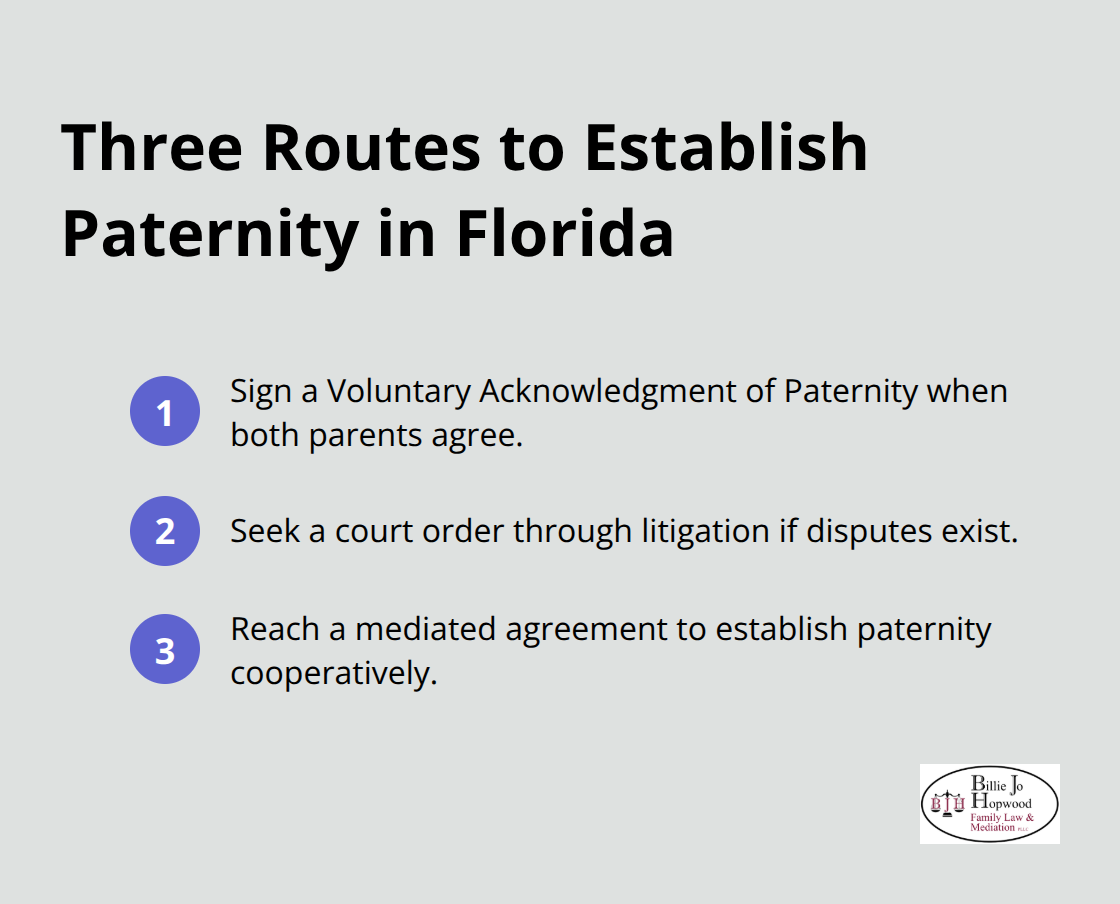
Three Routes to Establish Paternity
The state treats paternity establishment seriously because it directly impacts child support obligations, inheritance rights, and access to the father’s health insurance and Social Security benefits. Each pathway carries different timelines and costs. The Voluntary Acknowledgment form offers the quickest route when both parents agree, while litigation and mediation require more time but provide stronger legal protections if disputes exist.
Why Fathers Cannot Afford to Wait
Many fathers underestimate how quickly they need to act. Once a child reaches age 18, establishing paternity becomes significantly more complicated, though Florida law allows paternity cases to proceed until the child turns 19. The financial stakes are substantial-according to the U.S. Census Bureau, over 24 million children live without their biological father in the home, and child support enforcement becomes nearly impossible without established paternity.
Courts in Brevard County, where Melbourne is located, handle approximately 200-300 paternity cases annually, reflecting how common this issue remains for local families. Fathers who delay this process often face mounting complications that could have been prevented with early action.
Legal Standing and Parental Rights
Establishing paternity gives fathers concrete legal standing to pursue custody or visitation arrangements. Without it, mothers can relocate with the child, deny visitation, and make all major decisions unilaterally. Fathers who establish paternity gain the right to petition for parenting time, seek custody modifications, and access school and medical records.
The financial dimension cuts both ways-fathers gain inheritance and succession rights for their children, but also assume legal child support obligations. Many fathers delay this process believing they’ll handle arrangements informally with the mother, then face devastating consequences when the relationship deteriorates.
Moving Forward with Mediation
The reality is that establishing paternity early provides peace of mind and prevents future conflicts from escalating into expensive litigation. Florida courts favor biological parents having legal relationships with their children, making paternity establishment a straightforward process when both parties cooperate through mediation rather than fighting in court. Understanding these legal foundations sets the stage for exploring how mediation actually works in practice.
How Paternity Mediation Works in Melbourne, Florida
Gathering Documentation and Initial Assessment
The mediation process starts with an intake meeting where the mediator collects documentation from both parents. You’ll need to bring birth certificates, any existing agreements, proof of income, and medical records showing the child’s healthcare needs. The mediator reviews Florida’s child support guidelines, which calculate obligations based on combined parental income and the percentage of time each parent spends with the child.

Florida Statute 61.30 sets the guideline amount for combined parental income up to $235,000 annually, though cases exceeding this threshold require additional analysis. Having these documents ready accelerates the process significantly-most initial assessments take 30 to 60 minutes rather than weeks if paperwork arrives incomplete.
Understanding Financial Obligations Upfront
The mediator explains that paternity establishment triggers automatic child support obligations, so fathers need clear understanding of their financial responsibilities before signing any agreement. This conversation happens early because it shapes every other decision in the mediation. Fathers who grasp their obligations from the start make more realistic proposals about what they can actually commit to long-term. The mediator won’t pressure either parent, but both parties must acknowledge the financial reality that Florida law imposes once paternity is established.
Resolving Disagreements Through Structured Dialogue
Once documentation is complete, mediation sessions focus on resolving specific disagreements between parents. The mediator doesn’t decide outcomes like a judge would; instead, the mediator helps both parties communicate about custody schedules, financial support amounts, and decision-making authority regarding education and healthcare. Many fathers discover during these sessions that mothers have legitimate concerns about financial stability and reliability that require direct discussion. The typical mediation process in Brevard County concludes within two to four weeks when both parents engage cooperatively, compared to six to twelve months for contested litigation.
Common Sticking Points and Realistic Solutions
Common disagreements include whether the father will contribute to childcare costs beyond base support, how medical decisions get made, and whether the arrangement includes provisions for college expenses. Fathers who arrive prepared with realistic proposals about their work schedules and financial capacity reach agreements faster than those expecting the mediator to convince the mother to accept minimal involvement. Flexibility on these points often determines whether mediation succeeds or stalls.
From Agreement to Court Approval
Once both parties reach consensus, the mediator drafts a settlement agreement that gets filed with the court, and the judge typically approves it without requiring a full hearing since both parents have already agreed to the terms. This final step formalizes everything you’ve negotiated, giving both parents legal protection and clarity about their rights and responsibilities moving forward. With paternity established and a mediated agreement in place, fathers can now focus on the practical realities of parenting time and building a stable relationship with their child-which brings us to how custody and visitation arrangements actually function in Melbourne.
Why Mediation Costs Less and Resolves Faster
The Financial Reality of Litigation Versus Mediation
Litigation over paternity in Brevard County routinely stretches six to twelve months, with attorney fees accumulating at rates between $150 and $350 per hour depending on complexity and experience level. A contested paternity case requires discovery, depositions, court appearances, and potentially trial preparation-costs that easily exceed $5,000 to $15,000 for fathers who lack resources to navigate the process alone.
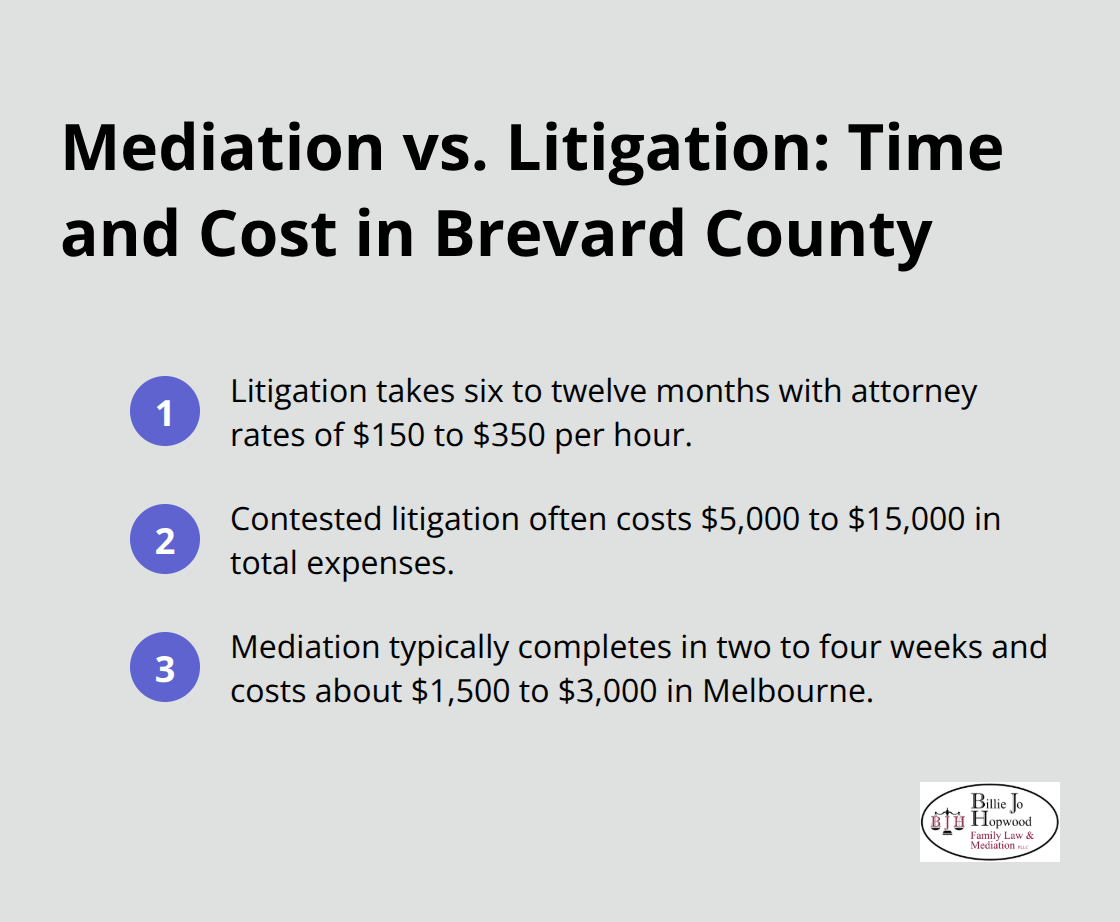
Mediation condenses this timeline to two to four weeks and reduces total expenses to roughly $1,500 to $3,000 in most Melbourne cases, including mediator fees and basic legal documentation.
The financial difference matters enormously for fathers already facing child support obligations. Money spent on litigation is money unavailable for actually supporting the child. Fathers who delayed mediation often paid substantially more in legal fees than they would have through a straightforward negotiated process. Courts in Florida don’t reward protracted disputes-judges expect reasonable parents to resolve paternity matters cooperatively, and they penalize parties who force unnecessary litigation through fee-shifting provisions that can add hundreds or thousands more to the losing party’s bill.
How Mediation Protects Your Relationship with Your Child
The emotional toll of courtroom conflict damages relationships that fathers will maintain for decades. Contested litigation requires both parents to attack each other’s credibility, parenting capacity, and financial reliability-testimony and evidence that poisons future cooperation on custody schedules and parenting decisions. Mediation keeps discussions focused on practical arrangements rather than character attacks, which means both parents retain dignity and can actually communicate about their child’s needs after the agreement is signed.
Fathers gain meaningful control over outcomes through mediation because they sit at the negotiation table rather than hoping a judge interprets their situation favorably. You decide what custody schedule works with your employment, what financial contributions you can realistically sustain, and how medical and educational decisions get made-the mediator doesn’t impose solutions, both parents do.
Why Mediated Agreements Actually Work Long-Term
This collaborative approach produces agreements that fathers actually follow long-term because they helped create them, rather than court orders that feel punitive and breed resentment. Mothers similarly report higher satisfaction with mediated outcomes because they had genuine input instead of waiting for judicial decisions that might contradict their preferences. The speed of mediation also means establishing paternity happens before conflicts calcify into permanent hostility, protecting the father-child relationship from damage that contested litigation inevitably inflicts.
Final Thoughts
Paternity mediation in Melbourne, Florida provides unmarried fathers with a practical pathway to establish legal rights while protecting their child’s interests and their own financial stability. The process avoids the adversarial nature of courtroom battles, allowing both parents to maintain dignity and focus on what matters most-creating a stable arrangement for their child’s future. Fathers who choose paternity mediation Melbourne typically resolve establishment within two to four weeks rather than spending six to twelve months in litigation.
The financial reality matters because money spent on legal fees is money unavailable for actually supporting your child. Mediation generally costs $1,500 to $3,000 compared to $5,000 to $15,000 for contested court cases, and this difference directly impacts your ability to meet child support obligations long-term. When fathers and mothers negotiate directly with a mediator’s guidance, they avoid the character attacks and credibility challenges that courtroom conflict demands, which means both parents can communicate effectively about custody schedules, medical decisions, and parenting time after the agreement is finalized.
Establishing paternity early prevents complications that multiply over time, and fathers who act decisively gain inheritance rights, access to medical records, and the legal standing to pursue meaningful custody arrangements. Contact Billie Jo Hopwood Family Law & Mediation, PLLC to discuss how mediation can work for your situation in Melbourne.