
Paternity disputes can feel overwhelming, especially when children are involved. The paternity mediation process offers a faster, less adversarial path than court litigation.
We at Billie Jo Hopwood Family Law & Mediation, PLLC help families navigate these sensitive matters while protecting everyone’s rights and interests. This guide walks you through each step so you can move forward with clarity and confidence.
What Paternity Mediation Actually Solves
Paternity disputes involve far more than establishing biological relationships. When paternity is contested or uncertain, it affects child support obligations, custody rights, inheritance claims, and access to medical history. Court litigation forces these issues through an adversarial system where one parent wins and the other loses, creating lasting resentment that harms children caught in the middle.
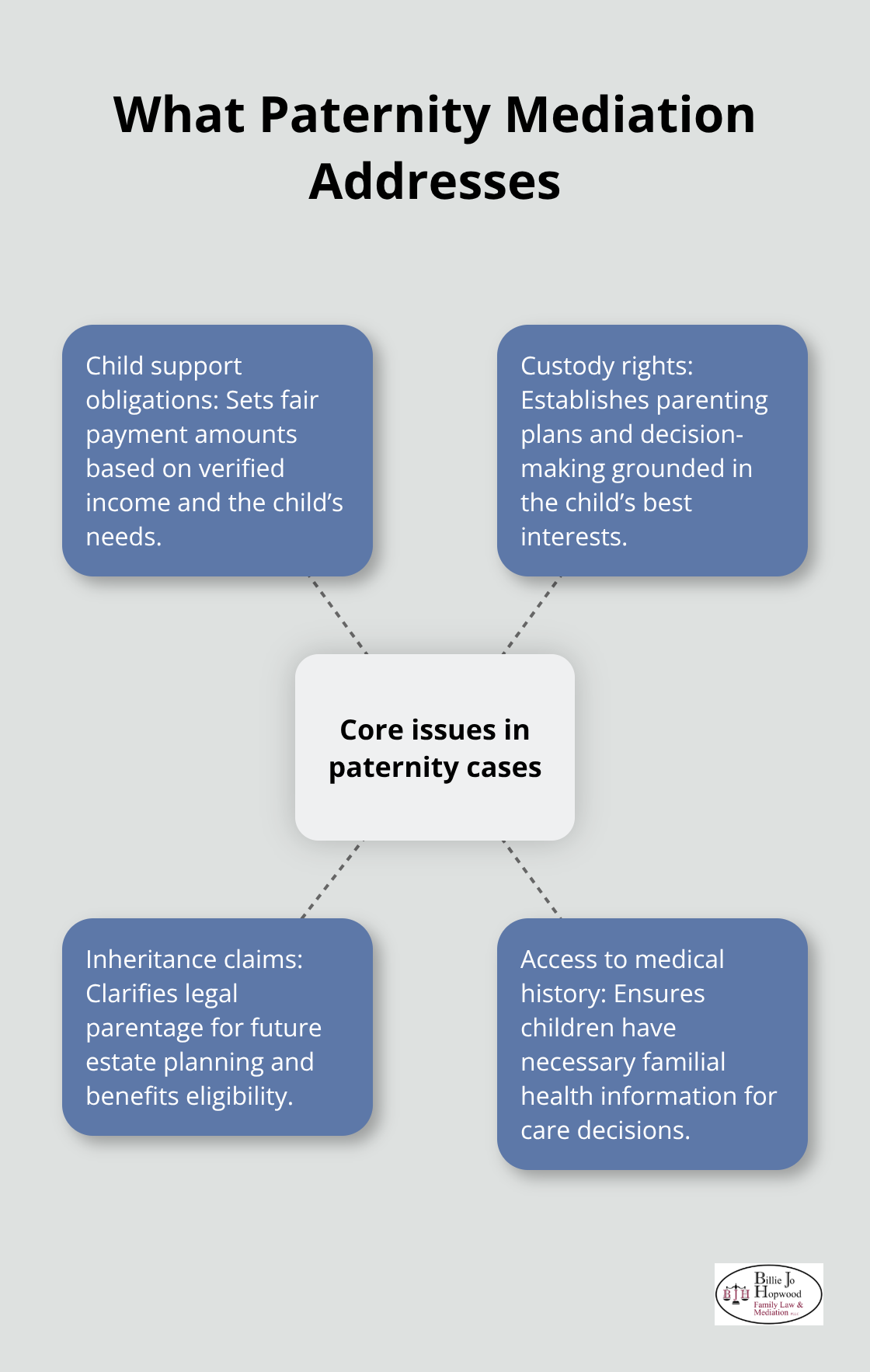
Mediation takes a completely different approach-both parents work toward solutions that actually serve the child’s interests rather than fighting over who prevails in front of a judge.
The Real Difference Between Mediation and Litigation
Court cases for paternity disputes typically take 6 to 12 months from filing to resolution, with costs ranging from $5,000 to $15,000 or higher depending on complexity and how contested the case becomes. Mediation compresses into 4 to 8 weeks with costs typically between $1,500 and $4,000 total. The financial difference matters significantly when families are already stretched thin. More importantly, mediation keeps decisions in your hands rather than handing them to a judge who knows nothing about your family’s specific circumstances.
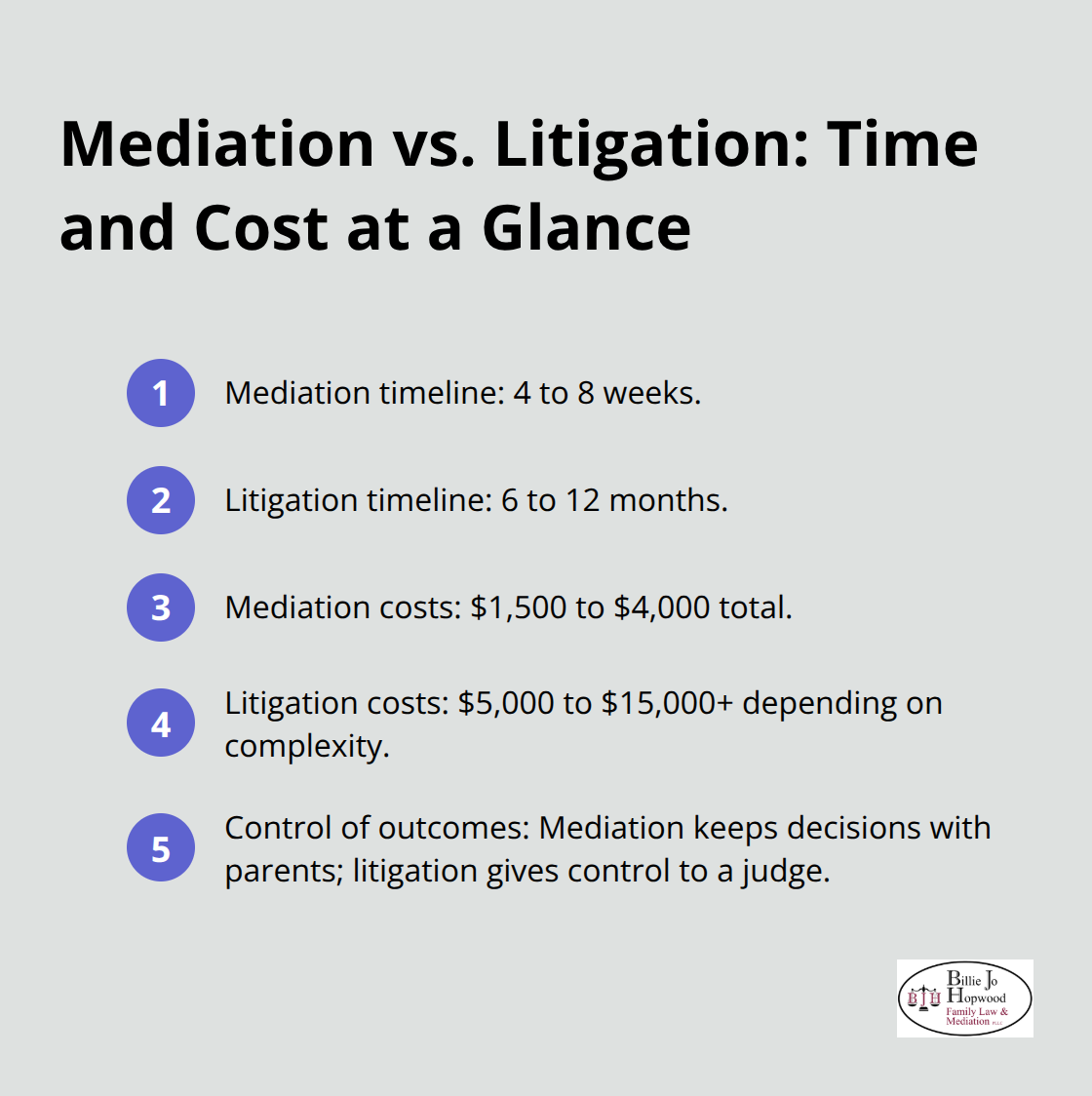
In litigation, a judge decides custody arrangements, support amounts, and visitation schedules based on state guidelines and limited courtroom testimony. In mediation, you and the other parent negotiate these terms directly with a neutral mediator guiding the process, which means you retain control over outcomes that will affect your life for the next 18 years.
Why Mediation Protects Your Child Better
Children benefit measurably when parents resolve paternity matters collaboratively rather than adversarially. Research from the American Psychological Association shows children experience less emotional stress when parents work together toward solutions instead of battling in court. Mediation also produces more sustainable agreements because both parents helped create them. When a judge imposes an order, one parent often feels resentful and may resist compliance or look for ways to modify it later, creating ongoing conflict. Agreements reached through mediation have significantly higher voluntary compliance rates because each parent has genuine buy-in to the terms they negotiated.
Moving Forward With the Right Support
Understanding these differences positions you to make an informed choice about how to handle your paternity matter. The next section walks you through the actual steps involved in the mediation process, so you can prepare for what happens at each stage and know what to expect when you sit down with a mediator.
How the Paternity Mediation Process Actually Works
Initial Consultation and the Agreement to Mediate
The paternity mediation process starts with an initial consultation where you meet with a neutral mediator to discuss whether mediation fits your situation. The mediator explains how the process works, what happens at each stage, and answers questions about confidentiality and costs. This meeting is also when you decide whether to proceed and sign an agreement to mediate, which establishes ground rules for respectful communication and commitment to the process. The mediator cannot force decisions on either party, so both parents must genuinely want to work toward resolution. Most mediators require both parties to attend this consultation together, though some allow separate initial meetings to assess whether mediation is viable. The agreement to mediate typically costs between $300 and $800 and takes 1 to 2 hours to complete. This upfront investment filters out situations where one parent has no real interest in cooperating, saving everyone time and money later.
Information Gathering and Financial Disclosure
Once mediation officially starts, the focus shifts to information gathering and financial disclosure. You and the other parent must exchange complete financial records including income documentation, tax returns, bank statements, and details about existing assets or debts. This transparency matters because child support calculations depend on accurate income figures, and custody arrangements require understanding each parent’s financial capacity to meet the child’s needs. Many parents resist this stage because it feels invasive, but incomplete or dishonest disclosure creates serious problems later. If child support orders are based on falsified income information, courts can modify the agreement and impose penalties. The mediator typically requires both parties to sign a financial affidavit confirming the accuracy of their disclosures. Information gathering usually takes 2 to 4 weeks depending on how quickly parents compile documentation.
Negotiation and Settlement
Once both parties have reviewed each other’s financial information, the negotiation phase begins. This is where the actual problem-solving happens. You and the other parent work with the mediator to discuss child support amounts, custody schedules, visitation rights, and any other terms affecting your child’s welfare and your ongoing relationship. The mediator keeps discussions focused and constructive, preventing conversations from becoming personal attacks or retreating into old grievances. Negotiation typically requires 2 to 4 mediation sessions spaced 1 to 2 weeks apart, giving both parents time to consider proposals and consult with their family law attorney between sessions. An attorney review of any proposed agreement before you sign it protects your rights and confirms compliance with Florida family law requirements. This step matters whether you work with a mediator or handle negotiations independently.
Safeguarding Your Interests During Mediation
Why You Need an Attorney Before Mediation Starts
Mediation works best when you have independent legal counsel reviewing every step. Consult with a family law attorney before your first mediation session, not after you’ve already agreed to terms. An attorney reviews the mediator’s ground rules, explains what you’re agreeing to, and answers questions about Florida family law requirements that affect your case. This upfront consultation prevents costly mistakes that become difficult to fix once you’ve signed a settlement agreement.
Verifying Financial Disclosures and Income Claims
During information gathering, your attorney checks whether the other parent’s financial disclosures are complete and accurate. Many parents omit income sources, underreport business earnings, or fail to mention assets, which directly reduces what you’d receive in child support or affects custody arrangements. Your attorney catches these gaps and instructs the mediator to request clarification or additional documentation. Incomplete financial information undermines the entire mediation process because child support calculations depend on accurate income figures.
Analyzing Settlement Proposals Against Florida Guidelines
Between mediation sessions, your attorney analyzes settlement proposals and explains how proposed child support amounts compare to Florida’s guidelines. The state calculates child support using a formula based on both parents’ gross monthly income, the number of overnight visits each parent has, and childcare costs. Florida courts assume the calculated guideline amount is correct unless one parent proves substantial deviation is warranted. If a proposal falls significantly below guideline amounts without justification, your attorney flags this before you sign anything.
Protecting Your Custody Rights
Custody arrangements require similar scrutiny. Florida law prioritizes the best interests of the child, considering factors like each parent’s involvement in the child’s life, the child’s relationship with extended family, school stability, and each parent’s ability to meet the child’s needs. An attorney confirms any custody proposal aligns with these factors and protects your parental rights going forward. Vague custody language creates disputes later when one parent interprets a term differently than the other.
Documenting Agreements for Legal Compliance
Once you’ve negotiated terms you can live with, documentation becomes critical. The mediator typically drafts a settlement agreement summarizing all terms, but this document needs attorney review before either party signs.
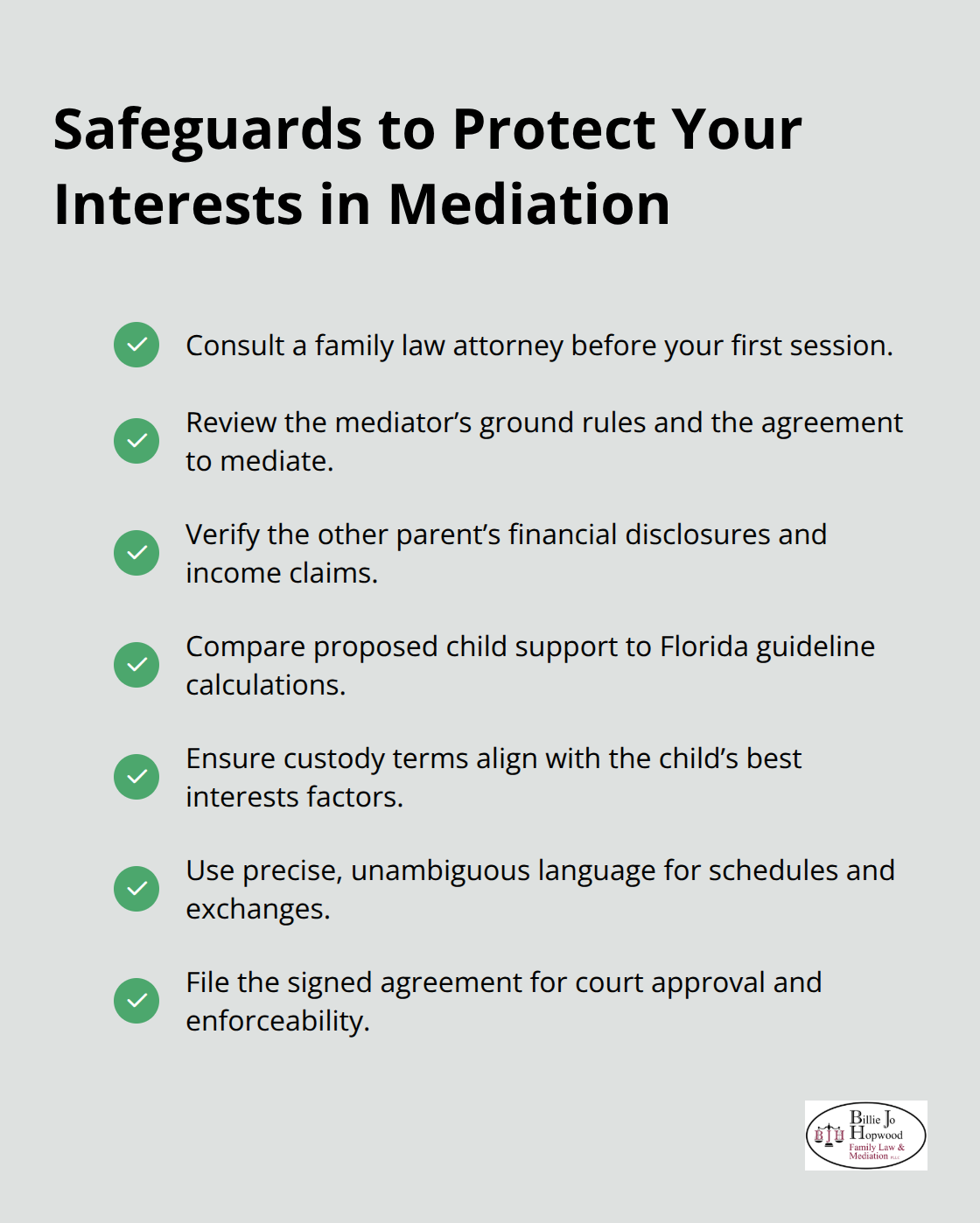
An attorney confirms the agreement complies with Florida statutes, includes all necessary provisions, and clearly defines ongoing obligations like child support payment dates and custody exchange procedures. Ambiguous language in settlement agreements creates conflict every month. For example, a vague custody schedule stating one parent has the child on weekends without specifying which weekends or time exchanges occur causes ongoing disputes. A properly drafted agreement specifies exact dates, times, and locations for all exchanges.
Once both parties sign the settlement agreement, it’s filed with the court. Florida courts generally approve mediated settlement agreements without modification if they meet legal requirements and don’t violate the child’s welfare. This approval converts your private agreement into a court order with legal enforceability. If either parent violates the agreement later, the other can return to court seeking enforcement or modification without starting the entire mediation process over.
Final Thoughts
Paternity mediation compresses what would take 6 to 12 months in court into 4 to 8 weeks, with costs dropping from $5,000 to $15,000 down to $1,500 to $4,000. The paternity mediation process keeps control in your hands rather than handing decisions to a judge who doesn’t know your family. Financial disclosure requirements prevent the other parent from hiding income that affects child support calculations, and attorney review at each stage catches gaps before you sign anything binding.
Your child benefits measurably when you choose collaboration over adversarial court battles. Children experience less emotional stress when parents work together, and agreements both parents helped create have significantly higher voluntary compliance rates. This means fewer future disputes, less ongoing conflict, and a more stable environment for your child to grow up in.
Contact Billie Jo Hopwood Family Law & Mediation, PLLC in Melbourne, Florida to schedule a consultation with someone who understands paternity matters and can guide you through mediation with confidence. The firm assists families through challenging legal situations and can answer your specific questions about how mediation applies to your circumstances. Your first step is a conversation that clarifies your options and positions you to protect what matters most.