
Divorce doesn’t have to drag on for years. Quick divorce mediation in Melbourne, Florida offers a path forward that’s both faster and fairer than traditional court battles.
At Billie Jo Hopwood Family Law & Mediation, PLLC, we’ve seen firsthand how mediation transforms what could be an exhausting process into something manageable. When both parties work together with a neutral mediator, resolutions that once took months can happen in weeks.
Why Mediation Cuts Your Divorce Timeline in Half
Court backlogs in Florida are real, and they add months-sometimes years-to your divorce. The judicial system moves slowly by design. Contested divorces typically take 6 to 12 months or longer before trial, and that’s only if no delays occur. Mediation in Melbourne, Florida works differently. Instead of waiting for court schedules, you control the pace.
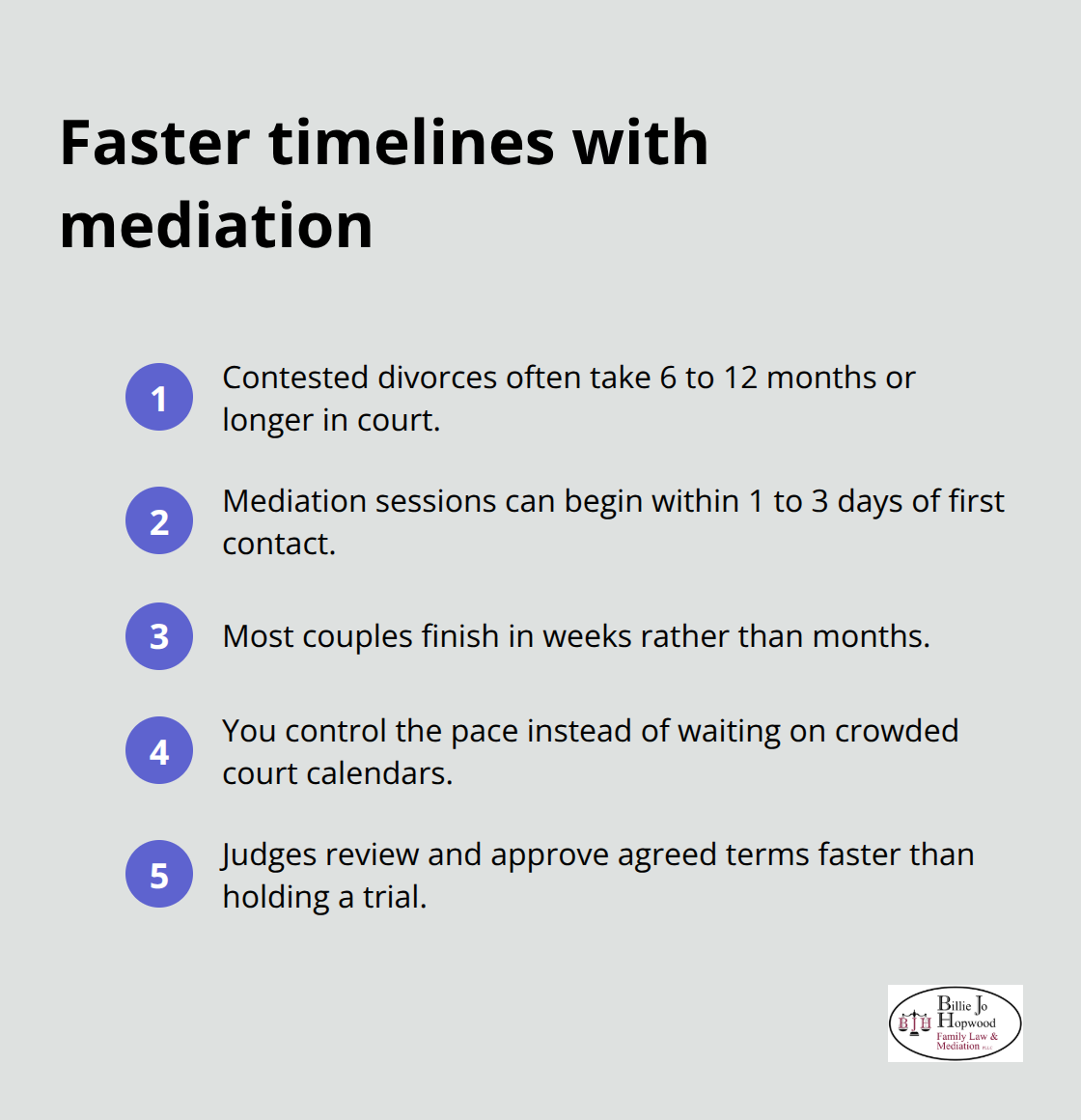
Sessions happen within 1 to 3 days of your initial contact, and most couples resolve their entire divorce in weeks rather than months. A mediated agreement moves through the court system faster because the judge simply reviews and approves what both parties have already agreed to, rather than holding a trial to decide everything from scratch.
The Real Cost of Courtroom Delays
Litigation doesn’t just take longer-it multiplies your legal bills. Contested divorces in Florida cost $15,000 to $50,000 per person or more, depending on complexity. Mediation typically costs a fraction of that amount.
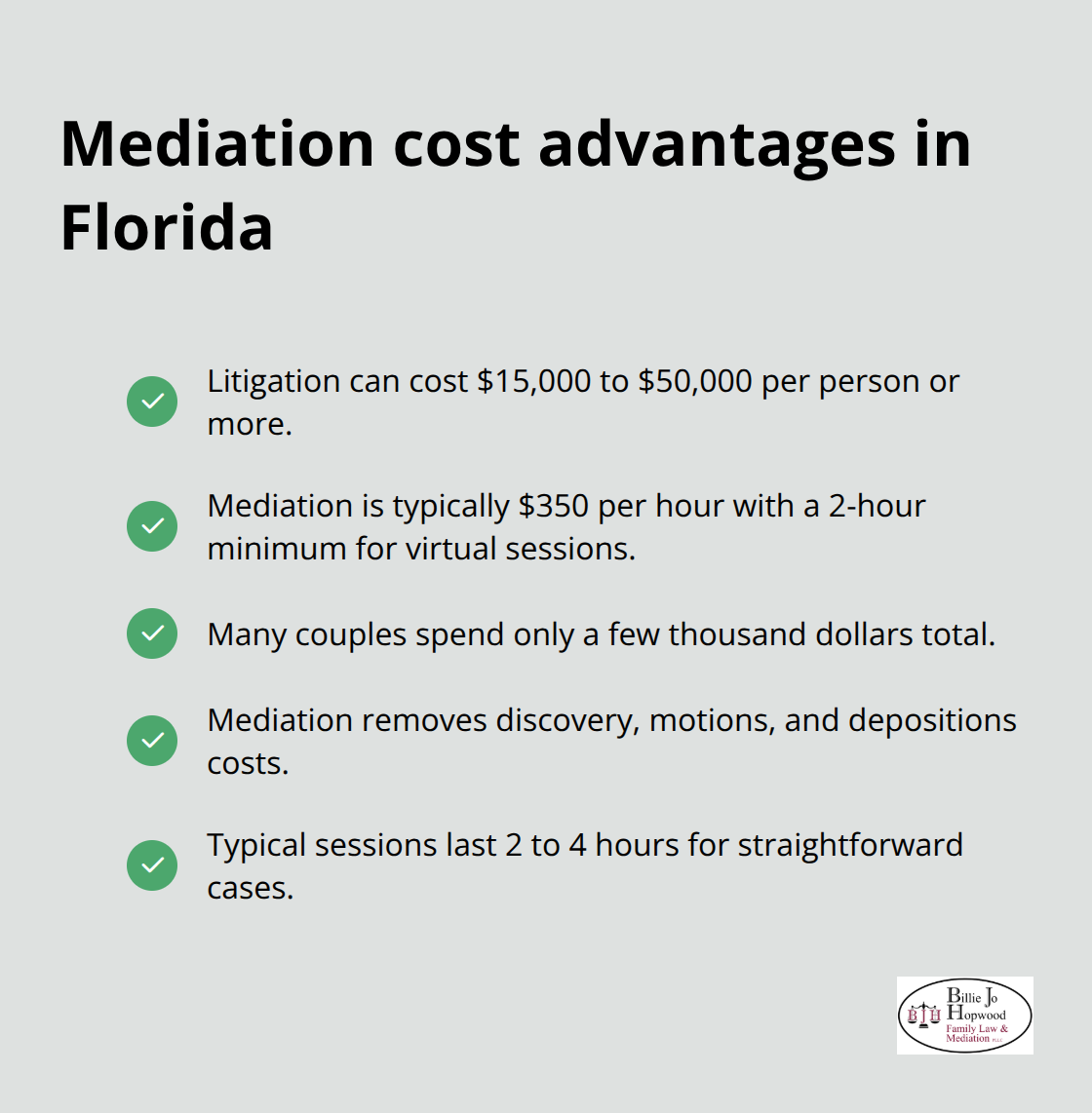
Standard mediation runs $350 per hour with a 2-hour minimum for virtual sessions, meaning many couples spend only a few thousand dollars total to resolve their entire case. Every month your divorce stays in the court system, you pay your attorney for discovery, motions, depositions, and appearances. Mediation eliminates those layers of expense. You move straight to negotiating the issues that matter: property division, child custody, and support amounts. Sessions typically last 2 to 4 hours for straightforward cases, though complex situations may need multiple sessions spread over several weeks.
Making Decisions Without Judge Intervention
In court, a judge decides everything. In mediation, you and your spouse decide everything. A neutral mediator facilitates conversations but doesn’t impose solutions. This collaborative approach removes the unpredictability of litigation. You know exactly what you’re agreeing to before anything becomes final. You can propose creative solutions that a court would never consider-custom parenting schedules that fit your family’s actual routines, property divisions that make sense for your specific situation, or support arrangements that reflect both parties’ real financial capacities. The mediator ensures both parties have equal voice and that neither person dominates the conversation. If one spouse tries to hide assets or refuses to negotiate in good faith, mediation can be halted and the case moves to court, but most people find the openness and control of mediation far preferable to the adversarial courtroom environment.
What Happens When Both Parties Participate Fully
Mediation works fastest when both spouses come prepared and willing to negotiate. You’ll want to bring comprehensive financial records-tax returns, pay stubs, bank statements, mortgage documents, and retirement account statements. This preparation (combined with honest disclosure from both sides) allows the mediator to move quickly through each issue. The mediator creates ground rules that keep discussions productive and emotions from derailing progress. When both parties engage in good faith, they often narrow disputes significantly, even if they don’t reach full agreement on every point. Unresolved issues can then move to court with a clearer picture of what actually divides you, which reduces trial time and attorney fees considerably.
Why Fair Resolutions Matter in Divorce Mediation
Control Over Your Own Outcome
Fairness in divorce mediation isn’t about splitting everything down the middle. It’s about reaching agreements that actually reflect your family’s unique circumstances. When you mediate, both you and your spouse retain control over the outcome instead of handing that power to a judge who knows nothing about your situation. A judge sees your case for a few hours and applies general legal rules. A mediator works with you over multiple sessions to understand what matters most to each of you. This fundamental difference shapes whether your final agreement feels fair or imposed.
In Florida, courts divide assets and debts fairly under equitable distribution principles, but fairness as defined by law isn’t always fairness as it applies to your life. Mediation lets you define fairness for yourselves. If one spouse needs the family home to maintain stability for the children while the other prioritizes retirement accounts, mediation can accommodate that trade. If both parents want flexible time-sharing that adjusts seasonally rather than a rigid schedule, you can build that agreement. A court cannot offer this level of customization because judges apply standard formulas to standard situations.
How Mediators Protect Both Parties Equally
The mediator’s role is to keep negotiations balanced, not to decide winners and losers. A neutral mediator enforces ground rules that prevent one person from dominating conversations or intimidating the other into unfavorable terms. The mediator also surfaces information gaps that could lead to unfair agreements later. If one spouse hasn’t fully disclosed financial assets or earning capacity, the mediator identifies this during preparation and requires transparency before moving forward.
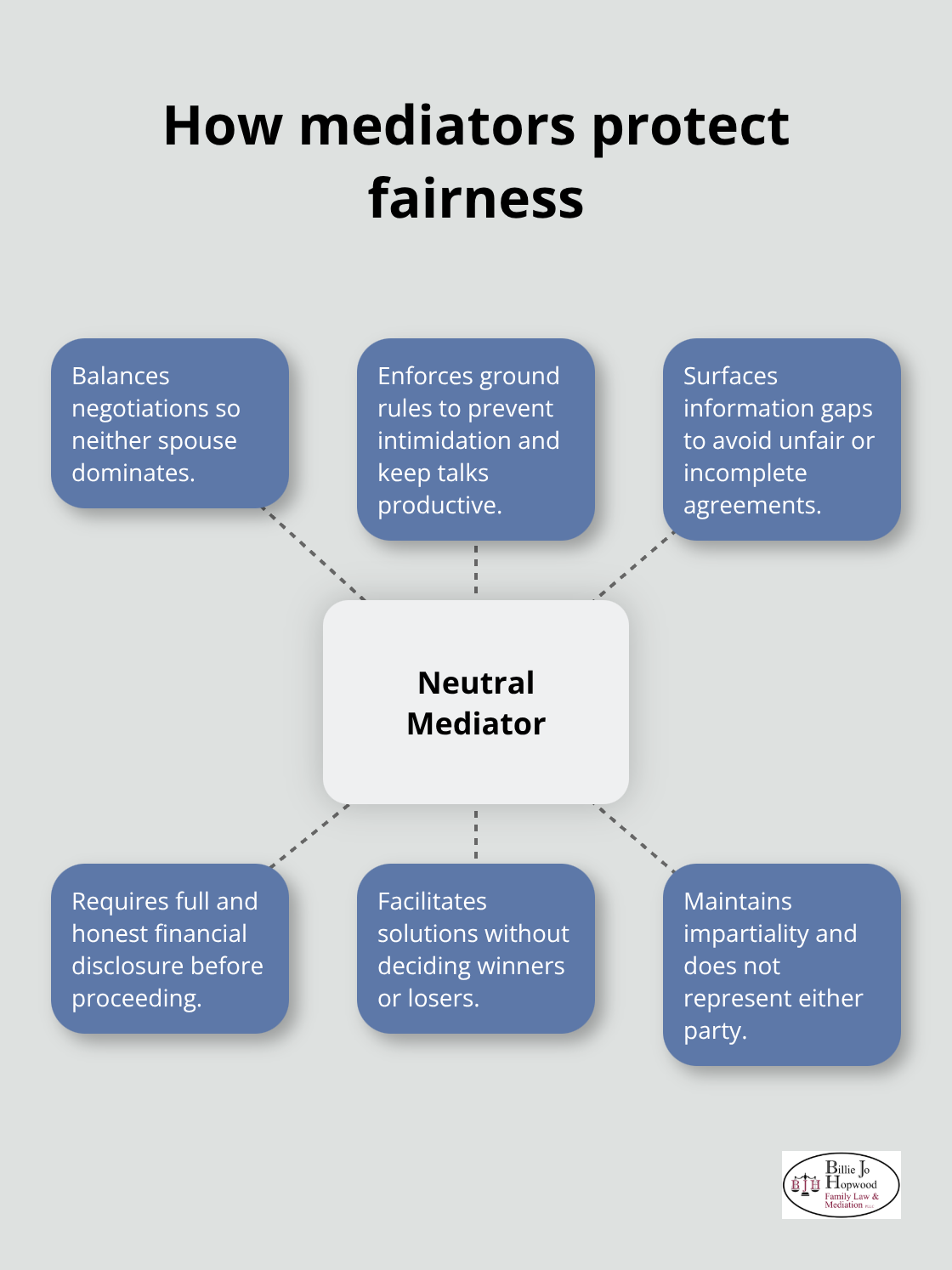
Florida Statute § 44.1011 defines the mediator’s responsibility to inform participants about the process and maintain impartiality throughout. This protects both parties equally. The mediator does not represent either side; instead, the mediator facilitates conversations that help you and your spouse reach mutually acceptable solutions.
Tailored Solutions Beyond Standard Court Orders
Mediation addresses costs that courts often overlook. Child support in Florida follows statutory formulas based on combined parental income, but mediation lets you negotiate how you’ll handle extracurricular expenses, healthcare costs, and education beyond what the formula covers. Property division becomes more nuanced too. Instead of selling assets to divide proceeds, you might keep the home while your spouse keeps retirement accounts of equivalent value, avoiding forced liquidation and tax consequences.
These tailored solutions emerge because both parties have voice and time to explore options that a rushing court docket would never permit. You craft agreements that actually work for your family’s real life, not agreements that fit a judge’s standard template. This customization often leads to better compliance after divorce because both parties helped shape the terms they live under.
When you move forward with mediation, you’ll want to understand what happens when both spouses come prepared and willing to work together toward resolution.
Common Misconceptions About Fast Divorce Mediation in Melbourne, Florida
Speed Does Not Mean Rushed or Unfair Decisions
The biggest fear people have about fast mediation is that speed creates unfairness. This fear is backwards. Mediation does not rush decisions-it eliminates the waste that makes court cases drag on. Court delays happen because judges manage hundreds of cases, discovery takes months, and each side files motions that push hearings further into the future. None of that waste exists in mediation. You sit down with a neutral mediator, both parties present their financial information upfront, and you negotiate solutions directly. This is not rushed; it is efficient. Florida courts typically require mediation before trial anyway under Florida Statute § 44.102, so mediation is not an optional shortcut-it is the standard process designed to move cases forward responsibly. The mediator’s role includes making sure both parties understand what they are agreeing to and that neither person faces coercion into unfavorable terms. If one spouse shows up unprepared, has not disclosed assets, or refuses to participate honestly, the mediator stops the process and reports an impasse to the court.
Mediation Protects Your Rights and Interests
Your rights in mediation are actually safer than in litigation because you control the outcome instead of hoping a judge rules in your favor. In court, a judge applies Florida’s equitable distribution rules, which means assets and debts get divided fairly but not necessarily in a way that makes sense for your situation. Mediation lets you propose alternatives that protect your interests better. If you have a small business, you might keep it intact rather than forcing a sale to divide proceeds-something a court could order but mediation lets you avoid. If child support calculations under Florida’s statutory formula do not reflect one parent’s legitimate financial needs, you can negotiate adjustments that work for both parties. The mediator does not make these decisions for you; you and your spouse do, which means you are not gambling on a judge’s interpretation of fairness.
Faster Process Saves Money on Legal Fees
Cost savings reinforce this protection. Contested litigation costs $15,000 to $50,000 per person or more, while mediation typically runs $350 per hour with most cases resolving in a few thousand dollars total per party. That financial difference matters enormously. When you spend less on the process, more of your assets stay in your pocket instead of going to attorney fees. You also avoid the discovery costs that litigation demands-depositions, document requests, and expert witnesses add thousands to litigation bills. Mediation sessions typically last 2 to 4 hours for straightforward cases, and even complex situations rarely require more than a few sessions spread over weeks. This compressed timeline reduces legal fees directly because your attorney spends less time preparing for hearings and managing court schedules. When you are not hemorrhaging money on litigation costs, you can invest in solutions that matter-whether that is securing better parenting time, protecting retirement accounts, or making sure child support covers actual expenses.
Final Thoughts
Quick divorce mediation in Melbourne offers you speed without sacrifice. You move through the process in weeks instead of months, you spend thousands instead of tens of thousands, and you keep control over decisions that matter most to your family. The collaborative nature of mediation means both parties shape the outcome together, which produces agreements that actually work in real life rather than court orders that feel imposed.
Fair resolutions come from this collaborative problem-solving. When you sit down with a neutral mediator instead of facing off in court, you propose creative solutions tailored to your family’s actual needs. You negotiate extracurricular expenses, healthcare costs, and parenting schedules that fit your routines, and you divide assets in ways that make financial sense for both parties. The financial reality reinforces this advantage: contested litigation costs $15,000 to $50,000 per person or more, while mediation typically costs a fraction of that amount, with most cases resolving in just a few thousand dollars total per party.
At Billie Jo Hopwood Family Law & Mediation, PLLC in Melbourne, Florida, we guide families through mediation with compassion and clarity. Contact us to begin your mediation process and see how quick divorce mediation in Melbourne can work for your situation.