
An uncontested modification in Melbourne Florida gives parents a practical way to update a parenting plan when life has changed and both of you agree on what should come next. Children grow, school schedules shift, jobs change, and a time-sharing arrangement that worked a few years ago may no longer fit your family’s daily routine. When you and the other parent already see eye to eye on the changes, the goal is to make them official without turning a cooperative decision into a courtroom battle.
At Billie Jo Hopwood Family Law & Mediation, PLLC, we guide Melbourne and Brevard County parents through uncontested modifications and family law mediation so you know exactly what to expect. This guide explains what Florida law requires to change a parenting plan, how the agreed modification process usually works, and the mistakes that can turn an agreement into a dispute, so you can move forward with confidence.
What an Uncontested Modification Actually Means in Florida
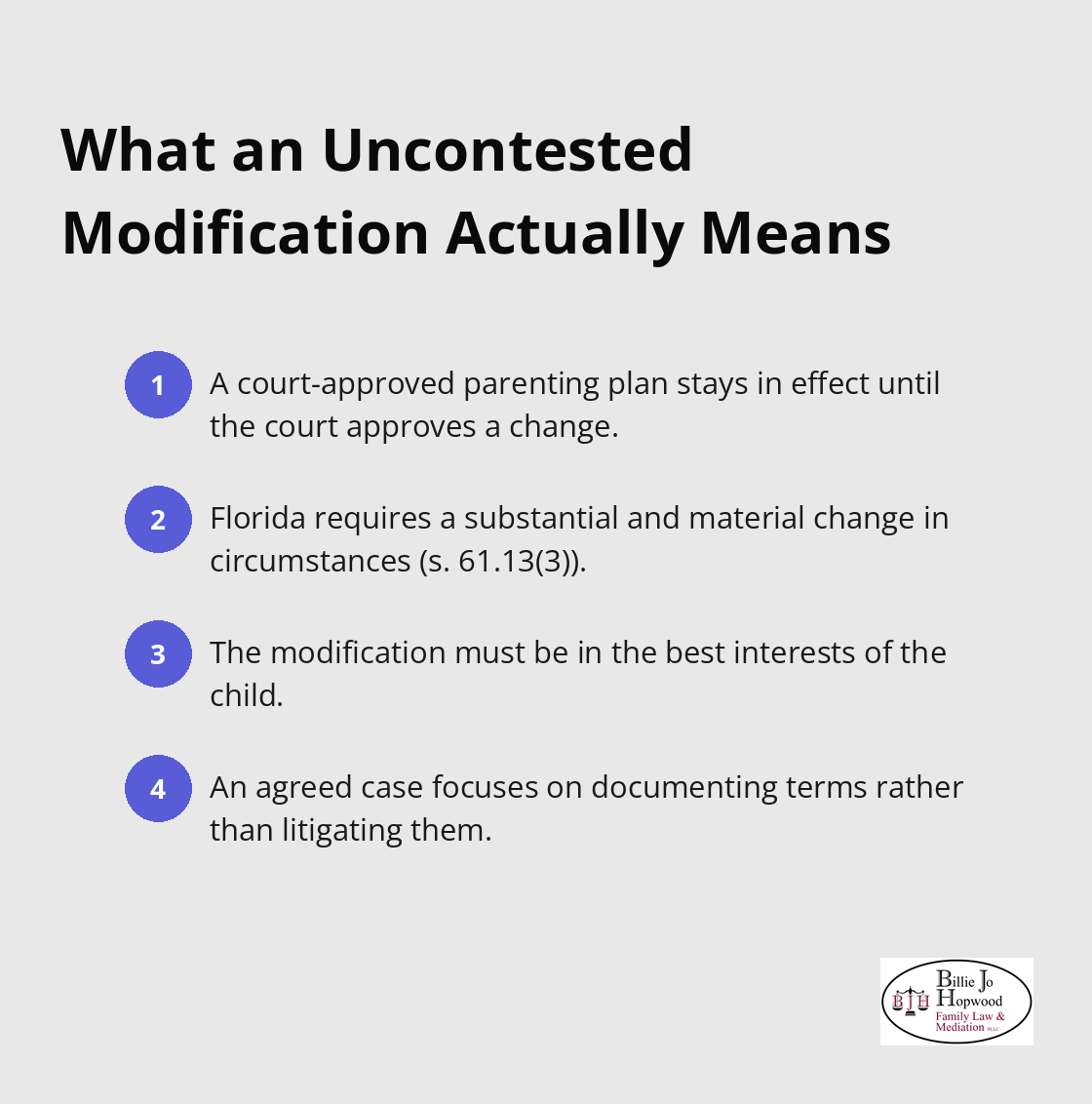
A parenting plan approved by a Florida court is a court order, not just an informal understanding between parents. Even when both parents agree that something needs to change, the existing plan generally stays in effect until the court approves a modification. An uncontested modification is simply a modification case in which the parents have reached agreement on the new terms, which allows the process to focus on documenting and approving those terms rather than litigating them.
The Legal Standard for Changing a Parenting Plan
Florida sets a clear standard for any change to parental responsibility or time-sharing. Section 61.13(3), Florida Statutes, states that a determination of parental responsibility, a parenting plan, or a time-sharing schedule may not be modified without a showing of a substantial and material change in circumstances and a determination that the modification is in the best interests of the child. The same subsection provides that the best interests of the child must be the primary consideration when establishing or modifying a parenting plan. Agreement between parents does not remove these requirements, but a well-documented agreement explaining what has changed and why the new plan serves the children can make the court’s review much more straightforward.
Common Reasons Parents Agree to Update a Plan
Many modifications grow out of ordinary life changes rather than conflict. A child may start middle school with a new schedule, take on sports or activities that change weekday routines, or simply need a different arrangement as they get older. A parent’s work hours may change, or one parent may move closer to the other. Section 61.13(3) specifically recognizes that if the parents lived more than 50 miles apart when the last time-sharing order was entered and a parent moves within 50 miles of the other parent, that move may be considered a substantial and material change in circumstances, so long as the modification is in the child’s best interests.
What a Modified Parenting Plan Must Cover
A modified plan must still meet Florida’s minimum requirements. Section 61.13(2)(b) provides that a parenting plan approved by the court must, at a minimum, describe in adequate detail how the parents will share and be responsible for the daily tasks associated with the upbringing of the child, include the time-sharing schedule arrangements, designate who will be responsible for health care, school-related matters, and other activities, and describe the methods and technologies the parents will use to communicate with the child. Unless both parents agree otherwise in writing, the plan must also designate authorized locations for exchanging the child. When you update a plan, it is wise to review every one of these areas rather than only the schedule you set out to change.
How the Uncontested Modification Process Works
When parents agree, the modification process is usually more predictable and less stressful than a contested case. It still involves specific court filings and careful drafting, and taking each step in order helps the case move smoothly toward approval.
Starting With the Right Court and Petition
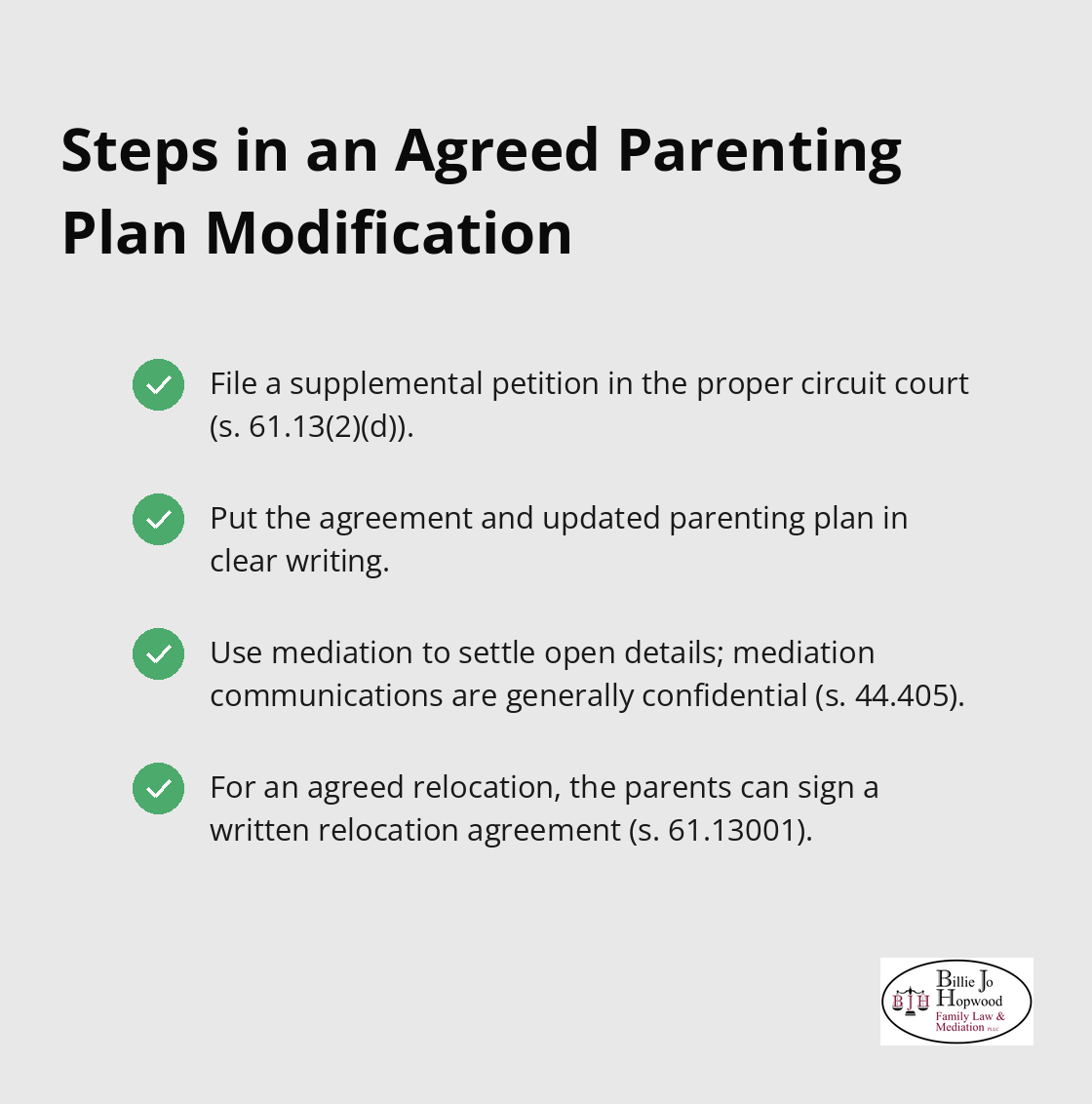
A modification is requested through a supplemental petition filed in the circuit court. Section 61.13(2)(d) provides that the circuit court in the county in which either parent and the child reside, or the circuit court in which the original order approving or creating the parenting plan was entered, may modify the parenting plan. For many Melbourne families, that means the Eighteenth Judicial Circuit in Brevard County. The Florida Supreme Court has approved Family Law Form 12.905(a), the Supplemental Petition to Modify Parental Responsibility, Visitation, or Parenting Plan/Time-Sharing Schedule and Other Relief, which explains the change in circumstances and the modification being requested. The Eighteenth Judicial Circuit also publishes a Brevard case checklist listing the supporting documents that typically accompany this petition.
Putting the Agreement in Writing
The heart of an uncontested modification is a clear, written agreement and an updated parenting plan that reflects exactly what the parents have decided. That document should spell out the new regular schedule, holidays, school breaks, transportation, exchanges, communication, and decision-making responsibilities. It should also state when the new arrangement takes effect and which parts of the existing order remain unchanged. Vague terms such as “reasonable time-sharing” may feel flexible today but often become the source of disagreements later, so precise language protects both parents and the children.
Using Mediation to Finalize the Details
Even parents who agree on the big picture sometimes need help working through the details. Family law mediation gives both parents a structured setting with a neutral mediator to resolve open questions before anything is filed or approved. Section 44.102(2)(c), Florida Statutes, provides that in circuits in which a family mediation program has been established, and upon a court finding of a dispute, the court shall refer all or part of custody, visitation, or other parental responsibility issues to mediation. Section 44.405 adds that, with limited exceptions, all mediation communications shall be confidential, which encourages open and honest conversation. A signed written agreement reached during mediation, however, is not confidential unless the parties agree otherwise, so it can be submitted to the court.
Agreed Relocation Under Florida Law
If a modification involves a parent moving, Florida’s relocation statute may apply. Section 61.13001 defines relocation as a change in the location of a parent’s principal residence of at least 50 miles from the residence at the time of the last order, for at least 60 consecutive days, not counting temporary absences for vacation, education, or the child’s health care. When the parents and every other person entitled to time-sharing agree, they may sign a written agreement that reflects consent to the relocation, defines a time-sharing schedule for the nonrelocating parent, and describes any transportation arrangements. If there is an existing case or judgment, the parties seek ratification of that agreement by court order, and the court may ratify it without an evidentiary hearing unless a party requests a hearing in writing within 10 days after the agreement is filed.
Mistakes That Turn an Agreed Modification Into a Dispute
Most uncontested modifications succeed because the parents communicate clearly and document their agreement carefully. When problems do arise, they usually trace back to a few predictable missteps that are easy to avoid with some planning.
Relying on an Informal Arrangement
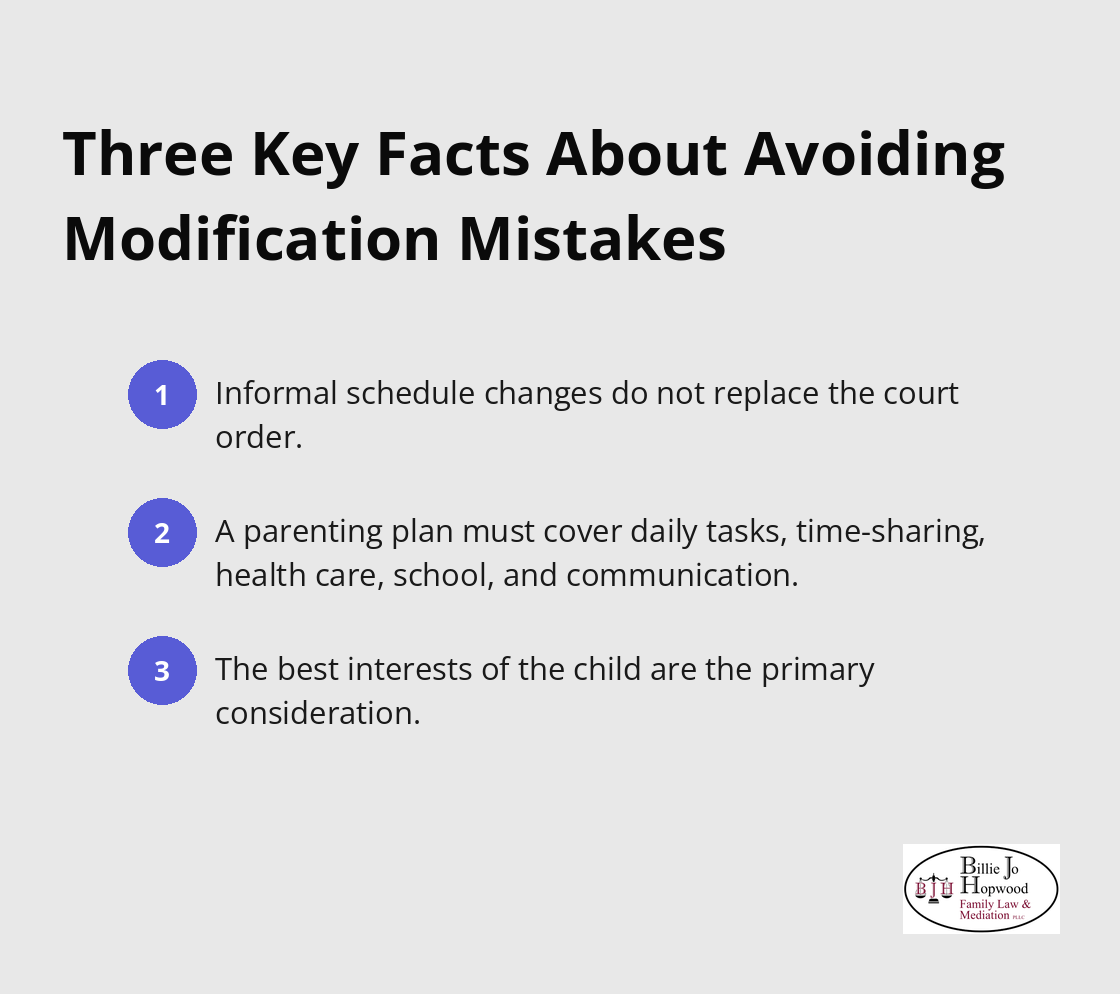
Parents sometimes begin following a new schedule without ever changing the court order. This can work for a while, but the existing parenting plan remains the governing order until the court approves a modification. If the relationship becomes strained, a parent may later insist on the original terms, and the informal arrangement can be difficult to rely on. Formalizing the change protects both parents and gives children a stable, predictable routine.
Leaving Important Details Unresolved
An agreement that addresses only the main weekly schedule can leave gaps that cause conflict later. Holidays, summer break, transportation, exchange locations, travel, and communication with the child all deserve attention. Because Florida requires a parenting plan to address daily tasks, time-sharing, health care, school matters, and communication, reviewing each of those areas during the modification helps make sure nothing important is overlooked.
Losing Sight of the Children’s Best Interests
It is natural for parents to focus on their own schedules and commitments. The court, however, must make the best interests of the child the primary consideration. Section 61.13(3) lists many factors the court evaluates, including each parent’s demonstrated capacity and disposition to facilitate and encourage a close and continuing parent-child relationship with the other parent. An agreement that clearly explains how the new plan supports the children’s school, activities, relationships, and stability is far more likely to be approved without delay.
Final Thoughts
An uncontested modification in Melbourne Florida allows parents who agree on change to update their parenting plan in a cooperative, orderly way. Florida law still requires a substantial and material change in circumstances and a plan that serves the children’s best interests, but a clear agreement, a complete parenting plan, and the right supplemental petition can keep the process focused and respectful.
Whether your family needs a new school-year schedule, a revised holiday plan, or an agreed relocation, taking the time to document the changes carefully now can prevent disagreements later. Mediation can help parents resolve the remaining details and reach terms both can support. You can learn more about our uncontested modification services on our website.
If you and your co-parent are ready to update your parenting plan in Melbourne or anywhere in Brevard County, contact Billie Jo Hopwood Family Law & Mediation, PLLC to discuss your options. We will help you understand each step, put your agreement in writing, and move forward with confidence.