
Family mediation offers a different path when relationships end or family conflicts arise. Instead of fighting in court, both parties work with a neutral mediator to reach agreements that work for everyone.
At Billie Jo Hopwood Family Law & Mediation, PLLC, we guide families through this process in Melbourne, Florida, helping them understand what family mediation actually means and how it can resolve disputes faster and with less expense than traditional litigation.
What Family Mediation Actually Is
The Core Definition and Structure
Family mediation is a structured negotiation process where a neutral third party-the mediator-helps both parties communicate and reach binding agreements on family matters. Unlike court litigation, where a judge imposes decisions after hearing arguments, mediation puts control directly into the hands of the people involved. In the 18th Judicial Circuit covering Brevard and Seminole counties, family mediation addresses dissolution of marriage, paternity, parenting plan modifications, and child support disputes. The mediator does not give legal advice, take sides, or decide outcomes. Instead, the mediator facilitates discussion, helps clarify priorities, and guides both parties toward customized solutions they can live with.
Florida-certified mediators must complete specialized dispute-resolution training and maintain certification by completing 16 hours of continuing education every two years. This means the person guiding your mediation has real credentials and ongoing professional development, not just volunteer status.
How Mediation Differs from Court Litigation
Court litigation forces a winner-and-loser outcome. A judge reviews evidence, hears arguments, and imposes terms neither party may want. Mediation flips this dynamic entirely. You and your former partner actively shape the agreement, which means the final result reflects what actually matters to your family rather than what a judge thinks is fair.
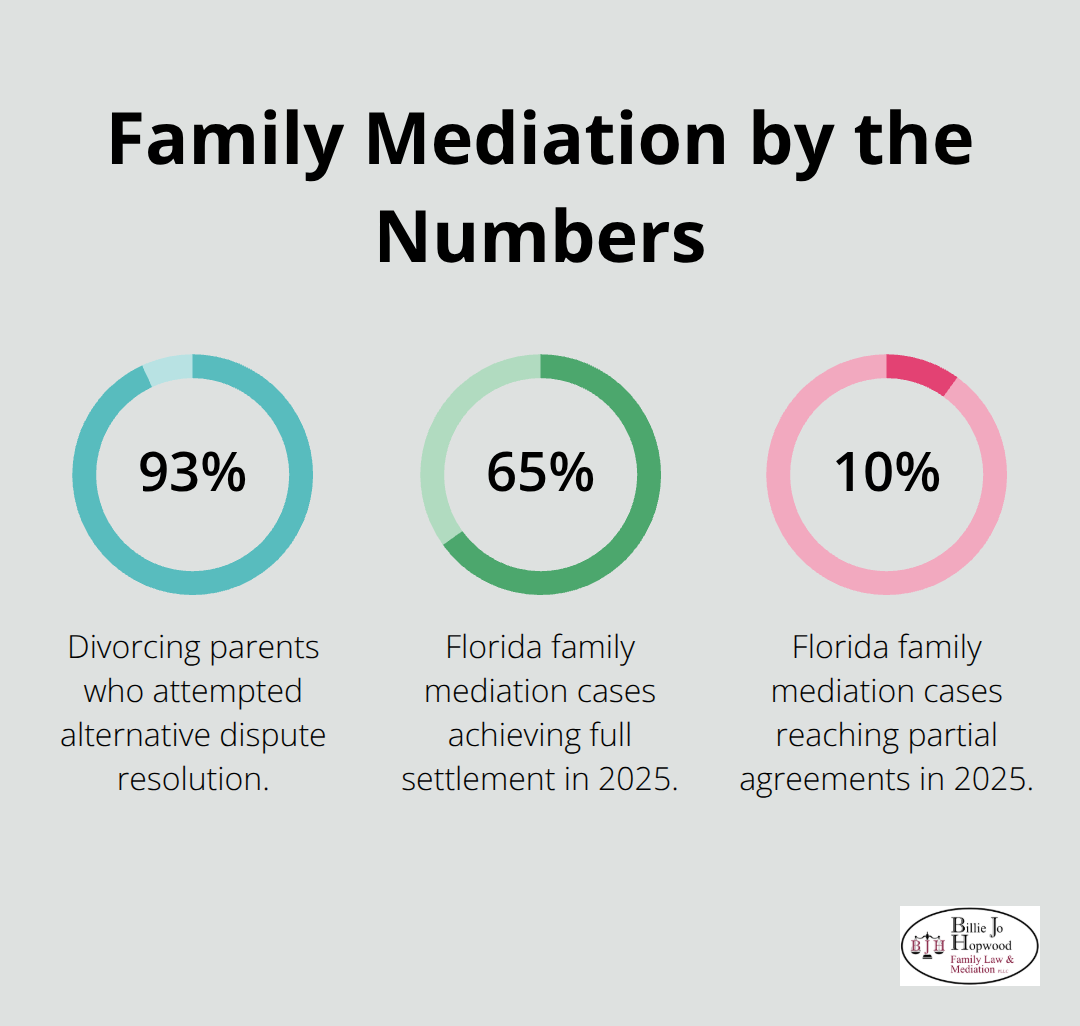
Research cited by Mediate.com found that 93 percent of divorcing parents attempted alternative dispute resolution, with over half choosing mediation specifically. The success rate for family mediation in Florida reached approximately 70 to 80 percent in 2025, with about 65 percent achieving full settlement and another 10 percent reaching partial agreements. Cost differences are stark: mediation typically involves far fewer attorney hours and court appearances, often saving families thousands of dollars compared to litigation.
What Mediation Actually Costs
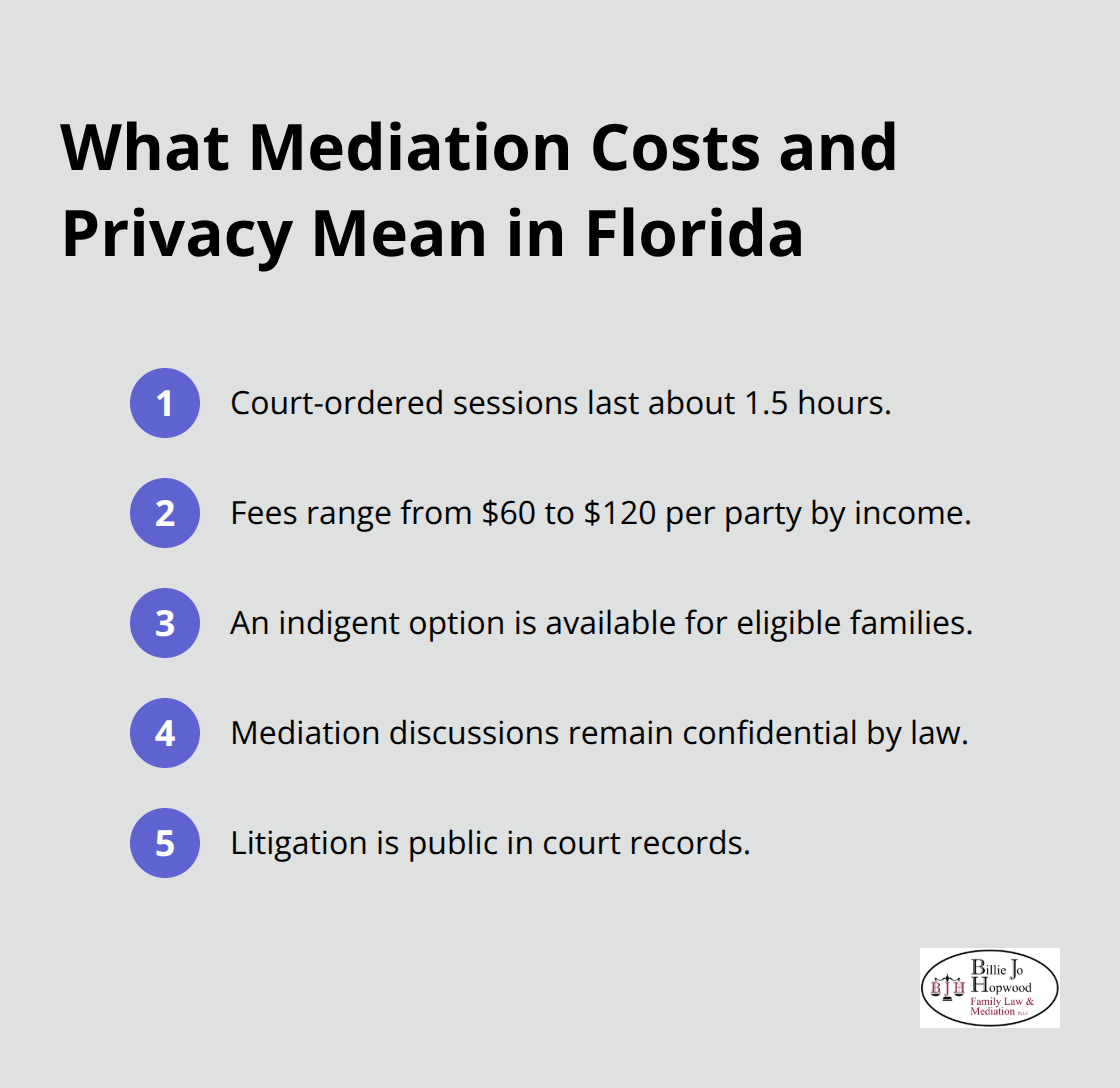
A court-ordered mediation session in Brevard or Seminole counties lasts approximately 1.5 hours and costs between $60 and $120 per party depending on combined household income, with an indigent option available for eligible families. Mediation sessions are confidential unless disclosure is required by law, meaning what you discuss stays private. Litigation, by contrast, happens in public court records.
Common Misconceptions About the Process
Many people mistakenly believe mediators will pressure them toward unfair deals or that mediation requires both parties to want reconciliation. Mediators maintain strict impartiality and cannot push either party. You retain complete authority to accept or reject any proposal. Mediation also works without requiring you to want the relationship to succeed-only that you’re willing to negotiate practical solutions for finances, custody, and support.
Another common misconception is that mediation is slower than court. In reality, scheduling mediation sessions is typically much faster than waiting for court hearings, and most cases resolve within weeks to a few months rather than the months or years litigation can demand. These time and cost advantages make mediation particularly attractive for families in Melbourne, Florida, who want to move forward without prolonged court battles.
Key Benefits of Family Mediation in Melbourne, Florida
Cost Savings Compared to Traditional Divorce
Mediation in Melbourne, Florida costs substantially less than litigation because you avoid the endless cycle of court filings, depositions, and attorney billable hours that litigation demands. A single mediation session through the 18th Judicial Circuit costs between $60 and $120 per party for 1.5 hours, compared to litigation where a contested divorce can easily exceed $15,000 to $30,000 in combined legal fees. You control the pace and depth of negotiation rather than waiting months between court hearings scheduled at the judge’s convenience.
Most families complete mediation within weeks to a few months, whereas litigation typically stretches 12 to 24 months or longer. The 2025 Florida mediation data shows that approximately 65 percent of cases reach full settlement and another 10 percent reach partial agreements, meaning roughly three-quarters of families walk away with binding agreements without ever stepping into a courtroom. Every month spent in litigation adds another layer of attorney fees and emotional exhaustion for everyone involved, especially children caught in the middle.
Faster Resolution Without Court Delays
Mediation eliminates the waiting game that defines court proceedings. You schedule sessions at times that work for both parties rather than waiting for the judge’s calendar to open. Most people complete mediation in one session; some need two or three, and very complex cases may require two consecutive days. This speed matters because prolonged uncertainty takes a real toll on families trying to move forward.
Greater Control Over Outcomes for Both Parties
What makes mediation genuinely powerful is that you keep decision-making authority instead of handing it to a judge who knows nothing about your family’s actual needs. In court, a judge imposes terms based on legal standards and what they believe is fair-not what works for your household. Mediation allows you to craft agreements around your children’s school schedules, your work commitments, and financial realities that a judge cannot address.
Parents who mediate custody arrangements report greater satisfaction with the outcome because the schedule reflects real life, not a template. You negotiate spousal support, child support, and asset division with the flexibility to include creative solutions (such as phased alimony or one parent keeping the family home longer) that courts cannot order. This control directly reduces post-settlement conflict because both parties shaped the agreement together rather than resenting a judge’s decision.
Why Mediated Agreements Stick
For families in Melbourne, Florida, this collaborative approach translates to faster healing, lower ongoing legal costs, and children who experience less parental conflict during and after the process. Settlements reached through mediation tend to be more durable, with less post-agreement conflict due to the collaborative nature of the process. Both parties invested in creating the solution, which means they’re more likely to honor it.
Understanding these financial and practical advantages helps families recognize when mediation fits their situation-and when other factors might push them toward court instead.
When Family Mediation Works Best
Ideal Situations for Mediation Success
Mediation succeeds when both parties want to resolve disputes without court involvement and are willing to negotiate in good faith. The 2025 Florida mediation data shows that approximately 70 to 80 percent of family cases reach settlement, but this outcome depends heavily on the specific circumstances of your situation. Couples dissolving a marriage with relatively straightforward asset division, no significant power imbalances, and a shared commitment to protecting children from conflict are ideal candidates for mediation.
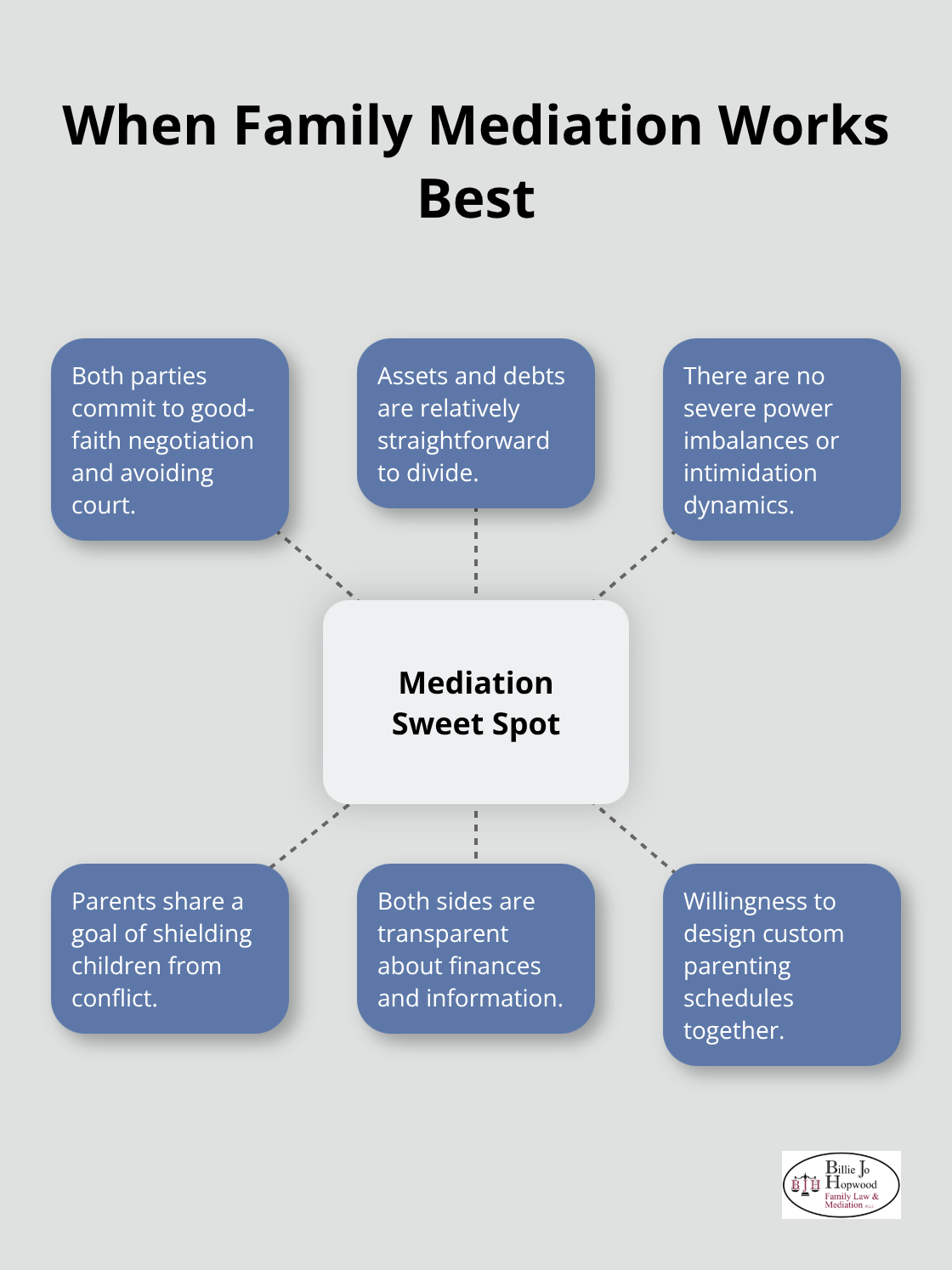
If you have minor children and both parents want to minimize disruption to their routines, mediation allows you to design parenting schedules that actually fit your family’s life rather than accepting a judge’s standard template.
Cases That Respond Well to Mediation
Dissolution of marriage cases where both parties acknowledge basic facts about income, property, and debts move through mediation faster because you skip the expensive discovery phase that litigation demands. Parenting plan modifications and child support adjustments also respond exceptionally well to mediation because parents understand their children’s needs better than any judge and can adjust arrangements as circumstances change without returning to court. The mediator in Brevard or Seminole counties facilitates these conversations while remaining completely neutral, which means both parties feel heard even when disagreements exist about specific terms.
Red Flags That Signal Court Intervention Is Necessary
Mediation becomes problematic when domestic violence, significant mental health crises, substance abuse, or severe power imbalances exist between parties. If one partner controls finances completely, has a history of intimidating the other, or has been arrested for violence, mediation cannot function because the intimidated party cannot negotiate freely. Court intervention protects vulnerable parties by removing them from direct negotiation and having a judge impose protections.
Child abuse allegations, threats of parental abduction, or situations where one parent actively prevents the other from seeing children also require court orders rather than mediation because these cases demand legal enforcement mechanisms that mediation cannot provide. If either party refuses to disclose financial information honestly or attempts to hide assets, mediation stalls immediately and litigation becomes necessary. Similarly, if one party shows no willingness to compromise or uses mediation as a delay tactic while continuing hostile behavior, court proceedings move the case forward more efficiently.
When Mediators Recommend Court Instead
The 18th Judicial Circuit recognizes these limitations, and mediators are trained to identify when cases lack the basic conditions for productive mediation and recommend court intervention instead. Spending weeks in failed mediation attempts wastes money and emotional energy when litigation would resolve matters faster in genuinely unsafe or uncooperative situations.
Final Thoughts
Choosing family mediation in Melbourne, Florida means selecting a path that prioritizes your family’s actual needs over prolonged court battles. The family mediation definition extends beyond a simple legal process-it represents a commitment to resolving disputes with dignity, speed, and control over your own future. We at Billie Jo Hopwood Family Law & Mediation, PLLC understand this distinction and help families navigate every stage from initial preparation through final agreement.
The collaborative process itself sets a healthier tone for post-separation life compared to adversarial court environments. Parents who mediated custody arrangements report greater satisfaction because they designed schedules that actually work for their children and their own lives. The agreement you created together becomes something both parties respect and follow, which reduces future conflicts and the need for additional court involvement.
If mediation doesn’t fully resolve every issue, you still gain clarity about where disagreements remain and what each party truly needs. This clarity often leads to faster resolution if litigation becomes necessary, or it may reveal that a second mediation session can bridge remaining gaps. Contact Billie Jo Hopwood Family Law & Mediation, PLLC in Melbourne, Florida to discuss whether mediation fits your family’s situation and how we can guide you toward resolution with confidence and clarity.