
Family disputes don’t have to end up in lengthy court battles. Mediation offers a collaborative path forward that puts families in control of their own outcomes.
At Billie Jo Hopwood Family Law & Mediation, PLLC, we see how understanding what is mediation family law can transform difficult situations into manageable solutions. This alternative approach saves time, money, and emotional stress while protecting relationships that matter most.
How Does Family Law Mediation Actually Work
Family law mediation is a structured negotiation process where a neutral third party helps divorcing couples or separating parents reach agreements outside of court. The mediator facilitates discussions between parties and helps them identify shared interests while they work toward mutually acceptable solutions. Both parties present their positions during mediation sessions while the mediator guides conversations toward productive outcomes. The process typically involves multiple sessions (each lasting two to four hours) with agreements documented in writing once parties reach them.
The Mediation Process Step by Step
Most mediation begins with an orientation session where mediators explain rules and procedures. Parents then meet with the mediator either together or separately, depending on the situation and comfort levels. The mediator helps identify key issues, explores various options, and assists in the creation of detailed parenting plans.
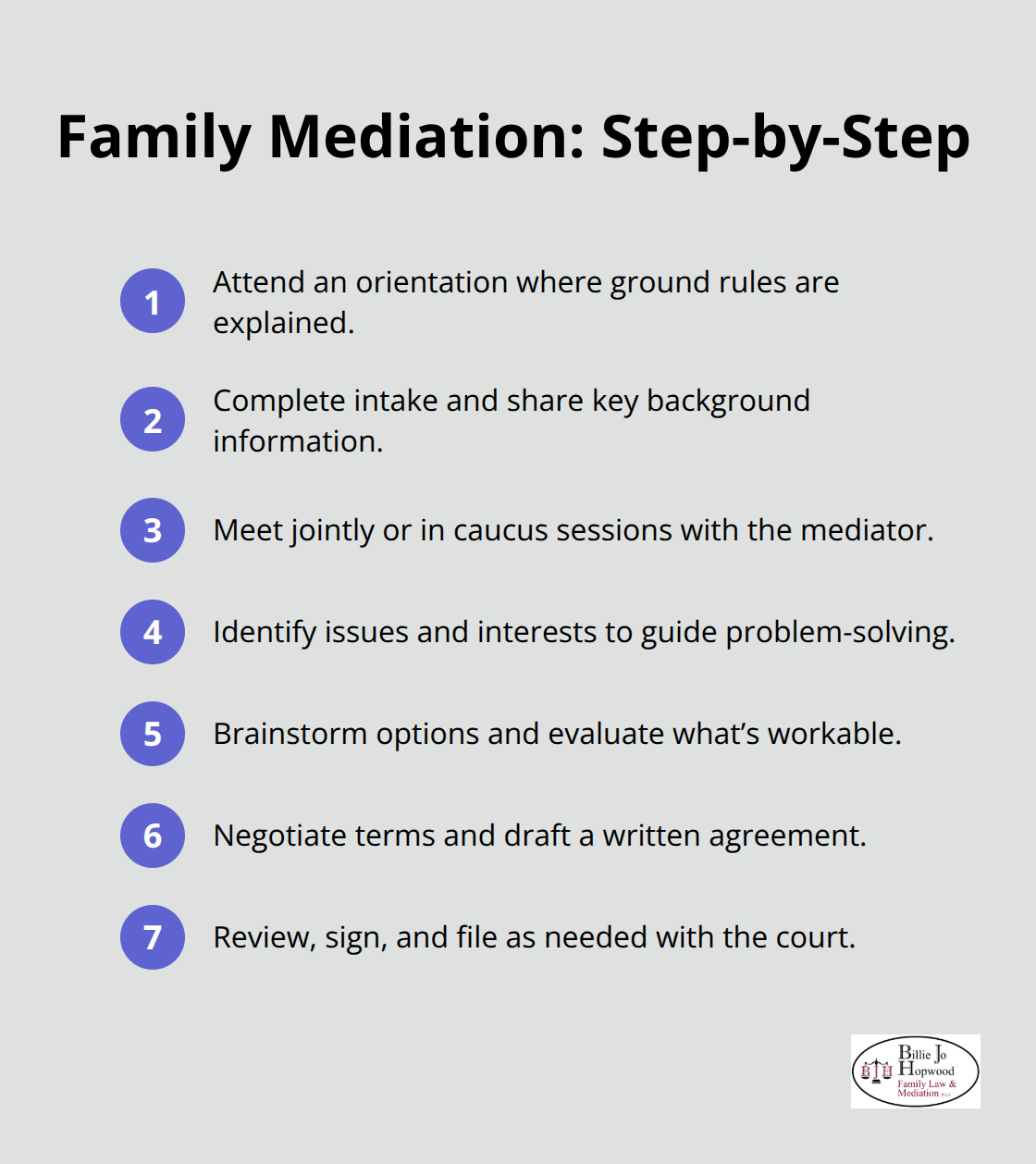
In California, mediation is required by law before judges will hear custody cases, while Texas Civil Practice and Remedies Code Section 154.002 promotes mediation as the preferred dispute resolution method. Sessions focus on practical matters like living arrangements, decision-making authority, and parenting schedules rather than blame assignment or past grievance litigation.
Why Mediation Outperforms Traditional Court Battles
Court proceedings follow rigid procedures with judges who make final decisions based on legal arguments and evidence. Mediation allows families to maintain control over their outcomes while they address emotional and practical needs that courts often overlook. Courts reported that 67% of cases reached agreement through mediation in 2024, compared to the unpredictable nature of court trials. Mediated agreements also show higher compliance rates than court-ordered judgments because parties actively participate in solution creation. The confidential nature of mediation encourages open communication, while court proceedings become part of public record and can damage relationships permanently.
These advantages make mediation particularly effective for specific types of family law cases where cooperation and customized solutions matter most.
Why Mediation Saves Money and Time
Family law mediation delivers measurable financial advantages that traditional litigation cannot match. The American Bar Association reports that mediated divorce cases cost an average of $3,000 to $7,000, while litigated divorces range from $15,000 to $30,000 per spouse. Court battles drag on for 12 to 18 months on average, but mediation typically resolves disputes within 2 to 4 months. These numbers reflect real savings that families can redirect toward rebuilding their lives rather than funding attorney fees and court costs.
Mediation Cuts Legal Expenses Dramatically
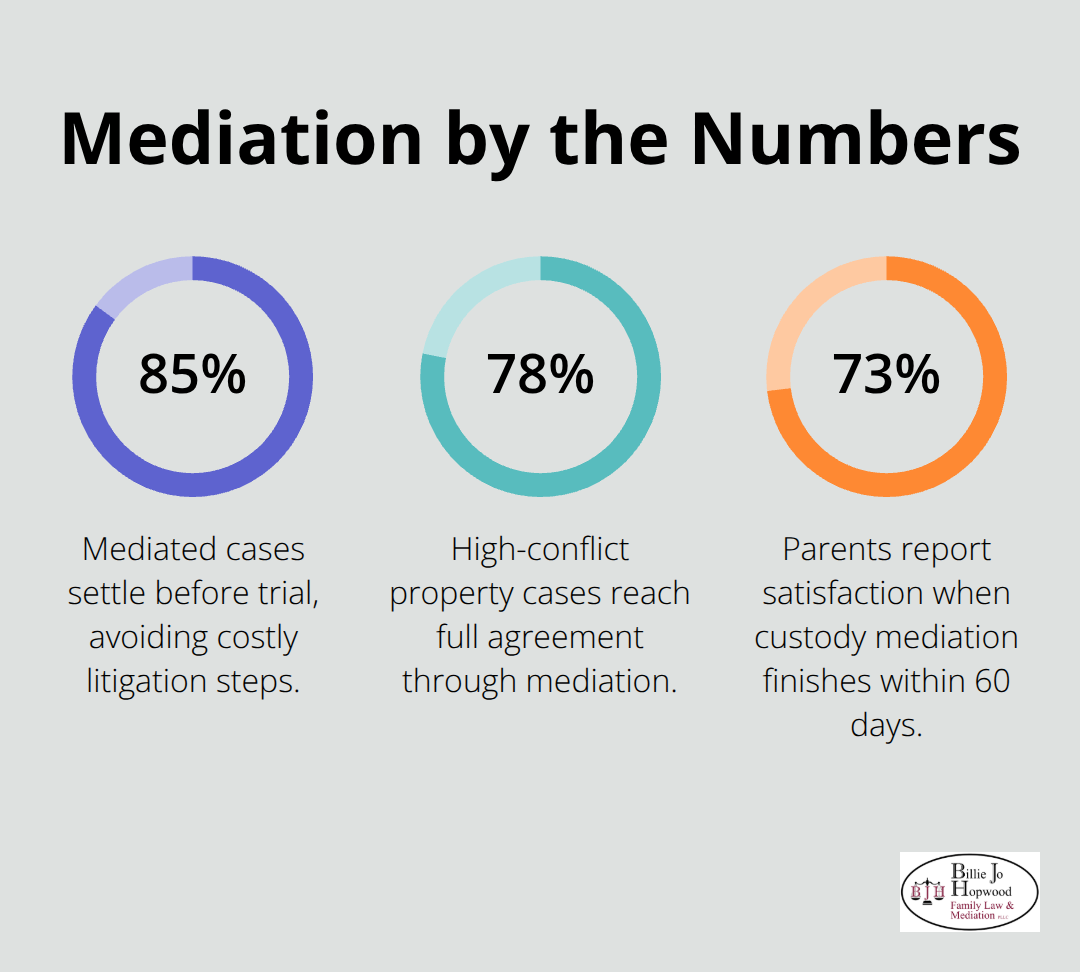
Attorney fees represent the largest expense in contested divorces, with hourly rates that range from $200 to $500 in most markets. Mediation reduces these costs because attorneys spend fewer hours on case preparation, discovery, and court appearances. Research from the Institute for the Advancement of the American Legal System shows that 85% of mediated cases settle before trial, which eliminates expensive litigation procedures like depositions and expert witness fees. Court filing fees alone can exceed $400, while mediation sessions typically cost $150 to $300 per hour (split between both parties).
Speed Creates Additional Value Beyond Cost Savings
Mediation sessions can be scheduled within weeks rather than waiting months for court dates. The McCammon Group reports that approximately 85% of their mediated cases reach settlement, often within a single day or series of shorter sessions. This speed prevents the emotional toll that extended court battles place on families, particularly children who benefit from quick resolution of custody arrangements. Parents who complete mediation within 60 days report 40% less stress compared to those involved in year-long court proceedings (according to studies from the American Psychological Association).
Control Over Outcomes Provides Long-Term Benefits
Mediation empowers families to craft solutions that courts cannot provide through rigid legal frameworks. Parents maintain decision-making authority over their children’s schedules, living arrangements, and future modifications to agreements. This control leads to higher compliance rates with mediated agreements compared to court-ordered judgments, as parties actively participate in creating their own solutions. The flexibility of mediation saves money and allows families to address unique circumstances that standard court orders often overlook, setting the foundation for successful co-parenting relationships.
Which Cases Benefit Most From Mediation
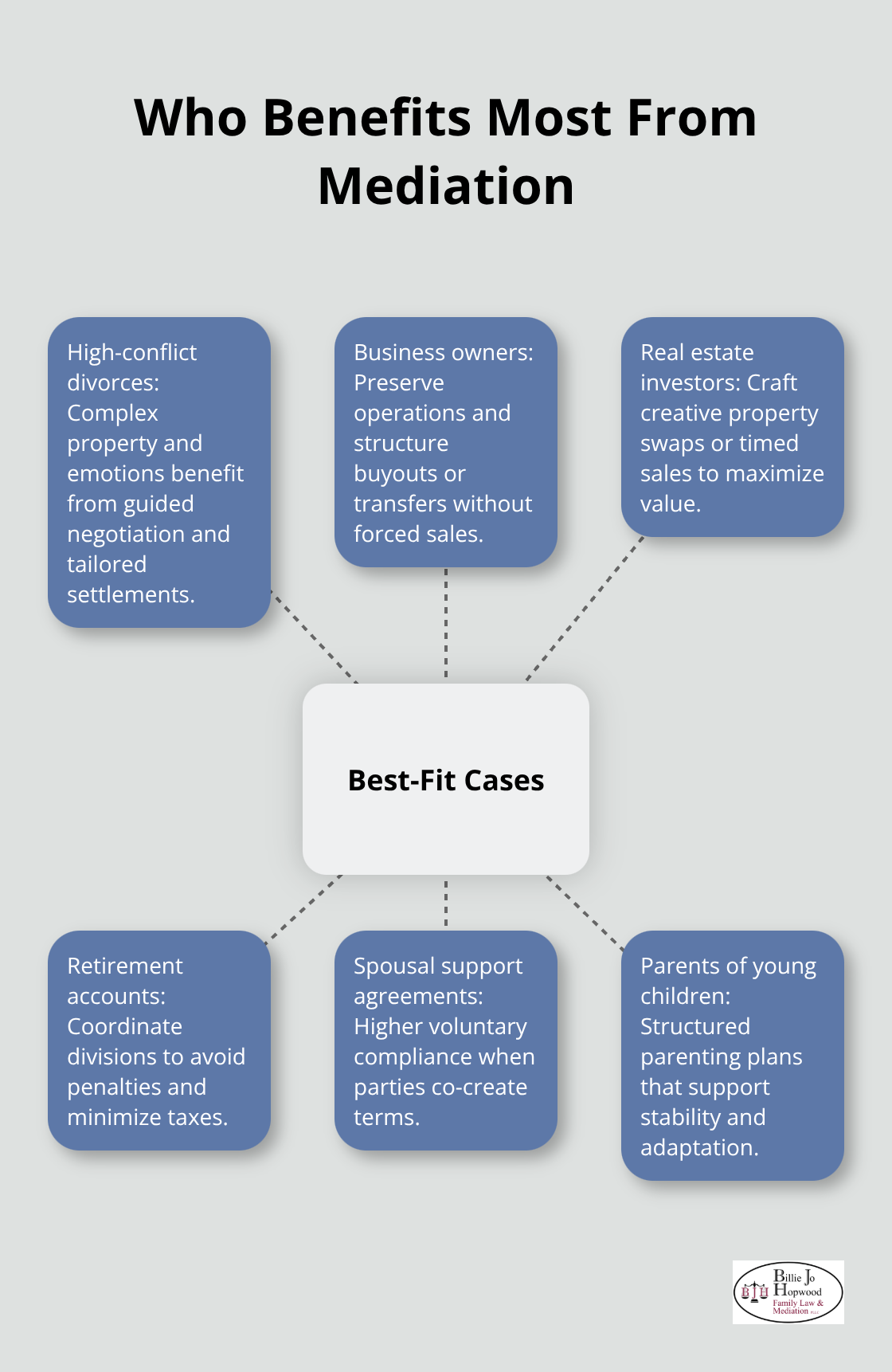
Mediation works best when both parties have assets to divide, children to protect, and relationships to preserve. High-conflict divorces that involve complex property portfolios see the greatest success rates, with 78% of cases that reach full agreement according to the National Center for State Courts. Business owners, real estate investors, and couples with retirement accounts benefit most because mediation allows creative solutions that courts cannot provide. Property division mediation prevents forced sales of family businesses and allows couples to structure asset transfers that minimize tax consequences. Spousal support negotiations through mediation result in agreements that 89% of parties follow voluntarily (compared to 64% compliance with court-ordered alimony).
Property Division Requires Strategic Mediation Timing
Couples with marital assets that exceed $250,000 should start mediation within 30 days of separation to prevent asset depletion and preserve value. Real estate markets change rapidly, which makes quick resolution essential for maximizing property values during division. Retirement account divisions through mediation avoid the 10% early withdrawal penalties that court orders often trigger, which saves couples thousands in unnecessary fees. Business valuations that are completed before mediation sessions provide concrete numbers that facilitate faster agreements, while delayed valuations create disputes that extend resolution timelines by an average of 4 months.
Child Custody Mediation Succeeds With Proper Preparation
Parents who complete mediation within 60 days of filing custody petitions report 73% satisfaction rates with their parenting plans, according to the American Academy of Matrimonial Lawyers. Successful custody mediation requires both parents to focus on children’s school schedules, extracurricular activities, and medical needs rather than personal grievances. California courts mandate mediation for all custody cases, while Texas courts require it in 85% of contested custody disputes (which reflects the proven effectiveness of this approach). Parents with children under age 10 achieve the highest success rates because younger children adapt more easily to structured parenting schedules that mediation creates.
Final Thoughts
Family law mediation transforms how families resolve disputes by placing control back in their hands. The evidence shows clear advantages: mediated cases cost 50-75% less than litigation, resolve 3-4 times faster, and achieve 85% settlement rates. Parents who understand what is mediation family law gain access to flexible solutions that courts cannot provide through rigid legal frameworks.
The decision to choose mediation depends on your willingness to communicate and compromise. Families with complex assets, business interests, or children benefit most from this collaborative approach. The confidential nature of mediation protects relationships while creating agreements that both parties actively support.
We at Billie Jo Hopwood Family Law & Mediation, PLLC guide Melbourne, Florida families through divorce, child custody, and support matters with compassionate representation. Our approach combines legal knowledge with mediation skills to help families reach agreements that work for everyone involved. The first step toward mediation means choosing a path that prioritizes your family’s future over prolonged conflict (rather than extended court battles).