
Divorce can be a challenging process, but mediation offers a smoother path forward. At Billie Jo Hopwood Family Law & Mediation, PLLC, we’ve seen firsthand how divorce mediation in Melbourne, Florida can help couples navigate this difficult time.
This guide will walk you through the essentials of divorce mediation, from understanding its benefits to choosing the right mediator. We’ll provide practical insights to help you make informed decisions about your divorce process in Melbourne, Florida.
What Is Divorce Mediation in Melbourne Florida?
The Collaborative Approach
Divorce mediation in Melbourne, Florida presents a collaborative process where a neutral third party assists couples in negotiating their separation terms. This method stands apart from traditional litigation, offering a more amicable and cost-effective route to divorce.
The Melbourne Mediation Process
The divorce mediation process in Melbourne typically involves multiple meetings with a certified mediator. These sessions address key issues such as property division, child custody, and financial support. The mediator facilitates discussions, ensuring both parties contribute to the decision-making process.
Advantages of Mediation
Choosing mediation in Melbourne can yield substantial benefits. A study by the American Bar Association indicates that mediated divorces often result in higher satisfaction rates and improved long-term outcomes for families. Couples who opt for mediation report reduced conflict and enhanced co-parenting relationships post-divorce.
Financial Benefits
The financial impact of selecting mediation over litigation proves significant. In Melbourne, the average cost of a mediated divorce typically ranges 40-60% lower than a litigated divorce. This cost reduction allows couples to preserve more assets for their post-divorce lives.

Positive Impact on Children
For couples with children, mediation in Melbourne offers a less adversarial approach. Research from the Florida Chapter of the Association of Family and Conciliation Courts reveals that children whose parents mediate their divorce experience reduced stress and adapt better to new family dynamics.
Mediation often leads to more creative and tailored solutions for families in Melbourne. This approach focuses on helping couples find common ground and develop agreements that suit their unique situations. As we move forward, let’s explore the key steps involved in the divorce mediation process.
Navigating the Divorce Mediation Journey in Melbourne, Florida
Selecting Your Mediator
The first step in the divorce mediation process involves choosing a qualified mediator. In Melbourne, mediators must complete a Florida Supreme Court certified training program. When you select a mediator, consider their experience with cases similar to yours. Ask about their success rates and approach to challenging situations. Local knowledge of Melbourne’s family court system can provide invaluable insights during this process.
Financial Disclosure
After you choose a mediator, both parties must provide comprehensive financial information. This typically includes tax returns, bank statements, and property valuations. In Florida, financial affidavits are mandatory. These documents form the foundation for fair asset division and support determinations. Transparency at this stage is essential – hiding assets can lead to legal consequences (and potentially invalidate agreements).
Identifying Key Issues
With finances laid bare, the next phase requires you to pinpoint the specific issues that need resolution. Common areas include property division, alimony, child custody, and support. Couples who clearly define their priorities often achieve more satisfactory outcomes. Try to create a list of your non-negotiables and areas where you’re willing to compromise.

Negotiation and Agreement
The heart of mediation lies in negotiation. Your mediator will facilitate discussions to help you explore various solutions. Florida law requires consideration of factors like marriage duration and each spouse’s economic circumstances when determining alimony. For child-related matters, the best interests of the child always take precedence.
During this phase, it’s important to remain focused on future arrangements rather than past conflicts. Couples who approach mediation with a forward-thinking mindset reach agreements more quickly (and report higher satisfaction with the outcomes).
Finalizing Your Settlement
Once you reach an agreement on all issues, your mediator will draft a settlement document. This agreement becomes legally binding after both parties sign it and a judge approves it. In Melbourne, the approval process typically takes 2-4 weeks. After approval, you’ll file for an uncontested dissolution, which can be finalized much faster than a litigated divorce.
While mediation offers a collaborative approach, having individual legal counsel review your agreement before signing is advisable. This ensures your rights are protected and the agreement aligns with Florida law.
As you move through the mediation process, you’ll want to ensure you’ve chosen the right mediator for your unique situation. Let’s explore how to make this critical decision in the next section.
How to Select the Best Divorce Mediator in Melbourne
Evaluating Mediator Qualifications
In Melbourne, Florida, certified mediators must complete a rigorous training program approved by the Florida Supreme Court. Certification alone doesn’t guarantee expertise. Look for mediators with additional qualifications such as a law degree or background in family counseling. These complementary skills can prove invaluable during complex negotiations.
The Florida Dispute Resolution Center maintains a database of certified mediators. This resource allows you to verify a mediator’s credentials and specializations. A mediator with extensive experience in family law cases will likely navigate your divorce more effectively than a generalist.
Assessing Local Knowledge and Experience
A mediator’s familiarity with Melbourne’s legal landscape can be a significant advantage. Local mediators understand the nuances of Brevard County family courts and can provide insights into local judges’ preferences and tendencies. This knowledge can help shape strategies and expectations throughout the mediation process.
When you interview potential mediators, ask about their experience with cases similar to yours in Melbourne. Inquire how many divorce mediations they’ve conducted in the area and their success rate in reaching mutually satisfactory agreements. A mediator who has handled numerous cases in Melbourne will likely have a better grasp of local trends and potential pitfalls.
Key Questions for Potential Mediators
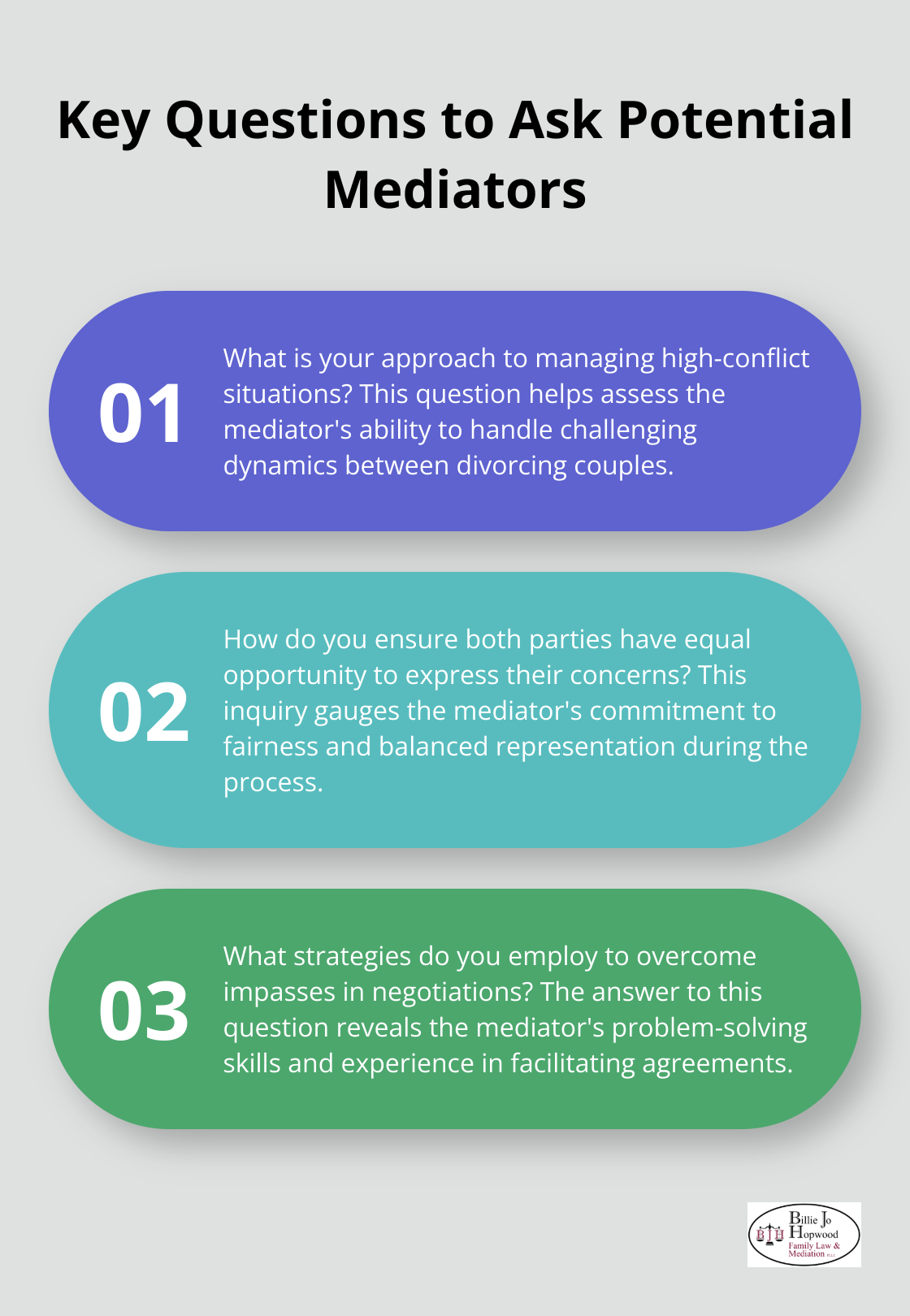
During your initial consultation with a mediator, ask pointed questions to gauge their suitability. Here are some key inquiries:
- What is your approach to managing high-conflict situations?
- How do you ensure both parties have equal opportunity to express their concerns?
- What strategies do you employ to overcome impasses in negotiations?
- How do you handle power imbalances between spouses during mediation?
- Can you provide references from previous clients in Melbourne?
The answers to these questions will give you insight into the mediator’s style, philosophy, and problem-solving abilities. Pay attention to how comfortable you feel communicating with the mediator. Effective mediation requires open dialogue, so choose someone who puts you at ease.
Considering Mediation Style
Mediators often have different styles (facilitative, evaluative, or transformative). Ask potential mediators about their approach and consider which style aligns best with your needs. Some couples prefer a more hands-on mediator who offers suggestions, while others want a mediator who primarily facilitates communication.
Evaluating Cost and Availability
While cost shouldn’t be the only factor, it’s important to understand a mediator’s fee structure. Ask about hourly rates, retainer fees, and any additional costs (such as document preparation). Also, inquire about the mediator’s availability and typical timeline for completing the mediation process. A mediator who can accommodate your schedule and work efficiently can help reduce stress during this challenging time.
Final Thoughts
Divorce mediation in Melbourne, Florida offers a collaborative path to resolution. This process prioritizes mutual understanding and empowers couples to make decisions about their future. Mediation provides numerous benefits, including reduced costs, faster resolutions, and improved co-parenting relationships.
We encourage you to explore divorce mediation as an alternative to courtroom battles. Research certified mediators in the Melbourne area with extensive family law experience. Schedule consultations with potential mediators to find someone who aligns with your goals and communication style.
At Billie Jo Hopwood Family Law & Mediation, PLLC, we guide clients through the mediation process with compassion. Our team strives to help you achieve a fair and amicable resolution (setting the foundation for a positive post-divorce future). Divorce mediation in Melbourne, Florida can transform a potentially adversarial process into an opportunity for growth and understanding.