
Family relationships often benefit from clear legal documentation. When family members have an intention to create legal relations between family, written agreements protect everyone involved and prevent misunderstandings.
We at Billie Jo Hopwood Family Law & Mediation, PLLC help families in Melbourne, Florida establish these protections through proper legal channels. This guide walks you through the process of formalizing your family’s legal interests.
What Legal Agreements Do Families Actually Need
Prenuptial and Cohabitation Agreements
Prenuptial agreements protect assets before marriage and address property division if the marriage ends, with the ability to outline spousal support terms that Florida law would otherwise determine. Cohabitation agreements work similarly for unmarried couples living together, specifying how expenses are shared, debts are allocated, and assets are divided if the relationship ends-a critical document since Florida does not automatically recognize palimony claims without a written agreement. Postnuptial agreements function like prenups but are signed after marriage, allowing couples to modify their property rights or clarify financial responsibilities mid-relationship.
Family Loans and Financial Transactions
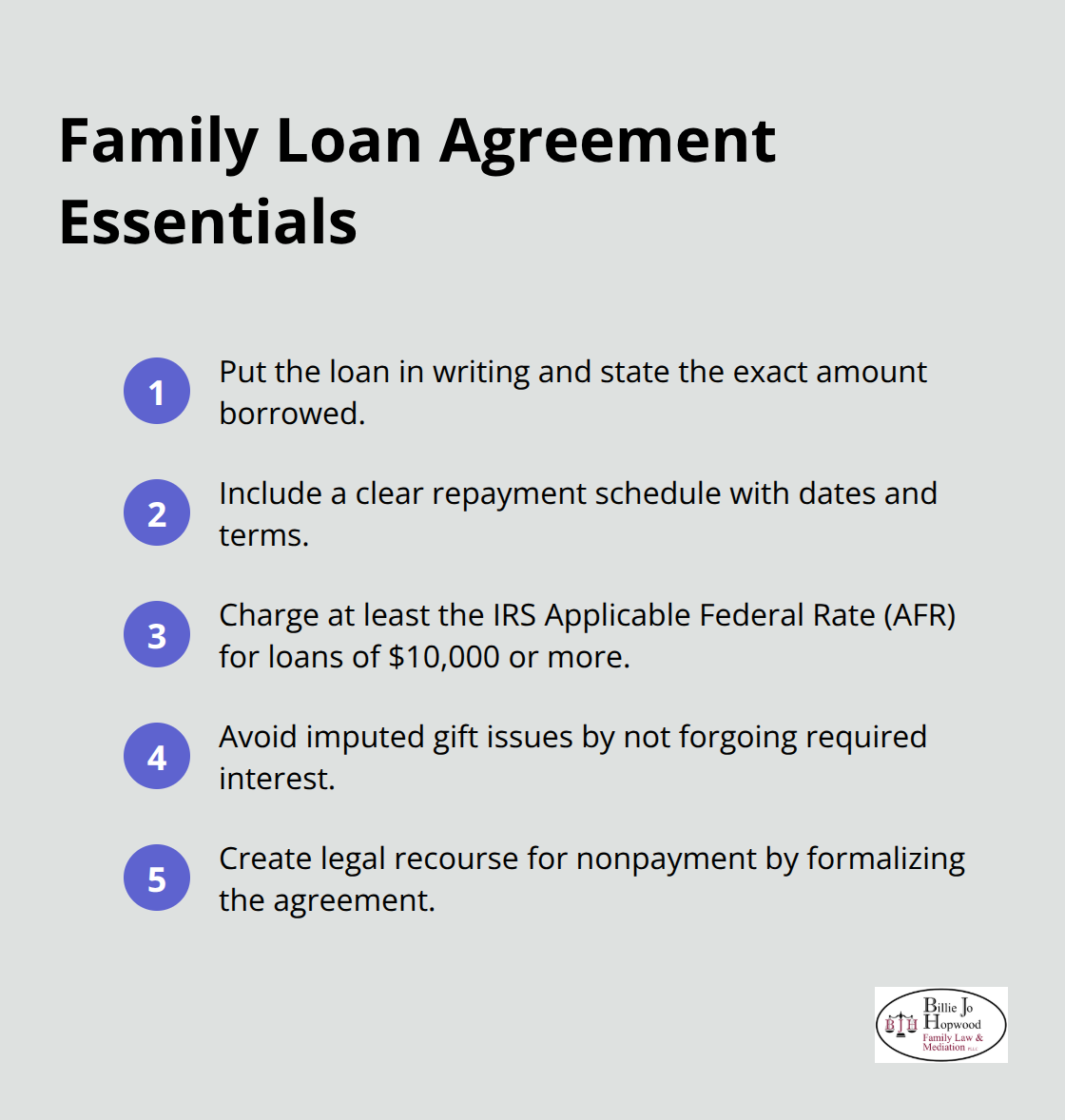
Family loan agreements formalize borrowing between relatives, documenting the amount, repayment schedule, and interest rate, which matters significantly for tax purposes since the IRS requires loans of $10,000 or more to charge interest at the applicable federal rate or risk the IRS treating foregone interest as a taxable gift. Without documentation, a parent who loans $50,000 to a child for a home down payment has no legal recourse if the child refuses to repay.
Guardianship, Custody, and Estate Planning
Guardianship documents establish who makes medical and financial decisions if a family member becomes incapacitated, while custody arrangements and parenting plans detail how children will be raised and where they will live. Estate planning documents-wills, trusts, and powers of attorney-direct how assets pass to heirs and who manages affairs after death.
Why Written Documentation Matters
Verbal agreements are nearly impossible to enforce, and without clarity, disputes drain time and money. Florida courts will not honor informal understandings between family members. Unmarried couples who accumulate joint property without a cohabitation agreement face losing access to shared assets if the relationship ends because Florida law does not automatically divide property for unmarried partners the way it does for divorcing spouses.
When Families Need Formal Legal Relations
Situations requiring formal legal relations include any significant financial transaction between family members, planning for incapacity or death, establishing custody arrangements, or protecting assets in new relationships. The next step involves identifying which specific agreements fit your family’s circumstances and understanding how to draft them correctly.
Building Your Legal Foundation in Melbourne, Florida
Identify Your Specific Legal Need
Starting the process of creating legal relations between family members requires clarity about what you need and honest communication with the people involved. Most families postpone this work because they assume it signals distrust, but the opposite is true-formal documentation prevents the misunderstandings that actually damage relationships. The first step is identifying your specific situation. Are you getting married and want to protect assets from a previous relationship? Are you lending money to a family member and need the IRS to recognize it as a loan rather than a gift? Are you setting up guardianship for a child or aging parent? The type of agreement you need depends entirely on your circumstances.
Avoid Conflating Different Agreements
Families often conflate different agreements and end up with the wrong document. A cohabitation agreement does not address child support, and a prenuptial agreement cannot establish medical decision-making authority. Write down the outcome you want and the people affected by it, then you will know what legal document fits.
Gather Your Financial Information
Once you identify the agreement type, gather your financial information and any existing documents related to the situation. For family loans, you need the loan amount, the repayment timeline, and the interest rate you both agree on. The IRS publishes applicable federal rates monthly, and loans over $10,000 must charge at least that rate or risk the IRS treating forgone interest as a taxable gift.
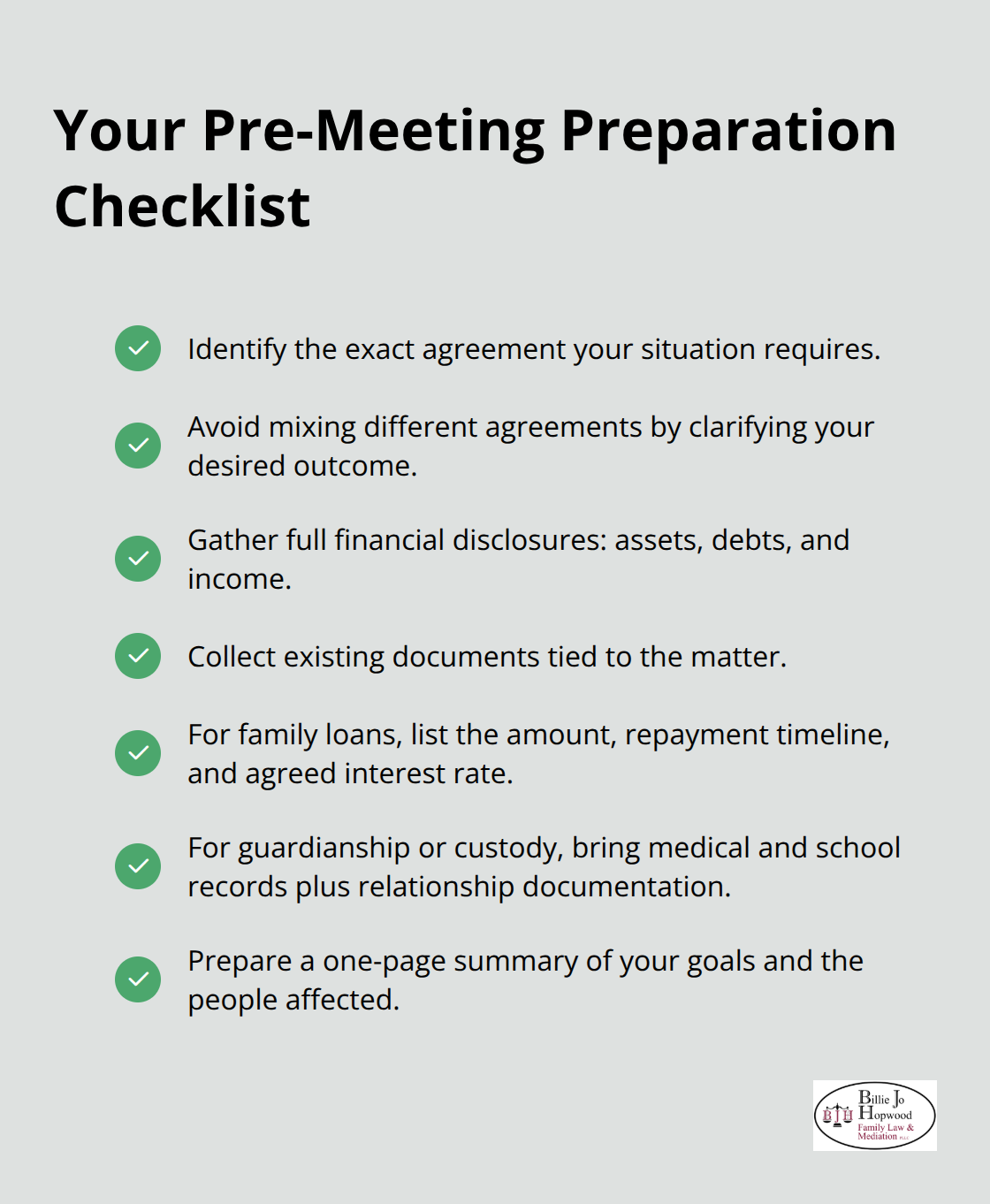
For prenuptial or cohabitation agreements, both parties must disclose all assets, debts, and income completely and honestly. Incomplete disclosure is grounds for a court to invalidate the agreement later, making full transparency non-negotiable.
Organize Documents Before Meeting an Attorney
For guardianship or custody matters, gather medical records, school records, and documentation of your relationship with the person you want to protect. The more organized you are before meeting with a family law attorney, the faster the process moves and the lower your costs. Many families arrive at initial consultations with scattered documents and vague ideas about what they want, which extends the timeline and increases fees. Prepare a one-page summary of your situation, the agreement you need, and the outcome you want.
Next Steps With Professional Guidance
A family law attorney in Melbourne, Florida will guide you from there on the specific documents required and any additional information needed to draft them correctly. The consultation itself clarifies which agreements fit your family’s needs and what timeline to expect for completion.
Documents That Protect Your Family
Prenuptial and Postnuptial Agreements
Prenuptial agreements and postnuptial agreements protect families across all income levels, not just wealthy individuals with massive estates. They address the financial reality of modern relationships where both partners bring assets, debts, or children from previous relationships into a new marriage. A prenuptial agreement signed before marriage lets both parties specify how property acquired before marriage stays separate, how income earned during marriage is divided, and what happens to spousal support if the marriage ends. A postnuptial agreement accomplishes the same goals but you sign it after marriage, which makes it useful when circumstances change-such as one spouse inheriting property or receiving a business promotion. Florida law permits both types and enforces them if both parties had independent legal advice, made full financial disclosure, and signed voluntarily without pressure.
How Florida Courts Handle Property Without Agreements
Without these agreements, Florida’s equitable distribution rules apply automatically. The court divides marital assets and debts based on factors like length of marriage, each spouse’s contribution, and future economic circumstances. For a 15-year marriage, that court process costs thousands in attorney fees and months of litigation, whereas a postnuptial agreement drafted upfront costs far less and gives you control over the outcome.
Guardianship Documents and Powers of Attorney
Guardianship documents and estate planning tools serve different purposes but work together to protect your family’s interests across multiple scenarios. Guardianship establishes who makes medical and financial decisions if you become incapacitated. A durable power of attorney for healthcare and a financial power of attorney accomplish this without court involvement, which is faster and less expensive than petitioning for guardianship. These documents take effect immediately and remain valid if you lose capacity, unlike court-ordered guardianship which requires ongoing court supervision.
Wills, Trusts, and Tax Planning
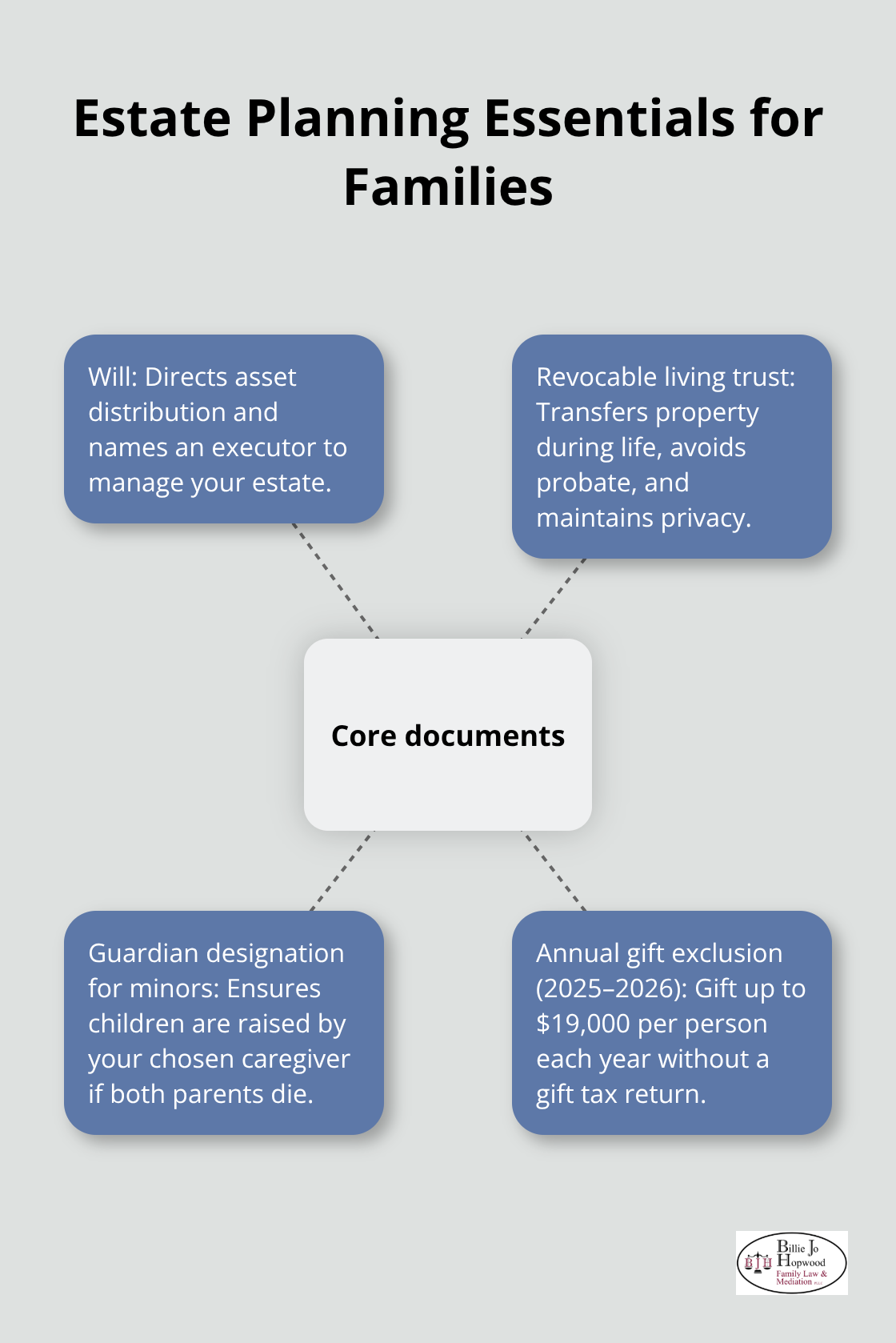
A will directs how your assets pass to heirs and names an executor to manage your estate. A revocable living trust lets you transfer property during your lifetime, avoid probate entirely, and maintain privacy since trusts are not filed with the court like wills are. If you have minor children, a will also designates a guardian to raise them if both parents die-something no other document accomplishes. The IRS allows you to gift up to $19,000 per person annually in 2025 and 2026 without filing a gift tax return, and a properly structured estate plan uses this annual exclusion along with your lifetime exemption to minimize tax liability for your heirs.
What Happens Without Legal Documents
Without these documents, Florida intestacy law determines who inherits your property and who raises your children, which rarely matches what families actually want. A family law attorney in Melbourne, Florida can review your situation and recommend which documents fit your specific circumstances.
Final Thoughts
Formalizing family legal relations transforms vague intentions into enforceable protections that safeguard everyone involved. When family members establish clear written agreements, they eliminate the ambiguity that breeds conflict and costly disputes. A prenuptial agreement, cohabitation contract, family loan document, or guardianship designation costs far less upfront than litigation or intestacy proceedings that ignore your actual wishes.
The intention to create legal relations between family members signals maturity and respect, not distrust. Families who formalize their arrangements report greater peace of mind because they know exactly what happens if circumstances change. Contact Billie Jo Hopwood Family Law & Mediation, PLLC to discuss your situation and learn which legal documents protect your family’s interests.
A consultation clarifies your options, the timeline for completion, and what to expect moving forward. Your family’s legal security depends on taking action now rather than waiting until a crisis forces difficult decisions under pressure.