
Divorce hits hard, especially when children are involved. An empathetic divorce mediation approach keeps your kids’ wellbeing at the center of every decision, not courtroom drama or legal fees.
At Billie Jo Hopwood Family Law & Mediation, PLLC, we’ve seen firsthand how mediation transforms family outcomes in Melbourne, Florida. This guide shows you exactly how.
How Mediation Shields Children From Divorce Damage
Litigation exposes children to prolonged conflict, courtroom appearances, and parental stress that damages their wellbeing. Mediation eliminates this exposure entirely. Research from the U.S. Census Bureau shows that children of divorce experience measurable harm: incarceration rates triple, teen birth rates spike by roughly 63% after the split, and mortality risk at age 25 increases between 35% and 55%.

These outcomes stem partly from the disruption itself, but courtroom battles amplify the damage by extending conflict over months or years. Mediation compresses this window dramatically. While court cases typically stretch 9 months to 2 years, mediation resolves in a few months or less, cutting the period your children experience active parental conflict. A faster resolution also means your family stabilizes sooner, allowing routines to resume and both parents to refocus energy on parenting rather than litigation.
Children Stay Connected to Both Parents
Distance between nonresident parents and children increases by roughly 100 miles on average after divorce, widening to over 200 miles after 10 years, according to Census Bureau analysis. Mediation prevents this drift. When you and your co-parent work together to craft a parenting plan rather than fight over one in court, you both remain invested in maintaining contact and involvement. Mediation emphasizes cooperative problem-solving, which means you address real logistics-school pickups, holiday schedules, transportation-rather than score points against each other. This collaborative mindset carries forward into co-parenting. You respect agreements you created together, stick to schedules you both designed, and prioritize your children’s access to both parents. A parenting plan developed in mediation reflects your family’s actual needs and constraints, not a judge’s generic ruling. This practical fit makes the plan more enforceable and sustainable over time.
Your Child’s Voice Matters in Mediation
Mediation creates space for children’s preferences to inform decisions without placing them in the courtroom witness stand or forcing them to choose sides. Age-appropriate input from your children-whether through a mediator’s conversation, a child specialist’s assessment, or direct discussion with parents-shapes custody and time-sharing arrangements that genuinely serve your kids’ interests. Children in mediated divorces report feeling heard and respected, which reduces anxiety and strengthens their sense of stability. You control how and when this input happens, keeping your children out of adversarial proceedings while ensuring their needs guide the outcome. This shift from courtroom exposure to collaborative input transforms how your children experience the divorce process itself.
Building a Mediation Process That Actually Works for Your Family
Start With What Matters Most to Your Children
Child-centered mediation in Melbourne, Florida succeeds because it flips the power structure. Instead of a judge imposing terms, you and your co-parent build a parenting plan together with a neutral mediator guiding the conversation toward your children’s actual needs. This means starting with a clear inventory of what matters most to your kids: school stability, time with each parent, extracurricular activities, medical care, and daily routines. The mediator helps you identify where your interests align-and they almost always do when the focus is on children rather than blame.
You discuss specifics, not emotions. What time does school start? Who handles doctor appointments? How do holidays split across households?
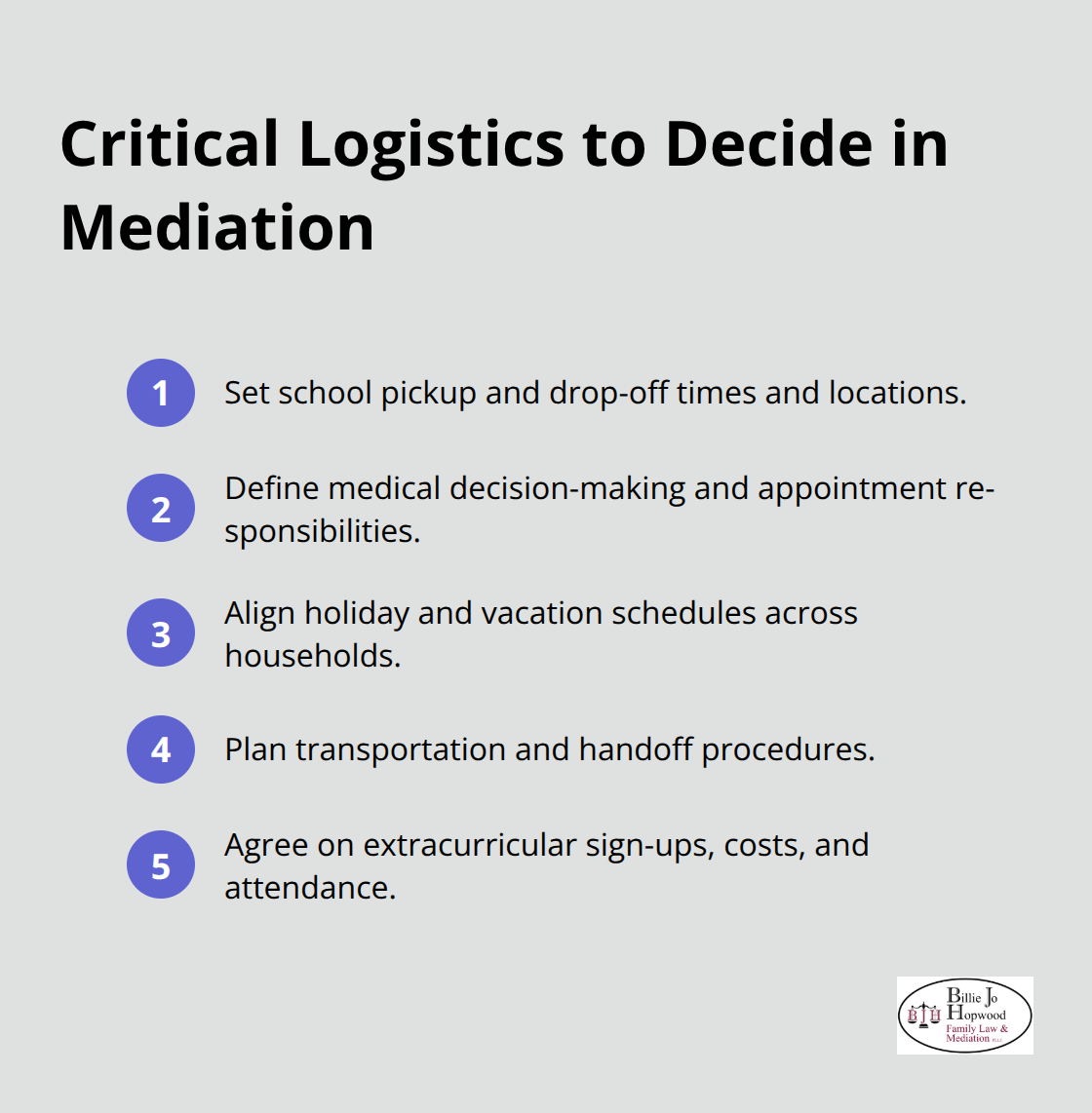
These concrete details prevent vague agreements that crumble when real life happens. Detailed parenting plans reduce ongoing conflicts significantly because both parents understand exactly what to expect, eliminating the ambiguity that triggers disputes months or years later.
Establish Ground Rules That Protect Your Children’s Peace
Safe communication during mediation requires establishing ground rules before negotiations begin. You agree to stay child-focused, avoid personal attacks, and pause conversations if emotions escalate. A mediator enforces these boundaries, keeping discussions productive. This matters because children absorb parental tension like sponges-they hear raised voices through walls, notice when parents refuse to speak directly, and internalize blame even when it’s not directed at them.
Mediation eliminates this background stress by modeling respectful disagreement. You learn to separate the parenting conversation from the marriage dissolution, which sounds simple but transforms outcomes. Instead of fighting over who caused the divorce, you solve problems together: How do you maintain your daughter’s soccer schedule across two households? What’s your process for deciding on summer camp? Who pays for braces, and how do you communicate about school performance?
Move From Conflict to Cooperation
When you and your co-parent work together to craft a parenting plan rather than fight over one in court, you both remain invested in maintaining contact and involvement. This collaborative mindset carries forward into co-parenting. You respect agreements you created together, stick to schedules you both designed, and prioritize your children’s access to both parents. A parenting plan developed in mediation reflects your family’s actual needs and constraints, not a judge’s generic ruling (which means it stays enforceable and sustainable over time).
Research from the U.S. Census Bureau shows that children whose parents maintain cooperative relationships demonstrate better educational outcomes, lower incarceration rates, and improved mental health compared to those caught in ongoing parental conflict. This shift from adversarial positioning to collaborative problem-solving directly addresses the long-term damage that divorce can inflict on children. When your kids see parents working together even as the marriage ends, they internalize a powerful message about respect and shared responsibility.
The next step involves translating these principles into concrete daily routines that anchor your children’s lives across two households.
What Actually Works When You’re Negotiating Your Child’s Future
Mediation demands a mental shift that most parents struggle with initially: you must separate your anger about the marriage from decisions about your children’s welfare. This isn’t about forgiveness or pretending the divorce doesn’t hurt. It’s about recognizing that every choice you make during mediation shapes your child’s next decade. When you focus on your child’s concrete needs-school enrollment, medical decisions, holiday schedules-instead of rehashing who caused the breakdown, mediation moves forward. A mediator in Melbourne, Florida will redirect conversations repeatedly. You start arguing about infidelity, and the mediator pulls you back to the question: which parent handles the pediatrician appointments? This feels frustrating at first, but it works. Research from the U.S. Census Bureau shows that children whose parents maintain cooperative relationships demonstrate better educational outcomes and lower incarceration rates compared to those caught in ongoing parental conflict. Your job is to keep conversations anchored to logistics and your child’s stability, not your grievances.
Routines Are Your Child’s Anchor Across Two Homes
Consistency across both households directly reduces anxiety and behavioral problems in children. You need identical bedtimes, similar homework expectations, and aligned screen time rules-not because perfection matters, but because predictability does. Document these routines explicitly in your mediation agreement. School pickup happens at 3:15 p.m. every Tuesday and Thursday at your home. Dinner occurs at 6 p.m. in both households. Homework takes priority over screens. Your child knows what to expect when they walk through either door. When routines diverge dramatically, children internalize instability. They test boundaries differently at each house, experience confusion about expectations, and struggle to transition between homes. The mediator helps you identify which routines matter most to your child and negotiate how to maintain them. This isn’t micromanaging your co-parent; it’s protecting your child’s sense of order during a chaotic transition.
Communication Protocols Prevent Conflict From Reaching Your Child
Children should never witness negotiations, hear financial details, or sense blame directed at either parent. This requires you to establish firm boundaries before mediation sessions begin. You don’t discuss the divorce with your child. You don’t ask your child to relay messages to their other parent.
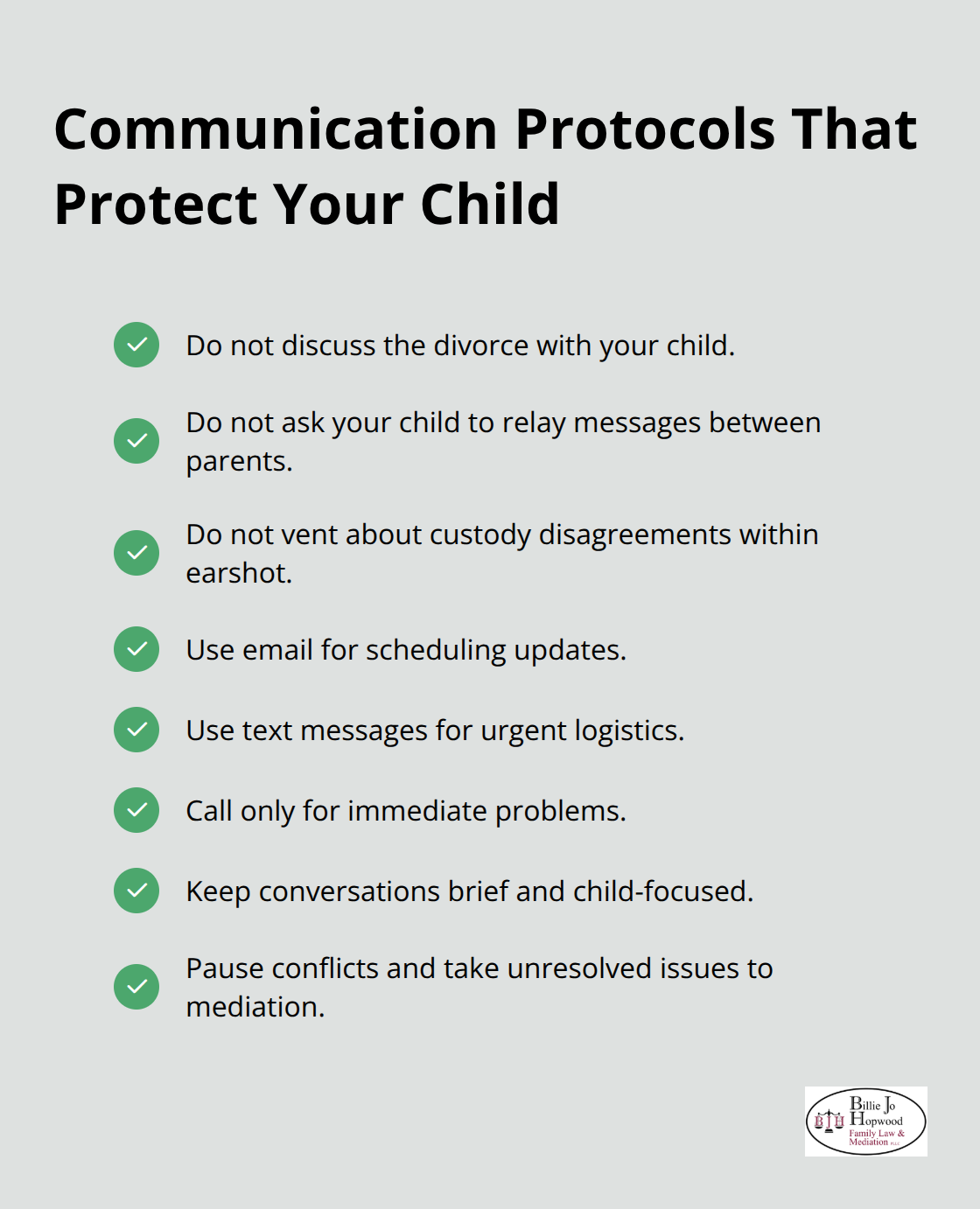
You don’t vent about custody disagreements in earshot. These rules sound obvious, but divorced parents break them constantly under stress. Instead, establish a communication protocol with your co-parent: emails for scheduling updates, texts for urgent logistics, phone calls only for immediate problems. Keep conversations brief and child-focused. When conflict arises-and it will-you pause and either resolve it separately or bring it to a mediator rather than involving your child. Parents who implement clear communication boundaries during mediation maintain them afterward, which translates directly to calmer co-parenting relationships. Your child benefits from seeing parents who disagree respectfully, communicate efficiently, and prioritize their wellbeing over winning arguments.
Final Thoughts
Courtroom litigation stretches your family’s pain across 9 months to 2 years while judges make decisions about your children’s lives. Mediation compresses this timeline dramatically, resolving most cases in a few months or less. Your children spend less time in legal limbo and more time adjusting to their new normal.
Court battles drain resources through attorney fees, court appearances, and endless settlement conferences. Mediation costs substantially less because you avoid adversarial posturing and courtroom time. Those savings stay in your family’s pocket, funding your children’s education, activities, and daily needs instead of enriching the legal system.
An empathetic divorce mediation approach returns control to you and your co-parent rather than handing it to a judge who doesn’t know your family. You craft parenting arrangements that fit your family’s reality, create agreements you both respect, and build the stability your children need. Contact Billie Jo Hopwood Family Law & Mediation, PLLC in Melbourne, Florida to explore how mediation can support your family through this transition.