Divorce mediation offers a collaborative approach to ending a marriage in Melbourne, Florida. At Billie Jo Hopwood Family Law & Mediation, PLLC, we’ve seen firsthand how proper preparation can lead to smoother negotiations and better outcomes.
This guide will walk you through how to prepare for divorce mediation in Melbourne, Florida, covering essential steps and strategies. By following these tips, you’ll be better equipped to navigate the mediation process and work towards a fair resolution.
What Is Divorce Mediation in Melbourne Florida?
Definition and Purpose
Divorce mediation in Melbourne, Florida involves a neutral third party who assists couples in resolving their disagreements to reach a mutually acceptable divorce settlement. This process aims to reduce conflict and promote cooperation between spouses, often leading to more satisfactory outcomes for all parties involved.
Mediation vs. Traditional Litigation
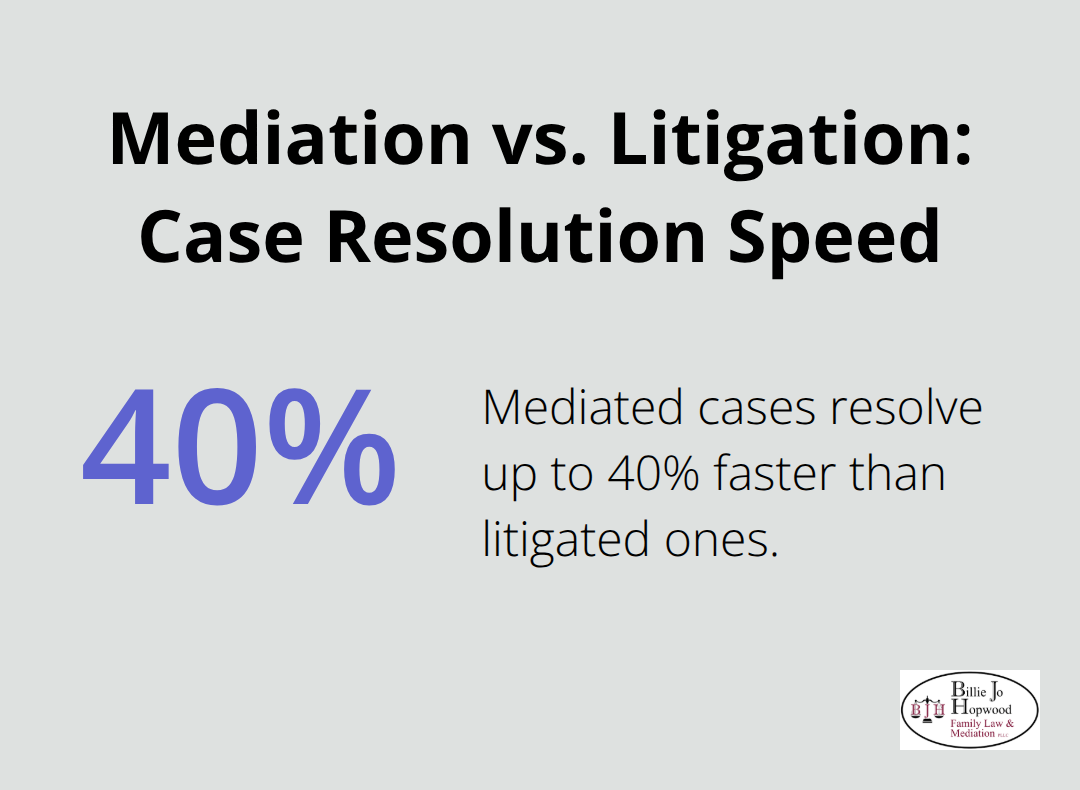
Mediation differs significantly from courtroom battles. In Melbourne, this approach puts control in the hands of the divorcing couple, not a judge. This often results in faster resolutions and substantial cost savings. The Florida Dispute Resolution Center reports that mediated cases resolve up to 40% faster than litigated ones.
The Melbourne Mediation Process
The mediation process in Melbourne typically starts with an initial meeting to establish ground rules. Subsequent sessions focus on specific issues such as property division or child custody. According to the Brevard County Clerk of Courts, most divorce mediations in Melbourne conclude within three to four sessions.
Advantages of Mediation
Choosing mediation in Melbourne offers several benefits:
- Cost-Effective: Mediation generally costs less than going to trial (average costs range from $3,000 to $8,000, compared to $15,000 to $30,000 for litigation).
- Higher Compliance: The Florida Bar reports that mediated settlements have a compliance rate exceeding 80%, significantly higher than court-imposed judgments.
- Better Post-Divorce Relationships: Couples who choose mediation often maintain improved relationships after divorce (particularly beneficial for co-parenting).
- Tailored Solutions: Mediation allows for more creative solutions customized to your family’s unique needs, which isn’t always possible in the rigid structure of a courtroom.
Preparing for Your First Mediation Session
As you prepare for your first mediation session, consider gathering relevant financial documents, identifying your priorities, and reflecting on potential compromises. These steps will help you enter the mediation process with clarity and confidence, setting the stage for productive negotiations and a fair resolution.
How to Prepare for Divorce Mediation
Proper preparation sets the foundation for successful divorce mediation in Melbourne, Florida. We recommend the following steps to ensure you’re ready for your mediation sessions.
Organize Your Financial Information
Start by collecting all relevant financial documents. This includes:
- Tax returns for the past three years
- Recent pay stubs
- Bank statements
- Credit card statements
- Mortgage documents
- Retirement account statements
- List of assets and debts
The Florida Courts report that a complete financial picture can accelerate the mediation process by up to 30%. Create a detailed spreadsheet of your assets and liabilities to provide a clear overview of your financial situation.
Identify Your Priorities
Take time to reflect on what matters most to you in the divorce settlement. Is it keeping the family home? Maintaining a specific custody arrangement? Or securing a certain level of financial support? The American Bar Association indicates that clients who clearly define their priorities are 40% more likely to reach a satisfactory agreement in mediation.
Create a Parenting Plan Draft
If you have children, develop a preliminary parenting plan. Include details such as:
- Custody arrangements
- Visitation schedules
- Holiday and vacation time
- Decision-making responsibilities for education, healthcare, and religious upbringing
The Florida Department of Children and Families notes that couples who arrive at mediation with a draft parenting plan resolve custody issues 25% faster than those who don’t.
Understand Florida Divorce Laws
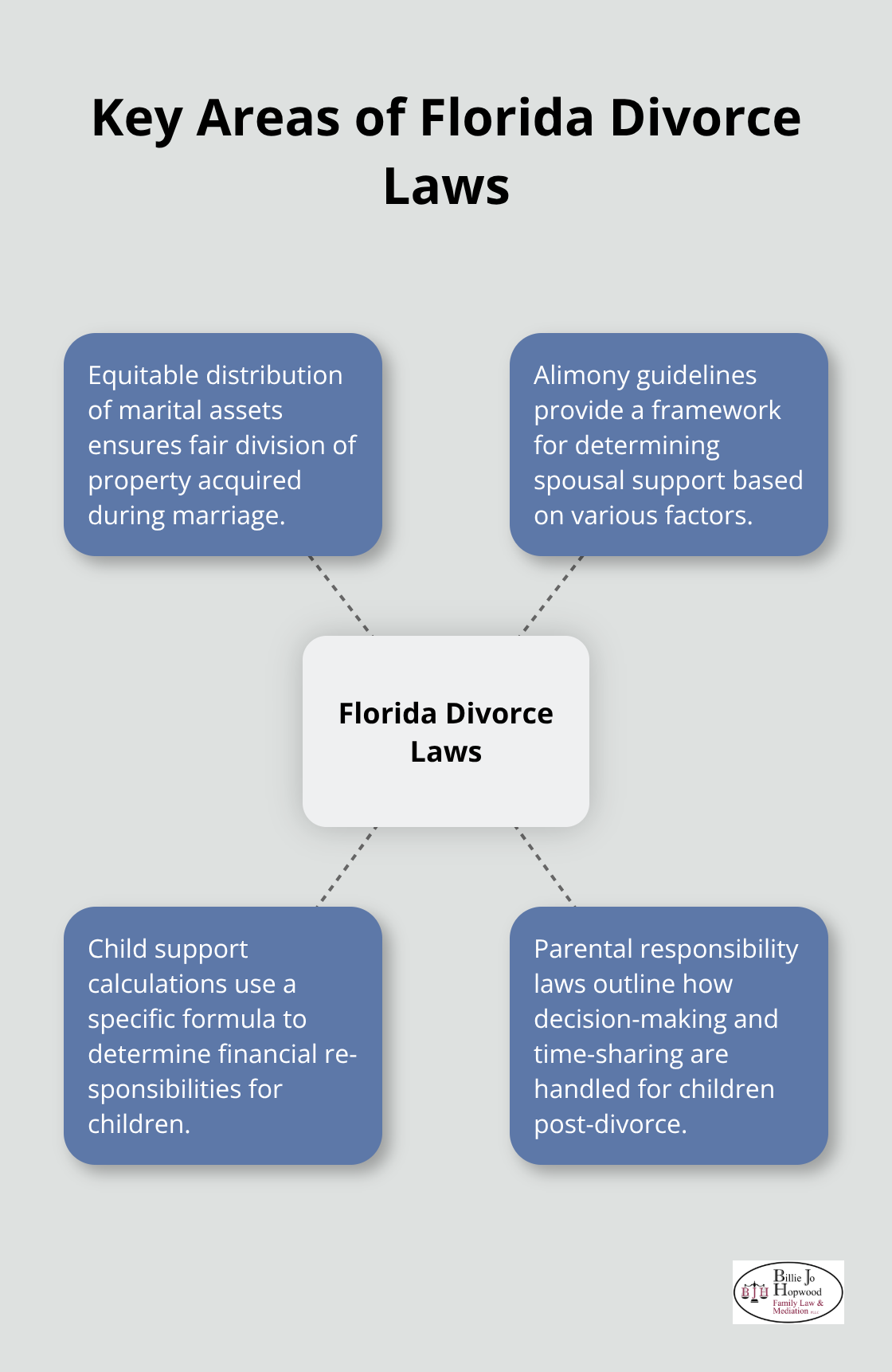
Familiarize yourself with Florida’s divorce laws. Key areas to research include:
- Equitable distribution of marital assets
- Alimony guidelines
- Child support calculations
- Parental responsibility laws
The Florida Bar offers free online resources that explain these laws in detail. A few hours spent reviewing this information can significantly enhance your ability to negotiate effectively during mediation.
Prepare Emotionally
Emotional preparation is just as important as financial and legal preparation. Try to:
- Practice stress-management techniques (such as deep breathing or meditation)
- Seek support from friends, family, or a therapist
- Focus on long-term goals rather than short-term emotions
Emotional readiness can make a substantial difference in your ability to negotiate calmly and rationally during mediation sessions.
As you complete these preparation steps, you’ll find yourself well-equipped to navigate the mediation process. The next section will explore strategies to employ during your actual mediation sessions for the best possible outcomes.
How to Navigate Mediation Sessions Successfully
Practice Active Listening and Clear Communication
Effective communication forms the foundation of successful mediation. Focus on your spouse’s statements without interruption. Paraphrase their points to confirm understanding. When expressing your views, use “I” statements to avoid blame and promote collaboration. For example, replace “You never consider my needs” with “I feel overlooked when my needs aren’t addressed.”
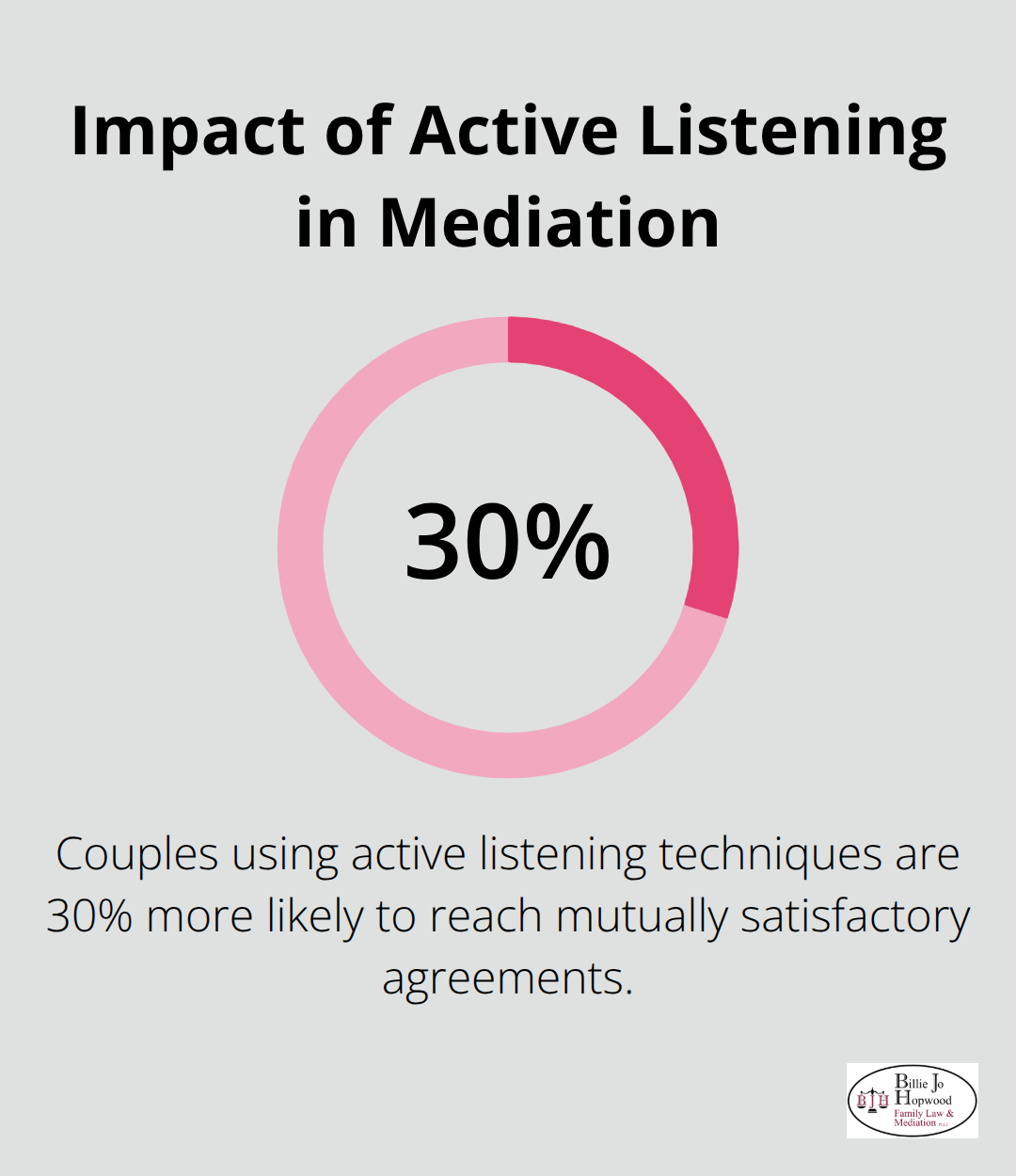
The Harvard Negotiation Project found that couples who used active listening techniques were 30% more likely to reach mutually satisfactory agreements in mediation. This approach improves understanding and reduces tension in the room.
Adopt a Problem-Solving Mindset
Approach mediation with a problem-solving attitude rather than a win-lose mentality. Find solutions that address both parties’ interests. The American Arbitration Association reports that mediation participants who prioritized problem-solving were 40% more likely to reach full agreements compared to those who approached sessions competitively.
To implement this strategy, create a list of your top three priorities before each session. During discussions, refer to this list to ensure you address what truly matters. Prepare multiple solutions for each issue to increase the likelihood of finding common ground.
Manage Your Emotions Effectively
Divorce mediation can trigger strong emotions. Use stress-management techniques to maintain composure. Practice deep breathing exercises or brief meditation before each session. The Mayo Clinic suggests that even a 5-minute meditation can significantly reduce stress levels.
If you feel overwhelmed during sessions, request a short break. Use this time to regain composure and refocus on your objectives. A calm demeanor enhances your ability to make rational decisions and communicate effectively.
Work Collaboratively with Your Mediator
Your mediator serves as a neutral third party to facilitate discussions and help you reach an agreement. Provide them with all necessary information and be open to their suggestions. A study by the Mediation Quarterly found that parties who actively engaged with their mediator resolved disputes 25% faster than those who didn’t.
Try to view your mediator as a valuable resource (rather than an adversary). Their experience and impartiality can help you navigate complex issues and find creative solutions.
Stay Focused on Long-Term Goals
During mediation, it’s easy to get caught up in short-term emotions. However, maintaining a focus on your long-term goals leads to better outcomes. The Journal of Family Psychology reports that couples who prioritized long-term objectives were 35% more likely to report satisfaction with their mediation results one year post-divorce.
Create a list of your long-term goals (e.g., financial stability, positive co-parenting relationship) and review it before each session. This practice will help you make decisions aligned with your future well-being.
Final Thoughts
Proper preparation for divorce mediation in Melbourne, Florida sets the stage for productive negotiations and fair resolutions. Effective communication, a problem-solving mindset, and emotional management contribute to successful mediation sessions. The benefits of mediation extend beyond immediate resolution, fostering better post-divorce relationships and reducing financial strain.
Billie Jo Hopwood Family Law & Mediation, PLLC guides families through challenging legal situations with compassion. Our team has observed how thorough preparation and a cooperative approach transform the divorce process. We support clients as they navigate this difficult transition.
Knowing how to prepare for divorce mediation in Melbourne, Florida empowers individuals to approach the process with confidence. Mediation offers a path to a more positive future for families in Melbourne. Our firm stands ready to assist you in achieving the best possible outcome for your unique situation.