Family law mediation offers a collaborative path to resolve disputes without the stress and expense of court battles. Understanding how to prepare for mediation family law cases can make the difference between a successful resolution and prolonged conflict.
At Billie Jo Hopwood Family Law & Mediation, PLLC, we’ve seen how proper preparation transforms outcomes for families in Melbourne Florida. The right preparation sets you up for productive discussions and fair agreements.
What Happens During Family Law Mediation
Family law mediation places you and your spouse in a private conference room with a neutral mediator who facilitates discussions about your divorce or custody issues. The mediator cannot make decisions for you but guides conversations toward mutually acceptable solutions. Sessions typically last 2-4 hours, and most cases resolve within 1-3 sessions according to Florida court statistics. The mediator begins with an explanation of confidentiality rules, then helps you identify key issues like property division, child custody schedules, and financial support obligations.
How Mediation Saves Time and Money
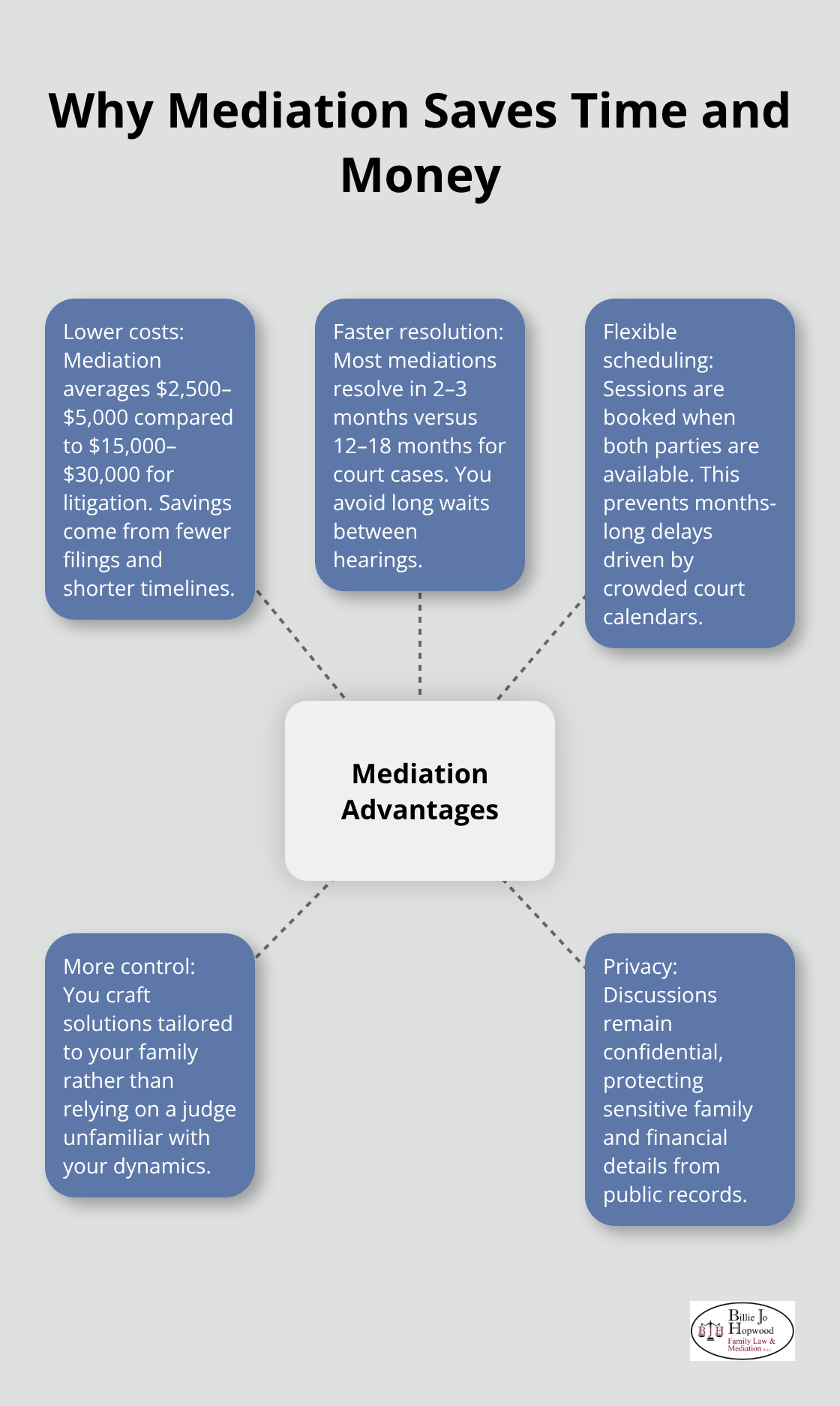
Traditional litigation costs Florida families an average of $15,000-$30,000 and takes 12-18 months to complete, while mediation averages $2,500-$5,000 and resolves within 2-3 months. Court schedules control litigation timelines and force you to wait months between hearings. Mediation lets you schedule sessions when both parties are available. You also retain control over outcomes instead of leaving decisions to a judge who knows nothing about your family dynamics. The confidential nature of mediation protects sensitive information from public court records (unlike traditional litigation).
When Florida Courts Require Mediation
Florida Statute 44.102 mandates mediation in most family law cases before trial, including divorce, custody modifications, and paternity disputes. Courts waive this requirement only in domestic violence cases or when one party lives outside Florida. Some judges order mediation even in uncontested divorces to address potential future conflicts. The court provides a list of certified mediators, but you can select your own qualified professional. Failure to attend court-ordered mediation can result in sanctions and delays your case resolution.
What to Expect on Mediation Day
The mediator opens each session with ground rules and confidentiality agreements that protect your discussions. You and your spouse sit in the same room (or separate rooms if needed) while the mediator moves between parties to facilitate negotiations. Most mediators use a combination of joint sessions and private caucuses to address sensitive topics. The process remains flexible – you can take breaks, request private time with your attorney, or pause sessions if emotions run high. Success depends on your willingness to communicate openly and consider creative solutions that work for both parties.
With this foundation of what mediation involves, you can now focus on gathering the essential documents and information that will make your sessions productive and efficient.
Essential Documents and Information to Gather
Complete financial documentation forms the backbone of productive mediation sessions. Florida courts require complete financial affidavits under Family Rule 12.285, and incomplete records delay agreements and increase costs. You must gather three years of tax returns, bank statements, retirement account statements, and credit card statements. Include pay stubs from the past six months, property deeds, mortgage statements, and vehicle titles. Create a detailed spreadsheet that lists every asset and debt with current values – this saves hours during mediation and prevents disputes over forgotten items.
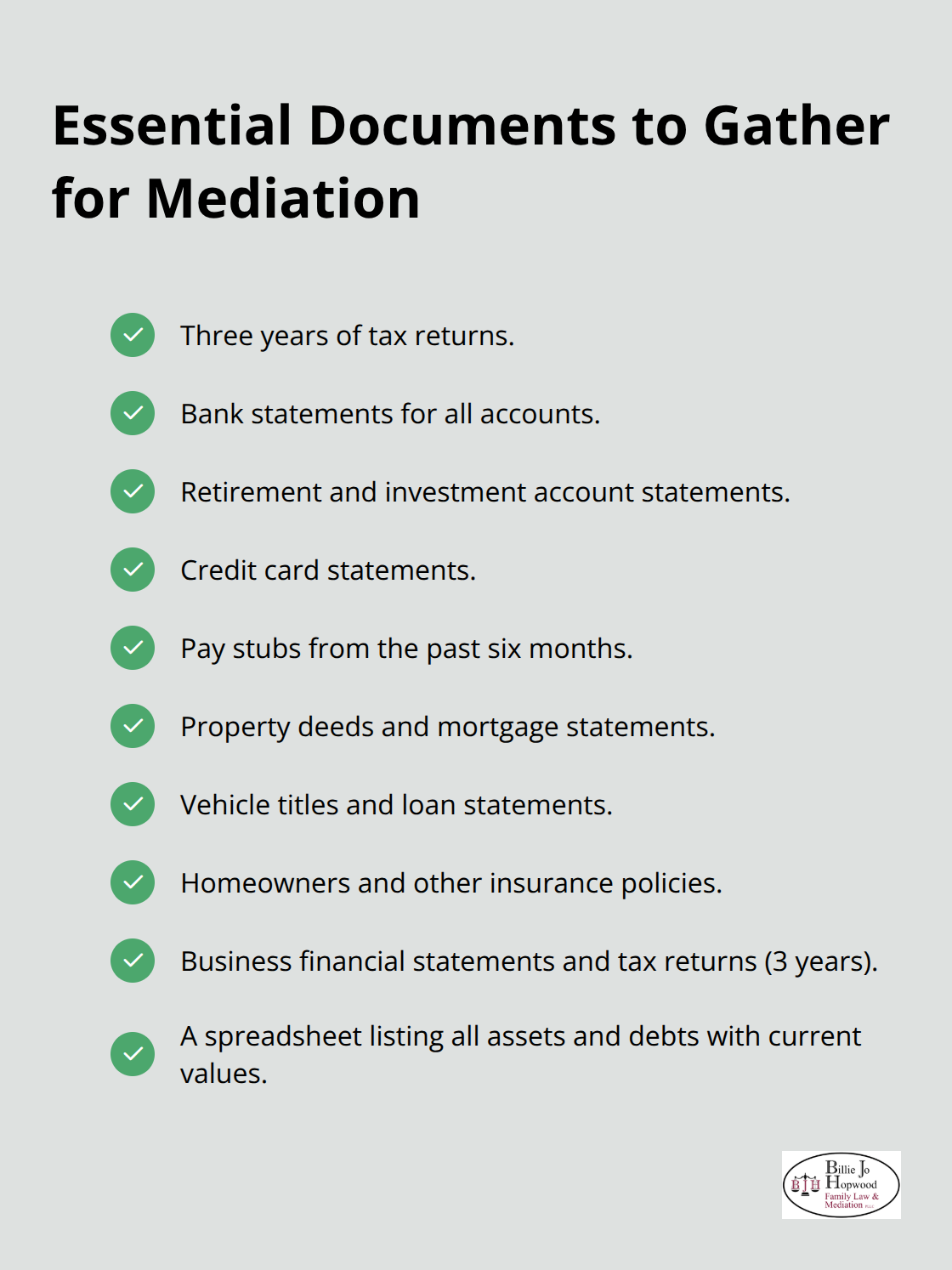
Insurance policies, business financial statements, and investment account records complete your financial picture.
Child Custody Documentation Requirements
Parents must provide school records, medical information, and current schedules for all children. Document current parenting time arrangements with specific dates and times to establish patterns. Include photographs of children’s bedrooms, school districts, and neighborhood amenities that support your custody position. Gather receipts for child-related expenses like medical bills, school supplies, and activity fees from the past year. Text messages, emails, and voicemails between parents about children provide evidence of communication patterns and cooperation levels.
Communication Evidence That Matters
Save all written communications between you and your spouse from the past two years, including text messages, emails, and social media interactions. Print bank records that show unusual spending patterns or hidden assets – these documents often reveal financial misconduct that impacts property division. Document any instances of missed visits, late support payments, or violation of temporary orders with dates and details. Phone records that show excessive calls or harassment support requests for communication restrictions. Marriage counseling records and therapy notes demonstrate efforts to save the relationship and can influence alimony decisions.
Property and Asset Documentation
Real estate appraisals, vehicle valuations, and business assessments provide accurate values for property division discussions. Collect mortgage statements, property tax records, and homeowners insurance policies for all real estate holdings. Vehicle titles, loan statements, and current market valuations help determine fair distribution of automobiles and recreational vehicles. Business owners need profit and loss statements, balance sheets, and tax returns for the past three years (these documents often require professional valuation). Retirement account statements, pension benefit summaries, and 401k loan information complete the asset documentation process.
Once you have organized all necessary documents, the next step involves preparing yourself mentally and emotionally for the mediation process itself.
How Do You Mentally Prepare for Mediation
Emotional preparation for mediation requires specific strategies that address the psychological challenges of divorce negotiations. Research from the American Bar Association shows that 73% of mediation failures stem from emotional reactions rather than legal disagreements. You must acknowledge that mediation will trigger intense feelings about your marriage, children, and financial future. Schedule therapy sessions or counseling appointments in the weeks before mediation to process anger, grief, and anxiety. Practice stress management exercises that you can use during sessions when emotions escalate. Sleep eight hours the night before mediation and avoid alcohol or caffeine that morning (these substances impair judgment and increase emotional volatility).
Set Clear Goals and Boundaries
Write down your top three priorities before you enter mediation and rank them in order of importance. Florida divorce statistics indicate that couples who identify specific goals beforehand reach agreements 68% faster than those who enter mediation without clear objectives. Create three lists: must-have outcomes, acceptable compromises, and absolute deal-breakers. For child custody, decide whether overnight visits matter more than holiday schedules or school district preferences. Financial priorities might include keeping the family home versus maximizing retirement savings. Share these priorities with your attorney but keep your deal-breakers private until negotiations require disclosure. Research typical outcomes for cases similar to yours to set realistic expectations about property division percentages and custody arrangements.
Use Communication Strategies That Work
Prepare specific phrases for high-stress moments during mediation sessions. Practice phrases like “I need a five-minute break” or “Let me discuss this with my attorney” instead of reacting emotionally to provocative statements. Studies from the Association of Family and Conciliation Courts show that couples who maintain neutral language during mediation reach settlements 45% more often than those who use accusatory or emotional language.

Focus conversations on future arrangements rather than past grievances (mediation addresses how to move forward, not who caused the divorce). Take notes during sessions to stay focused on facts rather than emotions. Avoid personal attacks or blame language that derails productive discussions and extends mediation timelines.
Final Thoughts
Successful mediation outcomes depend on thorough preparation that addresses both practical and emotional aspects of your case. Complete financial documentation, child-related records, and mental preparation create the foundation for productive discussions. Florida families who understand how to prepare for mediation family law cases reach agreements 68% faster and spend significantly less on legal fees compared to those who enter mediation unprepared.
Your preparation directly impacts your ability to communicate effectively, make informed decisions, and protect your family’s interests during negotiations. The time you invest in document collection and priority setting pays dividends when you sit across from your spouse and mediator. Proper preparation transforms what could be a contentious process into a collaborative solution (rather than an adversarial battle).
We at Billie Jo Hopwood Family Law & Mediation, PLLC guide Melbourne Florida families through every step of the mediation process. Our approach helps you prepare thoroughly while you maintain focus on your family’s future. Contact our firm to discuss your specific situation and develop a preparation strategy that positions you for mediation success.