
Family law litigation is often the path forward when mediation doesn’t resolve your case. Court proceedings can feel overwhelming, but understanding what lies ahead makes a real difference.
We at Billie Jo Hopwood Family Law & Mediation, PLLC have guided families through litigation in Melbourne, Florida for years. This guide walks you through the process, from initial filing to final judgment.
When Family Law Cases Go to Court
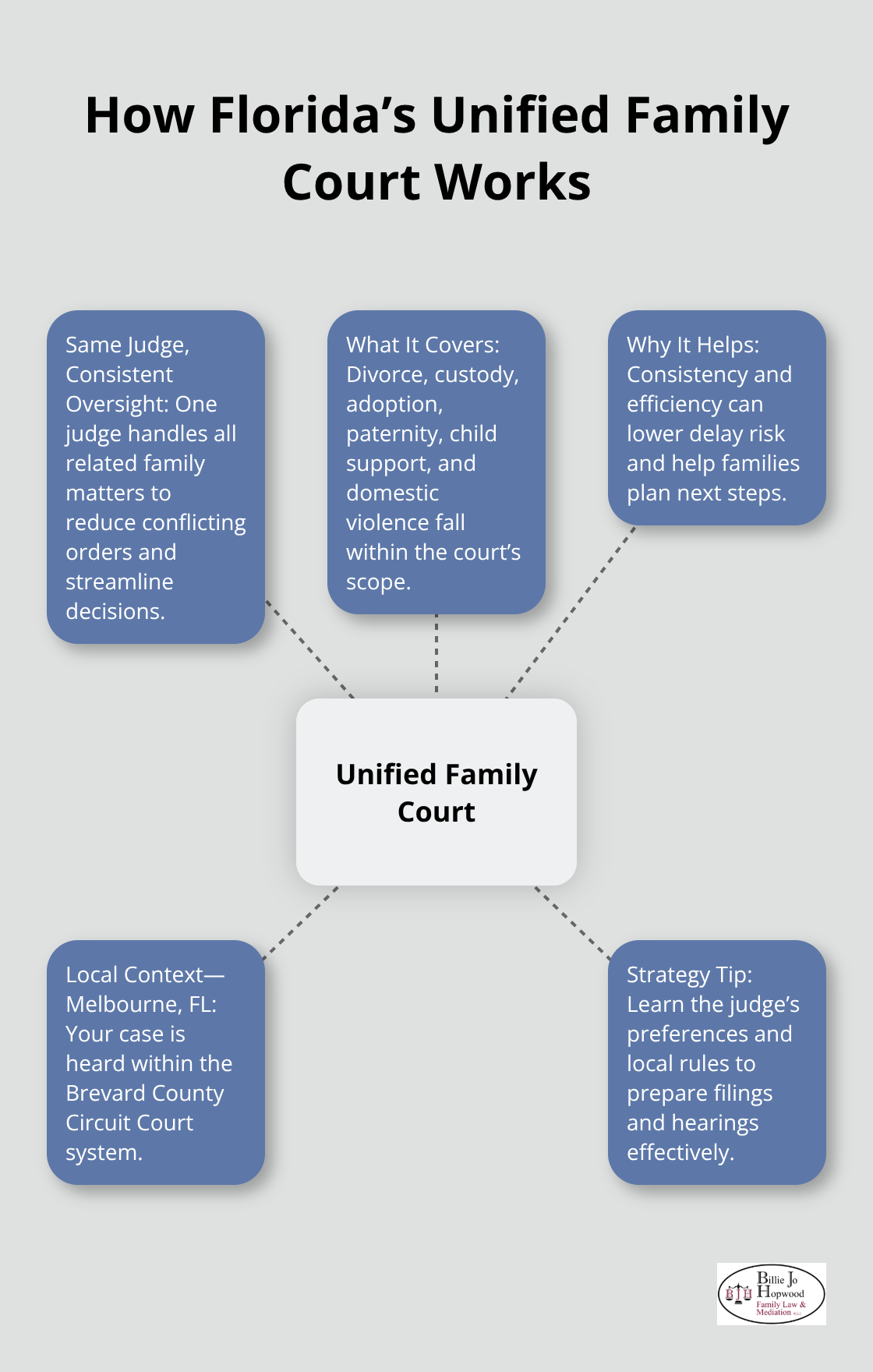
The Unified Family Court model in Florida assigns all cases involving a single family to the same judge to promote consistency and efficiency. This means one judge works with you throughout your case rather than rotating judges at different stages. The Melbourne Florida Family Court, part of the Brevard County Circuit Court, handles divorce, child custody, adoption, paternity, child support, and domestic violence matters. Understanding this system helps you prepare strategically for what lies ahead.
How litigation differs from mediation in practice
Mediation keeps both parties in control-you work toward a mutually acceptable agreement with a neutral mediator in a confidential setting. Litigation operates differently: it becomes adversarial, public, and governed by court rules and judicial decisions. A judge makes final decisions on contested issues, and court schedules determine when things move forward. The financial difference is stark. Uncontested divorces without children finalize in 4-6 weeks through mediation or settlement, while contested divorces or cases with children typically take 6-12 months in litigation, with complex scenarios exceeding a year.
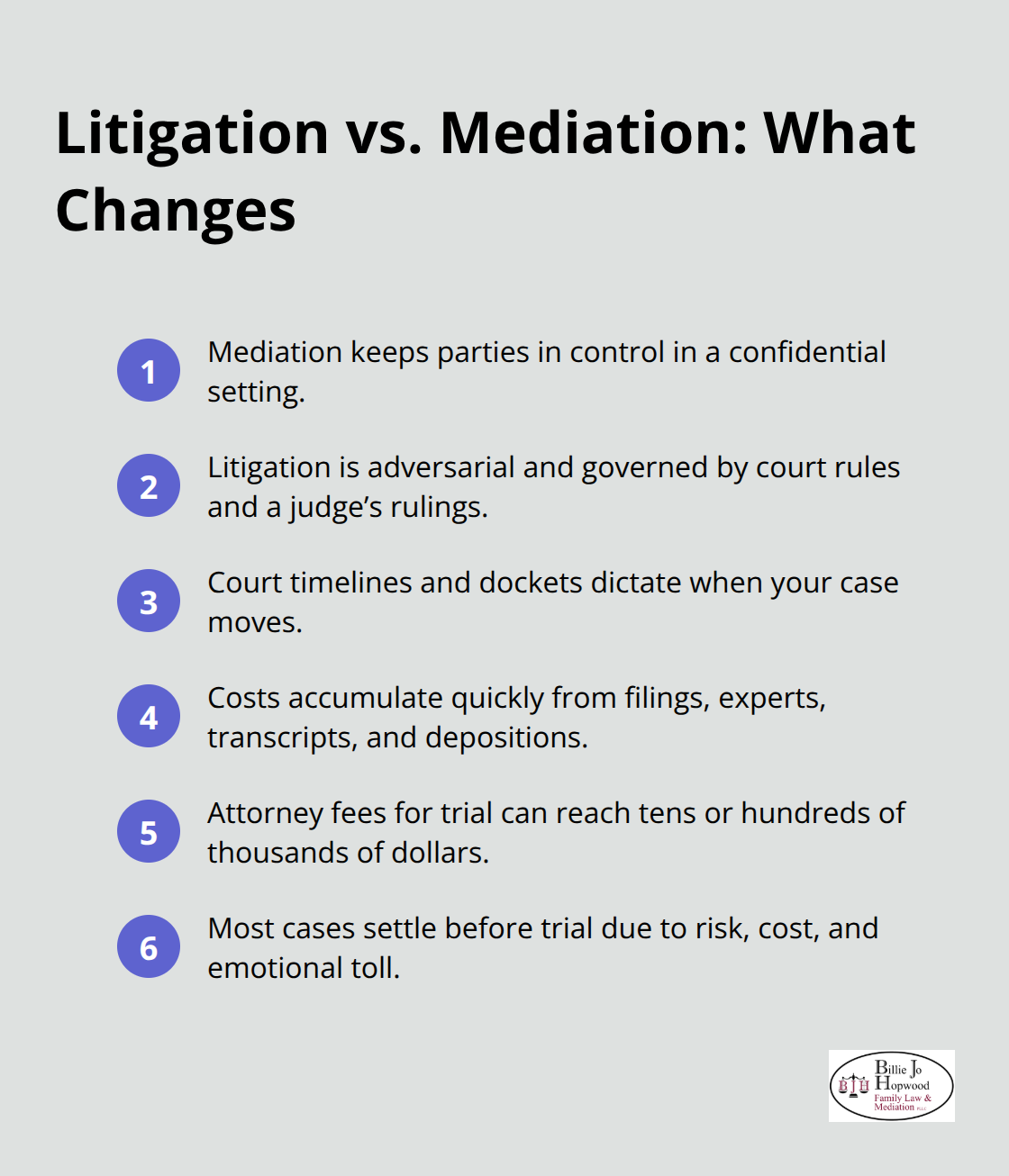
Court filing fees, service fees, expert witness fees, appraisals, transcripts, and depositions accumulate rapidly. Attorney fees for a family law trial can reach tens of thousands or hundreds of thousands of dollars, even if you represent yourself. Most family law matters settle before trial because the risk of trial outcomes often outweighs potential gains, and the emotional and financial toll becomes overwhelming.
What happens during court proceedings
The Melbourne Family Court requires mandatory mediation before most hearings or trials. Florida Statute §61.21(4) mandates parenting classes for cases involving children. You’ll interact with judges, case managers, mediators, and court clerks who manage records and procedures. Professional dress matters: men should wear a suit or dress pants with a collared shirt and tie; women should wear a business suit or conservative dress. Arrive early for security checks and show respect to the judge. Organize your documents in a binder with dividers and bring at least three copies of each document. When presenting your case, focus on facts, stay concise, and avoid emotional language. Self-representation is possible with help from the Florida Courts Help app, but professional representation typically produces better outcomes due to the complexity and high stakes involved. Court backlogs, discovery disputes, and the need for expert evaluations extend timelines unpredictably, making preparation and legal guidance invaluable.
Moving through discovery and pretrial preparation
Discovery allows both parties to exchange information and evidence before trial. This phase determines what documents, witness statements, and expert reports each side can present. Subpoenas compel witnesses to testify or produce documents. Expert evaluations (such as child custody assessments or property appraisals) often become necessary and add both time and expense. The court’s scheduling system controls when discovery deadlines occur and when pretrial conferences happen. These conferences give you and the other party a final chance to settle before trial proceeds. Many cases resolve at this stage because both sides gain clarity on the other’s position and evidence strength.
Preparing for what comes next
The complexity of family law litigation demands careful preparation. You need organized documentation, clear understanding of court procedures, and realistic expectations about timelines and costs. The next section covers how to gather evidence, work with your legal team, and understand the specific deadlines that control your case’s progression toward trial or settlement.
Common Issues Resolved Through Family Law Litigation
Family law litigation in Melbourne, Florida resolves disputes that mediation couldn’t settle. The court handles three major categories of family law conflicts, each with distinct financial and emotional consequences that shape how judges approach their decisions.
Child Custody and Timesharing Disputes
Child custody disputes represent some of the most contested litigation matters in Florida courts. When parents cannot agree on timesharing schedules, one parent typically seeks primary custody while the other fights for expanded visitation rights. The court applies the best interests of the child standard, examining factors like each parent’s relationship with the child, the child’s needs, school stability, and each parent’s ability to meet those needs. Florida courts increasingly favor shared parenting arrangements unless one parent poses a safety risk.
You must document everything regarding your involvement in the child’s daily life, school activities, medical appointments, and extracurricular participation. Courts weight demonstrated commitment over promises. Judges scrutinize parenting plans carefully because these decisions affect children for years. A parent who has consistently handled school pickups, medical care, and homework support has stronger evidence than one who claims equal capability without that history.
Alimony and Spousal Support Determinations
Alimony and spousal support disputes turn on income disparity and marriage length. Florida courts award alimony when one spouse lacks the financial ability to meet reasonable needs while the other spouse has the ability to pay. The length of your marriage directly impacts award duration. Marriages under ten years typically qualify for temporary alimony; marriages over seventeen years often result in permanent alimony.
The court examines both spouses’ earning capacity, education level, work history, and age. A spouse who left the workforce to raise children has stronger claims than one who chose not to work. Income calculations include salary, bonuses, commissions, rental income, and investment returns. Courts regularly impute income to spouses who deliberately underemploy themselves. If you earn fifty thousand dollars annually but possess credentials for eighty thousand dollar positions, the judge may calculate support based on the higher figure.
Division of Marital Assets and Debts
Asset and debt division follows Florida’s equitable distribution model, which doesn’t mean fifty-fifty but rather fair and just. The court classifies property as marital or non-marital. Marital assets acquired during the marriage get divided, while separate property brought into the marriage or inherited individually remains with that spouse.
Valuation disputes create significant litigation costs. Real estate appraisals, business valuations, and retirement account analyses require witnesses who charge thousands of dollars for reports. A business owner facing divorce must expect detailed financial scrutiny of company value, owner compensation, and hidden assets. Courts examine bank statements, tax returns, and financial affidavits carefully.
Hidden assets discovered during litigation damage credibility and often result in unfavorable rulings. Transparency about finances (even when unfavorable) produces better judicial outcomes than later-discovered concealment. The court’s ability to uncover financial deception through discovery and expert analysis means that attempting to hide assets typically backfires. Understanding these three major dispute categories helps you prepare evidence and realistic expectations for your specific situation, which directly influences how you should structure your case preparation and legal strategy moving forward.
Preparing Your Case for Trial
Organize Your Documentation Early
Start collecting documents immediately after you decide to litigate. The Melbourne Family Court requires specific paperwork before your case moves forward, and delays in submission extend your timeline significantly. You need your marriage certificate, financial affidavit (Forms 12.902(b) or 12.902(c)), parenting course certificate if children are involved, recent pay stubs, three years of tax returns, bank statements, and a comprehensive list of assets and debts. For child custody cases, add birth certificates, school records, medical records, and a proposed parenting plan.
Organize everything in a binder with dividers and create at least three complete copies of each document-one for yourself, one for the judge, and one for the opposing party or their attorney. This preparation prevents delays caused by missing documents and demonstrates to the court that you take the case seriously. Request documents from the IRS and medical providers early, as these often take weeks to arrive.
Build Your Trial Timeline and Strategy
Start two months before your trial date if one is scheduled. A practical rule of thumb for trial preparation is to begin collecting and organizing evidence at least eight weeks out, which gives you time to locate missing items, request records from schools or medical providers, and work with your legal team on strategy. Many people underestimate how long it takes to obtain three years of tax returns from the IRS or medical records from multiple providers.
Your legal team coordinates discovery, manages deadlines, and handles communication with the opposing party’s counsel. If you choose to represent yourself, understand that you are held to the same standards as licensed attorneys under the Florida Rules of Evidence. You must file a Notice to Set for Trial with the court, and in Brevard County, a Settlement Conference typically occurs before trial for divorce cases.
Prepare Your Trial Materials and Witnesses
Prepare a trial memorandum at least one week before trial-this brief document outlines your case history, the issues in dispute, applicable law, and what you are requesting from the judge. Create a witness list with up to five lay witnesses, including their names, phone numbers, addresses, and what they will testify about. If you have witnesses, file a Motion for Order for Issuance of Subpoenas and budget the associated fees, which vary by county but typically range from fifty to one hundred dollars per subpoena plus service fees. Notify witnesses well in advance so they can arrange time off work.
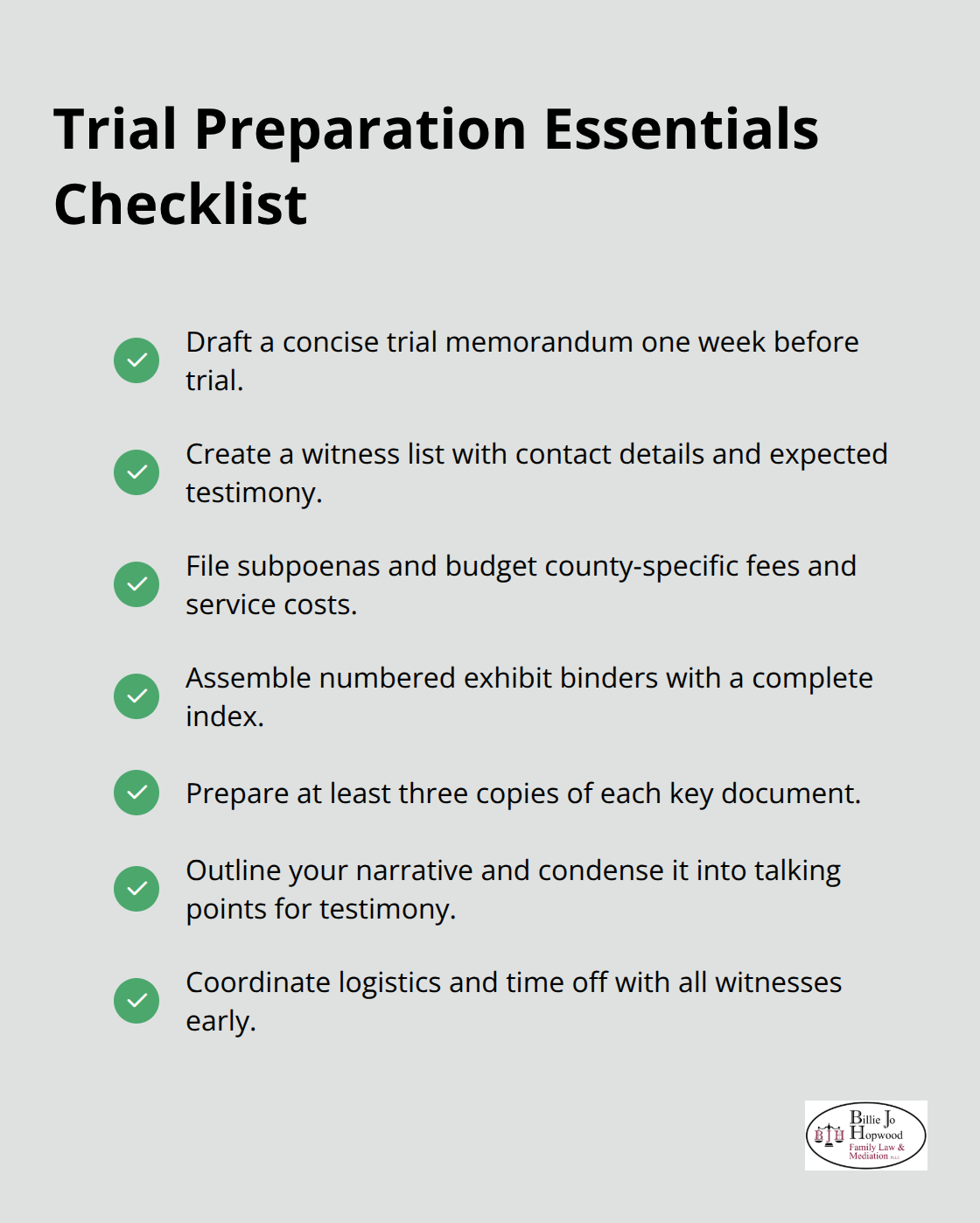
Prepare trial exhibit binders using three-ring binders with numbered exhibits and a complete index. Try to have these ready at least one week before trial. Draft a narrative of events since you and the other party met, then condense it into a concise outline you can reference during testimony-you cannot read directly from prepared statements while testifying.
Leverage Settlement Opportunities Before Trial
Court scheduling controls when discovery deadlines occur and when pretrial conferences happen. These conferences often become settlement opportunities because both sides gain clarity on evidence strength and the other party’s position. Judges can mandate mediation at any point during proceedings, typically after initial pleadings but before trial preparation begins, which may resolve your case without proceeding to trial. Many contested cases resolve at pretrial conferences rather than proceeding to trial, which saves thousands in additional attorney fees and reduces the emotional toll on your family.
Final Thoughts
Family law litigation in Melbourne, Florida demands both strategic thinking and compassionate guidance when mediation stalls and disputes require judicial intervention. Court orders are enforceable, and violations can result in contempt charges, so compliance matters immediately after your case resolves through trial judgment or settlement. The emotional transition after litigation ends deserves attention, and many people benefit from counseling or therapy after contentious proceedings conclude, particularly when children are involved.
Rebuilding stability for your family takes time, but clear court orders or settlement agreements provide the framework for that transition. Implementation of custody schedules, financial obligations, and property transfers must occur as specified in your final judgment or settlement agreement. Understanding what comes next helps you move forward with confidence rather than uncertainty about your obligations and rights.
We at Billie Jo Hopwood Family Law & Mediation, PLLC assist families through family law litigation with representation in divorce, child custody, alimony, and child support matters. If you’re facing family law litigation or considering whether court is necessary for your situation, contact our office to discuss your specific circumstances and explore your options.