
Family law disputes don’t have to mean courtroom battles and mounting legal bills. The collaborative family law process offers Melbourne, Florida families a different path-one where both sides work together with trained professionals to reach fair agreements.
We at Billie Jo Hopwood Family Law & Mediation, PLLC see this approach transform how families handle separation and divorce. This guide walks you through each stage and shows why many local families choose collaboration over litigation.
What Collaborative Family Law Actually Means
The Core Structure and Commitment
Collaborative family law is a structured process where both spouses and their attorneys commit upfront to resolving disputes without court involvement. Each party hires a lawyer trained specifically in collaborative methods, and together they assemble a team of neutral professionals-typically a financial specialist, a child specialist, and sometimes a mental health professional. The American Bar Association approved the Uniform Collaborative Law Act in 2024, recognizing this approach as a standardized framework that’s gaining traction across states. What separates collaboration from traditional litigation is fundamental: in court, a judge makes binding decisions after hearing arguments from both sides. In collaborative law, you and your spouse make the decisions together through structured negotiations, which means you retain control over outcomes that directly affect your family’s future.
How Costs Stack Up in Practice
The financial difference alone makes collaboration worth serious consideration. Mediation in Florida typically costs between $2,000 and $8,000, while traditional litigation frequently exceeds $20,000 per person according to data tracked by Florida family law practitioners. Collaborative divorce falls somewhere in the middle but stays significantly cheaper than court battles because you avoid lengthy discovery processes, depositions, and trial preparation. The participation agreement that all parties sign creates a powerful incentive structure: if the collaborative process fails to reach settlement, both attorneys must withdraw, which means everyone has strong motivation to solve problems cooperatively rather than fight in court.
The Professionals Who Support Your Family
The key professionals in a collaborative team serve specific roles. A financial neutral analyzes complex assets, debts, and income to ensure both parties understand the true financial picture-this transparency prevents costly disputes later. A child specialist focuses on your children’s emotional needs and helps develop parenting plans that actually work in real life, not just on paper. Mental health professionals address the emotional toll of separation and improve communication between spouses, which directly reduces conflict during negotiations.
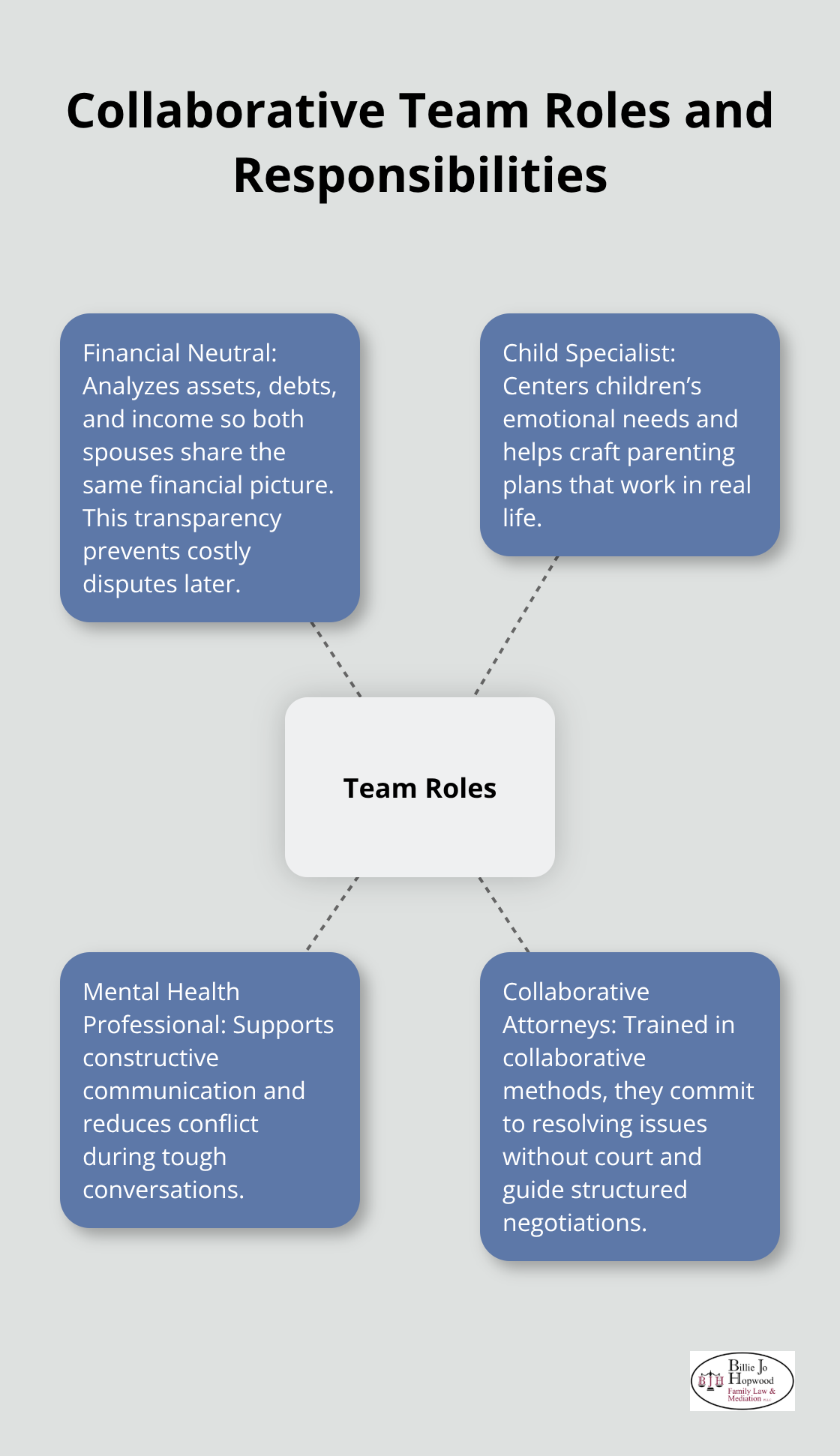
All parties commit to full disclosure, respectful communication, and prioritizing children’s needs through the participation agreement.
Why This Structure Works
This framework succeeds because it aligns everyone’s interests toward resolution. The financial neutral prevents misunderstandings about money. The child specialist ensures parenting plans reflect what your children actually need. Mental health professionals keep conversations constructive when emotions run high. Together, these professionals create an environment where both spouses can negotiate from a position of clarity rather than fear or anger-and that shift changes everything about how families move forward.
The next section walks you through exactly what happens at each stage, from the initial team assembly through the final settlement negotiations.
How the Collaborative Process Actually Works
The Participation Agreement Sets the Foundation
Starting collaborative family law means signing a participation agreement that commits both spouses to resolving disputes without court. This agreement carries real consequences-if either party walks away, both attorneys must withdraw, which means hiring new lawyers and starting over in court. This built-in consequence keeps both sides focused on settlement rather than posturing. The participation agreement also establishes ground rules: full financial disclosure, respectful communication, and a commitment to prioritize children’s needs. These aren’t suggestions-they’re binding commitments that shape how every conversation unfolds.
Assembling Your Team Based on Actual Needs
During the initial team assembly phase, you’ll meet with your attorney to identify which professionals your family actually needs. Not every case requires a child specialist or mental health coach-a financial neutral is almost always essential, but the specific team composition depends on your situation’s complexity. Your collaborative attorney helps you determine what professionals will add real value rather than just adding cost. The financial neutral analyzes complex assets, debts, and income to ensure both parties understand the true financial picture (this transparency prevents costly disputes later). A child specialist focuses on your children’s emotional needs and helps develop parenting plans that actually work in real life, not just on paper. Mental health professionals address the emotional toll of separation and improve communication between spouses, which directly reduces conflict during negotiations.
Information Gathering Through Structured Exchange
Information gathering happens through structured exchange rather than adversarial discovery. Both parties provide complete financial documents, asset valuations, and income records upfront, which typically takes two to four weeks depending on complexity. This transparency prevents the hidden-asset hunting that drives up litigation costs. Once everyone has the same information, negotiation sessions begin with a focus on identifying common interests rather than fighting over positions.
Negotiation Sessions That Produce Results
The financial neutral presents analysis that both parties trust because they selected this person together. Approximately 80 percent of couples who enter collaborative divorce reach settlement according to data tracked by Florida family law practitioners, and these agreements tend to stick because both parties shaped them directly. Negotiation sessions usually run two to three hours and happen roughly every two to four weeks, meaning most cases resolve within three to six months. This timeline beats litigation by months or years, and the cumulative cost stays substantially lower than court battles that can stretch for years and exceed $20,000 per person.

Understanding how these stages work prepares you for what comes next-the concrete financial and emotional benefits that families in Melbourne, Florida experience when they choose this path.
Why Collaborative Divorce Saves Money and Time in Melbourne, Florida
The Real Cost Difference That Matters
Collaborative divorce in Melbourne, Florida delivers measurable financial advantages that matter when your family’s resources are already stretched thin. Mediation in Florida typically costs between $2,000 and $8,000, while traditional litigation frequently exceeds $20,000 per person according to data tracked by Florida family law practitioners. Collaborative divorce generally lands between these figures but stays significantly cheaper than court because you avoid the adversarial machinery-no lengthy discovery battles, no depositions, no trial preparation. The participation agreement structure creates an incentive that traditional litigation lacks: if either party abandons the process, both attorneys must withdraw, meaning you would hire new lawyers and restart in court. This consequence keeps both spouses motivated to solve problems rather than stall.
Timeline Advantages That Add Up Fast
Most collaborative cases in Florida resolve within three to six months, whereas litigation routinely stretches two to three years or longer. Faster resolution means lower total attorney fees, fewer missed workdays, and less cumulative stress on your children. The financial neutral in your collaborative team prevents the asset-hunting and valuation disputes that drive litigation costs upward-everyone works from the same numbers from day one.
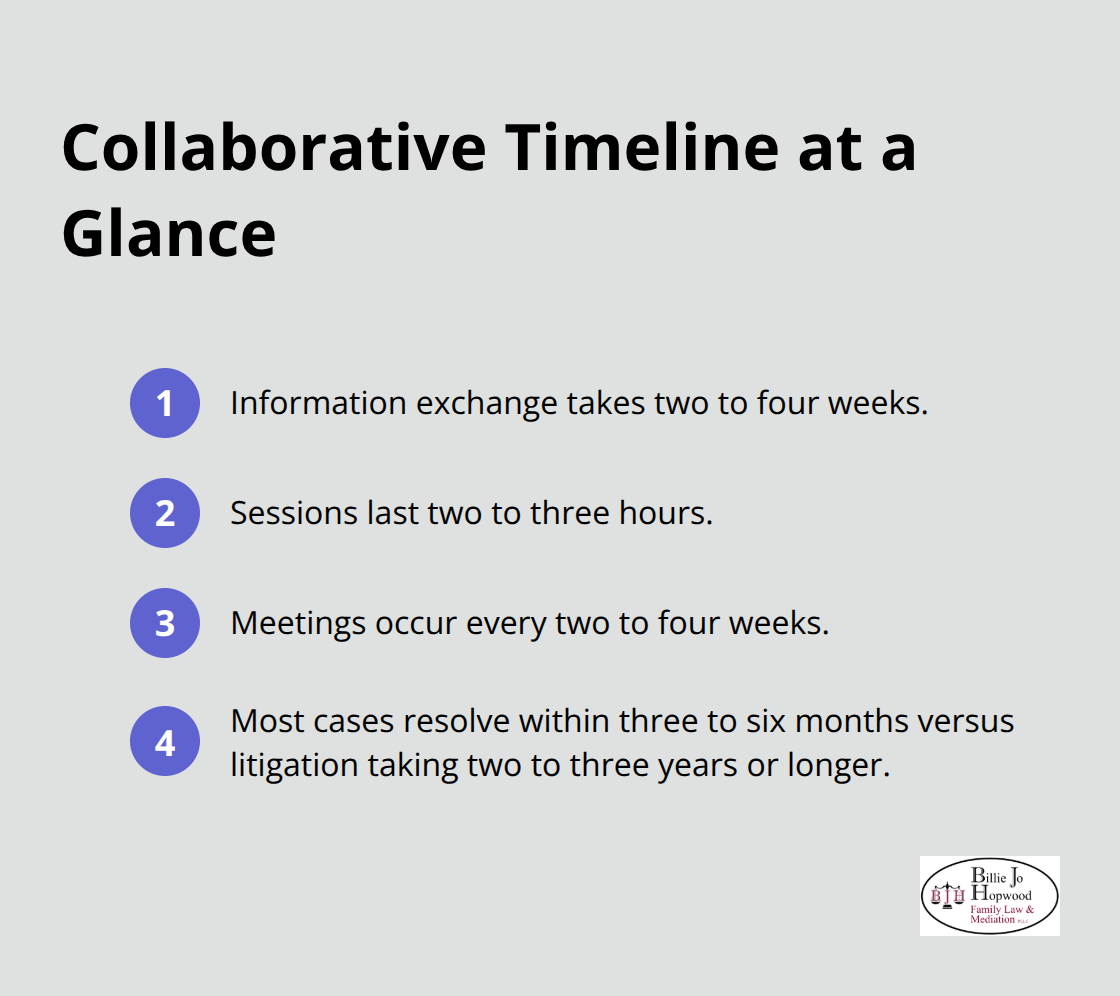
You avoid the expensive back-and-forth that characterizes court battles, where each side hires separate financial experts who often reach conflicting conclusions about asset values.
Control Over Outcomes Protects Your Family’s Future
Control over outcomes matters more than people realize when you make decisions that reshape your family’s structure. In court, a judge you have never met makes binding decisions about child custody, support amounts, and asset division based on limited courtroom testimony and legal standards that may not fit your family’s actual needs. In collaborative divorce, you and your spouse negotiate directly with professional support, which means your parenting plan reflects what your children actually need rather than what fits a judge’s template. Approximately 80 percent of couples who choose collaborative divorce reach settlement according to Florida family law data, and these agreements hold because both parties shaped them.
Protecting Your Long-Term Relationships
The less adversarial environment also protects your long-term co-parenting relationship-research shows children adjust better when parents use collaborative methods instead of battling through trial. Mental health professionals embedded in your collaborative team help keep conversations constructive when emotions run high, which prevents the scorched-earth communication patterns that plague litigated divorces. You retain dignity and agency throughout the process instead of becoming witnesses in your own family’s dissolution. The collaborative structure allows you to move forward as co-parents who respect each other, rather than as adversaries who fought in court.
Final Thoughts
Collaborative family law offers Melbourne, Florida families a fundamentally different approach to separation and divorce. Rather than fighting through court, both spouses work together with trained professionals to reach agreements that reflect their family’s actual needs. The collaborative family law process moves faster than litigation, costs significantly less, and gives you control over outcomes that directly affect your children’s future.
Melbourne, Florida families choose this approach because it protects what matters most. Your children adjust better when parents cooperate rather than battle through trial, and your long-term co-parenting relationship survives intact when you negotiate respectfully instead of becoming adversaries in a courtroom. The financial neutral prevents misunderstandings about money, the child specialist ensures parenting plans reflect what your kids actually need, and mental health professionals keep conversations constructive when emotions run high.
Contact Billie Jo Hopwood Family Law & Mediation, PLLC in Melbourne, Florida to discuss whether this approach fits your situation. We help families navigate separation with compassion and clarity, offering guidance through divorce, child custody, alimony, and child support matters. A consultation with our team clarifies your options and answers questions about how the collaborative family law process works for your family’s specific circumstances.