
Divorce proceedings in Melbourne, Florida don’t have to mean lengthy court battles. Two popular alternatives offer families more control over their outcomes.
At Billie Jo Hopwood Family Law & Mediation, PLLC, we help clients understand the collaborative law vs mediation debate. Both approaches prioritize cooperation over conflict, but they work differently and suit different situations.
How Do These Two Approaches Actually Work?
The Collaborative Law Process
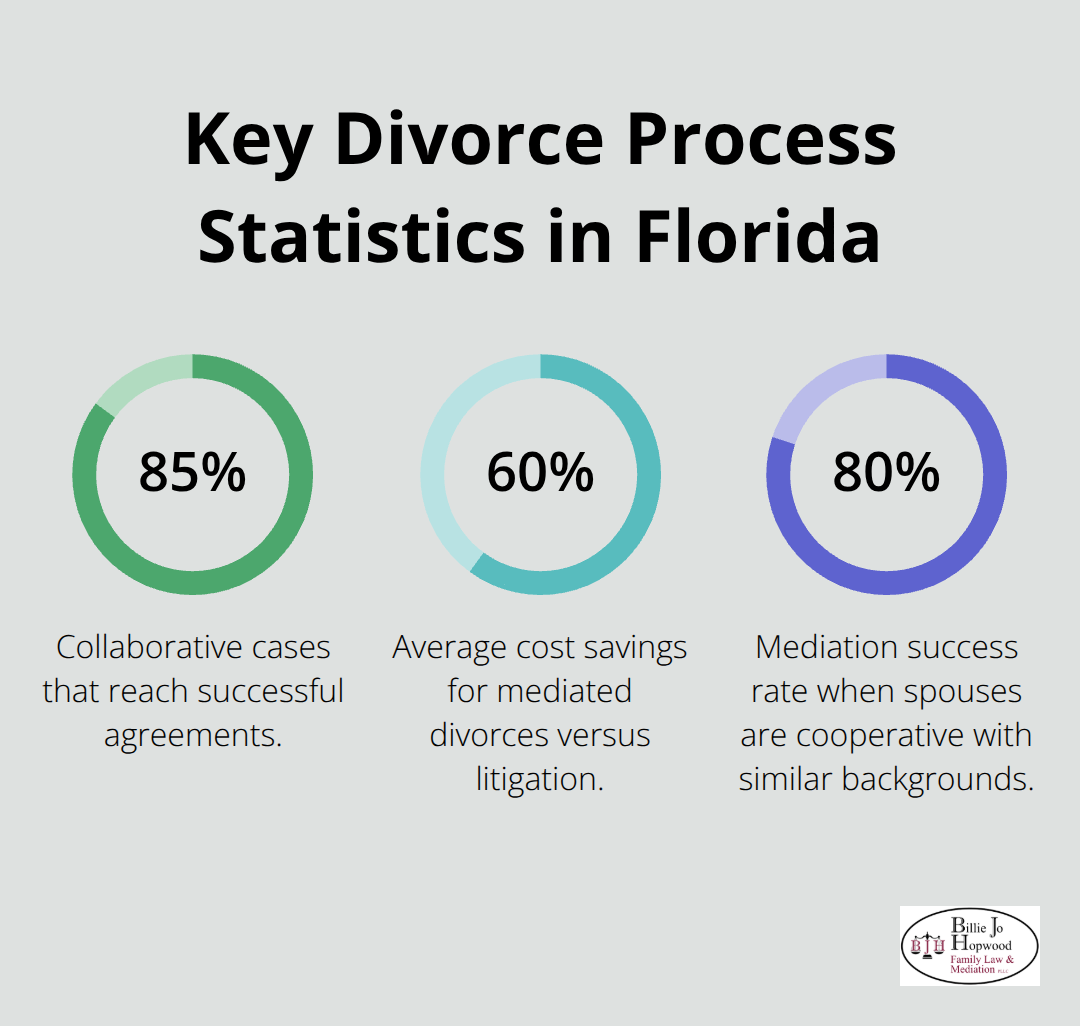
Collaborative law operates through a structured framework where both spouses retain their own attorneys who sign a no-court agreement. This binding commitment means if negotiations fail, both attorneys must withdraw and new legal representation becomes necessary. The Florida Dispute Resolution Center reports that this requirement motivates 85% of collaborative cases to reach successful agreements.
Sessions include both spouses and their attorneys who work together in the same room, often with additional professionals like financial advisors or child custody specialists. The process typically takes 6 to 12 months, with meetings that families schedule around their availability rather than court calendars. Each spouse pays for their own attorney, plus shared costs for any neutral professionals who participate.
The Mediation Framework
Mediation centers around one neutral mediator who facilitates discussions without decisions for the couple. The Florida Bar Association data shows mediated divorces in Melbourne cost approximately 60% less than litigation, with most cases that resolve in 3 to 4 months.
Sessions typically last 2 to 4 hours and allow each party to present their perspective without interruption. The mediator uses techniques like caucusing (private meetings with each spouse) to overcome deadlocks. Unlike collaborative law, couples can consult their own attorneys outside of sessions but attorneys don’t participate directly in negotiations. Once agreements are reached, the mediator drafts a Memorandum of Understanding that becomes the foundation for the final divorce decree.
The Core Distinction
The fundamental difference lies in legal representation during negotiations. Collaborative law provides continuous attorney advocacy throughout discussions, while mediation relies on neutral facilitation with optional outside legal consultation. This distinction shapes how each process handles complex financial matters and emotional dynamics between spouses.
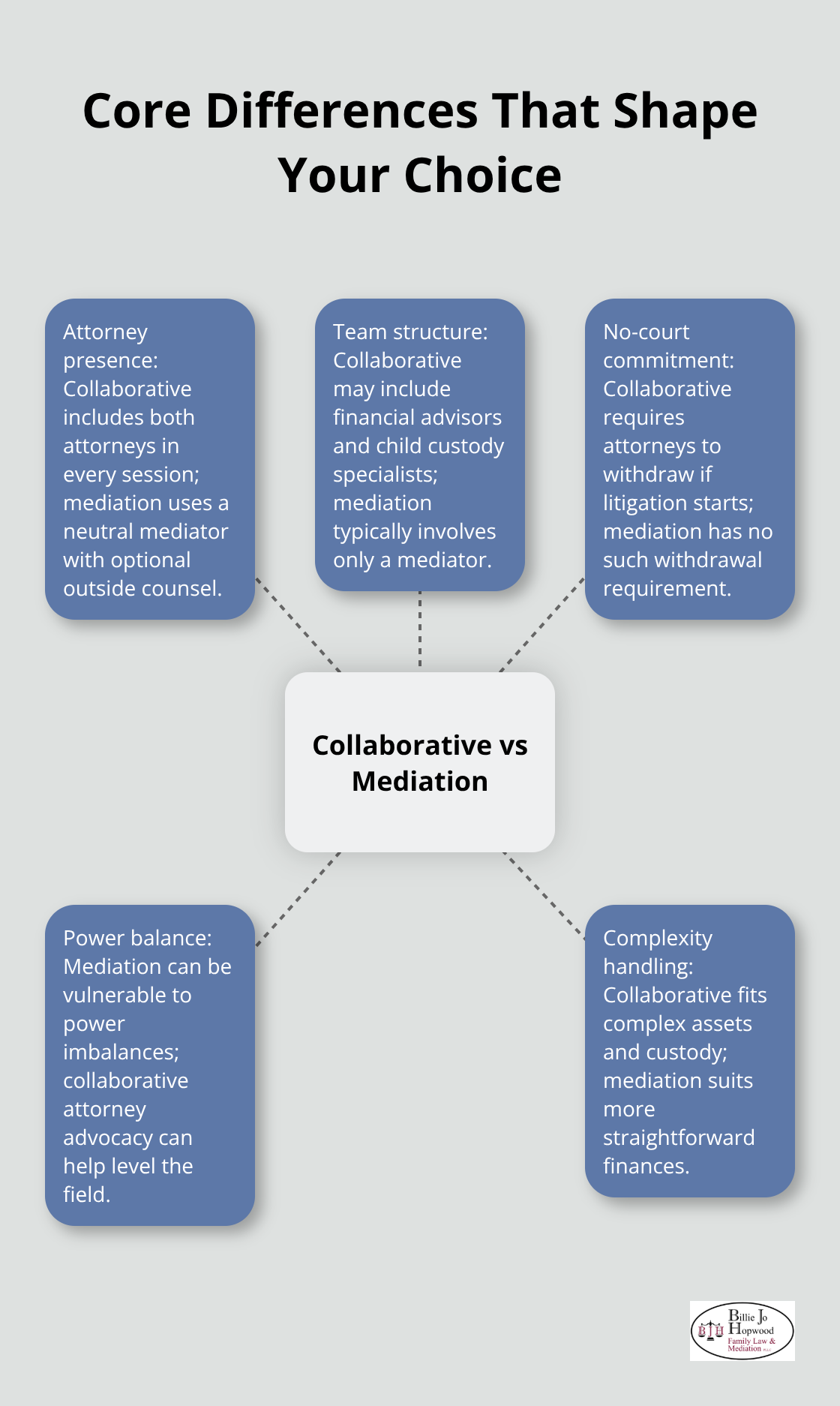
Both approaches offer Melbourne families alternatives to traditional litigation, but their different structures create unique advantages and limitations that affect which method works best for specific situations involving family law disputes.
Why Choose Collaborative Law
Continuous Attorney Support Makes the Difference
Collaborative law provides immediate legal guidance throughout every negotiation session, which sets it apart from other divorce methods. Each spouse has their attorney present during all discussions, creating real-time protection for your interests. The American Bar Association data shows that 85% of collaborative cases reach agreements because attorneys actively guide conversations toward productive solutions rather than let emotions derail progress.
This direct attorney involvement proves particularly valuable when complex financial assets are involved. Financial advisors and child custody specialists often join collaborative teams, providing comprehensive support that addresses every aspect of your divorce. The Florida Dispute Resolution Center reports that collaborative divorces handle intricate property divisions 40% more effectively than unassisted negotiations because legal counsel helps identify potential issues before they become problems.
The No-Court Commitment Creates Accountability
The binding no-court agreement in collaborative law creates powerful motivation for both spouses to reach resolution. When attorneys must withdraw if litigation becomes necessary, everyone involved has strong incentives to make the process work. This commitment eliminates the common litigation threat that can poison negotiations in other divorce methods.
When Collaborative Law Falls Short
This same feature creates the primary drawback of collaborative law. If negotiations fail, both spouses must start over with new attorneys, essentially doubling legal costs and extending timelines. Melbourne families facing this scenario often spend an additional 6 to 8 months finding new representation and rebuilding their cases from scratch (a significant financial and emotional burden).
Best Fit Scenarios
Collaborative law works best when both spouses genuinely commit to cooperation and possess similar negotiation power. This approach proves ideal for couples with complex financial situations who want to preserve ongoing relationships for co-parenting purposes. The structured attorney support particularly benefits families with substantial assets or intricate custody arrangements that require professional guidance.
While collaborative law offers significant advantages, mediation presents a different set of benefits and limitations that may better suit certain family situations.
Why Mediation Often Wins
Speed and Cost Advantages Drive Popular Choice
Mediation delivers Melbourne families the fastest path to divorce resolution.

The Florida Dispute Resolution Center confirms that mediated cases conclude 25% faster than litigation. Most mediation sessions complete within 3 to 4 months compared to the 12 to 18 months that court battles require. The cost difference proves even more dramatic – mediated divorces cost approximately 60% less than litigation according to Florida Bar Association data, with typical mediation expenses that range from $2,000 to $8,000 versus litigation costs that exceed $20,000 per person.
The single mediator structure eliminates the complex schedules that plague collaborative law. While collaborative cases require coordination between multiple attorneys and professionals, mediation sessions adapt to your schedule without bureaucratic delays. The National Mediation Board reports that most successful mediations resolve within 1 to 2 sessions, which makes this approach particularly attractive for couples who seek quick resolution.
Flexibility Creates Custom Solutions
Mediation’s informal structure allows for custom agreements that courts rarely provide. The neutral mediator facilitates creative problem-solving without the rigid legal constraints that bind collaborative attorneys. This flexibility helps couples craft unique custody arrangements or financial settlements that fit their specific circumstances (particularly valuable for families with unconventional work schedules or special needs children).
Power Imbalances Present Real Risks
This same informality creates mediation’s primary weakness – the absence of immediate legal advocacy during negotiations. Without attorneys present, power imbalances between spouses can skew negotiations unfairly. The Ohio State Bar Association notes that mediation works best when both parties possess similar negotiation skills and emotional stability. Complex financial situations often require legal guidance that mediation cannot provide during sessions, which potentially leads to agreements that favor one spouse over another.
Prime Candidates for Mediation Success
Mediation proves most effective for couples with straightforward financial situations who maintain reasonable communication skills. The American Arbitration Association data shows 80% success rates for mediation when both spouses approach the process cooperatively and possess similar education levels or professional backgrounds. With the guidance of a neutral mediator, families can identify what matters most and create solutions that work for their unique situation, making it ideal for couples without significant asset complexity or contentious custody disputes. By focusing on understanding rather than winning, families often leave mediation with agreements they helped shape-agreements they’re more likely to honor long-term.
Final Thoughts
The collaborative law vs mediation choice depends on your specific circumstances and priorities. Mediation offers the most cost-effective solution, with expenses from $2,000 to $8,000 compared to collaborative law’s higher costs due to multiple attorney fees. Time commitments also differ significantly – mediation typically resolves within 3 to 4 months while collaborative law extends 6 to 12 months.
Consider mediation when you and your spouse communicate reasonably well and face straightforward financial situations. Choose collaborative law when you need continuous legal guidance, face intricate financial matters, or require additional professionals like financial advisors. Your comfort level with negotiation plays a major role in this decision (mediation requires you to advocate for yourself with occasional outside legal consultation, while collaborative law provides constant attorney support during every session).
We at Billie Jo Hopwood Family Law & Mediation, PLLC help Melbourne families evaluate their unique situations to determine which approach best serves their needs. Both methods offer significant advantages over traditional litigation. Power imbalances between spouses often favor the collaborative approach where legal representation levels the field.