
Family disputes can feel overwhelming, but there’s a path forward that doesn’t require courtroom battles. At Billie Jo Hopwood Family Law & Mediation, PLLC, we help families understand what family mediation is and how it can resolve conflicts more peacefully.
This guide walks you through the mediation process, its advantages, and whether it’s right for your situation.
What Family Mediation Actually Is
Family mediation is a structured process where a trained neutral third party helps family members communicate and negotiate their own solutions to disputes. The mediator does not decide outcomes or provide legal advice-instead, they facilitate conversation, identify underlying interests, and guide parties toward agreements they can both accept. This distinction matters because it means you retain complete control over the final result rather than having a judge impose one. The mediator creates a safe environment where each person can express their perspective without the adversarial pressure of courtroom litigation. Maryland Rule 9-205 governs court-ordered mediation, typically limiting sessions to four hours across two meetings, though private mediation has no such restrictions and can continue as long as needed.
Where mediation fits in family disputes
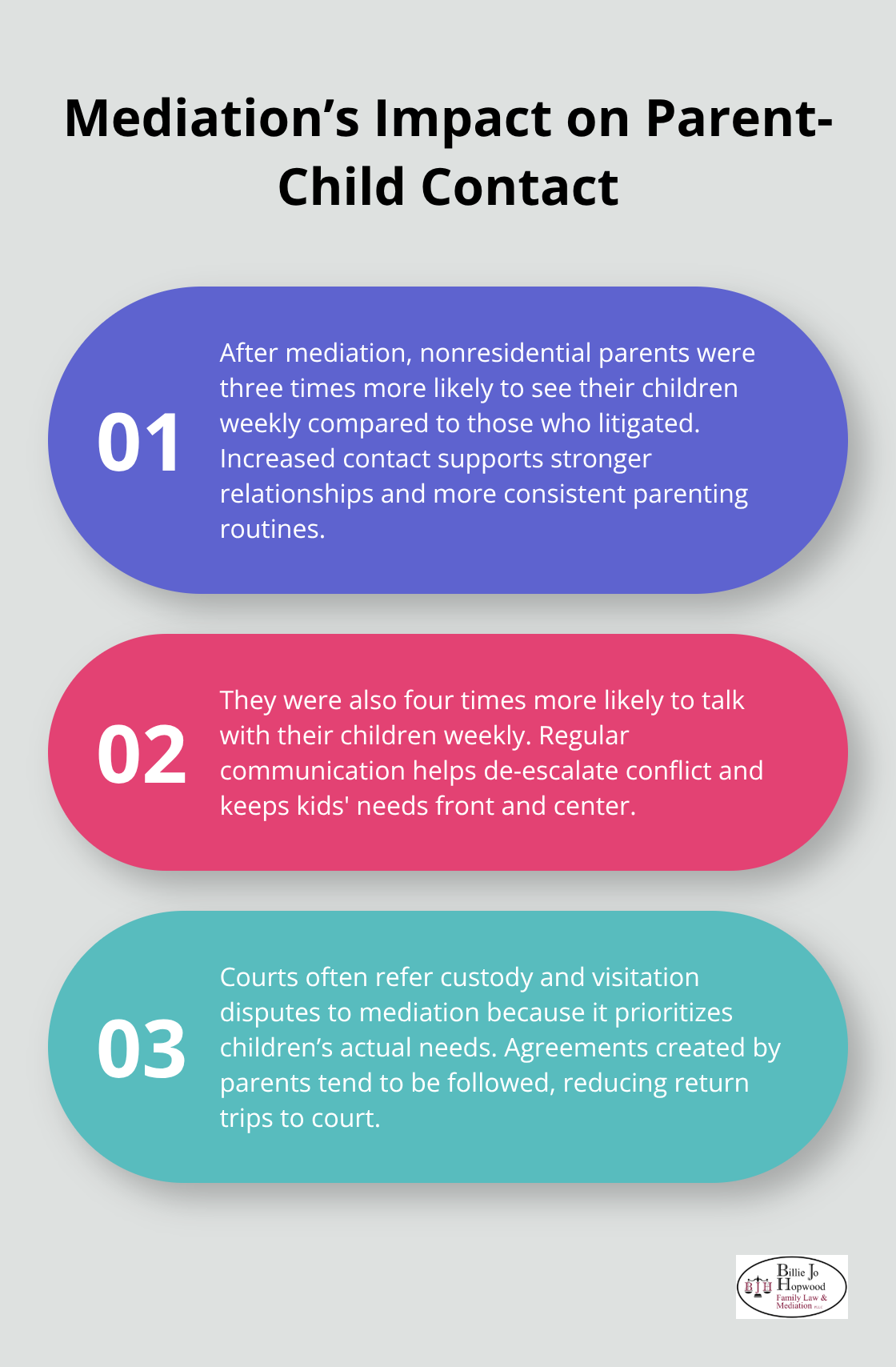
Mediation works across the full spectrum of family conflicts. Divorce mediation addresses property division, support obligations, and custody arrangements-the three issues that consume most court time and money. When custody or visitation disputes land in circuit court, judges often refer cases to mediation specifically because it focuses on children’s actual needs rather than courtroom positioning. The process also handles paternity cases, alimony disagreements, and ongoing modifications to existing custody agreements. A University of Virginia study published in The Journal of Consulting and Clinical Psychology found that nonresidential parents are three times more likely to see their children weekly after mediation than after litigation, and four times more likely to talk to their children weekly. That outcome reflects mediation’s core strength: it builds agreements people actually follow because they created them together rather than resisting court orders.
How mediation differs from fighting in court
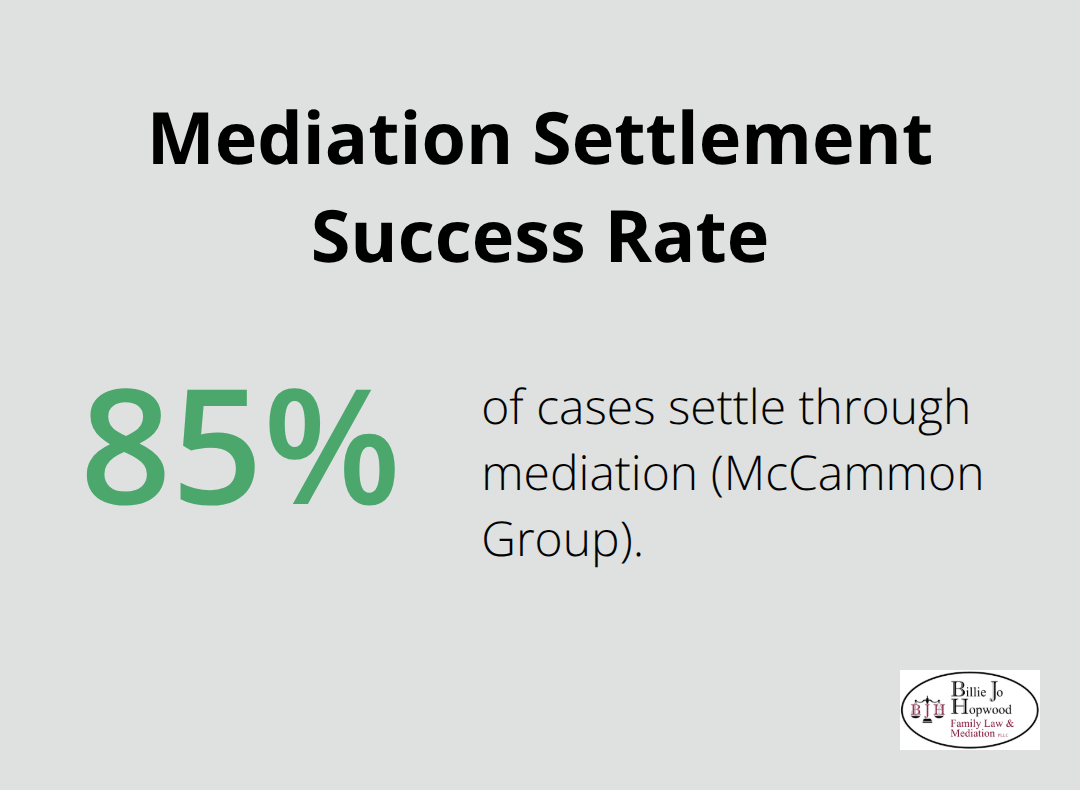
Litigation forces binary outcomes-one person wins, the other loses. A judge reviews evidence, applies law, and decides property splits, custody arrangements, and support amounts based on legal standards. This approach takes time (fully litigated divorces often take a year or longer), costs substantially more (typical attorney fees run thousands of dollars monthly), and produces public court records. Mediation compresses timelines to weeks or months, costs range from about $3,000 to $8,000 total, and keeps everything confidential since discussions never enter the public record. The McCammon Group reports approximately 85% of cases reach settlement through mediation, and mediated agreements show greater compliance than court judgments because people honor customized solutions they shaped themselves. Arbitration occupies middle ground-a neutral arbitrator hears both sides and renders a binding decision, more formal than mediation but faster than litigation. Mediation remains fundamentally different because the parties control whether agreement happens, not the decision-maker.
What happens next in the mediation process
Understanding the structure of mediation helps you prepare for what comes next. The process unfolds in distinct phases, each designed to move you from conflict toward resolution. Your mediator will walk you through each step, explaining what to expect and how you can participate effectively.
How Mediation Moves From Start to Settlement
The Initial Consultation Sets the Foundation
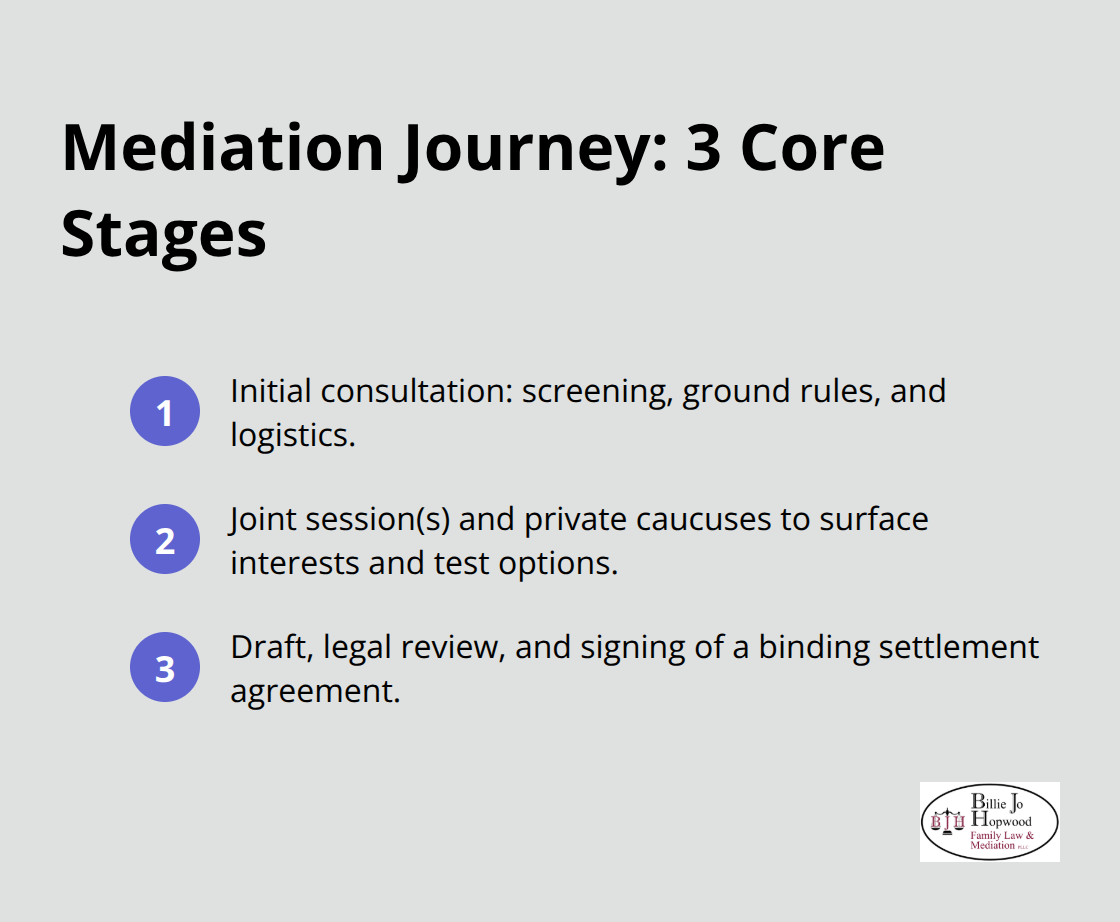
The mediation process begins weeks before you sit down with anyone. During the initial consultation, you and your mediator discuss what brought you to mediation, what issues need resolution, and whether mediation makes sense for your situation. This conversation typically happens over the phone or video call and takes 30 to 60 minutes. The mediator screens for domestic violence, substance abuse, or severe power imbalances that might make mediation unsafe or ineffective. Both parties must sign a mediation agreement that outlines confidentiality rules, cancellation policies, and fee arrangements. This step matters because it establishes ground rules before emotions run high in joint sessions. Many mediators ask you to gather financial documents, custody proposals, or property lists beforehand so sessions focus on negotiation rather than information gathering. Once both parties agree to proceed, scheduling becomes flexible-you choose in-person, virtual, or hybrid formats that fit your work and family commitments.
Joint Sessions and Separate Caucuses Drive Progress
Joint sessions bring both parties and the mediator into the same room or video call. The mediator explains the process, establishes communication ground rules, and lets each person present their perspective without interruption or cross-examination. This isn’t a courtroom where lawyers tear apart testimony; it’s a structured conversation where you explain what matters to you and why. After both sides present, the real work begins. The mediator identifies common ground, clarifies misunderstandings, and separates emotional positions from underlying interests. When conversations stall or tension rises, the mediator may call separate caucuses-private meetings with each party alone. These caucuses let you speak candidly about your actual bottom line, fears, and willingness to compromise without the other person hearing. The mediator shuttles information between caucuses, exploring creative solutions and testing whether proposals might work.
From Agreement to Binding Contract
Research shows mediation typically concludes within three to six sessions depending on complexity, with each session lasting two to three hours. Once parties move toward agreement, the mediator or your attorney drafts a settlement agreement that spells out custody schedules, support amounts, property divisions, and any other resolved issues. Before signing, have an independent attorney review the draft to protect your legal interests. A signed mediation agreement becomes a binding contract and can be incorporated into a court order, giving it the same enforceability as a judge’s decision but without the public record exposure or years of litigation.
This binding nature means both parties must follow the terms they negotiated, and violations carry legal consequences just as court orders do.
With your settlement agreement finalized and legally binding, the next step involves understanding what happens when mediation doesn’t resolve all issues or when you need to formalize the agreement through the court system.
Advantages of Family Mediation Over Court Proceedings
Mediation Costs Far Less Than Litigation
Mediation costs between $3,000 and $8,000 total, split between both parties, while litigated divorces routinely consume $15,000 to $30,000 or more in attorney fees alone depending on case complexity and how long disputes drag through court. The financial difference compounds when you factor in lost work time, stress-related expenses, and the compounding costs of prolonged conflict. A typical mediation resolves within three to six sessions over a span of weeks or months, whereas fully litigated divorces take a year or longer from filing to final judgment. This speed matters practically because you stop paying mediator fees much faster than you stop paying hourly attorneys, and you return to normal life sooner instead of managing ongoing court dates and discovery demands. The University of Virginia study published in The Journal of Consulting and Clinical Psychology found that mediated agreements show greater compliance than court judgments because people honor customized solutions they shaped themselves rather than resisting imposed orders. When someone follows an agreement willingly, you avoid the additional costs of enforcement actions, contempt proceedings, or modification battles that plague litigated cases. Virtual and hybrid mediation options reduce travel time and childcare expenses further, letting you participate from home or your workplace without disrupting your schedule. You choose when sessions happen instead of waiting for court docket availability, which compresses timelines substantially.
Confidentiality Shields Your Family From Public Exposure
Litigation creates a permanent public record accessible to anyone with an internet connection, exposing your finances, parenting conflicts, health issues, and personal disputes to public scrutiny. Mediation keeps everything confidential since discussions never enter court filings or public records. This privacy matters enormously when children are involved because they won’t find their custody arrangements or parental conflicts documented online for future employers, peers, or strangers to discover. Your financial information, property details, and support amounts stay completely private rather than published in court documents. Mediation agreements can include provisions protecting sensitive information further, something impossible in litigated cases where discovery forces disclosure of nearly everything. This confidentiality extends to the mediator, who cannot testify in court or share mediation discussions with judges or third parties. If mediation fails and you eventually litigate, nothing discussed in mediation can be used against you in court, meaning you can speak openly without fear of those statements being weaponized later. That protection encourages honest conversation and creative problem-solving that courtroom positioning prevents.
You Retain Control Over Decisions Rather Than Surrendering Them to a Judge
Mediation puts decision-making power directly in your hands instead of handing it to a stranger in a black robe who spends twenty minutes reviewing your entire life. You and your spouse craft the custody schedule, decide how to divide property, and set support amounts based on your actual circumstances and priorities rather than applying generic legal formulas. This autonomy produces agreements reflecting what actually works for your family instead of what satisfies legal standards. The McCammon Group reports approximately 85% of cases reach settlement through mediation because people invest in solutions they designed, not solutions imposed upon them.
You can modify agreements more easily when circumstances change because you understand the reasoning behind each term and can discuss adjustments cooperatively rather than filing modification petitions and returning to court. The process accommodates unusual situations that rigid legal frameworks struggle with (like allowing one parent flexibility during certain business seasons or structuring support to reflect changing income patterns). You also avoid the unpredictability of judges whose personal philosophies shape custody and support decisions in ways you cannot control.
Final Thoughts
Family mediation offers a fundamentally different path through family disputes than courtroom litigation. What is family mediation at its core: a process where you and your spouse control the outcome while a neutral third party facilitates productive conversation. This approach costs between $3,000 and $8,000 compared to litigation expenses that often exceed $15,000 to $30,000, and it resolves in weeks or months rather than years.
Mediation works best when both spouses genuinely want to resolve disputes cooperatively and are willing to compromise on major issues. If you face domestic violence, severe power imbalances, or a spouse unwilling to negotiate honestly, mediation may not be appropriate and litigation might become necessary. However, most families benefit from attempting mediation first because the worst outcome means you return to litigation with no harm done, while the best outcome saves substantial money, time, and emotional strain.
If you’re considering mediation, start by gathering financial documents and thinking clearly about your priorities and bottom-line needs. Contact us to discuss your family law matter and explore whether mediation can help your family move forward. We at Billie Jo Hopwood Family Law & Mediation, PLLC in Melbourne, Florida help families navigate these decisions and guide you through mediation or litigation depending on what your situation requires.