Family conflict doesn’t have to end in a courtroom battle. Brevard Florida family mediation offers a faster, more affordable path forward where you keep control of the decisions that matter most.
At Billie Jo Hopwood Family Law & Mediation, PLLC, we’ve seen how mediation transforms difficult situations into workable solutions. This guide shows you exactly how the process works and why it works.
Why Mediation Costs Less and Finishes Faster
The Real Price of Litigation in Brevard County
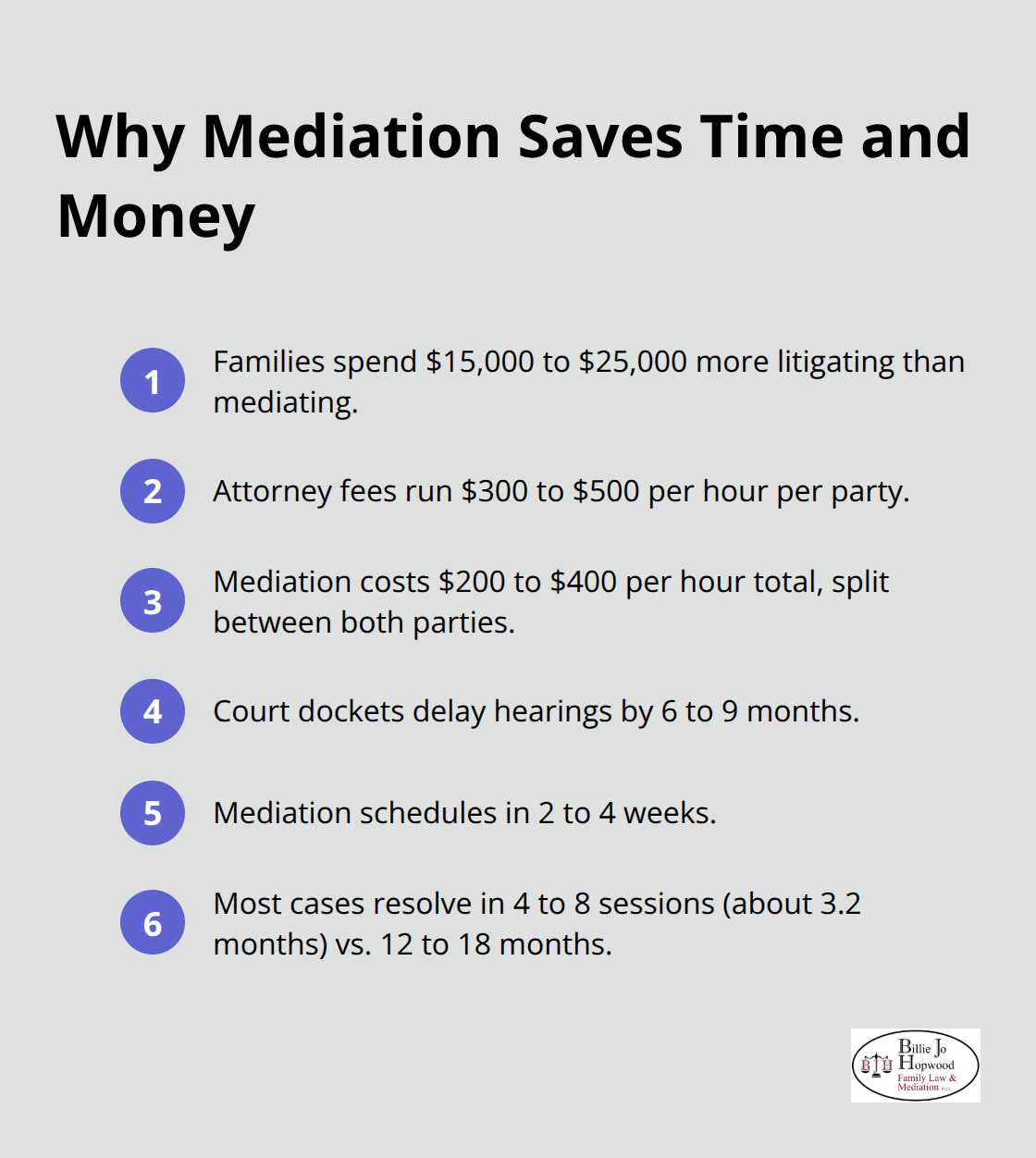
Court litigation in Brevard County drains finances and time in ways most families don’t anticipate. According to Florida State Courts data, families typically spend $15,000 to $25,000 more pursuing litigation compared to mediation. Attorney fees alone run $300 to $500 per hour per party, and that’s before court costs, discovery expenses, and depositions pile up. Mediation sessions cost $200 to $400 per hour total and split between both parties, cutting your actual hourly expense roughly in half.
How Scheduling Delays Add Up
The Eighteenth Judicial Circuit handles over 3,500 family law cases annually, meaning court dockets back up 6 to 9 months before you see a judge. Mediation scheduling happens in 2 to 4 weeks. Most disputes resolve in 4 to 8 sessions, wrapping up in approximately 3.2 months versus the 12 to 18 months litigation typically requires. That difference matters when you’re missing time with your children or waiting to move forward with your life.
You Decide the Outcome, Not a Judge
Control over outcomes separates mediation from court decisions in one critical way: you decide what happens, not a judge. In court, a judge reviews your case for perhaps a few hours and makes rulings on parenting time, asset division, and support amounts based on legal standards and their interpretation of facts. Mediation lets you craft solutions that actually fit your family’s needs.
One parent works night shifts while the other manages school pickups; mediation accommodates that reality. You both value flexibility in holiday schedules rather than rigid court-ordered arrangements; mediation builds that in. You want to preserve an amicable relationship for your children’s sake; mediation encourages that cooperation from start to finish.
Compliance Rates Tell the Real Story
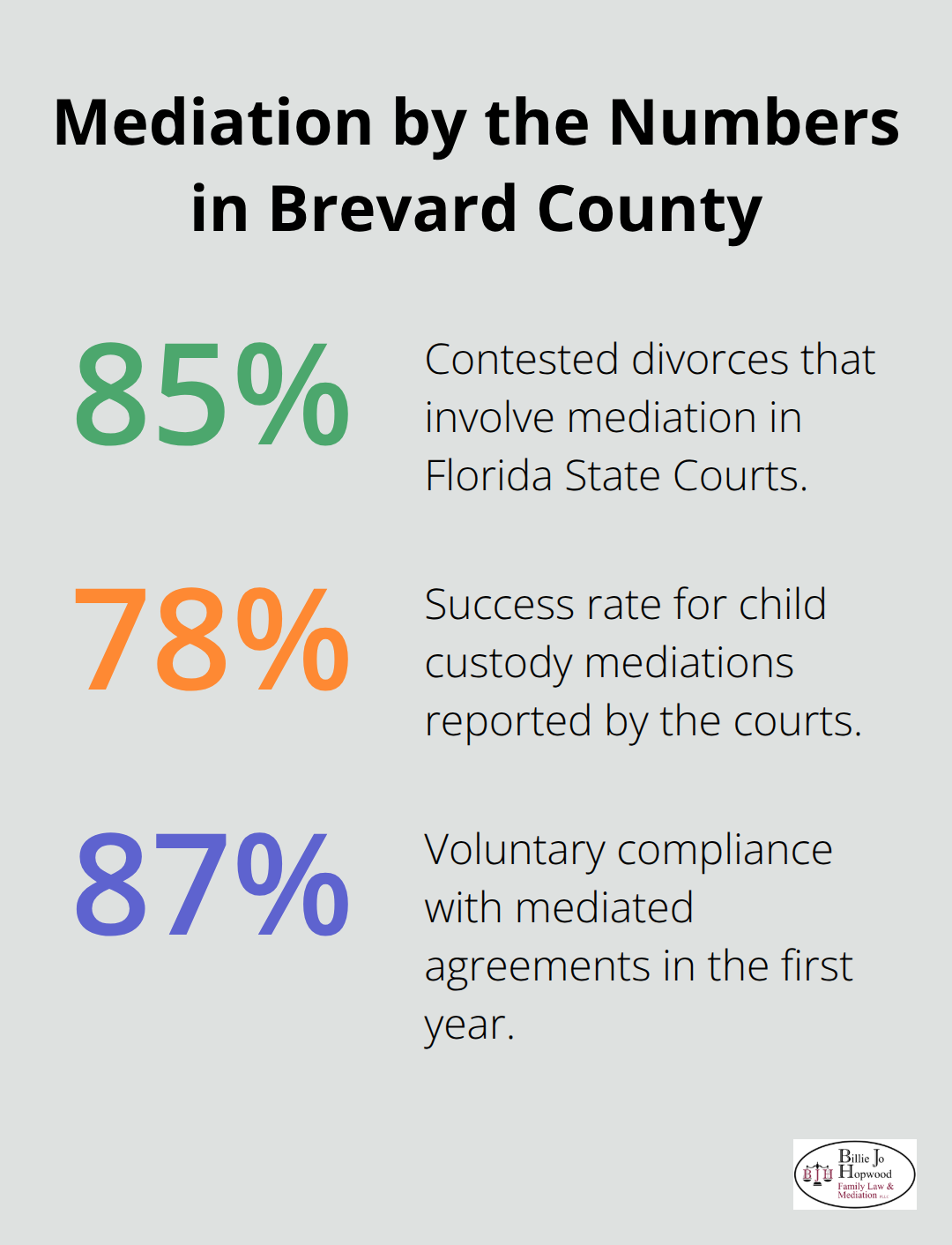
The Florida State Courts data shows 87% voluntary compliance with mediated agreements in the first year, compared to 40% or higher violation rates for many court-ordered arrangements. Once your mediation agreement is filed with the court, it becomes legally binding within 1 to 2 weeks and carries the same enforceability as a court judgment. This higher compliance rate means fewer return trips to court and less conflict down the road.
Understanding these advantages sets the stage for what actually happens inside a mediation session and how the process moves you toward resolution.
What Disputes Does Mediation Actually Resolve in Brevard County
Mediation in Brevard County handles the three categories that consume most family law court time: custody arrangements, support modifications, and asset division. According to Florida State Courts data, approximately 85% of contested divorces involve mediation, and the success rate for child custody mediations reaches 78%. These numbers reflect real families working through disputes that would otherwise drag through months of litigation.
The Eighteenth Judicial Circuit requires mediation for dissolution of marriage and paternity cases before trial, giving you a structured opportunity to settle without a judge’s involvement. Understanding which disputes mediation addresses and how it handles them helps you prepare realistic expectations and identify what actually gets resolved at the table.
Custody and Parenting Time Takes Priority
Child custody disputes drive the majority of mediation orders in Brevard County. Parents negotiate overnight schedules, holiday rotations, and relocation requests that affect time-sharing arrangements. Mediation works here because it lets you address what matters most to your family rather than fitting your situation into a judge’s standard template. One parent may need flexibility for shift work; another may prioritize consistency for school performance. Mediation accommodates both priorities simultaneously.
All parenting plan modifications require mediation even when parents seek changes to primary residence, school district, or extracurricular involvement, according to Florida State Courts data. The mediator guides you through these conversations without dictating outcomes, helping you move from positions like “I want primary custody” to workable proposals like alternating school weeks with flexibility during summer break. This collaborative approach produces agreements parents actually follow, with 87% voluntary compliance in the first year compared to violation rates exceeding 40% for court-ordered arrangements.
Support Modifications and Income Changes
Child support and alimony modifications automatically trigger mediation when income changes exceed 15% or involuntary job loss occurs, per Florida State Courts data. Modifications involving shared custody changes, medical expenses, or college costs typically go to mediation before court hearings. The mediator helps you calculate what changed since the original order and what adjustment makes sense now.
Income dropped 20% after a layoff; the mediator helps quantify how that affects child support. One parent now covers private school tuition; the mediator helps you decide whether to adjust support or split the cost differently. These conversations happen in a private, confidential setting rather than in open court where details become public record. Court-ordered mediation in Brevard follows an income-based fee structure: free mediation for combined income under $50,000; $60 per party for income between $50,000 and $100,000; and over $100,000 requires private mediators at approximately $200 to $500 per hour, according to the court mediation program.
Property and Asset Division Reaches Fair Splits
Property division mediation covers everything from the marital home and vehicles to retirement accounts and business interests. Florida law starts with a 50/50 equitable distribution unless deviations are justified, but mediation lets you negotiate splits that actually work for both of you. One parent keeps the home with a mortgage adjustment; the other takes the investment portfolio and retirement accounts. You divide a family business by one parent purchasing the other’s share over time rather than forcing a sale. You split the pension differently than Florida guidelines would suggest because one parent sacrificed career growth for childcare.
Mediation produces these customized outcomes without a judge reviewing your case for a few hours and issuing orders based on legal standards alone. You bring property records, retirement account statements, and business valuations to mediation, and the mediator helps you work through who keeps what and how to handle joint debts. Most disputes resolve in 4 to 8 sessions within approximately 3.2 months, letting you move forward with clarity rather than waiting 12 to 18 months for trial. Once you understand what mediation resolves, the next step involves learning how the actual process unfolds from your first consultation through your final agreement.
How Mediation Moves From First Conversation to Final Agreement
Schedule Your Mediation and Prepare Your Documents
Your first call to schedule mediation matters more than most people realize. When you contact a mediator in Melbourne, Florida, you answer basic questions about your situation, the issues you need to resolve, and whether court has already ordered mediation or you’re choosing it voluntarily. This initial conversation determines timing and cost structure. Court-ordered mediation in Brevard follows an income-based fee schedule: free mediation for combined household income under $50,000; $60 per party for income between $50,000 and $100,000; and over $100,000 requires private mediators at approximately $200 to $500 per hour according to the court mediation program. Private mediation outside court orders typically costs $200 to $400 per hour total, split between both parties. You’ll schedule your first session within 2 to 4 weeks, far faster than court dockets that push 6 to 9 months into the future.
Before that first session, organize your financial documents: recent pay stubs, bank statements from the last 3 to 6 months, property records including deeds and mortgage statements, retirement account documentation like 401(k) and IRA statements, and any prenuptial or postnuptial agreements. Identify your three highest priorities in advance-custody schedule, support amount, or which assets matter most-and rank them.
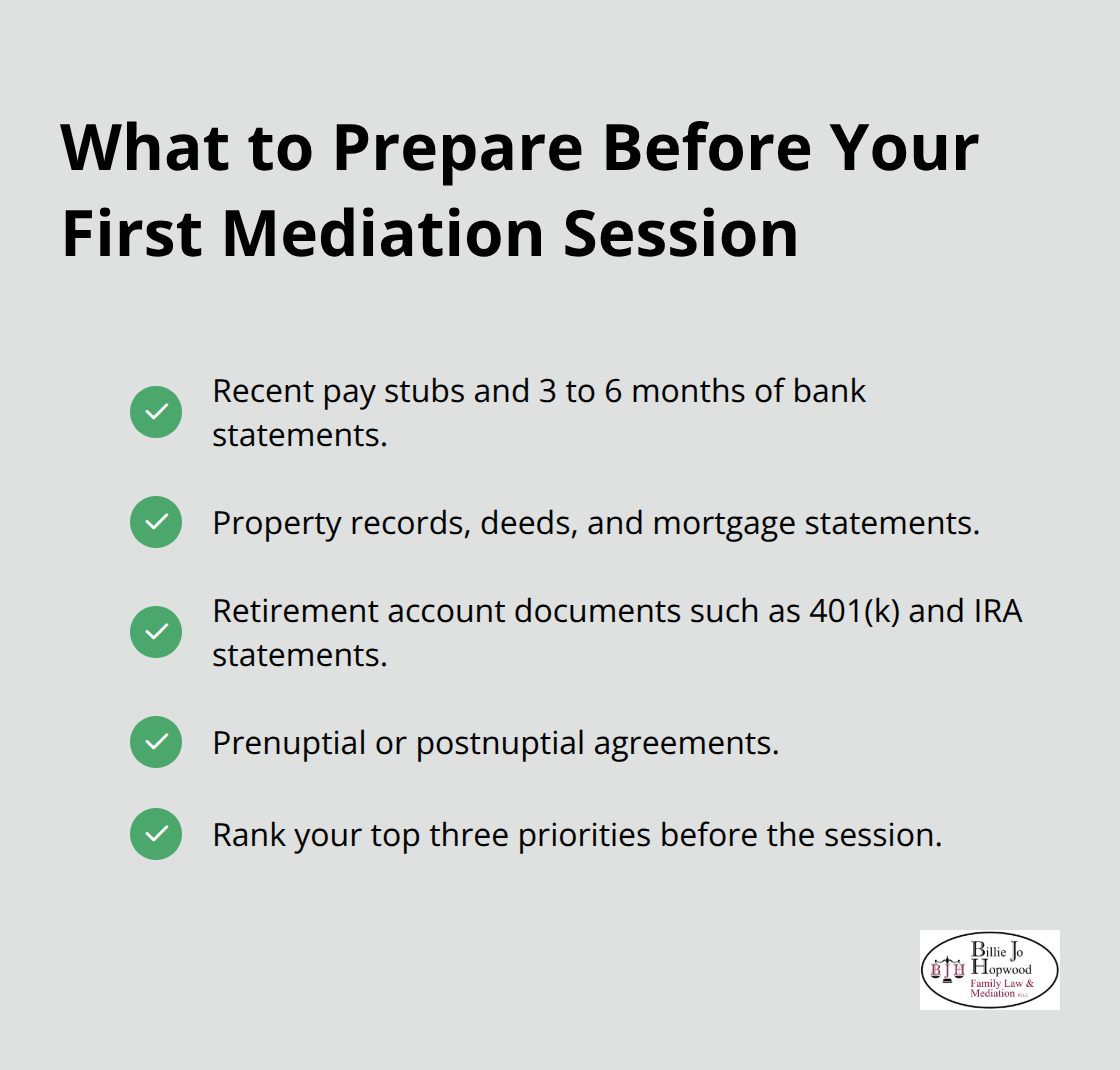
This preparation prevents wasted session time and keeps discussions focused on what actually matters to your family.
Understand Confidentiality and the First Session Structure
The mediator opens your first session by outlining the process, establishing ground rules, and confirming both parties understand confidentiality protections. Florida mediation discussions remain confidential and inadmissible in court if mediation fails, which encourages honest conversation without fear your words will be used against you later. The mediator then guides structured dialogue on each issue, sometimes holding joint sessions where you both speak and listen, and sometimes using separate caucus meetings where the mediator shuttles between rooms to understand each person’s concerns privately. This flexibility helps manage high emotions and safety concerns without derailing progress.
Navigate Sessions and Reach Agreements
Most disputes resolve in 4 to 8 sessions over approximately 3.2 months according to Florida State Courts data, though complex cases involving business assets or custody disputes may require additional meetings. Once you reach agreement on an issue, the mediator documents it. When all issues are resolved, the mediator drafts your complete mediation agreement covering parenting time, decision-making authority, child support calculations, and property or debt division with specific deadlines for actions like transferring property or closing joint accounts.
Finalize and File Your Agreement
You review this agreement with an attorney if desired-many people do-before signing. Once signed and filed with the court, your mediation agreement becomes legally binding within 1 to 2 weeks and carries the same enforceability as a court judgment. If mediation stalls on particular issues, you have clear options: take a break and resume later, schedule additional sessions to work through remaining problems, or move forward with partial agreements on resolved issues while pursuing informal post-mediation negotiations on the rest. This structured approach combined with flexibility produces outcomes that actually work for your family rather than forcing you into a judge’s standard template.
Final Thoughts
Brevard Florida family mediation transforms what could stretch into years of courtroom conflict into months of collaborative problem-solving where you control the outcome. Families save $15,000 to $25,000 by mediating instead of litigating, with sessions costing $200 to $400 per hour split between both parties versus $300 to $500 per hour per party in court fees. Most disputes wrap up in 4 to 8 sessions over approximately 3.2 months, compared to 12 to 18 months waiting for trial dates in crowded dockets.
Mediation preserves what matters most: your relationship with your children and your ability to make decisions that fit your family’s actual life rather than a judge’s legal template. Court orders follow standardized approaches and judicial preferences, while mediation agreements reflect your priorities, work schedules, values around parenting, and financial realities. This difference shows up in compliance rates-87% of people follow mediated agreements voluntarily in the first year, compared to violation rates exceeding 40% for many court-ordered arrangements.
Starting mediation means scheduling your first session within 2 to 4 weeks, organizing your financial documents, and identifying your three highest priorities before you walk in. Once you reach agreement, your mediation agreement becomes legally binding within 1 to 2 weeks of filing with the court, carrying the same enforceability as any judge’s ruling. Contact Billie Jo Hopwood Family Law & Mediation, PLLC in Melbourne, Florida to discuss your situation and take the first step toward resolution that works for your family.