
Child custody disputes put families through unnecessary stress and expense. At Billie Jo Hopwood Family Law & Mediation, PLLC, we’ve seen how mediation transforms these conflicts into workable solutions.
This guide walks you through the child custody mediation steps so you understand what to expect and how to protect your relationship with your child.
What Happens During Child Custody Mediation in Melbourne, Florida
The Mediation Structure and What to Expect
Child custody mediation in Melbourne, Florida is a structured negotiation where a neutral mediator helps both parents develop a parenting plan focused on your child’s needs. The mediator does not make decisions for you-instead, they facilitate communication, help you understand each other’s concerns, and guide you toward mutually acceptable arrangements. Florida courts often require mediation before custody disputes go to trial, which means you’ll likely face this process if custody remains unresolved. The mediator addresses specific issues like time-sharing schedules, decision-making authority over medical and educational matters, holiday arrangements, and transportation logistics. Most custody mediations in Florida run approximately three hours, though some cases require additional sessions depending on complexity and the number of unresolved issues.
Why Mediation Produces Better Outcomes Than Court
Court battles over custody drain finances and damage parent-child relationships. Litigation costs thousands in attorney fees, court costs, and expert witness expenses, while mediation typically costs a fraction of that amount. Parents who reach custody agreements through mediation report significantly better long-term co-parenting relationships than those who litigated. A court-imposed custody order leaves one parent feeling defeated, which poisons cooperation for years. Mediation forces both parents to engage constructively with each other’s perspectives, building the foundation for effective parenting after divorce. Unlike courtroom litigation where a judge imposes a custody order, mediation keeps control in your hands-you decide what works for your family, not a stranger in a robe. When you control the outcome through mediation, you create a parenting plan that actually reflects your family’s unique needs rather than generic judicial templates.
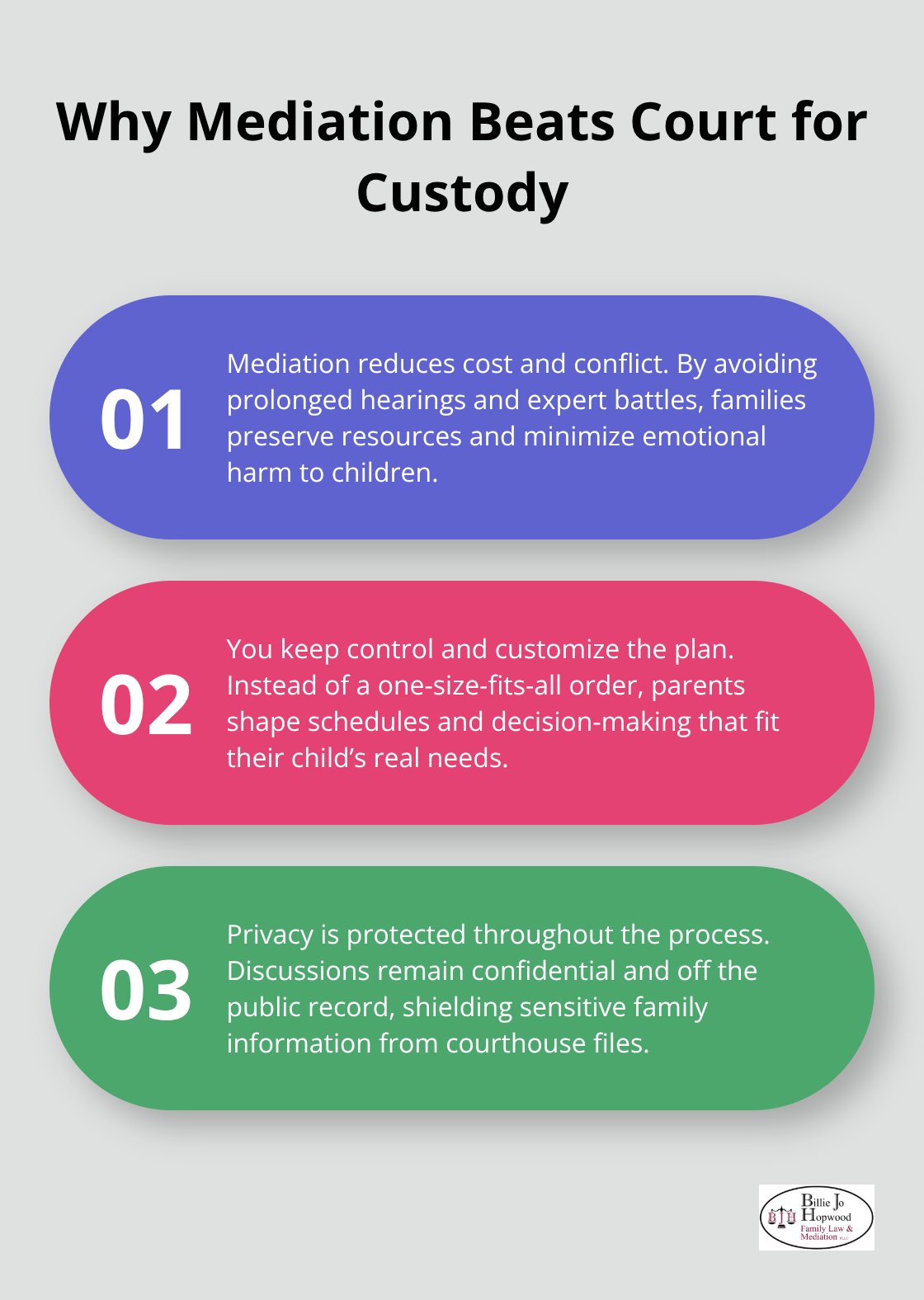
You also maintain privacy; mediation discussions remain confidential and off the public record, protecting your family’s sensitive information from courthouse files.
How Florida Law Supports Mediation and Parental Authority
Florida Statutes establish that natural guardianship of minor children is held jointly by both parents during the child’s minority unless a court orders otherwise. This legal framework means both parents retain meaningful authority over custody and parenting decisions, which mediation acknowledges and preserves. When parents reach a mediated agreement, that agreement becomes a binding court order once the judge approves it-giving your negotiated solution the same legal weight as a contested trial verdict. If mediation does not produce agreement, the mediator reports an impasse to the court and your case proceeds to hearings or trial, but the mediation process will have narrowed the disputed issues and informed subsequent steps. Florida’s approach recognizes that parents working collaboratively through mediation produce more stable, child-centered parenting plans than adversarial courtroom battles. The state supports virtual mediation options in many family law cases, making the process accessible regardless of scheduling conflicts or distance.
Understanding these fundamentals prepares you for the actual mediation steps ahead, where preparation and strategy determine whether you reach an agreement that truly serves your child’s interests.
Getting Ready for Child Custody Mediation in Melbourne, Florida
Gather Documentation Two Weeks Before Mediation
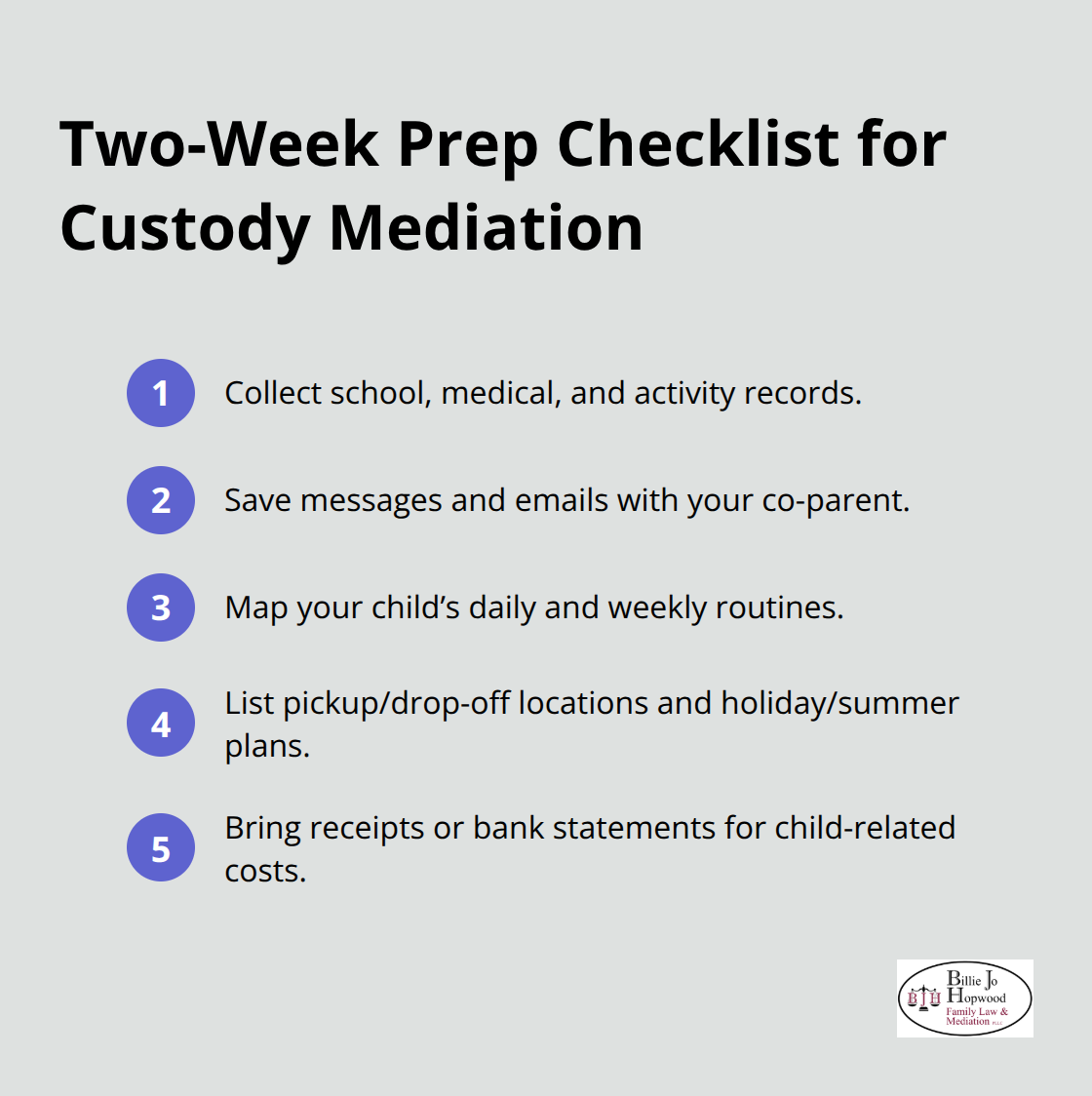
Preparation determines whether mediation succeeds or fails. Two weeks before your mediation session, you should gather school records, medical appointment histories, extracurricular activity schedules, and housing details. Print or save all communications with your co-parent so you can reference specific incidents if needed. Create a detailed packet showing your child’s daily and weekly routines, including wake times, meal schedules, homework support, and bedtime. Document exact pickup and drop-off locations you propose, holiday and summer plans, and how you’ll share child-related costs like daycare, health insurance, and activity fees. Bring receipts or bank statements proving these expenses so the mediator understands the financial reality of your situation.
Prepare Your Parenting Plan One Week Before
One week before mediation, you should draft a parenting plan that includes your preferred time-sharing schedule, decision-making authority over medical and educational matters, transportation arrangements, and communication protocols with your co-parent. Research common custody schedules like the 2-2-5-5 rotation to understand practical trade-offs before the session. Create a must-have versus nice-to-have list so you know which issues matter most and where you can show flexibility. This preparation prevents you from making reactive decisions during the actual mediation.
Organize Materials 48 Hours Before the Session
Forty-eight hours before mediation, you should print three copies of every document and organize them in labeled folders. Arrive fifteen minutes early on the day of mediation, dress professionally, eat a full meal beforehand, silence your phone, and bring a notebook to capture agreements as they emerge.
Navigate the Mediation Session Itself
During the session, the mediator will make opening statements and establish an agreed agenda for discussion. The mediator typically starts with easier topics to build momentum before addressing contentious issues. Most custody mediations last approximately three hours, though complex cases may require additional sessions. The mediator may use private caucus sessions (meeting with each parent separately to understand concerns and de-escalate conflicts without the other parent present). Focus your opening statement on your child’s needs rather than your co-parent’s failures. Establish clear boundaries during discussions: no blaming, no threats, and no using your child as a messenger. If safety concerns or power imbalances exist, discuss these with the mediator beforehand and request safer formats like separate sessions or virtual mediation.
Finalize Your Agreement
When the mediator suggests terms, you should evaluate whether they serve your child’s best interests rather than rejecting proposals out of stubbornness. If you reach agreement, the mediator drafts a detailed settlement including the specific parenting plan and exact schedules. Review this document carefully before signing because it becomes a binding court order once the judge approves it. This agreement controls your custody arrangement for years, so accuracy matters tremendously. Once you understand what a finalized agreement looks like, the next step involves making that agreement work long-term through proper documentation and adjustment strategies.
Making Your Mediation Agreement Stick
Your mediated custody agreement holds value only if both parents follow it consistently. The moment you sign that settlement, the real work starts. Many parents discover that their carefully negotiated parenting plan fails within months because they never formalized it properly or planned for how life changes would affect the arrangement. The agreement must be filed with the court and approved by a judge to become a binding order, not just a handshake between parents. Your mediator will have drafted a detailed settlement document that specifies exact pickup times, drop-off locations, holiday schedules, and decision-making authority. Before you leave mediation, confirm that every detail in the written agreement matches what you actually agreed to during discussions. An attorney should review the document before you sign because errors in the written agreement create expensive problems later.
Once the judge signs off, that order controls your custody arrangement for years, making accuracy during the drafting phase non-negotiable.
File Your Agreement and Obtain Court Approval
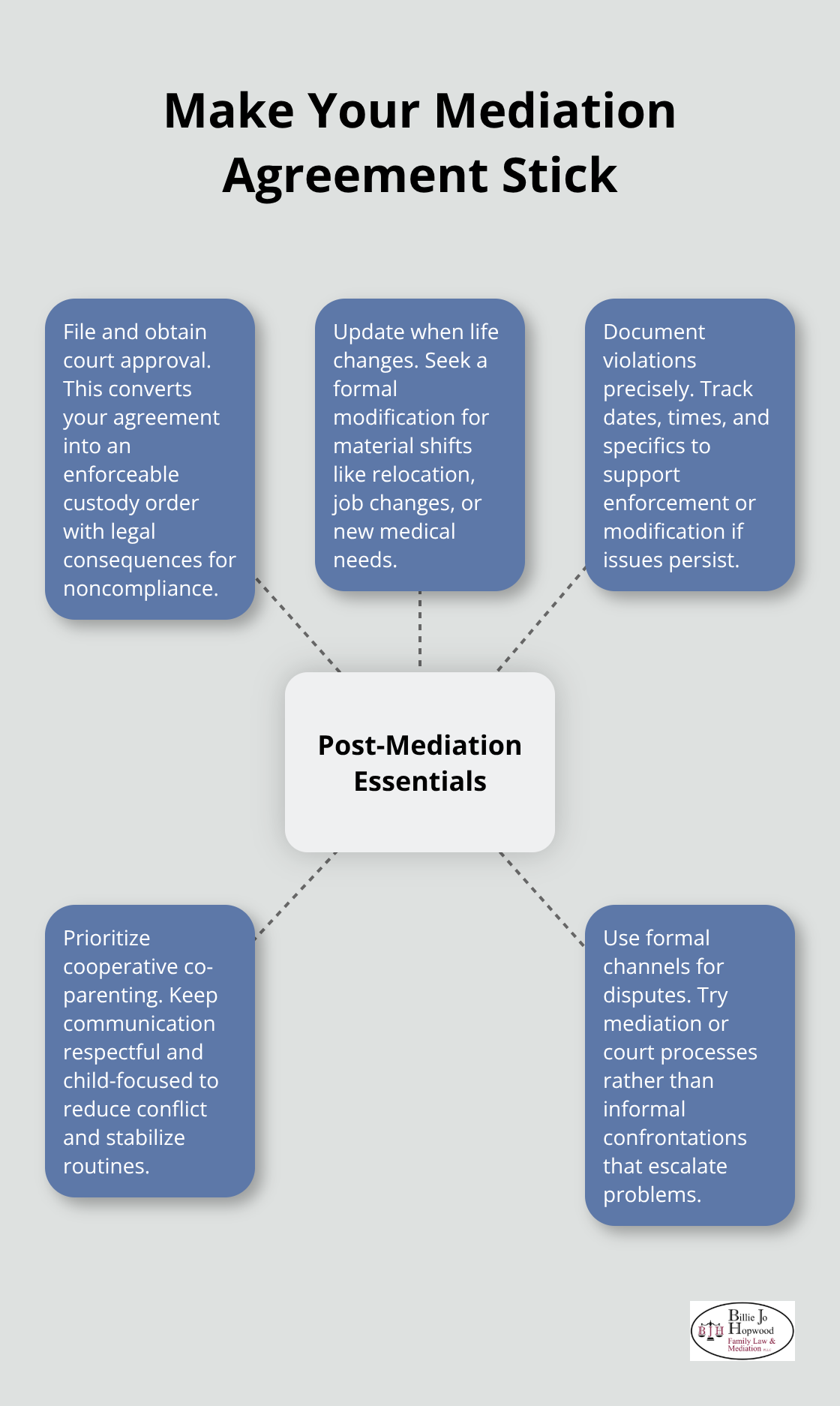
The mediated settlement document does not become legally binding until a judge approves it. Your mediator handles the initial drafting, but you must submit the agreement to the court for formal approval. This step transforms your negotiated arrangement into an enforceable custody order. Without court approval, the agreement remains a contract between parents rather than a legal custody order. The filing process typically takes several weeks, so plan accordingly if you need the order in place quickly. Once the judge signs the order, both parents must follow it or face potential contempt charges.
Update Your Agreement When Circumstances Change
Many parents fail to update their agreements when circumstances change, which creates conflict and confusion. Your child’s needs evolve as they age, your work schedule may shift, and one parent might relocate. Florida courts expect parents to modify custody orders through formal amendment when material changes occur rather than making informal adjustments that nobody documents. If your child develops a medical condition requiring different scheduling, if your job changes significantly, or if your co-parent moves, these qualify as material changes that warrant amendment. Filing a modification request with the court costs less than litigating a full custody dispute and protects both parents by creating a clear, updated legal record. Parents who communicate proactively about schedule changes before problems escalate maintain better relationships with their co-parents and avoid returning to court repeatedly. Establish a communication protocol early where you discuss potential schedule adjustments with your co-parent before either parent makes unilateral changes.
Document Violations and Enforce the Order
If your co-parent consistently violates the custody order, you must document every instance with dates, times, and specific violations. This documentation becomes critical if you need to file a contempt motion or pursue modification through the court. Violations that go unaddressed signal acceptance and weaken your position if enforcement becomes necessary later. Keep records in a secure location and avoid confrontational communication about violations. Instead, address violations through formal channels or mediation if the pattern continues.
Build a Cooperative Co-Parenting Relationship
A cooperative co-parenting relationship requires setting aside the hurt from your custody dispute and focusing on your child’s stability. Your child benefits immensely when both parents maintain consistent routines, communicate respectfully about decisions, and avoid badmouthing the other parent. Parents who cooperate report that their children have fewer behavioral problems, better school performance, and less anxiety about the divorce itself. Use neutral communication channels like email or co-parenting apps rather than text messages that escalate conflict easily. Many families find that scheduling regular co-parenting check-ins every month or every quarter prevents small disagreements from becoming major disputes. These conversations should focus on your child’s development, upcoming events, and potential schedule adjustments rather than rehashing relationship grievances. If your co-parent violates the custody order repeatedly or refuses to cooperate on important decisions, you may need to return to mediation or pursue enforcement through the court rather than attempting to resolve everything informally.
Final Thoughts
Child custody mediation steps in Melbourne, Florida offer families a realistic path forward that courtroom battles cannot match. When you work through mediation, you maintain control over decisions that affect your child’s life rather than surrendering that authority to a judge. The process costs significantly less than litigation, protects your family’s privacy, and produces custody arrangements that both parents actually follow because they helped create them.
After you reach a mediated agreement, your real responsibility starts. That custody order only works if both parents commit to following it consistently and communicate respectfully about your child’s needs. Many families discover that the cooperative mindset they developed during mediation carries forward into their co-parenting relationship, reducing conflict and creating stability for their children.
If circumstances change significantly, you should update your agreement through the court rather than making informal adjustments that create confusion. Document any violations your co-parent commits and address them through proper channels. Contact Billie Jo Hopwood Family Law & Mediation, PLLC in Melbourne, Florida if you need support navigating mediation or formalizing your custody agreement.