
Family caregivers often face legal questions they never expected to encounter. From managing medical decisions to protecting themselves financially, the landscape of family caregiver legal rights can feel overwhelming without proper guidance.
At Billie Jo Hopwood Family Law & Mediation, PLLC, we help families navigate these complex situations. This guide walks you through the protections available to you and the steps needed to safeguard your interests.
Legal Protections and Financial Support for Family Caregivers
Federal Leave Laws That Protect Your Job
Sixty-three million Americans serve as family caregivers, yet most operate without understanding their legal rights. Federal and state laws do protect you, though the specifics depend on where you work and your caregiving situation. The Family and Medical Leave Act covers eligible employees at covered employers, allowing up to 12 weeks of unpaid, job-protected leave annually to care for a spouse, child, or parent with a serious health condition. If you care for a military family member, you may qualify for up to 26 weeks of military caregiver leave during a single 12-month period. This protection means your employer cannot fire you for taking leave, though the leave itself remains unpaid.
Paid Leave Programs in Your State
Beyond FMLA, 13 states plus Washington D.C. now offer paid family leave programs that provide wage replacement while you care for loved ones. California offers 60 to 70 percent wage replacement for up to 8 weeks per year, with maximum weekly benefits around $1,620. Colorado provides up to 12 weeks at 90 percent wage replacement up to half the state average weekly wage, capped at roughly $1,100 weekly. If you live in Maryland, Massachusetts, or Minnesota, paid leave benefits launch in 2026, expanding access significantly.
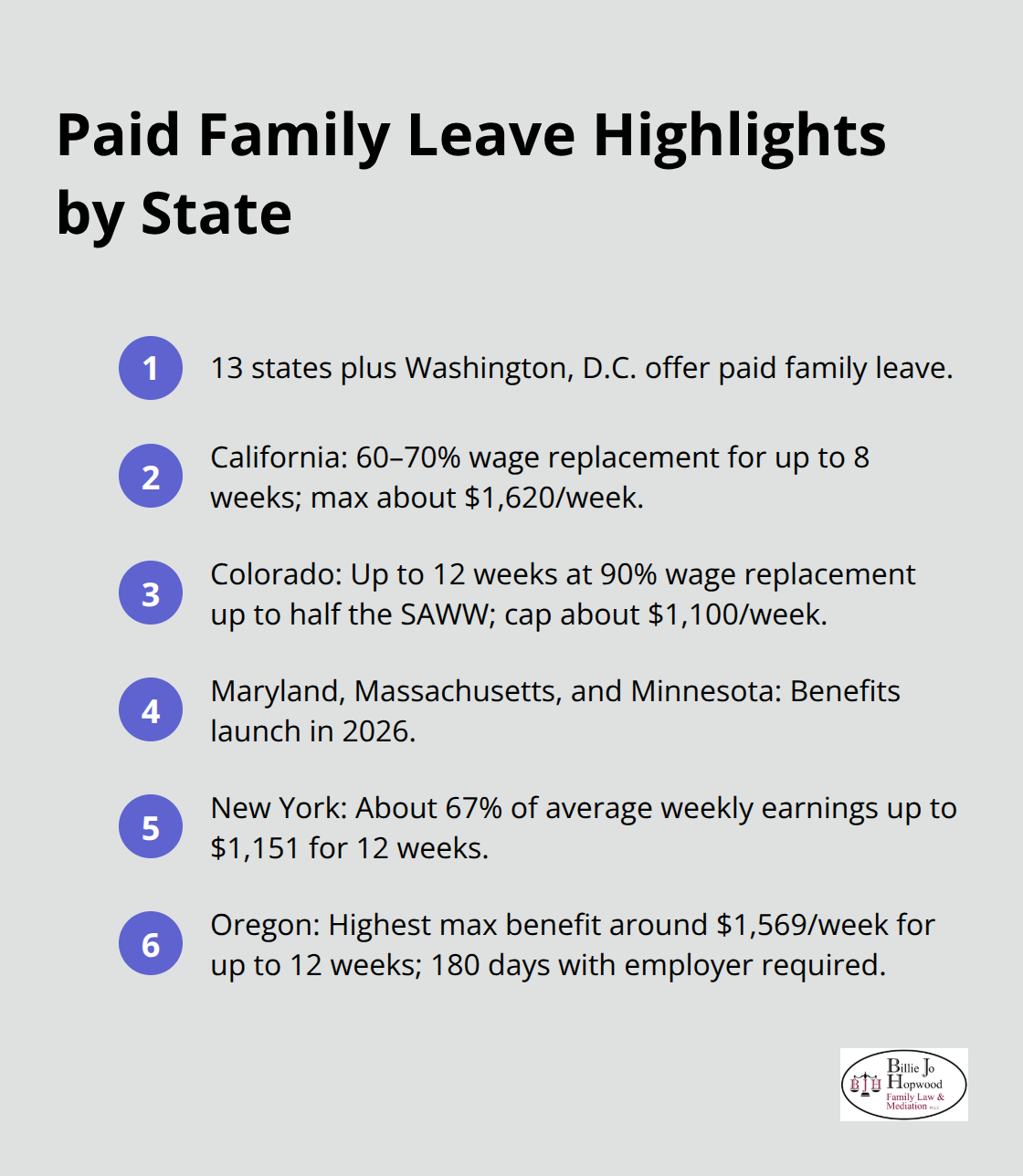
New York pays approximately 67 percent of average weekly earnings up to $1,151 weekly for 12 weeks per year. Oregon offers the highest maximum benefit at around $1,569 weekly for up to 12 weeks, though you must have worked 180 days for your employer first.
Employer Benefits Beyond Legal Minimums
Many employers offer additional protections beyond legal minimums. Check your employee handbook or speak with human resources about what applies to your situation. The U.S. Department of Labor’s Wage and Hour Division provides free guides on discussing family leave with your employer. Contact them at 1-866-487-9243 if you believe your rights have been violated.
Tax Deductions and Caregiver Compensation Programs
Caregivers often absorb significant expenses without realizing tax deductions exist. If you provide more than half the annual support for a dependent family member, you may claim them as a dependent on your taxes, reducing your tax burden. Additionally, 11 million caregivers nationwide receive compensation through Medicaid, Veterans Affairs programs, or other state initiatives. Research your state’s caregiver compensation programs, as eligibility varies widely. Some states allow Medicaid to pay family members for in-home care, effectively converting unpaid caregiving into paid work. Many state labor departments offer workshops on caregiver benefits specific to your location.
When Legal Disputes Arise Over Care Authority
Understanding your financial rights forms only part of the picture. Family caregivers frequently encounter conflicts over who holds legal authority to make medical decisions, manage finances, or direct care. These disputes intensify when multiple family members disagree about the care recipient’s needs or when no formal legal documents exist to clarify your role.
When Disagreements Arise Over Care Authority and Legal Rights
Understanding Decision-Making Authority
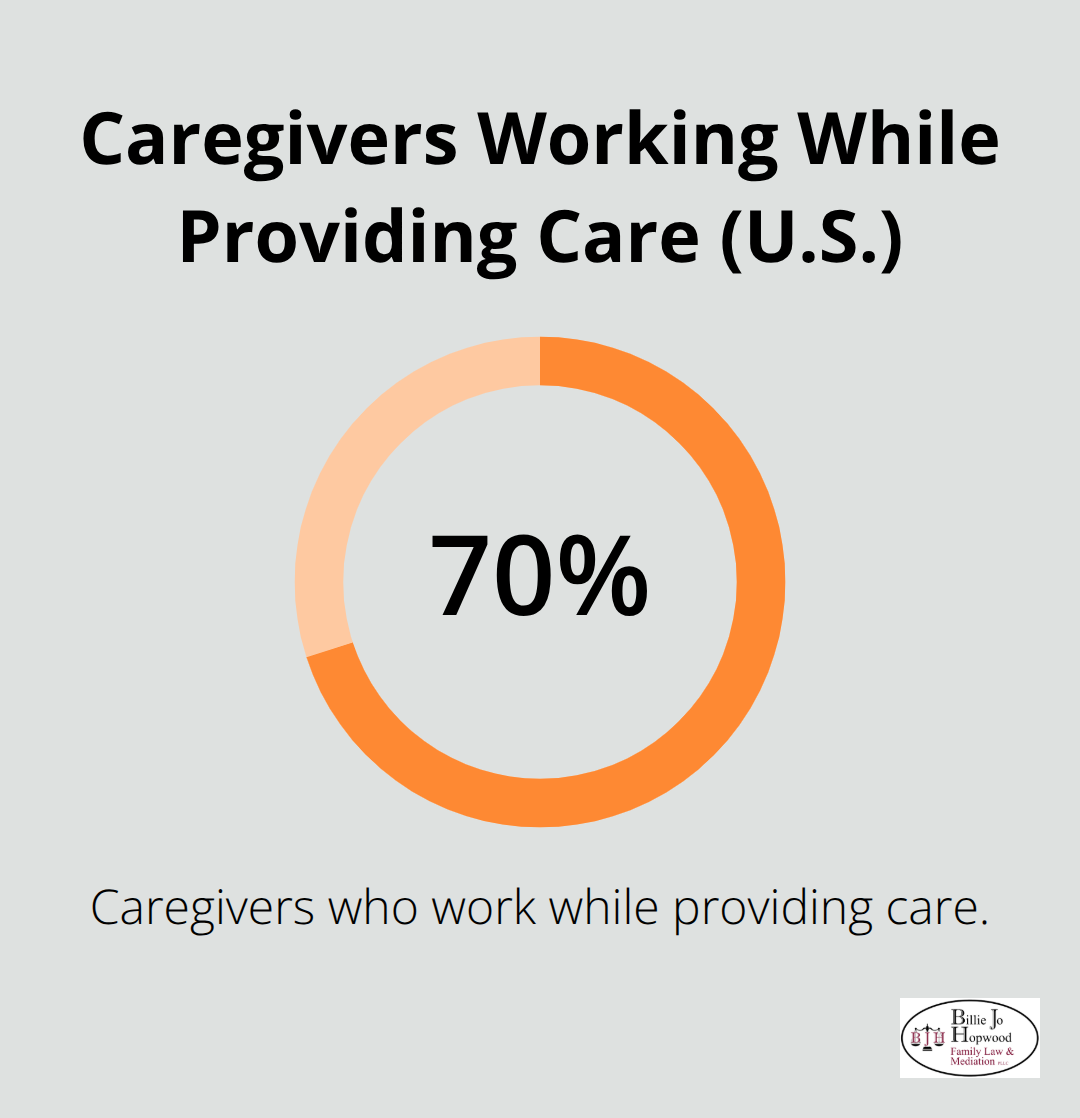
Family caregivers often discover that financial protections mean little without clarity on who holds legal authority to make decisions. Seventy percent of caregivers work while providing care, according to Caregiving in the US 2025 from AARP and the National Alliance for Caregiving, yet most lack formal documentation establishing their decision-making power. Without a power of attorney or healthcare directive, hospitals refuse to discuss the care recipient’s condition with you, and siblings or distant relatives can override your care preferences.
Powers of Attorney: Financial Versus Healthcare
Powers of attorney come in two distinct forms, each granting different rights. Financial powers of attorney grant you authority to manage money and property, while healthcare powers of attorney allow you to make medical decisions. A financial power of attorney does not authorize you to consent to surgery or choose a nursing facility. Conversely, a healthcare power of attorney does not let you access bank accounts or pay bills. Many caregivers assume their role automatically grants them authority, only to face rejection when hospitals or financial institutions demand specific legal documents.
Guardianship as a Last Resort
Guardianship presents another pathway but carries significant drawbacks. Establishing guardianship requires court involvement, attorney fees typically ranging from two thousand to five thousand dollars, and ongoing court supervision and annual accounting. Guardianship also strips the care recipient of decision-making rights entirely, which can damage relationships and create unnecessary conflict among family members. Courts generally prefer less restrictive alternatives like powers of attorney or healthcare directives, which preserve the care recipient’s autonomy while granting you practical authority. If guardianship becomes necessary because the care recipient cannot execute documents or refuses to do so, legal counsel can guide you through the process and help you understand whether guardianship or another arrangement better serves your situation.
Liability Gaps and Insurance Exposure
Liability and insurance gaps create additional exposure that caregivers rarely anticipate. More than forty percent of caregivers perform high-intensity care involving complex medical tasks, yet only twenty-two percent receive formal training, according to Caregiving in the US 2025. Administering medications, managing feeding tubes, or assisting with mobility without proper training increases injury risk to both you and the care recipient. If the care recipient falls and sustains injuries, liability questions arise immediately. Most homeowner’s insurance policies exclude intentional or professional care activities. Long-term care insurance for the care recipient may cover certain expenses but typically does not protect you from liability claims. Request that the care recipient’s homeowner’s insurance agent clarify coverage for in-home caregiving. Some policies require notification when a family member becomes a live-in caregiver. If the care recipient receives Medicaid, the agency may provide liability protection as part of the caregiver compensation program.
Documenting Expenses and Protecting Your Finances
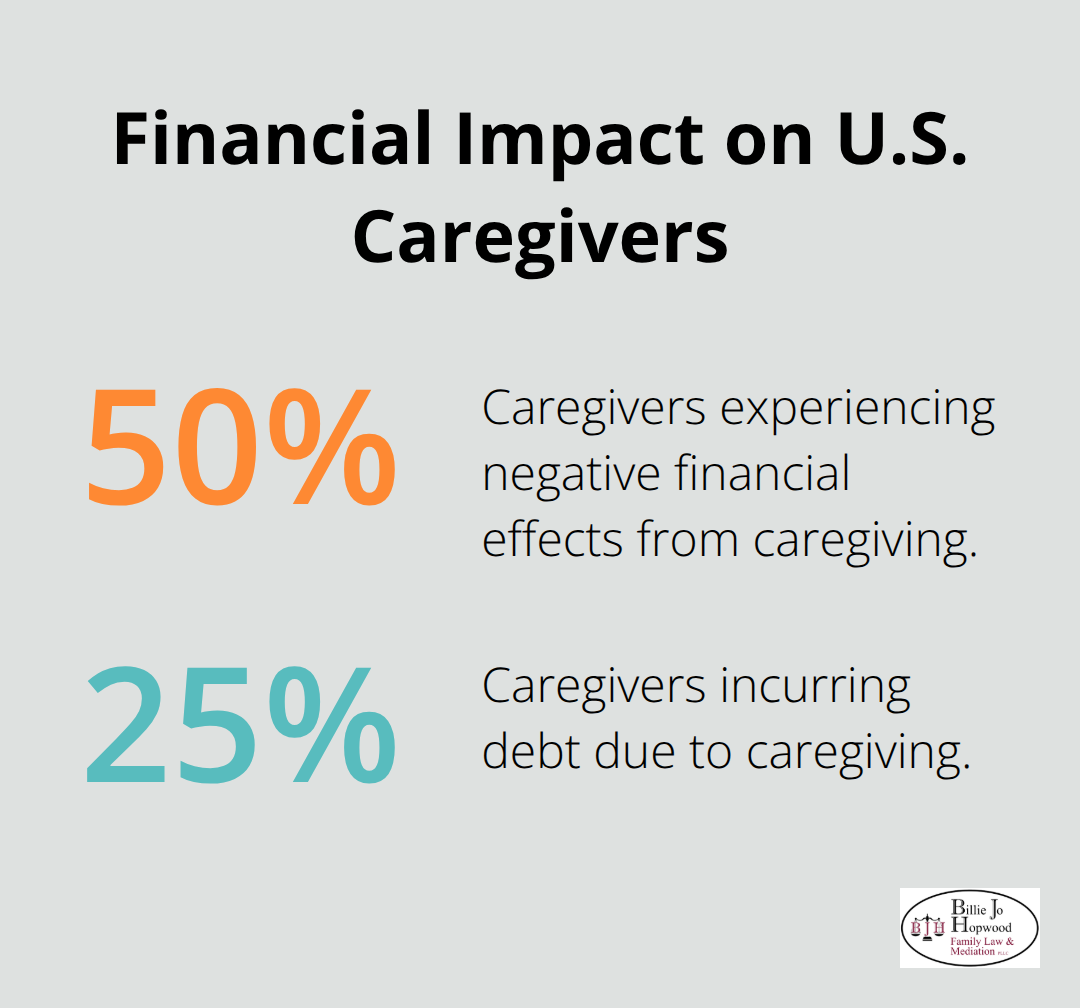
Out-of-pocket expenses for medications, equipment, or care supplies accumulate quickly. Fifty percent of caregivers experience negative financial effects from caregiving, with twenty-five percent incurring debt, according to AARP. Document all caregiving duties, time spent, and any incidents or injuries in writing.
This documentation serves multiple purposes: it establishes a record if disputes arise, supports potential claims for compensation through Medicaid or state programs, and demonstrates the intensity of your role to insurers or courts. Track every expense and explore reimbursement options through Medicaid programs, tax deductions, or the care recipient’s insurance. A written caregiving agreement clarifying who pays for what prevents financial disputes and protects you from absorbing costs the care recipient can afford. These documented agreements and expense records form the foundation for the next critical step: creating formal legal documents that protect both you and the care recipient.
Protecting Your Role With Written Agreements
Written Caregiving Agreements Establish Clear Expectations
A written caregiving agreement forms the foundation for protecting both your authority and your financial interests. Without one, you operate in legal limbo-responsible for daily care decisions yet lacking the documentation to enforce them. The agreement should specify your caregiving duties in concrete terms: which medications you administer, what medical appointments you attend, whether you manage personal hygiene or mobility assistance, and which household tasks fall under your responsibility. Include the duration of the arrangement, whether it is ongoing or temporary, and what happens if the care recipient’s needs change dramatically.
Compensation and Expense Clarification Prevent Conflict
Address compensation explicitly in your agreement, including whether you receive payment, what amount, how often, and from which source-the care recipient’s personal funds, insurance, Medicaid, or a family member’s contribution. Many caregivers avoid this conversation, assuming it damages relationships, but documented expectations actually prevent resentment and conflict. Specify who covers what expenses: medications, medical equipment, food, utilities, and transportation to appointments. Clarify whether you receive housing, meals, or other in-kind benefits and assign monetary value to them for tax and Medicaid purposes.
Plan for Transitions and Contingencies
State what happens if the care recipient enters a facility, passes away, or the arrangement ends for other reasons. Have an attorney review the agreement before signing to confirm it aligns with state law and protects your interests adequately. This step prevents costly disputes later.
Powers of Attorney Grant Specific Decision-Making Authority
Powers of attorney and healthcare directives handle decision-making authority separately from caregiving agreements. A healthcare power of attorney grants you the legal right to make medical decisions, consent to treatment, and access medical records when the care recipient cannot do so themselves. A financial power of attorney lets you manage bank accounts, pay bills, and handle property matters. These documents require the care recipient to be mentally capable of understanding what they are signing, so execute them sooner rather than later when capacity is clear.
Guardianship Requires Court Involvement and Higher Costs
Many states offer statutory forms through the state bar or attorney general’s office that courts recognize readily. If the care recipient refuses to sign or lacks capacity, guardianship becomes necessary, but courts impose strict requirements and ongoing oversight. Guardianship costs between two thousand and five thousand dollars in attorney fees alone, plus annual court filings and accounting requirements, making it far more expensive and intrusive than preventive documents. If you anticipate guardianship, consult an attorney immediately to explore whether a limited guardianship preserves some of the care recipient’s autonomy while granting you necessary authority, or whether alternatives like healthcare directives or powers of attorney achieve the same practical result. Many families discover too late that a simple document signed years earlier would have eliminated months of court proceedings and family discord. Document your caregiving responsibilities, expenses, and time investment from day one-this record supports potential compensation claims through Medicaid programs, demonstrates the legitimacy of your role if disputes arise, and protects you financially if the arrangement changes unexpectedly.
Final Thoughts
Family caregiver legal rights exist to protect you, but only if you act on them now. Powers of attorney, written caregiving agreements, and documented expenses form a safety net that prevents financial hardship and legal disputes. Most caregivers operate without these protections, discovering gaps only when conflicts arise or circumstances shift unexpectedly.
Taking action prevents costly problems later. Execute a healthcare power of attorney and financial power of attorney while the care recipient has capacity, create a written caregiving agreement that specifies duties and compensation, and document your caregiving time and out-of-pocket costs from day one. Research your state’s paid family leave program, verify insurance coverage for in-home caregiving, and request liability protection through Medicaid if applicable.
At Billie Jo Hopwood Family Law & Mediation, PLLC in Melbourne, Florida, we help families navigate family caregiver legal rights when disputes arise over care authority or when family members disagree about the care recipient’s needs. Contact us to discuss your specific circumstances and explore how formal legal planning protects both you and your loved one.